- Motorcycle
- Dürkopp-Werke (0 offers)
Buy Dürkopp-Werke Motorcycles
From 1867 to 1961, the traditional Bielefeld company manufactured robust motorcycles and scooters alongside its famous sewing machine production. Today, the MD150, MD200, and Diana scooter are sought-after classics.
Search results
Currently, there are no matching listings for your search.
Create search alert
Let yourself be notified as soon as a listing is published that matches your search filters.
Create listing
Do you have a Dürkopp-Werke that you want to sell? Then create a listing now.
Create listingDürkopp-Werke listing references from Classic Trader
Below you will find listings related to your search that are no longer available on Classic Trader. Use this information to gain insight into availability, value trends, and current pricing for a "Dürkopp-Werke" to make a more informed purchasing decision.
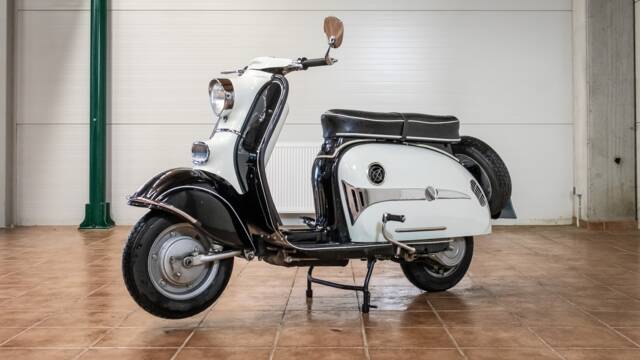
1961 | Dürkopp-Werke Diana
Elegant motor scooter from the early 1960s

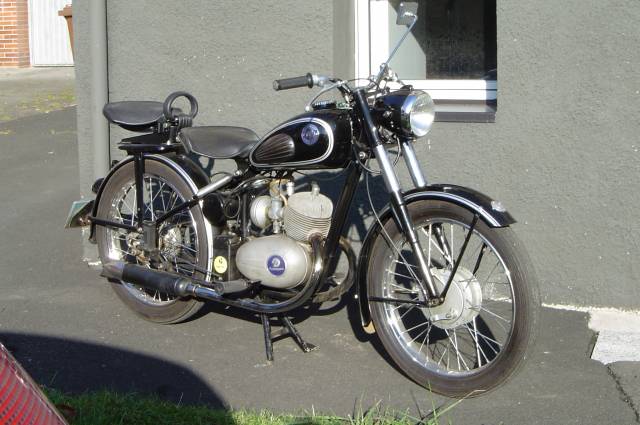
1952 | Dürkopp-Werke MD 150
Motorrad Teilrestauriert

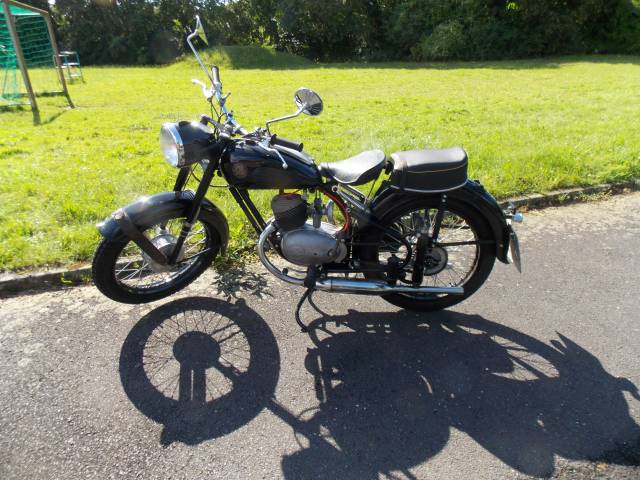
1953 | Dürkopp-Werke MD 200
Create search alert
Let yourself be notified as soon as a listing is published that matches your search filters.
Create listing
Do you have a Dürkopp-Werke that you want to sell? Then create a listing now.
Create listingBuy Dürkopp-Werke Motorcycles
History & Development
The history of Dürkopp-Werke begins in 1867, when Nikolaus Dürkopp took over the sewing machine factory Koch & Co in Bielefeld and renamed it Dürkopp & Co. Even before the turn of the century, the company was constructing motorised two-wheelers – a pioneer of the German motorcycle industry. Early machines from 1898 to 1905 included single- and twin-cylinder engines; particularly notable was an inline four-cylinder engine, one of the most advanced designs of its era.
After World War I, motorcycle production ceased temporarily until Dürkopp re-entered the market in 1927. The M10, M11, and M12 models from the 1930s established the brand in the sports motorcycle segment. During World War II, the factory concentrated on armaments production; not until 1949 did they resume the two-wheeler division with the revised M10 model.
The most successful era began in 1951 with the MD150 – a completely in-house designed machine with a 149.8cc two-stroke engine. Until 1954, an impressive 17,890 units of this model were produced. With 5.5 kW (7.5 hp) at 5,300 rpm, the MD150 achieved a solid 90 km/h and was considered one of the most reliable German motorcycles in its class. 1952 saw the MD200 with a 198cc two-stroke engine and increased output of 7.5 kW (10.2 hp), capable of 96 km/h. Approximately 10,000 units left the factory until 1954.
From the mid-1950s, Dürkopp shifted focus to small motorcycles and scooters. Models like the MKL 100, MF 100, and MFS 100 used 98cc Sachs engines; the M 125 initially received ILO, later Ardie engines, after Dürkopp acquired the Nuremberg-based Ardie works in 1955.
The greatest commercial success became the Diana scooter, first presented at the 1953 IFMA. With Italian-inspired design, robust German engineering, and the excellent 200cc two-stroke engine, the Diana successfully competed with Vespa and Lambretta. Variants like Diana Sport, TS, TSE and smaller models Dianette (175cc) and Fratz (48cc) expanded the range.
In 1961, Dürkopp discontinued two-wheeler production – declining sales due to growing motorisation made the business unprofitable. In 1990, the company merged with Adler to form Dürkopp Adler AG, which continues to produce sewing and conveyor technology today.
Special Features & Highlights
Dürkopp motorcycles were distinguished by engineering excellence rather than showmanship. The Bielefeld-based company mastered precision manufacturing – a competence derived directly from sewing machine production. Unlike many competitors who relied on bought-in components, Dürkopp developed proprietary engines for the MD150 and MD200: robust two-stroke motors with excellent refinement.
A unique selling point was the telescopic fork on the MD models, which was by no means standard in the early 1950s. While many German manufacturers used leading-link or friction dampers, Dürkopp offered modern chassis comfort.
The Diana scooter represented German scooter culture at the highest level. Unlike NSU with its Lambretta licence or DKW with rather utilitarian designs, Dürkopp created a proprietary design combining Italian elegance with German solidity. The 200cc engine was considered the best German scooter two-stroke: vibration-free through sophisticated damping, powerful and reliable. Many owners praised the silky-smooth power delivery and cultured running characteristics.
The Diana Sport in particular, with 12-volt electrics, electric starter, and 12 hp, achieved impressive performance for a scooter. The top speed of nearly 100 km/h made it motorway-capable – an argument that counted in the late 1950s.
The logo with the curved "D", occasionally featuring Bielefeld's water tower at its centre, recalls the company's social responsibility. In 1891, Dürkopp workers purchased potatoes from Saxony after crop failures and sold them below market value to workers' families – an early expression of the cooperative movement.
Technical Specifications
Smaller models Dianette 175 (175cc, 7.5 hp) and Fratz 48 (48cc, 1.5 hp) targeted beginners and female riders. The M 125 with ILO or Ardie engine produced around 5 hp and reached 75 km/h.
Market Overview & Buying Tips
Dürkopp motorcycles and scooters belong to the rarer German classics. While DKW, NSU, or Zündapp appear more frequently on the market, well-preserved Dürkopp machines are rarities – reflected in stable to rising prices.
Price Levels by Model and Condition
MD150 and MD200 (motorcycles):
- Restoration project (running, paint/chrome damaged): £2,200–4,000
- Good original condition (patinated, functional): £4,500–6,500
- Fully restored (show condition): £7,000–10,500
2024 auction results: An unrestored MD200 changed hands at Bonhams for approximately £1,000; restored examples achieve two to three times this figure.
Diana scooters (TS 200, Sport, TSE):
- Barn find/restoration base: £700–1,300
- Roadworthy, age-appropriate: £1,800–3,000
- Good restoration: £3,500–5,500
- Diana Sport (electric start, 12V): £4,800–7,500
H&H Auctioneers sold a 1960 Diana TS Sport MK2 in 2024 for £1,840; a 1955 Diana in top condition went to auction in 2012 with an estimate of £2,500–3,500. Classic Driver listed a 1955 Diana in 2024 with an estimate of €2,700–3,200 (approximately £2,300–2,700).
Dianette and Fratz: Significantly rarer, hence difficult to value. Estimates: £1,300–3,500 depending on condition.
Buyer Profiles and Value Development
Dürkopp appeals to three groups:
Admirers of German engineering: Those who appreciate NSU, DKW, or Maico will find in Dürkopp an underrated alternative with excellent build quality.
Scooter enthusiasts: The Diana offers an authentic 1950s riding experience without Lambretta/Vespa premiums. Good entry-level classics for scooter newcomers.
Collectors of post-war German marques: Alongside British classics, German post-war machines are enjoying growing popularity in the UK.
Value development is stable to moderately rising. German post-war motorcycles benefit from growing interest in non-mainstream brands. While BMW, Horex, or NSU Max already command high prices, Dürkopp models remain affordable – likely to change as the brand gains broader recognition.
What to Look for When Buying
MD150 / MD200 (motorcycles):
- Engine: Two-strokes tolerate long standstill periods poorly. Piston seizures from gummed oil are common. Before viewing: test kickstarter – should show even resistance.
- Frame: Check downtu be and steering head area for cracks. Amateur welding is a knockout criterion.
- Telescopic fork: Stanchion chrome often corroded through. Re-chroming costs £250–450.
- Spare parts: Small wear items (seals, bearings) via classic suppliers. Engine-specific parts (pistons, cylinders) are critical – check engine is complete.
Diana scooter:
- Bodywork: Legshield underside and footwell are rust hideaways. Tap filler – cheap restorations disguise rust-through.
- Engine: The 200cc Dürkopp engine is robust, but replacement pistons difficult to source. Original carburettor (Bing) is valuable – replacement with generic parts reduces value.
- Electrics: 6-volt systems are standard; 12-volt conversions (original on Sport models) increase practicality but reduce originality.
- Seat: Diana TS from 1959 has dual seat instead of single seats – often worn or replaced with unsuitable reproductions.
- Lighting: Headlamp sits on steering head on early models, on horn cowling on later ones – don't confuse when buying parts.
Parts supply: Dürkopp clubs and specialists are rare. Sources:
- Classic scooter scene: Diana parts via Vespa/Lambretta dealers with sidelines
- Classic parts dealers: Reproductions for wear items (brake shoes, cables, seals)
- 3D printing: Small parts (trim clips, bar-end caps) can be reproduced
- Ardie parts: M 125 A with Ardie engine benefits from better Ardie parts availability
Typical restoration costs (complete restoration):
- MD150/MD200: £5,000–10,000 (depending on starting condition)
- Diana scooter: £3,500–7,000
Paint, chrome, and engine rebuild are the main items. DIY work halves costs.
Documentation and Registration
Many Dürkopp machines lack continuous paper history. Original registration documents increase value by 10–15%. With missing papers:
- Type approval via engineers (MOT stations, specialists) required
- Frame number should match data plates – on MD models at steering head, on Diana at bulkhead
- Engine number often illegible from corrosion – document beforehand
Historic vehicle status: MD150 (from 1951), MD200 (from 1952), and Diana (from 1953) are eligible for historic vehicle registration. Requirement: original condition or period modifications. Conversions to 12V electrics or modern indicators may be problematic.
Riding Characteristics & Experience
MD150 and MD200: Lightweights with Character
The MD motorcycles ride uncomplicated and nimble. At around 105 kg dry weight, they're genuine lightweights – ideal for relaxed country lane tours, less so for motorway dashes. The two-stroke engine starts willingly (if intact) and pulls evenly from tickover. Power delivery is linear, without sporting ambitions – you ride with, not against, traffic.
The telescopic fork absorbs minor bumps decently; potholes are harsh. The rear swing arm is more firmly tuned than on British machines – the MD models aren't comfort champions. However, the machine sits planted in corners; low weight allows effortless turn-in.
Brakes: Front and rear drum brakes require anticipation. Progressive, but modest when wet. Those coming from modern discs must adjust.
Gearbox: Three-speed with foot shift (left-up-shifts-down on early models per old DIN standard, later reversed). Gear changes are precise but not silent – two-stroke engines don't forgive ham-fisted shifting.
Sound: Typical two-stroke note – not smoky blare like DKW RT, rather a clean, high-frequency whirr. With a well-run-in engine, the Dürkopp unit runs surprisingly refined.
Long-distance: Optimal for 30–50-mile day trips. Beyond that, narrow seat and lack of wind protection recall that the 1950s had different expectations. Tank range: around 125 miles with moderate riding.
Diana Scooter: German Smooth Operator
The Diana scooter surprises with refinement on Italian levels. The 200cc two-stroke runs vibration-free and torquey – no comparison to the often rough-running NSU Prima engines. Throttle response is spontaneous, without lurching or hesitation.
Riding position: Upright and relaxed, seat offers good support. Legroom is more generous than Vespa 150; even tall riders find space. Steering is light but precise – no vague geometry like some French scooters.
Cornering: The Diana leans moderately into corners without becoming nervous. The chassis remains stable through brisk bends. Loading (pillion + luggage) noticeably affects handling – adjust rear preload accordingly.
Brakes: Drum equipment like the motorcycles, but well-dimensioned. The Diana decelerates reliably, provided you keep pads dry.
Diana Sport with electric starter and 12 hp offers significantly more thrust. 0–30 mph in around 8 seconds is respectable for a period scooter. Top speed of nearly 60 mph makes motorway sliproads possible – though the narrow tyre (3.50-10) demands attentive steering in crosswinds.
Sound: Rich, sonorous two-stroke without shrillness. The Diana engine ranks among the most cultured German scooter units – only BMW single-cylinder scooters are similarly refined.
Daily usability: Perfect for short trips and urban traffic. The Diana scooter isn't purely a showpiece but a usable classic. Parts availability is the Achilles heel – those finding a well-maintained Diana can certainly use it as summer daily transport.
Design & Styling
Dürkopp design followed the maxim "form follows function" – no extravagant lines, but purposeful elegance. The MD motorcycles present themselves traditionally conservative: round tanks with subtle pinstriping (often black with red or cream accents), chrome-plated mudguards, slim seat. Nothing screams for attention; everything breathes dignified solidity.
Notable is the clean line work without superfluous attachments. Tool boxes integrated, cable routing concealed, exhaust routed close to frame. Dürkopp engineers detested chaos – it shows.
The Diana scooter design is, however, a homage to Italian styling language. Flowing, bulbous body lines, generously dimensioned legshield, curved side panel – visually closer to Vespa than NSU Prima. Yet in detail, typically German: thicker gauge metal, more substantial weld seams, no delicate grace but robust elegance.
Colour palette: Diana scooters came in classic red, cream, mint green, and sky blue – 1950s pastels. Two-tone paintwork with contrasting side stripes was popular. Chrome handlebar cowlings, headlamp rings, and wheel trims provided highlights.
The script "Dürkopp" adorns tank (MD models) or side panel (Diana) in classic serif typeface – restrained but unmistakable. The curved "D" logo stands for Bielefeld tradition.
Special feature on Diana Sport: Two-tone seat (often black-red or black-white), chrome luggage rack at tail, and additional trim. The Sport version aimed to appear distinguished – and succeeded.
Designers aren't named – typical for the era when engineering departments co-determined design. The Italian influence on the Diana scooter isn't coincidental: Dürkopp studied Vespa and Lambretta intensively, but didn't crudely copy – instead intelligently adapted.
Summary
Dürkopp-Werke represents an often-overlooked facet of German motorcycle history: engineering without glamour, but with substance. While BMW and Horex pursued sporting ambitions and NSU focused on racing success, Dürkopp built down-to-earth machines for everyday riders – doing so with the same precision that made their sewing machines world-famous.
The MD150 and MD200 are excellent entry-level classics: affordable, easy to handle, robustly built. Those seeking an uncomplicated motorcycle for Sunday runs without Horex or BMW prices will find a charming alternative here. Their rarity makes them insider tips – for now.
The Diana scooter is the brand's star. Technically on par with Vespa, aesthetically distinctive, considerably cheaper. For scooter newcomers, an ideal classic: characterful without diva tantrums, usable without compromises. The Diana Sport with electric starter is more practical for daily use than most Italian contemporaries.
Buying recommendation: Act while prices remain moderate. The German post-war motorcycle scene is experiencing a renaissance – and Dürkopp stands in the second row, ready for re-evaluation. Those buying a well-restored MD200 or Diana Sport today invest in a piece of industrial history not everyone knows yet – but will soon appreciate more.
Find your Dürkopp motorcycle on Classic Trader – from functional barn finds to fully restored examples. Bielefeld engineering awaits new owners.