- Motorcycle
- Danuvia-Csepel (0 offers)
Buy Danuvia-Csepel Motorcycle
Discover the rare industrial heritage of Hungary with the Danuvia-Csepel range, the backbone of Cold War era mobility. These lightweight two-stroke machines represent a unique chapter in Eastern European engineering, now sought after by discerning British collectors.
Search results
Currently, there are no matching listings for your search.
Create search alert
Let yourself be notified as soon as a listing is published that matches your search filters.
Create listing
Do you have a Danuvia-Csepel that you want to sell? Then create a listing now.
Create listingDanuvia-Csepel listing references from Classic Trader
Below you will find listings related to your search that are no longer available on Classic Trader. Use this information to gain insight into availability, value trends, and current pricing for a "Danuvia-Csepel" to make a more informed purchasing decision.
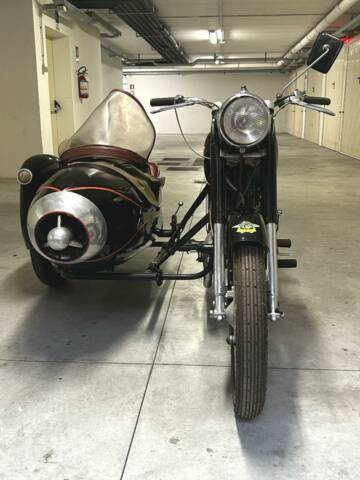
1959 | Danuvia-Csepel 125
ALTRE MOTO O TIPOLOGIE Csepel de luxe

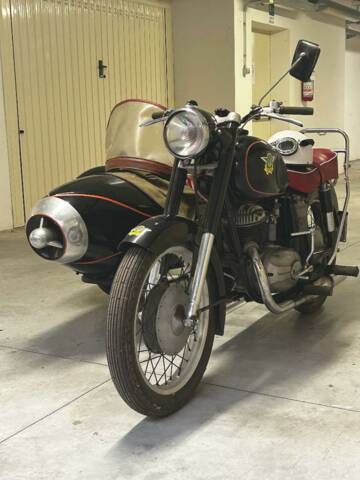
1959 | Danuvia-Csepel 125
ALTRE MOTO O TIPOLOGIE Csepel de luxe
Create search alert
Let yourself be notified as soon as a listing is published that matches your search filters.
Create listing
Do you have a Danuvia-Csepel that you want to sell? Then create a listing now.
Create listingHistory & Heritage
The story of Danuvia-Csepel is a fascinating journey through the industrial and political landscape of 20th-century Hungary, reflecting the broader shifts of European history. To truly understand these motorcycles, one must look at Csepel Island in Budapest, a massive industrial hub that served as the heart of Hungarian manufacturing. Originally, the site was home to the Manfréd Weiss Steel and Metal Works, founded by the visionary industrialist Manfréd Weiss. Before the Second World War, this facility was one of the largest metallurgical complexes in Central Europe, producing everything from aircraft components to munitions.
The "WM" (Weiss Manfréd) era between 1931 and 1935 was a pivotal period for the brand. During these years, the factory produced its first motorised cycles, which were essentially heavy-duty bicycles with auxiliary engines. These machines were designed to be robust and affordable, catering to a population that needed reliable transport but lacked the means for luxury vehicles. The early WM 100cc models, often referred to as "BMA" style machines, were simple, light, and did not require a driving license in the Hungary of the 1930s. This period of early development was cut short by the onset of the Second World War, during which the Csepel works were diverted to the production of military hardware, including aircraft engines and armoured vehicle parts.
The post-war era brought a seismic shift. In 1948, under the rising influence of the Communist Party, the Hungarian government nationalised the Csepel works. The factory was renamed the Csepel Works (Csepel Művek) and became a state-owned enterprise. It was during this time that the motorcycle production was reorganised to meet the needs of the "working class." The design of the new 125cc motorcycle was heavily inspired by the German DKW RT 125. This was not an isolated incident; after 1945, the DKW RT 125 became the most copied motorcycle design in history, influencing everything from the British BSA Bantam to the American Harley-Davidson Hummer and the Soviet Moskva M1A. The Hungarian engineers took the fundamental RT 125 concept—a simple, loop-scavenged two-stroke engine and a lightweight cradle frame—and adapted it to the local conditions, prioritising durability over performance.
By 1954, the D-Csepel 125 emerged, marking the beginning of a dedicated line of motorcycles that would define Hungarian roads for over a decade. The transition to the Danuvia name for the 125cc models occurred in the late 1950s, specifically with the launch of the DV-125 in 1958. This model became a national icon, with over 157,000 units produced until 1966. For many Hungarian workers, the Danuvia was more than just a bike; it was their primary means of transport and a symbol of personal freedom within a planned economy. In an era where private car ownership was a distant dream for most, the "Danuvia" was the vehicle that allowed families to travel, provided a reliable commute to the factory, and formed the backbone of rural communication.
In the UK, these machines remained virtually unknown during their production years. The Iron Curtain acted as a formidable barrier to trade, and while some Eastern Bloc brands like MZ and Jawa found a foothold in the British market through importers like Wilf Green, Danuvia remained an exotic rarity. Today, the appeal for British collectors lies in this very obscurity and the stark, functional beauty of Socialist-era design. They represent a tangible link to a world that existed parallel to the West but operated under vastly different principles.
Highlights & Models
While the Danuvia-Csepel production run was relatively focused, several distinct models and variants are of particular interest to the classic motorcycle community.
The Danuvia DV-125 (1958–1966) The DV-125 is the definitive Hungarian classic. It featured a 123cc single-cylinder two-stroke engine, which was an evolution of the earlier Csepel designs. Improvements included a boosted output to 5.5 bhp at 4,300 rpm, a four-speed gearbox, and the introduction of a swinging arm rear suspension. This made it a far more capable machine for the varied road conditions of the time, which often included unpaved rural tracks. Its light weight of just 95kg made it agile, while its simple construction ensured it could be maintained with basic tools—a crucial requirement in a country where professional service networks were limited.
The D-Csepel 125 (1954–1958) The predecessor to the DV-125, the D-Csepel, is a rarer find today. Early versions still utilised a plunger-style rear suspension or even a rigid rear end in some export configurations. It is distinguished by its slightly lower power output (around 5 bhp) and more primitive cycle parts. For the purist, the D-Csepel represents the raw beginnings of the post-war Hungarian motorcycle industry. Many of these bikes were used to the point of destruction, making surviving original examples highly sought after.
The DMC (1958–1964) A sportier variant based on the DV-125 platform, the DMC featured revised bodywork and slightly more aggressive styling. While the mechanical components remained largely the same, the aesthetic changes were intended to appeal to a younger, more style-conscious demographic. These are exceptionally rare today, even within Hungary, as production numbers were significantly lower than the standard DV-125.
The White 125 (1967) Perhaps the most intriguing variant for the international market is the White 125. In an attempt to earn valuable hard currency, the Hungarian government exported approximately 200 units to the USA under the "White" brand name. These bikes featured different badges and minor trim changes to suit American tastes. Finding a White 125 in the UK is a "Holy Grail" moment for collectors of Cold War memorabilia, as most remained in the States or were eventually lost to time. They represent a rare instance of a Socialist product attempting to compete in the capitalist heartland.
Technical Data
The technical specifications of the Danuvia-Csepel reflect the era's focus on reliability and simplicity. Below is a summary of the core data for the primary models.
Note: British owners often find that the 6V electrical system, while charmingly period-correct, can be temperamental. Many enthusiasts choose to upgrade to a modern 12V electronic ignition system to improve reliability for modern road use. The flywheel magneto system is simple but relies on permanent magnets that can lose their strength over decades, leading to a weak spark.
Market Overview & Buying Tips
The market for Danuvia-Csepel motorcycles in the UK is niche, often revolving around enthusiasts of Eastern European vehicles or those looking for a unique conversation piece at vintage shows.
Pricing and Availability In their native Hungary, a Danuvia DV-125 can still be found for between £700 and £2,200, depending on the state of restoration. However, once you factor in the costs of sourcing, transporting, and registering the bike in the UK, the price typically rises. A well-restored, UK-registered example can fetch between £2,500 and £4,000. Projects are cheaper, often starting from £500, but be prepared for a difficult journey when it comes to parts.
Importing and DVLA Registration If you are considering importing a Danuvia from Hungary or elsewhere in Europe, be aware of the DVLA requirements. Since these bikes were never officially sold in large numbers in the UK, they lack a type approval history. You will need to complete the following steps:
- NOVA (Notification of Vehicle Arrivals): Within 14 days of the bike arriving in the UK, you must notify HMRC. This is crucial even if no VAT is due.
- Dating Certificate: The DVLA requires proof of the vehicle's age. You should contact a recognised club (such as the Vintage Motor Cycle Club - VMCC) or a specialist in Hungarian vehicles to obtain a dating letter based on the frame and engine numbers.
- V55/5 Form: This is the application for first vehicle tax and registration of a used motor vehicle. You will need to provide the dating certificate, insurance (based on the VIN/Frame number), and potentially an MOT if the bike is not yet 40 years old (though most Danuvias are now MOT exempt).
- Physical Inspection: In some cases, the DVLA may request a physical inspection to verify the identity of the vehicle.
2-Stroke Engine Inspection Tips When inspecting a Danuvia engine, pay close attention to the following:
- Crankshaft Seals: These are the most common point of failure. If the seals are hard or perished, the engine will draw air, leading to a lean condition and potential seizure. Look for difficulty in starting and an erratic idle.
- Piston Slap: Listen for a metallic rattling sound from the cylinder at idle. This indicates a worn piston or bore. Replacement pistons (54mm) are available from Hungarian specialists.
- Gearbox Selection: Ensure all four gears engage smoothly. The selector mechanism can become sloppy over time, and parts for the gearbox are significantly harder to find than engine components.
- Magneto Health: A bright blue spark is essential. A yellow or weak spark usually means a failing condenser or weak magnets.
Sourcing Parts Parts are virtually non-existent in UK bike shops. Your best bet is to look at Hungarian websites such as Veterán Apró or contact specialists like OK Team Classic in Budapest. Many owners also use forums and Facebook groups dedicated to "Magyar Motorkerékpárok" (Hungarian Motorcycles) to find rare items.
Riding Experience
Riding a Danuvia DV-125 is a lesson in patience and mechanical empathy. With just 5.5 bhp on tap, it is not a machine for the fast lane of a British A-road. Instead, it excels on quiet B-roads where its lightweight nature and "buzzing" two-stroke character can be fully appreciated.
The four-speed gearbox is surprisingly positive, and the 123cc engine has a linear power delivery. It doesn't have a "power band" in the modern sense; it simply chugs along with a distinctive "ring-ding-ding" exhaust note. The riding position is upright and comfortable, though the small dimensions of the bike might feel cramped for taller British riders.
The period road experience was vastly different from today's. In 1960s Hungary, asphalt was a luxury reserved for main arterial roads. Most Danuvias spent their lives navigating dirt tracks and cobblestones. This explains the relatively soft (if primitive) suspension and the high ground clearance. Riding one today on modern smooth tarmac feels remarkably nimble, but hit a pothole and you are reminded of the bike's lightweight construction and 1950s suspension technology. The smell of the 2-stroke mix (typically 1:25 or 1:33) is an evocative part of the experience, leaving a blue haze that marks your passage through the English countryside.
Design & Zeitgeist
The design of the Danuvia-Csepel is a masterclass in Socialist functionalism. Every line and component was dictated by the need for ease of production and durability. The characteristic red paintwork, often found on the DV-125, is a signature of the brand, although black and grey versions were also produced for different state departments.
The fuel tank, with its simple kneepads and prominent Csepel emblem, is the visual centerpiece. The wide mudguards were a practical necessity for the unpaved roads common in post-war Hungary. There is a lack of chrome compared to Western bikes of the same era, reflecting the material shortages and the "worker-first" philosophy of the factory. Instead, you find robust painted finishes and heavy-duty castings.
For a British owner, the bike represents a tangible link to a different world. It is a machine that prioritised the collective need for transport over individual luxury. The "Socialist Realism" aesthetic is present in the rectangular speedometer and the simple, robust switchgear. It feels like a tool rather than a toy, and that utilitarian spirit is evident in every weld and casting.
Cultural Significance
In Hungary, the Danuvia is a cultural touchstone. It represents the era of the "Goulash Communism"—a period of relative stability where the average citizen could finally afford a small piece of motorised independence. It features in countless Hungarian films and family photographs from the 60s and 70s, often seen with a sidecar or loaded with agricultural produce.
The Iron Curtain motorcycle culture was one of ingenuity. Because new bikes were expensive and waiting lists were long, owners became expert mechanics. A Danuvia was expected to last a lifetime, often being handed down from father to son. This culture of "make do and mend" is why so many of these bikes survived, albeit often with non-standard repairs.
While it lacks the racing pedigree of Norton or the glamour of Triumph, the Danuvia holds a different kind of prestige. It is the "people’s bike" of the Pannonian Plain. In recent years, there has even been a "Danuvia Motorrad Projekt" aimed at reviving the name, though for the true enthusiast, nothing replaces the smell of the original 60s two-stroke mix and the mechanical clatter of a Csepel engine. For the UK collector, owning a Danuvia is an act of historical preservation, keeping alive a piece of the story that was largely hidden from the West for forty years.
Summary
The Danuvia-Csepel is a fascinating choice for the British classic motorcycle enthusiast. It offers a combination of mechanical simplicity, historical depth, and absolute rarity on UK roads. While the process of importing and maintaining one requires more effort than a common Japanese or British classic, the reward is a truly unique machine that tells a story of survival and ingenuity from behind the Iron Curtain.
Whether you are a collector of Eastern Bloc history or simply looking for a lightweight classic that stands out at any bike meet, the Danuvia-Csepel is a rewarding and characterful choice. It is a motorcycle that invites questions, starts conversations, and provides a unique window into the industrial soul of post-war Hungary.
language: en-GB vehicleType: motorbike makeId: 2353 h1: 'Buy Danuvia-Csepel Motorcycle' teaser: | Discover the rare industrial heritage of Hungary with the Danuvia-Csepel range, the backbone of Cold War era mobility. These lightweight two-stroke machines represent a unique chapter in Eastern European engineering, now sought after by discerning British collectors. page_title: 'Buy Danuvia-Csepel Motorcycle | Offers & Prices | Classic Trader' meta_description: 'Find rare Danuvia-Csepel motorcycles for sale. Explore Hungarian classics like the DV-125. Essential guide on UK imports, DVLA registration, and prices.'
History & Heritage
The story of Danuvia-Csepel is a fascinating journey through the industrial and political landscape of 20th-century Hungary. To understand these motorcycles, one must look at the Csepel Island in Budapest, a massive industrial hub that served as the heart of Hungarian manufacturing. Originally, the site was home to the Manfréd Weiss Steel and Metal Works, founded by the visionary industrialist Manfréd Weiss. Before the Second World War, this facility was one of the largest metallurgical complexes in Central Europe, producing everything from aircraft components to munitions.
The Danuvia brand itself traces its roots back to 1920, established as Danuvia Ipari és Kereskedelmi Kft. While initially focused on weaponry and precision tools, the company eventually turned its attention to motorised transport. The post-war era saw the nationalisation of the Csepel works under the Communist regime, leading to the creation of the Csepel Works (Csepel Művek). It was here that the production of motorcycles truly flourished, heavily influenced by German engineering. Much like many other post-war manufacturers, the Hungarians looked to the DKW RT 125 design, which had become the blueprint for lightweight motorcycles globally.
By 1954, the D-Csepel 125 emerged, marking the beginning of a dedicated line of motorcycles that would define Hungarian roads for over a decade. The transition to the Danuvia name for the 125cc models occurred in the late 1950s, specifically with the launch of the DV-125 in 1958. This model became a national icon, with over 157,000 units produced until 1966. For many Hungarian workers, the Danuvia was more than just a bike; it was their primary means of transport and a symbol of personal freedom within a planned economy.
In the UK, these machines remained virtually unknown during their production years. The Iron Curtain acted as a formidable barrier to trade, and while some Eastern Bloc brands like MZ and Jawa found a foothold in the British market, Danuvia remained an exotic rarity. Today, the appeal for British collectors lies in this very obscurity and the stark, functional beauty of Socialist-era design.
Highlights & Models
While the Danuvia-Csepel production run was relatively focused, several distinct models and variants are of particular interest to the classic motorcycle community.
The Danuvia DV-125 (1958–1966) The DV-125 is the definitive Hungarian classic. It featured a 123cc single-cylinder two-stroke engine, which was an evolution of the earlier Csepel designs. Improvements included a boosted output to 5.5 bhp, a four-speed gearbox, and the introduction of a swinging arm rear suspension. This made it a far more capable machine for the varied road conditions of the time. Its light weight of just 95kg made it agile, while its simple construction ensured it could be maintained with basic tools—a crucial requirement in a country where professional service networks were limited.
The D-Csepel 125 (1954–1958) The predecessor to the DV-125, the D-Csepel, is a rarer find today. Early versions still utilised a plunger-style rear suspension or even a rigid rear end in some export configurations. It is distinguished by its slightly lower power output (around 5 bhp) and more primitive cycle parts. For the purist, the D-Csepel represents the raw beginnings of the post-war Hungarian motorcycle industry.
The DMC (1958–1964) A sportier variant based on the DV-125 platform, the DMC featured revised bodywork and slightly more aggressive styling. While the mechanical components remained largely the same, the aesthetic changes were intended to appeal to a younger, more style-conscious demographic. These are exceptionally rare today, even within Hungary.
The White 125 (1967) Perhaps the most intriguing variant for the international market is the White 125. In an attempt to earn valuable hard currency, the Hungarian government exported approximately 200 units to the USA under the "White" brand name. These bikes featured different badges and minor trim changes to suit American tastes. Finding a White 125 in the UK is a "Holy Grail" moment for collectors of Cold War memorabilia, as most remained in the States or were eventually lost to time.
Technical Data
The technical specifications of the Danuvia-Csepel reflect the era's focus on reliability and simplicity. Below is a summary of the core data for the primary models.
Note: British owners often find that the 6V electrical system, while charmingly period-correct, can be temperamental. Many enthusiasts choose to upgrade to a modern 12V electronic ignition system to improve reliability for modern road use.
Market Overview & Buying Tips
The market for Danuvia-Csepel motorcycles in the UK is niche, often revolving around enthusiasts of Eastern European vehicles or those looking for a unique conversation piece.
Pricing and Availability In their native Hungary, a Danuvia DV-125 can still be found for between £700 and £2,200, depending on the state of restoration. However, once you factor in the costs of sourcing, transporting, and registering the bike in the UK, the price typically rises. A well-restored, UK-registered example can fetch between £2,500 and £4,000. Projects are cheaper but be prepared for a difficult journey when it comes to parts.
Importing to the UK If you are considering importing a Danuvia from Hungary or elsewhere in Europe, be aware of the DVLA requirements. Since these bikes were never officially sold in large numbers in the UK, they lack a type approval history. You will need to provide evidence of the vehicle's age (usually through an official dating certificate from a recognised club or the manufacturer’s archives) and complete a NOVA (Notification of Vehicle Arrivals) declaration. Registration will also require a V55/5 form and potentially a physical inspection by the DVLA.
Key Points to Inspect
- Engine Condition: The two-stroke engine is simple, but check for excessive noise from the crank bearings. Parts for the 123cc unit are mostly sourced from Hungary.
- Tinwork: The mudguards and side panels are prone to vibration cracks and rust. Original replacements are hard to find in the UK, often requiring bespoke fabrication or international shipping.
- Electricals: Ensure the 6V system isn't a "birds nest" of old wires. A non-functioning magneto can be expensive to rewind.
- Documentation: Always ensure the bike comes with its original Hungarian "Szürke forgalmi" (grey registration book) if possible, as this makes the UK dating process significantly easier.
Riding Experience
Riding a Danuvia DV-125 is a lesson in patience and mechanical empathy. With just 5.5 bhp on tap, it is not a machine for the fast lane of a British A-road. Instead, it excels on quiet B-roads where its lightweight nature and "buzzing" two-stroke character can be fully appreciated.
The four-speed gearbox is surprisingly positive, and the 123cc engine has a linear power delivery. It doesn't have a "power band" in the modern sense; it simply chugs along with a distinctive "ring-ding-ding" exhaust note. The riding position is upright and comfortable, though the small dimensions of the bike might feel cramped for taller British riders.
Handling is light, thanks to the 95kg weight, but the suspension is basic. The rear swinging arm provides enough damping for minor bumps, but you will feel every significant pothole. The drum brakes are adequate for the speeds the bike is capable of, provided they are well-maintained and the cables are properly adjusted.
Design & Zeitgeist
The design of the Danuvia-Csepel is a masterclass in Socialist functionalism. Every line and component was dictated by the need for ease of production and durability. The characteristic red paintwork, often found on the DV-125, is a signature of the brand, although black and grey versions were also produced.
The fuel tank, with its simple kneepads and prominent Csepel emblem, is the visual centerpiece. The wide mudguards were a practical necessity for the unpaved roads common in post-war Hungary. There is a lack of chrome compared to Western bikes of the same era, reflecting the material shortages and the "worker-first" philosophy of the factory.
For a British owner, the bike represents a tangible link to a different world. It is a machine that prioritised the collective need for transport over individual luxury, and that utilitarian spirit is evident in every weld and casting.
Cultural Significance
In Hungary, the Danuvia is a cultural touchstone. It represents the era of the "Goulash Communism"—a period of relative stability where the average citizen could finally afford a small piece of motorised independence. It features in countless Hungarian films and family photographs from the 60s and 70s.
While it lacks the racing pedigree of Norton or the glamour of Triumph, the Danuvia holds a different kind of prestige. It is the "people’s bike" of the Pannonian Plain. In recent years, there has even been a "Danuvia Motorrad Projekt" aimed at reviving the name, though for the true enthusiast, nothing replaces the smell of the original 60s two-stroke mix.
Summary
The Danuvia-Csepel is a fascinating choice for the British classic motorcycle enthusiast. It offers a combination of mechanical simplicity, historical depth, and absolute rarity on UK roads. While the process of importing and maintaining one requires more effort than a common Japanese or British classic, the reward is a truly unique machine that tells a story of survival and ingenuity from behind the Iron Curtain.
Whether you are a collector of Eastern Bloc history or simply looking for a lightweight classic that stands out at any bike meet, the Danuvia-Csepel is a rewarding and characterful choice.