- Motorcycle
- Cimatti (0 offers)
Buy Cimatti Motorcycle
Cimatti built stylish 50cc mopeds and lightweight motorcycles from 1950 to 1984 in Bologna. Founded by an Olympic cyclist, the brand remains a hidden gem of the Italian two-stroke scene for British collectors.
Search results
Currently, there are no matching listings for your search.
Create search alert
Let yourself be notified as soon as a listing is published that matches your search filters.
Cimatti listing references from Classic Trader
Below you will find listings related to your search that are no longer available on Classic Trader. Use this information to gain insight into availability, value trends, and current pricing for a "Cimatti" to make a more informed purchasing decision.
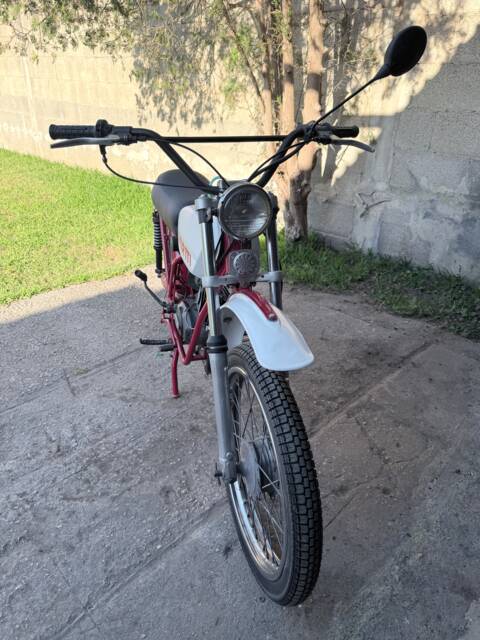
1970 | Cimatti Kaiman
Vendesi moto d’epoca

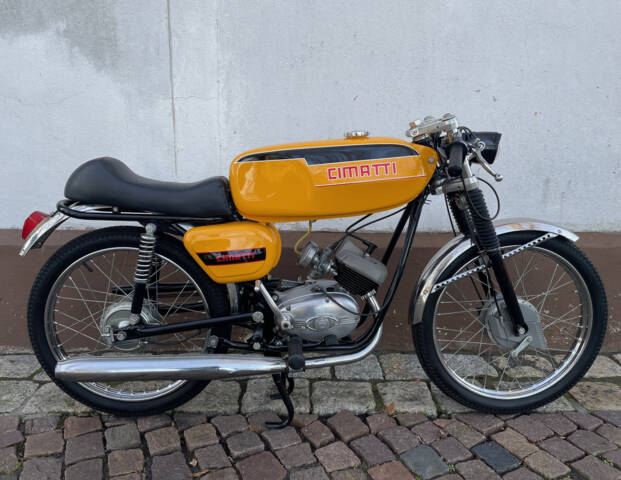
1972 | Cimatti Sport 50
Super Zustand, original restauriert.

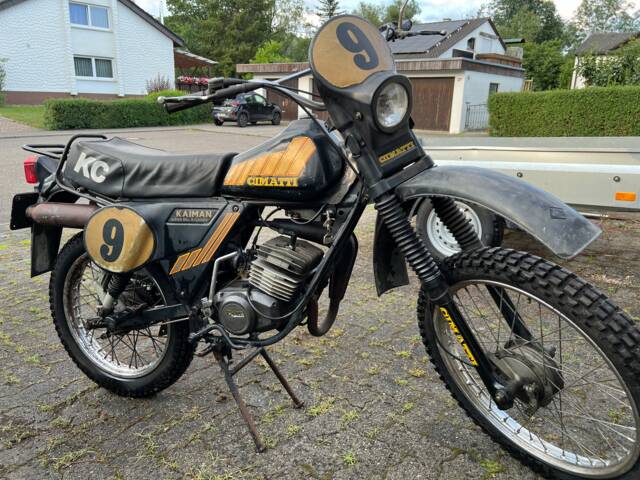
1981 | Cimatti Kaiman KC
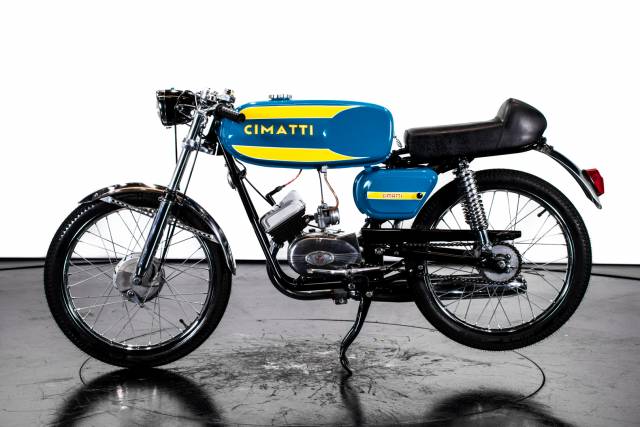
1969 | Cimatti S4
-
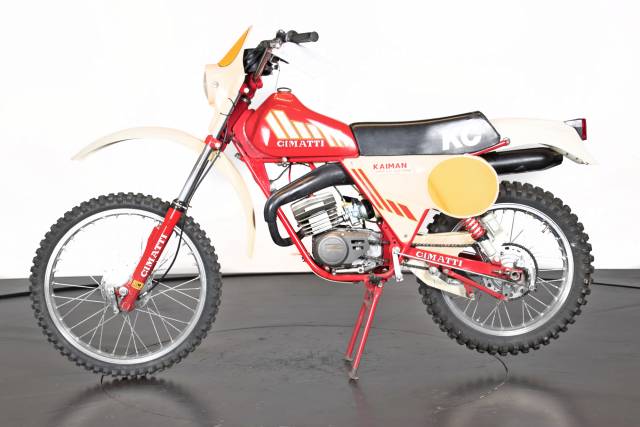
1982 | Cimatti Kaiman X21
-
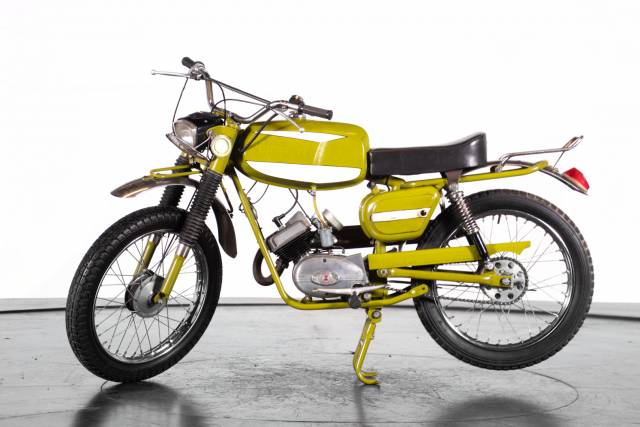
1968 | Cimatti S4
-
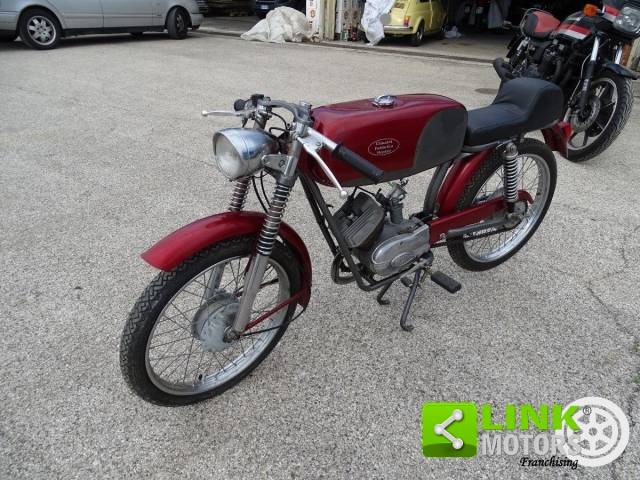
1957 | Cimatti Sport 50
Cimatti 50 1957
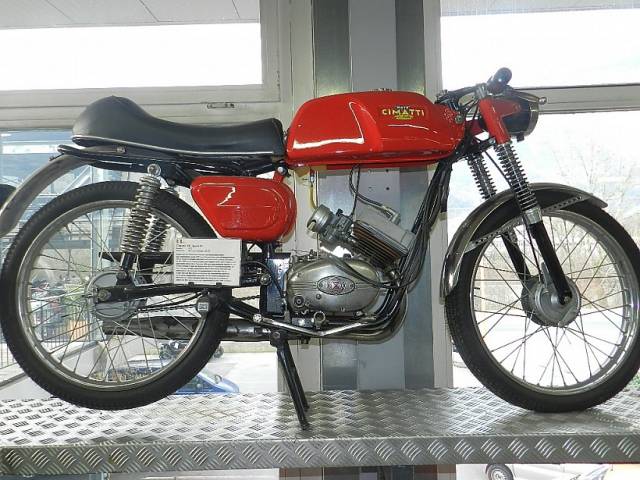
1972 | Cimatti Sport 50

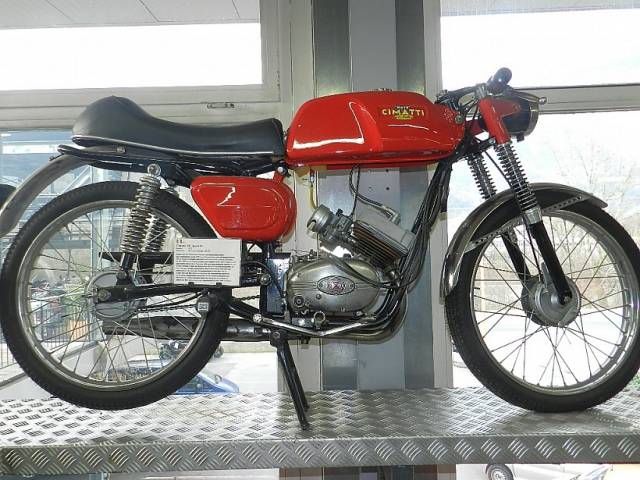
1972 | Cimatti Sport 50
Create search alert
Let yourself be notified as soon as a listing is published that matches your search filters.
History & Heritage
The story of Cimatti is inextricably linked with the competitive spirit of its founder, Marco Cimatti. Born in 1913 in Bologna, the heart of Italy's "Motor Valley," Cimatti first made a name for himself not with engines, but on two wheels of a different kind. He was a professional cyclist whose career reached its peak in 1932 at the Los Angeles Olympic Games, where he won a gold medal in the team pursuit. After further success in the Giro d'Italia, where he claimed four stage wins, Cimatti turned his attention to industry, bringing the same grit and determination to manufacturing that he had shown on the track.
In 1937, he established a bicycle factory in Bologna, eventually moving production to an old industrial mill in Pioppe di Salvaro. While the setting was rural and modest, the ambition behind the brand was anything but. For several years, the company focused on high-quality cycle frames, even sponsoring a professional cycling team between 1948 and 1950 to maintain its connection to the sport that made its founder famous.
The pivotal shift occurred between 1950 and 1951. Post-war Italy was desperate for affordable mobility. While Vespa and Lambretta were already conquering the cities, there was a growing market for lightweight, motorised bicycles and small-capacity motorcycles. Drawing on his expertise in frame building, Marco Cimatti introduced his first motorised mopeds. Unlike some competitors who tried to build everything in-house, Cimatti leaned into the local Bolognese ecosystem of specialized component makers. He sourced engines from Franco Morini and Minarelli, two legendary firms that provided the heartbeat for much of the Italian moped industry.
The 1950s saw the range expand rapidly. By 1956, models like the Sagitario were establishing Cimatti as a brand that cared about more than just utility. These were machines with "Bolognese" flair, lightweight, well-finished, and possessing a sporty character that appealed to the youth market. Cimatti wasn't just building transport; he was building machines for people who enjoyed the act of riding.
In the 1960s, the brand reached maturity. While many small Italian manufacturers vanished during the consolidation of the late fifties, Cimatti thrived. This was partly due to the arrival of Marco’s son, Enrico Cimatti, who brought a modern commercial vision to the firm. Under Enrico’s guidance, Cimatti became a global exporter, sending machines to France, Norway, Tunisia, and the United States. In the US, they were often rebranded as City-Bike or Town-Bike and sold through department stores, but in Europe, the Cimatti name stood on its own merits.
The brand's sporting credentials were cemented between 1966 and 1968, when Cimatti won the Italian 50cc Regularity Championship for three consecutive years. "Regularity" was the precursor to modern Enduro, demanding reliability, navigation, and consistent performance over tough terrain. These victories proved that Cimatti’s lightweight frames could handle more than just the cobbled streets of Bologna.
The 1970s were the golden era for the brand, particularly in the UK and French markets. Models like the Kaiman, Piper, and Mini Chic became icons of the teenage "Sixteener Special" scene. The Kaiman 50 in particular, with its various iterations (X16, X19, X21), became the flagship of the range, offering everything from a civilised city moped to a rugged "Kaiman Cross" for off-road enthusiasts. Between 1972 and 1975, the company even moved upmarket with the Ariete 125, a proper small-capacity motorcycle powered by a Demm engine, aimed at riders who had outgrown their 50cc mopeds but wanted to stay with the brand.
However, the 1980s brought insurmountable challenges. The "Japanese Invasion" of the European market saw brands like Honda, Yamaha, and Suzuki flooding the UK and Italy with mass-produced, highly reliable machines at prices that small artisanal factories couldn't match. By 1982, Cimatti was forced to use Garelli engines for some models as their traditional suppliers struggled. Production eventually ceased in 1984. Unlike many of its contemporaries, the Cimatti brand was never revived or sold to a larger conglomerate, leaving it as a pure, finite chapter in the history of Italian motorcycling.
Highlights & Features
Cimatti’s catalog was diverse, but several models stand out as the primary targets for collectors today. Each reflects a different facet of the Bolognese approach to lightweight engineering.
The Kaiman 50 series (1970s) is undoubtedly the most famous. In the UK, these machines were part of the "pedal-moped" boom. To comply with local laws for 16-year-olds, many were fitted with functional pedals, though they were effectively small motorcycles. The Kaiman was praised for its chassis quality. While some mopeds felt spindly, the Cimatti used a sturdy frame and proper telescopic forks. The Kaiman Cross version remains highly sought after; with its high-level exhaust, braced handlebars, and knobby tyres, it perfectly captured the "mini-enduro" craze of the mid-70s.
The Ariete 125 (1972-1975) represents the peak of Cimatti's technical ambition. It was a stylish, lightweight roadster that looked like a scaled-down version of the larger Italian superbikes of the era. It featured a distinctive long, slim fuel tank and a stepped seat that gave it a racing silhouette. Because production was relatively short and many were ridden hard by young enthusiasts, finding a surviving Ariete today, especially one that hasn't been modified, is a significant challenge for any collector.
For those interested in the more utilitarian side of the brand, the Piper and Mini Chic offer a different appeal. The Piper was a classic moped designed for the urban commute, featuring smaller wheels and a simple, open frame that made it easy to mount. The Mini Chic, meanwhile, was a masterpiece of compact design. It was essentially a "monkey bike" style moped, with small wheels and a chunky, stylish frame that made it popular for use as a "paddock bike" or for city-dwellers with limited storage space. Its aesthetic was remarkably clean and "chic," living up to its name.
The Sagitario (1956) is the "holy grail" for Cimatti historians. It represents the transition from the motorised bicycles of the early 50s to the proper mopeds of the 60s. With its classic "teardrop" tank and simple, elegant lines, it is a piece of industrial art. Finding one outside of an Italian museum or a very private collection in the Emilia-Romagna region is rare, but it remains the definitive expression of Marco Cimatti's original vision.
Technical Data
Cimatti was famous for its "component-built" approach, meaning specifications could vary depending on the specific engine supplier used for a production run. However, the following table provides a general overview of the most common configurations found in the UK and European markets.
*Note: Many 50cc models were restricted in various export markets to comply with local moped laws. UK "Sixteener" versions often had pedals fitted until the law changed in 1977. 50cc engines generally run on a petrol/oil premix at a ratio of 25:1 or 32:1 depending on the specific oil used.
Market Overview & Buying Tips
The UK market for Cimatti is a specialised niche within the broader "Italian Small Bike" scene. Unlike Ducati or Moto Guzzi, which have massive club infrastructures, Cimatti owners in Britain tend to be part of the vintage moped community, often rubbing shoulders with fans of Fantic, Gilera, and Garelli.
The Kaiman 50 is the most common entry point. In the current 2024-2025 market, a Kaiman in "barn find" condition, complete but non-running and needing a full restoration, can be found for between £400 and £750. For a running machine in decent original condition, expect to pay £1,000 to £1,500. If you are looking for a "concours" or professionally restored Kaiman Cross, prices can reach £2,000 to £2,800, reflecting the rarity and the cost of sourcing authentic parts from Italy.
The Ariete 125 is a significantly more expensive prospect. Because it falls into the category of a "learner-legal" classic (for those with the appropriate vintage license), it has cross-over appeal. A good, roadworthy Ariete 125 will typically fetch between £2,500 and £4,500 in the UK. Given their scarcity, these sales often happen privately through enthusiast networks or at specialist auctions like Bonhams or Car & Classic.
Buying Advice:
- Engine Verification: Because Cimatti used "off-the-shelf" engines, it is common to find machines with swapped powerplants. A Kaiman originally fitted with a Franco Morini engine might now have a Minarelli P6. In the moped world, this isn't necessarily a deal-breaker, in fact, the Minarelli P6 is often preferred for its tuning potential, but it should be reflected in the price if you are seeking absolute factory originality.
- The "Sixteener" Context: Check if the bike has its original pedals or if it has been "de-mopeded." Many UK owners removed the pedals in the 80s once they were no longer a legal requirement for their age group. For a purist restoration, finding the original pedal crank and chain assembly is vital but difficult.
- Frame Integrity: Cimatti frames were well-made but didn't always have the best rustproofing. Check the "backbone" of the frame and the area around the swingarm pivot for signs of internal corrosion.
- Documentation: In the UK, registering a vintage Italian moped that has been imported without papers can be a bureaucratic headache. Always prefer a bike with a V5C logbook. If it’s an "unregistered import," ensure you have the NOVA (Notification of Vehicle Arrivals) clearance, or you may face significant hurdles with the DVLA.
Riding Experience
Riding a Cimatti is an exercise in sensory nostalgia. It begins with the ritual of the "cold start." Most Cimattis lack electric starters; instead, you engage the "tickler" on the Dell'Orto carburettor, turn on the fuel tap, and give the small kickstart lever a sharp prod. When the engine catches, it emits that distinctive, high-pitched two-stroke "ring-ting-ting" that once defined every British high street.
The Kaiman 50 feels incredibly light. At around 50kg, you don't so much sit on it as you do wear it. The handling is sharp and flickable, a testament to Marco Cimatti’s bicycle-building roots. While the power is modest, don't expect to win any drag races against modern scooters. The way the power is delivered is engaging. You have to work the 4-speed gearbox, keeping the engine in its narrow power band to maintain momentum. It turns a trip to the local shops into a mini-Grand Prix.
The Ariete 125 offers a more substantial experience. It feels like a "real" motorcycle, with a more relaxed riding position and enough torque to keep up with modern B-road traffic. The engine vibration is noticeable, it's an old-school single-cylinder after all, but it adds to the character. The drum brakes, typical of the era, require a firm hand and a bit of foresight compared to modern discs, but they are perfectly adequate for the bike's weight and speed.
The most evocative part of the experience, however, is the smell. The blue haze of burning two-stroke oil is a hallmark of the Cimatti. For many British riders who grew up in the 70s, that scent is an instant time machine back to their first taste of freedom on the road.
Design & Accessories
Bolognese design in the mid-20th century was characterised by a "functional elegance." Cimatti avoided the gaudy, over-the-top chrome of some American-influenced brands, opting instead for clean lines and purposeful silhouettes.
The Kaiman design is defined by its geometric fuel tank. In the 1970s, Cimatti moved away from the rounded "teardrop" tanks of the 50s towards a more modern, angular look. The paint schemes were often simple but striking: vibrant Italian racing red, deep cobalt blue, or a crisp white, usually accented by the iconic Cimatti oval badge. These badges, often made of embossed metal or high-quality enamel, are a signature detail. Surviving badges are prized; reproduction stickers are available, but they lack the depth and character of the originals.
Accessories for Cimattis were relatively sparse, as the bikes were sold on their "ready-to-go" sporting looks. However, many owners in the UK fitted aftermarket items that are now considered "period correct." This includes expansion chamber exhausts for better performance, braced "tracker" handlebars for the Kaiman Cross, and leather tool rolls.
If you are restoring a Cimatti, the "finishing touches" are the hardest to find. The original Selle Dalla Valle seats, with their specific upholstery patterns, are almost impossible to source in good condition. Similarly, the plastic mudguards used on the later Kaiman models often became brittle and cracked over time. Most collectors now rely on 3D printing or specialist fabricators in Italy to replicate these parts.
Culture & Legacy
While Cimatti may not have the name recognition of Vespa or Lambretta, it occupies an important place in the British "Mod" and scooterist culture. While the hardcore Mods stuck to their large-frame Italian scooters, the younger brothers and the "weekend Mods" often gravitated towards Italian mopeds like the Cimatti. They offered a way into the "Continental Cool" lifestyle at a fraction of the price of a Vespa.
In the UK today, the Cimatti legacy lives on through events like the moped runs organised by the NACC (National Autocycle and Cyclemotor Club). Seeing a line of Kaimans and Pipers puffing their way through a British village is a reminder of a time when the "50cc class" was the most exciting thing on two wheels.
Cimatti also represents a lost era of artisanal manufacturing. Before the global supply chain standardised everything, a small factory in Bologna could build a world-class machine by hand-picking the best local components. That "assembled-with-soul" feeling is exactly what makes them so attractive to modern collectors who are tired of the anonymous nature of modern, plastic-clad motorcycles.
Summary
Cimatti is a brand for the connoisseur of the "small and beautiful." Whether it's the Olympic heritage of its founder or the giant-killing performance of its racing mopeds, the company punched far above its weight for three decades.
For the British collector, a Cimatti offers a unique combination of Italian style and mechanical simplicity. Because they use widely-available Minarelli and Morini engines, keeping one on the road is surprisingly achievable compared to other rare marques. You get the exclusivity of a boutique brand without the nightmare of sourcing internal engine components.
If you want a piece of the 1970s "Sixteener" era that stands out from the crowd of more common Puchs and Hondas, a Cimatti Kaiman is perhaps the ultimate choice. It is a machine that rewards the rider with sharp handling, a rev-happy engine, and the unmistakable flair of the Bolognese motor valley. Buying a Cimatti isn't just about owning a motorcycle; it's about preserving a high-revving, blue-smoking piece of Italian social history.