- Motorcycle
- Brough-Superior (0 offers)
Buy Brough Superior Motorcycles
Hand-built in Nottingham between 1919 and 1940, Brough Superior motorcycles earned the title "The Rolls-Royce of Motorcycles" through uncompromising quality and performance. Each machine was a bespoke masterpiece, tailored to the individual rider and tested to guarantee speeds that defined an era of British engineering excellence.
Search results
Currently, there are no matching listings for your search.
Create search alert
Let yourself be notified as soon as a listing is published that matches your search filters.
Create listing
Do you have a Brough-Superior that you want to sell? Then create a listing now.
Create listingBrough-Superior listing references from Classic Trader
Below you will find listings related to your search that are no longer available on Classic Trader. Use this information to gain insight into availability, value trends, and current pricing for a "Brough-Superior" to make a more informed purchasing decision.
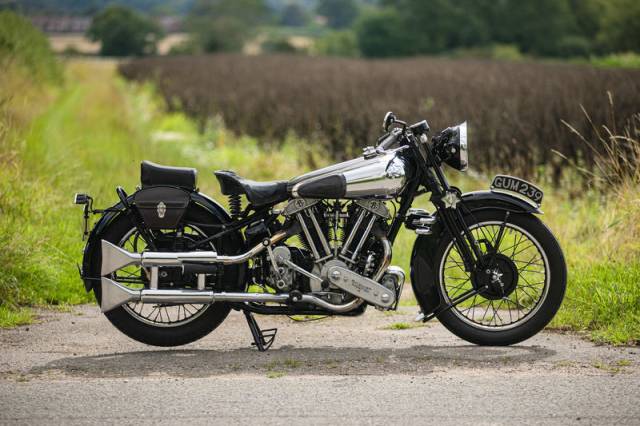
1939 | Brough-Superior SS 100
1938 Brough Superior SS100 990cc

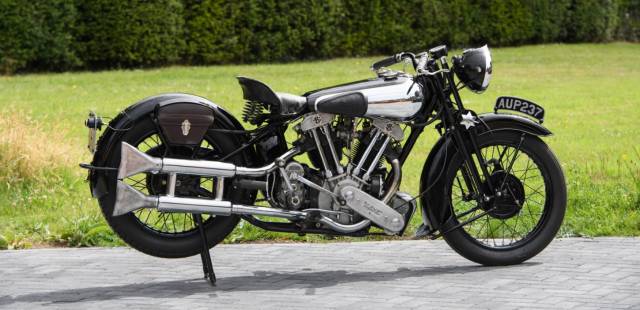
1936 | Brough-Superior SS 100
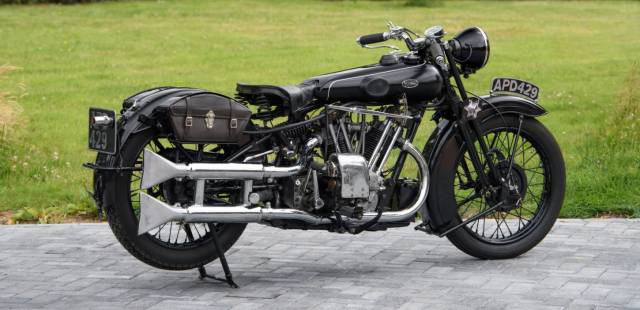
1933 | Brough-Superior 680
Alpine Black
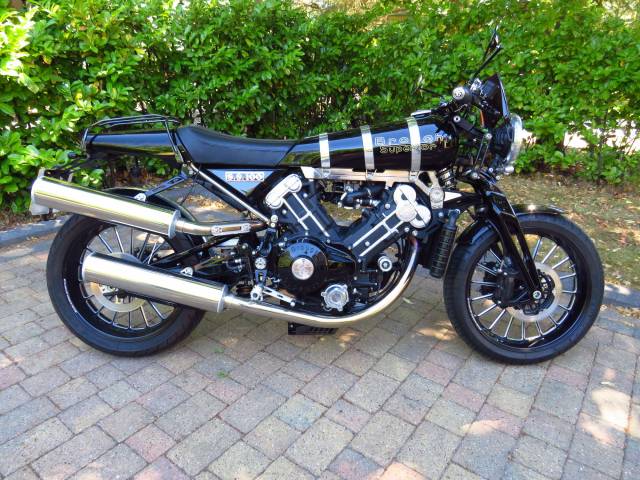
2020 | Brough-Superior SS 100
2020 Brough Superior SS100 Mk1 997cc
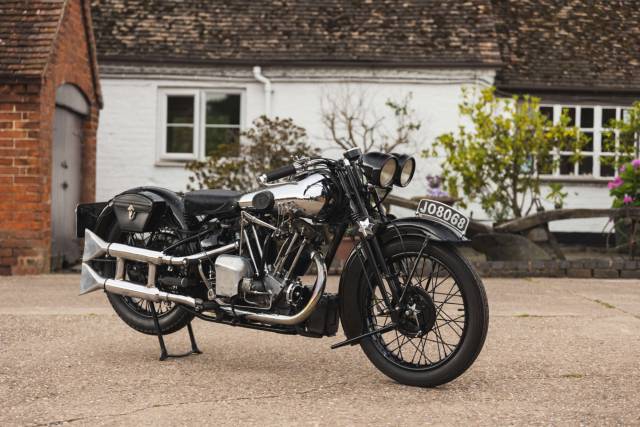
1933 | Brough-Superior 680
1933 Brough Superior 680 OHV 680cc
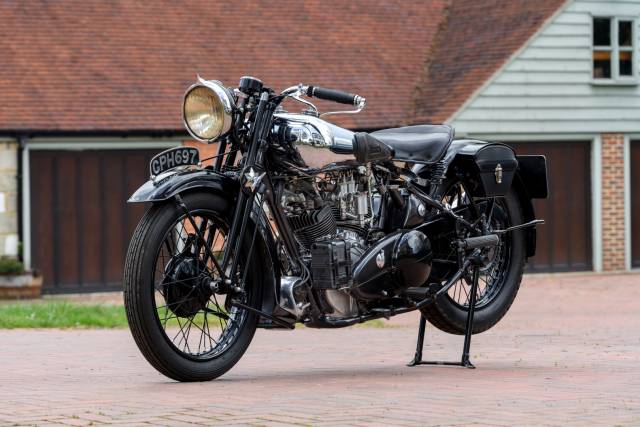
1938 | Brough-Superior SS 100
1938 BROUGH SUPERIOR SS100 – ‘BODMIN BROUGH’
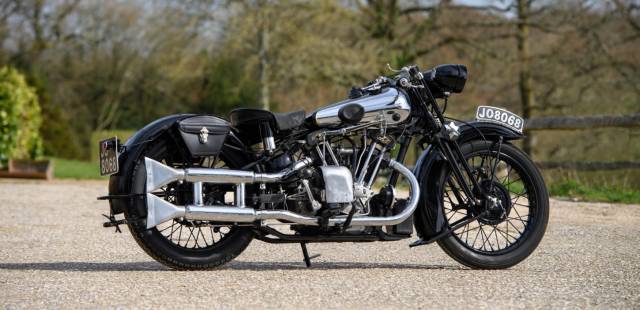
1933 | Brough-Superior 680
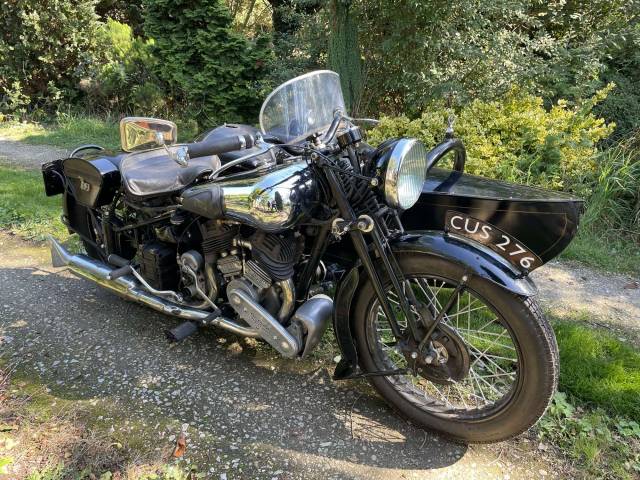
1939 | Brough-Superior SS 80
1939 Brough Superior SS80 with Alpine 'Petrol Tube' Sidecar
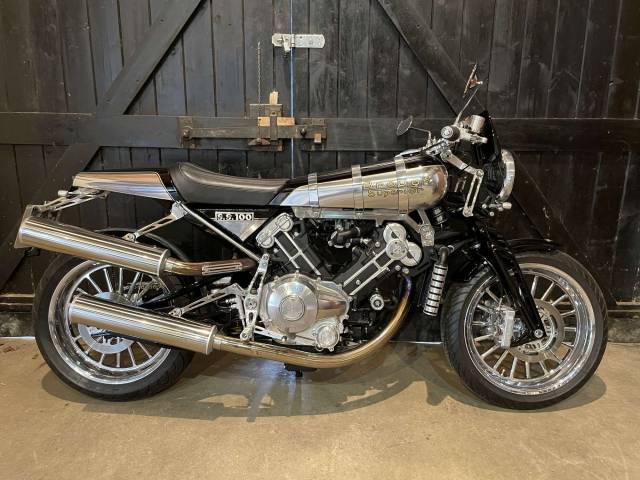
2018 | Brough-Superior SS 100
2018 Brough Superior SS100
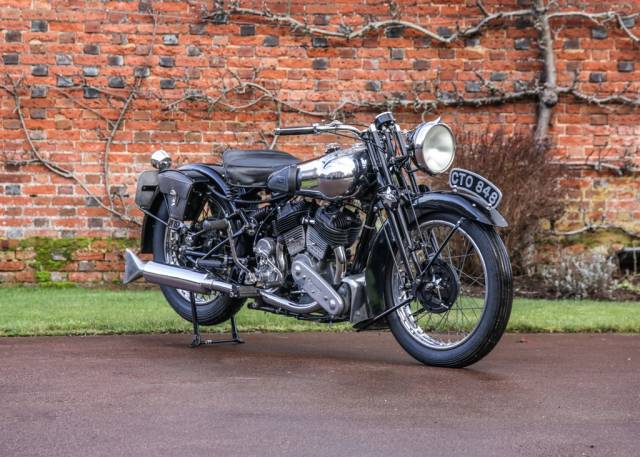
1936 | Brough-Superior SS 80
Brough Superior SS80
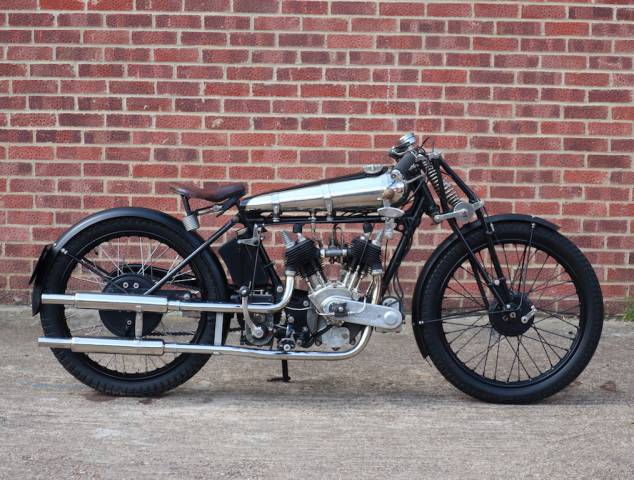
1932 | Brough-Superior 5-15
UK road registered, with UK V5C logbook
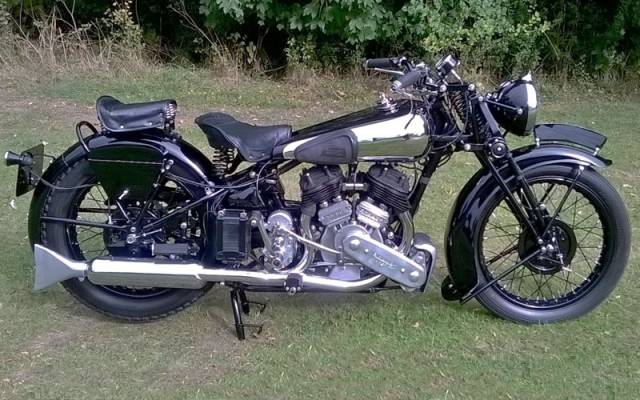
1939 | Brough-Superior SS 80
Auction Donington Park: 22.02.2017 Estimate: £ 75000 - 80000
Create search alert
Let yourself be notified as soon as a listing is published that matches your search filters.
Create listing
Do you have a Brough-Superior that you want to sell? Then create a listing now.
Create listingHistory & Heritage
The story of Brough Superior is inextricably linked to the ambition of one man: George Brough. Founded in 1919 on Haydn Road in Nottingham, the marque was born from a desire to surpass the achievements of George’s father, William E. Brough, who had been manufacturing motorcycles since 1902. George, an accomplished racer and engineer, sought to create the "superior" machine his name suggested—a motorcycle that combined the raw power of a racing thoroughbred with the refinement of a luxury motor car.
In the early 1920s, the Nottingham factory became a temple of British craftsmanship. Unlike mass-produced competitors, every Brough Superior was assembled by hand using the finest components available. The famous moniker, "The Rolls-Royce of Motorcycles," was first coined by H.D. Teague of The Motor Cycle magazine in 1923. Legend has it that George Brough, ever the marketing genius, invited a representative from Rolls-Royce to the factory. After witnessing the meticulous assembly process and the white-glove inspection of every part, the car manufacturer officially sanctioned the use of the title.
The production run was remarkably small, with only approximately 3,048 motorcycles leaving the works over 21 years. This scarcity, combined with the brand's association with the British establishment and high-society figures, cemented its status as a national icon. The factory survived until 1940, when the onset of World War II forced a shift to Merlin engine component production for the war effort. Although the original Nottingham era ended then, the legacy remains the high-water mark of the British "Golden Age" of motorcycling.
Highlights & Special Features
What set a Brough Superior apart from a Zenith, a Vincent-HRD, or a Norton was the level of bespoke customisation. George Brough famously stated that no two machines were exactly alike. Customers could specify everything from the engine tune and gearbox ratios to the shape of the handlebars, which were often bent to suit the rider's specific reach and posture.
The Guarantee of Speed
The most famous models, the SS80 and SS100, derived their names from a written guarantee. An SS80 (Super Sports 80) was guaranteed to have been timed at over 80 mph (129 km/h), while the SS100 was guaranteed to exceed 100 mph (161 km/h). In an era where most family cars struggled to reach 50 mph, these figures were staggering. George Brough personally tested many of the SS100s at Arkwright Street or on the open roads of Nottinghamshire to ensure they met the mark.
Engineering Innovation
Brough was a pioneer of features that are now taken for granted. He introduced the first prop stand (side stand), the first "roll-on" centre stand, and dual headlights. His "Castle" forks, based on a Harley-Davidson design but significantly refined, provided superior handling and stability at high speeds. The use of large-capacity V-twin engines from J.A. Prestwich (JAP) and later Matchless provided the "low-down" torque and effortless cruising capability that became the brand's hallmark.
The Lawrence Connection
No discussion of Brough Superior is complete without mentioning T.E. Lawrence, better known as Lawrence of Arabia. Lawrence owned seven Broughs and was awaiting delivery of his eighth when he tragically died following a crash on his seventh machine, "George VII" (registration GW 2275), in 1935. Lawrence’s passion for the marque was profound; he found in the Brough a mechanical equivalent to the speed and freedom he had experienced in the desert. His patronage remains the ultimate endorsement of the brand's allure.
Technical Data
The technical specifications of Brough Superiors evolved significantly between 1919 and 1940. While George Brough did not manufacture his own engines, he worked closely with suppliers to produce "Brough-spec" units that were often more powerful and better finished than standard versions.
Key Components:
- Engines: JAP (J.A. Prestwich) engines were the performance choice for most of the production run. The "K" series (KTOR, JTOR) engines are particularly prized by collectors. From 1935, Brough shifted towards Matchless engines for better reliability and smoother running.
- Forks: Early models used "Castle" forks. Later, Webb girder forks became standard, often fitted with friction dampers to manage the high-speed stability.
- Fuel Tanks: The iconic "saddle" tank, often finished in chrome with black or gold lining, is the most recognisable feature of a Brough.
Market Overview & Buying Tips
Brough Superior motorcycles are among the most valuable and sought-after collector vehicles in the world. Their rarity, combined with their legendary status, means that prices have remained exceptionally strong, even during broader market fluctuations.
UK Auction Results 2024-2025
The UK market remains the global epicentre for Brough Superior sales, with major houses like Bonhams and H&H Classics regularly featuring "star lots."
- SS100 (JAP-powered): These remain the "Holy Grail." In March 2025, a 1930 SS100 ridden by George Brough himself sold for £241,500 at the National Motorcycle Museum auction. Other high-quality JAP SS100s typically command between £200,000 and £350,000, depending on their racing history or connection to famous owners.
- SS100 (Matchless-powered): Often considered more "rideable" than the JAP versions, these fetch between £180,000 and £280,000. A well-documented 1937 model was recently estimated at £220,000-£250,000.
- SS80: The "entry-level" Brough (though hardly affordable) has seen steady growth. A 1939 SS80 Special sold for £52,900 in 2024. Pristine, early JAP-powered SS80s can reach £80,000-£110,000.
- SS680 & 11.50: These models offer a slightly different character. The 11.50, often used for sidecar work, typically sells for £60,000-£90,000, while the SS680 OHV can fetch £70,000-£120,000.
Provenance and Authenticity
When buying a Brough Superior, the "paper trail" is as important as the metal.
- The Brough Superior Club: This is the definitive authority. They hold the original factory build ledgers. Any serious buyer should verify the frame and engine numbers against these records to ensure the machine is not a "bitsa" (built from parts of various bikes).
- Matching Numbers: A "matching numbers" bike (where the engine and frame were paired at the factory) carries a significant premium.
- Originality vs. Restoration: While "concours" restorations are impressive, there is a growing market for "oily rag" survivors—bikes with original paint and patina that tell a story of decades of use.
- Logbooks: Look for the original "buff" logbook or early V5 documents that trace the ownership back to the pre-war era.
What to Look For on Inspection
- Engine Condition: JAP engines are robust but expensive to rebuild. Check for "smoke" on startup and listen for any heavy mechanical knocking.
- Gearbox: The Sturmey-Archer boxes are generally reliable, but parts for the early 3-speed versions can be difficult to source.
- Tank Integrity: The large petrol tanks are prone to internal corrosion if left empty. Check for "pinhole" leaks or signs of heavy filler under the paint.
- Frame Alignment: Given the speeds these bikes were capable of, many suffered accidents. Ensure the frame is straight and shows no signs of crude welding repairs.
Performance & Riding Experience
Riding a Brough Superior is an exercise in "mechanical empathy." It is a visceral, physical experience that requires the rider to be fully engaged with the machine.
The V-Twin Character
The heart of the experience is the massive V-twin engine. Whether it’s the "thumping" side-valve SS80 or the "screaming" overhead-valve SS100, the torque is immediate. A Brough doesn't need to be revved hard; it "wafts" along on a wave of low-end power. At 60 mph, the engine is barely stressed, turning over with a rhythmic, musical cadence that is unique to these large-capacity British twins.
Handling and Braking
For their time, Brough Superiors were exceptionally stable. The long wheelbase and low centre of gravity make them excellent "grand tourers." However, by modern standards, the girder forks and rigid rear ends (on many models) require respect. You don't "flick" a Brough into a corner; you guide it with deliberate, smooth inputs.
The brakes are perhaps the most significant reminder of the bike's age. Even the dual-front drum setups on later SS100s require a firm hand and plenty of foresight. Stopping a 200 kg machine from 100 mph in the 1930s was a feat of bravery; today, it requires a very different approach to traffic and road positioning.
The "Hands-On" Operation
Operating a pre-war Brough involves more than just a twist-grip. Many models feature manual ignition advance/retard levers, hand-change gear levers (on the side of the tank), and even manual oil pumps for the primary drive. Mastering these controls is part of the joy of ownership—it turns every ride into a performance.
Design & Aesthetics
George Brough understood that a luxury product must look the part. His eye for proportion and detail made the Brough Superior the most beautiful motorcycle of its day.
The Iconic Silhouette
The defining feature is the fuel tank. Long, sleek, and often finished in a combination of deep black enamel and brilliant chrome, it gives the bike a sense of speed even when standing still. The "Brough Superior" script, often hand-lined in gold leaf, is a mark of quality that has never been bettered.
Chrome and Polish
In an era where most motorcycles were utilitarian black, Brough used chrome liberally. From the exhaust pipes and silencers to the handlebars and headlight shells, the bikes were designed to dazzle. The "fishtail" silencers are a particular design highlight, providing a sculptural end to the exhaust system while producing the famous Brough "growl."
Ergonomics and Comfort
Despite their performance, these were designed as "gentleman's expresses." The seating position is generally upright, with wide, comfortable saddles (often by Lycett or Terry). The footpegs and controls were positioned to allow for long days in the saddle—a necessity for the long-distance trials and tours that George Brough and his customers enjoyed.
Racing, Records & Culture
The Brough Superior legend was forged on the racetracks and speed-trial beaches of Britain and Europe.
Pendine Sands and Brooklands
George Brough was a regular at Pendine Sands in Wales, where he pushed his machines to their limits on the hard-packed sand. He also competed at Brooklands, the world's first purpose-built motor racing circuit. The "Pendine" model was specifically named to commemorate his successes there.
World Records
In 1937, Eric Fernihough set a world motorcycle speed record of 169.79 mph (273.25 km/h) on a supercharged Brough Superior at Gyón, Hungary. This record stood as a testament to the ultimate potential of the Brough design. Other racers like Noel Pope also achieved legendary status at Brooklands, lapping the circuit at over 120 mph on his Brough.
British Racing Culture
The Brough was the choice of the "gentleman racer." It represented a uniquely British approach to speed—one that didn't sacrifice elegance for performance. This culture lives on today in events like the Goodwood Revival and the Banbury Run, where Brough Superiors are still campaigned with vigour by dedicated enthusiasts.
The Modern Revival
Since 2013, the Brough Superior name has been revived by a new company based in Toulouse, France (though with deep British roots). These modern machines, such as the new SS100 and the "Lawrence," use high-tech materials like titanium and carbon fibre while maintaining the aesthetic spirit of the Nottingham originals. While they are modern superbikes, they pay constant homage to the heritage of George Brough.
Summary
The Brough Superior is more than just a motorcycle; it is a piece of British industrial art. For the collector, it represents the pinnacle of pre-war engineering and the ultimate expression of the "Rolls-Royce" philosophy on two wheels.
Whether it is the historical significance of the T.E. Lawrence connection, the thrill of mastering a 100 mph V-twin, or simply the aesthetic pleasure of seeing a chrome tank glinting in the sun, the appeal of the Brough Superior is timeless. In the UK market, these machines remain the gold standard for investment and prestige.
Owning a Brough is a responsibility as much as a privilege. It is about preserving a legacy of Nottingham craftsmanship that defined an era. For those with the means and the passion, there is no finer way to experience the history of the open road.
Find your piece of British history—explore Brough Superior motorcycles on Classic Trader today.