- Motorcycle
- Ardie (0 offers)
Buy Ardie Motorcycle
Ardie turned light German engineering into something distinctive, with British JAP power and sharp pre-war sporting intent. For buyers in Great Britain, that mix makes Ardie one of the most intriguing names in the classic motorcycle market.
Search results
Currently, there are no matching listings for your search.
Create search alert
Let yourself be notified as soon as a listing is published that matches your search filters.
Ardie listing references from Classic Trader
Below you will find listings related to your search that are no longer available on Classic Trader. Use this information to gain insight into availability, value trends, and current pricing for a "Ardie" to make a more informed purchasing decision.
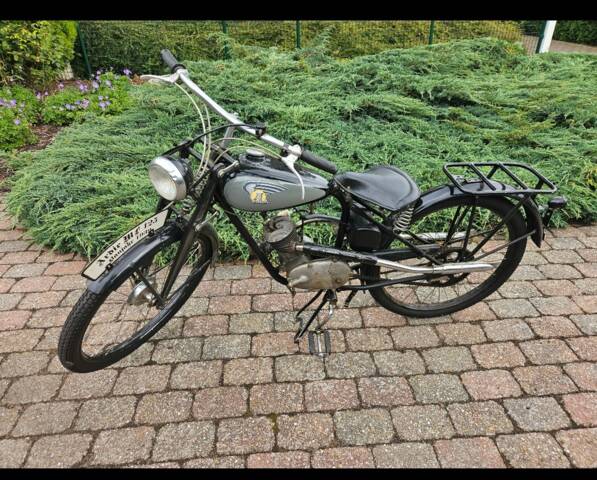
1939 | Ardie MF 125
RARITÄT! ARDIE Motorrad Bj. 1939 – fahrbereit mit Fahrzeugbrief

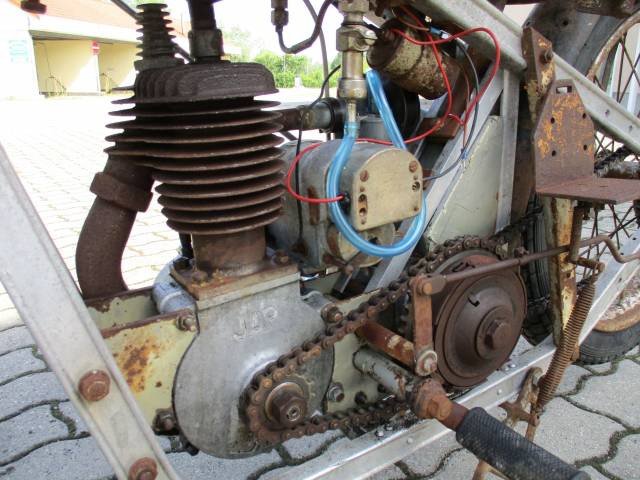
1932 | Ardie ZL 30
Ardie Silberfuchs ZL 20
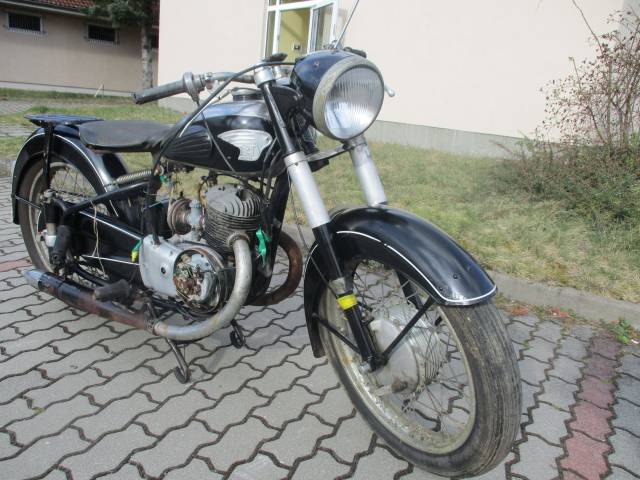
1953 | Ardie B 252
Ardie B 252
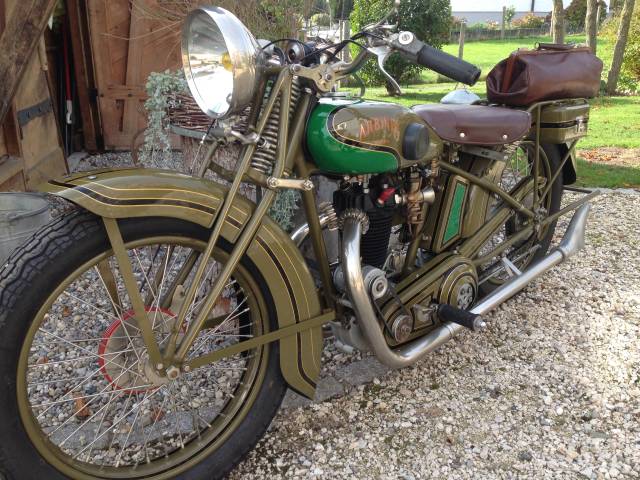
1936 | Ardie RZ 200
Arbinet

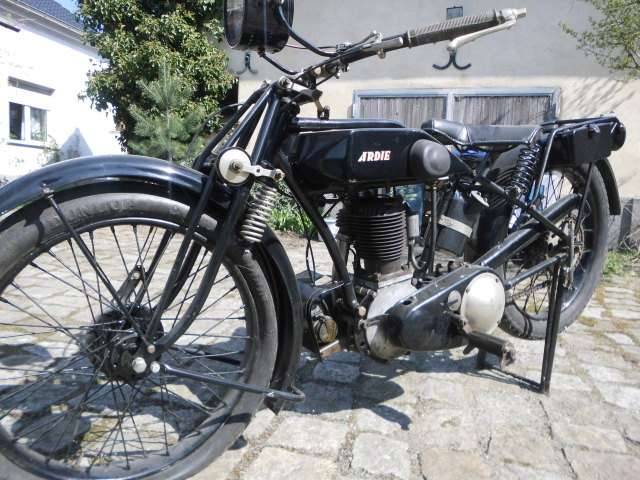
1928 | Ardie TM 500
Ardie TM 500
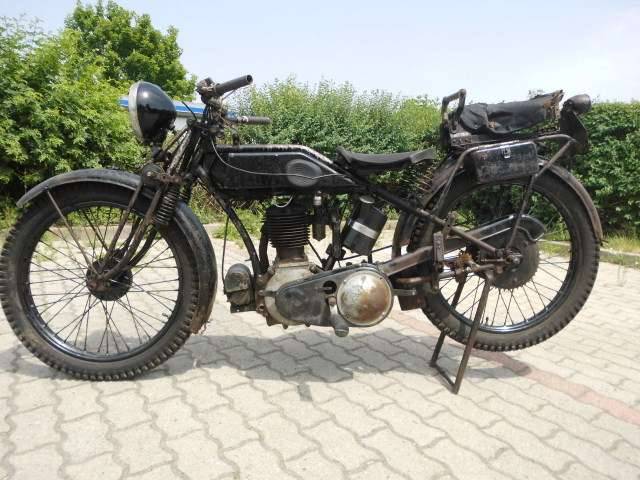
1929 | Ardie TM 500
Ardie TM 500
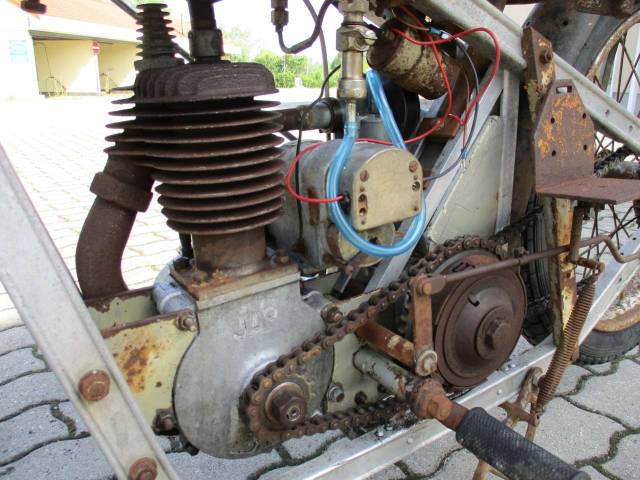
1932 | Ardie ZL 30
Ardie Silberfuchs ZL 20
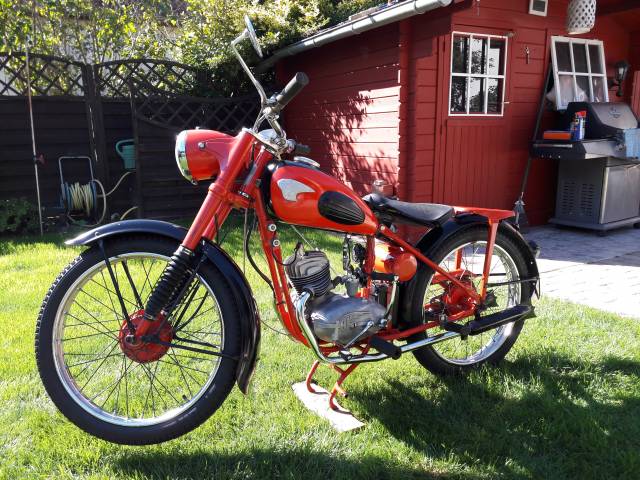
1951 | Ardie B 125
HU NEU, Fahrbereit, Alle Papiere vorhanden
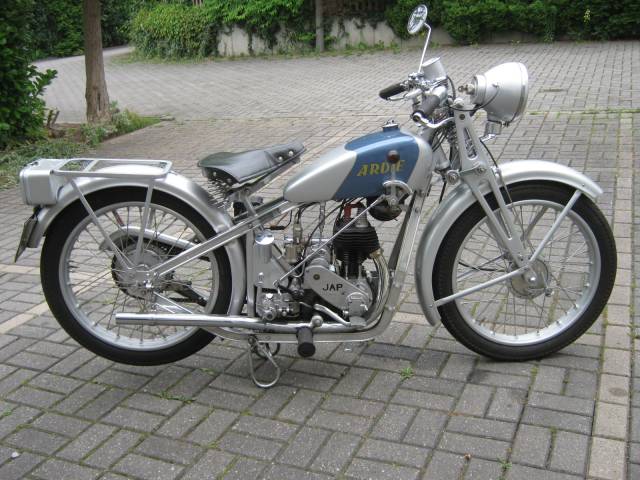
1930 | Ardie ZL 30
ARDIE ZL 30 SILBERFUCHS Rahmen aus Aluminium, JAP Motor
Create search alert
Let yourself be notified as soon as a listing is published that matches your search filters.
History & Heritage
Ardie is one of those classic motorcycle names that rewards a close look. Founded in Nürnberg in 1919 by Arno Dietrich, the marque began with compact two-stroke singles before rapidly evolving into a more ambitious maker of sporting and prestige machines. For collectors in Great Britain, Ardie has an added layer of interest: the company leaned heavily on British suppliers at the point when many German makers were still defining their identity, and that gives the brand a familiar engineering thread for UK-based enthusiasts.
The earliest Ardie motorcycles were simple and practical, aimed at post-war mobility rather than glamour. That changed in the mid-1920s when the company turned to J.A.P. engines from London-based J. A. Prestwich, a firm rooted in Tottenham and North London engineering culture. JAP power units were widely respected for brisk performance and racing pedigree, and Ardie’s decision to use them helped lift the brand into a more serious sporting class. In the classic market today, that British connection matters: it links an Ardie to the wider history of interwar motorcycle production in Britain, where JAP engines also powered many well-known marques and specialist racers.
Ardie’s pre-war years are best remembered for the elegant Silber models. The TM 500, the Silberfuchs, and above all the SS 31 Silberpfeil defined the company’s reputation in the early 1930s. These machines were not mass-market commuters; they were finely judged, often lightly built, and aimed at buyers who wanted something more distinctive than a standard utility bike. The use of Duralumin frames on certain models gave Ardie a technical and visual identity that still stands out at shows and auctions.
The 1930s also brought a visible sporting presence. Ardie machines achieved success in international events such as the Austria TT and Hungary TT, and the company became associated with lightweight, quick-reacting machines that rewarded an assertive rider. Yet the political and economic realities of the decade reshaped the marque. Import restrictions and changing industrial conditions gradually pushed Ardie away from British engines, and by the later 1930s the firm moved through a succession of different suppliers before developing more of its own post-war identity.
After 1945, Ardie rebuilt with a new generation of two-strokes that were more suited to everyday transport in a recovering Germany. Models such as the B 252 and BZ 350 may not have the same glamour as the pre-war Silbers, but they are important to the brand story because they show Ardie adapting to a more utilitarian era while keeping a strong engineering character. For buyers today, that split defines the market: pre-war Ardies are rare, elegant and highly collectible; post-war machines are more approachable and often easier to use.
Highlights & Features
Ardie’s appeal lies in contrast. The marque can move from a practical small-displacement two-stroke to a polished sporting single with British heart and German chassis detail, and that variety is exactly why collectors keep scanning listings for the next example.
The first highlight is the brand’s British power unit story. JAP engines were designed and built in London, and Ardie used them at a time when a good engine supplier could transform a company’s reputation. A JAP-powered Ardie often feels more international than many of its German contemporaries. The engine note, the throttle response and the parts logic all connect it to the wider British motorcycle world.
The second highlight is the Silberpfeil itself. With its Duralumin frame, sporting seating position and refined presentation, it sits near the top of Ardie’s pre-war hierarchy. The model is not just attractive; it is historically important. It represents the moment when Ardie was at its most ambitious, combining light construction, premium components and real competition intent. A good one has presence even among far more famous brands.
Third comes the Silberfuchs, the lighter sibling that shows Ardie could think beyond one flagship model. It offers much of the same design language in a smaller, more accessible package. For collectors who admire early 1930s engineering but want something less imposing than the 500cc top model, the Silberfuchs is especially appealing.
Fourth is the B 252, which matters because it broadens the ownership story. This is the sort of machine that can still be ridden with reasonable confidence, maintained with more routine workshop knowledge, and enjoyed without treating every outing as a museum event. It is one of the better entry points into the Ardie world.
Finally, the BZ 350 closes the line with a more modern, post-war feel. It reflects Ardie’s late development phase and gives collectors a different kind of satisfaction: less pre-war delicacy, more usable engineering.
For British buyers, another feature stands out: parts familiarity. Because Ardie used JAP engines and Burman gearboxes on key pre-war models, a UK-based enthusiast is not dealing with a completely alien machine. Specialist support for British motorcycle components still exists, and while an Ardie is never a casual purchase, it is often more approachable than a rare machine with totally orphaned mechanical systems.
Technical Data
Typical pre-war features: Burman gearboxes, chain final drive, rigid rear end, drum brakes, hand controls on earlier machines, and lightweight frame construction on select models.
Typical post-war features: more conventional road equipment, telescopic front suspension on later machines, improved usability, and simpler two-stroke maintenance.
Market Overview & Buying Tips
Ardie is a niche market, even by classic motorcycle standards. Good examples surface irregularly, and the best bikes are usually bought by collectors who already know what they are looking at. The result is a market where originality, history and completeness matter more than simple cosmetic shine.
Price levels in GBP
Pre-war Ardies sit at the top of the range. A restored 1931 Silberpfeil sold at Bonhams for £20,700 in 2008, and that figure remains a useful benchmark for a strong, documented example. Today, a serious pre-war Ardie in presentable, complete condition can easily sit in the £15,000–£40,000+ bracket, with especially rare or highly original machines going beyond that when collectors compete.
Smaller pre-war models such as the Silberfuchs or TM 500 often trade below the flagship machine, but not by much if they are complete and correctly restored. A rough project may start around £3,000–£7,000, while a good, usable example can move into £10,000–£20,000 territory depending on originality, paperwork and engine condition.
Post-war Ardies are generally more affordable. A decent B 252 or BD 176 may appear from roughly £2,500–£6,000, with restored or especially tidy examples climbing higher. The BZ 350 can command more because it is the final and most technically interesting post-war machine, but it remains far below the serious pre-war Silbers.
What UK buyers should inspect
Engine identity and completeness: On JAP-powered machines, check that the engine number, casting details and specification make sense together. A mismatched or heavily altered motor can reduce value sharply.
Burman gearbox condition: Many Ardie buyers overlook the gearbox until the test ride. On a Burman unit, examine shift quality, endfloat, oil leaks and the feel of the selector mechanism. Fortunately, Burman parts and knowledge are still available in the British classic motorcycle scene, and that helps keep repairs realistic.
Frame originality: Duralumin frames are a major selling point, but they also need careful inspection. Look for repair marks, cracking, corrosion around joints and evidence of incorrect polishing or poor welding.
British parts support: This is a real advantage. JAP engines and Burman gearboxes are not modern components, but they are not invisible either. The UK has a long tail of specialists, clubs and spares dealers dealing with these systems, which makes the ownership prospect less daunting than it first appears.
Paperwork and provenance: For a rare make like Ardie, a clear trail of ownership, old photos, period registration and restoration records can add real value. Provenance matters because there are so few comparable bikes.
Buying advice by type
If you want the purest Ardie experience, focus on the pre-war sporting singles. If you want something to ride more often, the post-war two-strokes make more practical sense. Either way, buy the most complete example you can afford. Missing trim, hard-to-find controls and incorrect period details are expensive to source.
Riding Experience
Riding an Ardie is about feel as much as speed. These motorcycles were built in an age when road surfaces were rougher, suspension was simpler and the rider was expected to work. That is part of their charm. You do not merely sit on an Ardie; you manage it.
The pre-war JAP-engined models have a lively, mechanical character that still feels rewarding today. The larger singles deliver a deep, determined pulse through the frame, and the Burman gearbox adds a deliberate rhythm to every ride. There is a satisfying honesty to the controls: the machine asks for patience, timing and a bit of respect. If you are used to modern motorcycle manners, an Ardie feels more alive, more physical and more engaging.
The Silberpfeil is the most complete expression of that experience. Its lighter construction and stronger engine give it real urgency for the period. It is not a relaxed cruiser. It is a quick, responsive pre-war sports machine that wants smooth roads and an attentive rider. On a good road, it feels distinctive rather than simply old.
The smaller Silberfuchs brings a different mood. It is lighter in scale and less intimidating, which can make it feel more nimble at modest speeds. For many collectors, that smaller bike gives the best balance of usability and rarity.
The post-war machines are more forgiving. The B 252 and BZ 350 feel like products of a more practical era, with easier manners and less ritual. They are not soulless by any means. In fact, their two-stroke delivery gives them a crisp, eager personality, especially at urban and touring speeds. They are better suited to real use, and that matters if you want to enjoy a bike rather than preserve it in a heated garage.
Design & Style
Ardie design evolved in clear stages, and each phase tells you something about the company’s ambitions.
The earliest machines were straightforward and functional, with little unnecessary decoration. That simplicity was not a weakness; it was part of the brand’s practical beginnings. As the 1920s gave way to the 1930s, Ardie’s style became much more purposeful. Tanks grew more elegant, lines became cleaner and the whole presentation moved towards a sporting upper-class image.
The Silber models are the visual high point. The combination of metal-finished frame parts, compact proportions and a confident stance gives them a distinctly refined look. They are not overstyled. They are carefully judged. That is why they still stand out in a crowd of more famous pre-war motorcycles.
Collectors often notice the contrast between the premium pre-war machines and the post-war utilitarian bikes. After the war, Ardie stripped away much of the glamour and focused on honest transport. The result is a black-and-chrome or plain painted visual language that is far less theatrical but arguably more representative of the times.
For many buyers, that contrast is part of the attraction. A pre-war Ardie looks like a machine from the age of dress caps and long gloves. A post-war Ardie looks like something built for getting to work, carrying luggage and surviving rough roads. Both are authentic, just in different ways.
Racing Heritage
Ardie’s sporting reputation is stronger than many casual observers expect. The company was not just building stylish road bikes; it was using competition to prove that its engineering choices made sense.
The early international results matter because they show that Ardie’s JAP-powered machines were capable of more than local success. The brand’s presence in events such as the Austria TT and Hungary TT helped establish its reputation beyond Germany. This was a time when racing success had direct marketing value, and Ardie used it well.
The importance of JAP engines should not be underestimated here. J. A. Prestwich had already become a respected name in British motorcycle circles, with roots in Tottenham, London, and its engines were known for performance, tunability and competition pedigree. By choosing JAP power, Ardie plugged itself into a transnational sporting culture that made sense to serious riders on both sides of the Channel.
Ardie also benefited from the broader British engineering ecosystem around those engines. In period, and still today, Britain has been a natural home for knowledge about JAP units and Burman gearboxes. That is useful for modern collectors because it means Ardie is not only historically interesting but also mechanically legible. Parts, manuals and specialist knowledge are still circulating through the British classic scene.
That matters especially when you look at market behaviour. The most prized Ardies are those with visible competition or museum-grade provenance, but even regular road bikes gain prestige from the brand’s sporting image. A machine that once carried a JAP engine and Burman transmission with racing credibility is much easier to sell to a collector than an otherwise obscure pre-war motorcycle.
Bonhams’ £20,700 result for the 1931 Silberpfeil remains a useful reference point because it confirms what the market has long said: the best Ardies are serious collector machines, not curios. They sit in the category of motorcycles that enthusiasts pursue because they are rare, elegant, mechanically interesting and historically layered.
Summary
Ardie is a name for buyers who want rarity with substance. The marque offers pre-war sporting engineering, a strong British connection through JAP engines and Burman gearboxes, and a post-war chapter that is easier to own and maintain.
If you want the best-known collector choice, look for the Silberpfeil. If you want a smaller pre-war Ardie with real character, the Silberfuchs is compelling. If you want a more usable classic, the B 252 and BZ 350 deserve attention.
For Great Britain buyers, the mix of British mechanical heritage and specialist support makes Ardie especially interesting. Find a complete example, check the paperwork carefully, and buy the best machine you can afford. The right Ardie is rare, distinctive and deeply rewarding.