- Motorcycle
- Agrati (0 offers)
Buy Agrati Motorcycles
Agrati built a short but distinctive chapter in Italian scooter history, with Capri models that carried the brand from Como into the heart of the 1960s riding scene. Find original Agrati and Agrati-Garelli scooters on Classic Trader and discover now which Capri fits your garage.
Search results
Currently, there are no matching listings for your search.
Create search alert
Let yourself be notified as soon as a listing is published that matches your search filters.
Agrati listing references from Classic Trader
Below you will find listings related to your search that are no longer available on Classic Trader. Use this information to gain insight into availability, value trends, and current pricing for a "Agrati" to make a more informed purchasing decision.
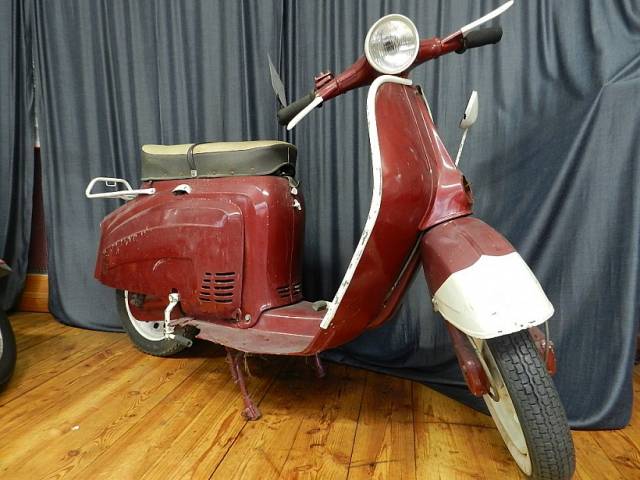
1968 | Agrati Capri 50

Create search alert
Let yourself be notified as soon as a listing is published that matches your search filters.
History
Agrati is one of those names that rewards the diligent collector. It was never the biggest player in the Italian scooter boom, yet it left behind a family of machines with a clear identity, a strong link to Garelli engineering and a particularly interesting British story. The core Agrati period ran from 1958 to 1965, after which the machines became Agrati-Garelli until around 1970. For buyers today, that timeline matters: it separates the earliest pure Agrati scooters from the later badge-sharing machines that are often easier to find but less sharply defined in brand terms.
The company’s roots go back much further than the Capri. Ditta A. Agrati & Figli was based in Monticello near Como and had been involved in electric motors since around 1900. After the Second World War the Agrati family acquired Garelli Motorcycles, a move that changed the direction of the business completely. Garelli itself had been founded in 1919 by Adalberto Garelli, a gifted engineer whose name had already become respected in racing circles thanks to his famous 350 cc split-single engine. Garelli machines were ridden by great Italian talents such as Tazio Nuvolari and Achille Varzi, which gave the brand a sporting aura long before the post-war scooter years.
Agrati’s best-known chapter began in 1958 with the launch of the Capri scooter. The first Capri used a 70 cc Garelli two-stroke engine, and the design was aimed squarely at the growing European demand for affordable personal transport. Italy was producing stylish small-capacity machines in huge numbers, and Agrati wanted a share of that market. The Capri line expanded quickly: Capri 50, Capri 50 S, Capri 70, Capri 80, Capri 100, Capri 125 and the larger Super Capri 150 followed as the range matured.
The decisive corporate change came in 1961, when Agrati formally merged into Agrati-Garelli. The merger brought financial stability and widened the industrial base, but it also marked the beginning of the end for the pure Agrati badge. By 1965 the Agrati name was dropped altogether and the scooters were sold simply as Garelli. In one sense that ended the brand; in another, it allowed the Capri to continue for several more years, with production of some versions extending to about 1970.
For collectors, the Agrati story is attractive precisely because it sits between well-known scooter giants and the more specialist Italian names. Agrati never reached the mass-market visibility of Vespa or Lambretta, yet it produced machines with enough individuality to stand out today. That rarity is part of the appeal. It is also why original documentation, chassis identification and model correctness matter so much when evaluating a listing.
Agrati’s later influence went beyond scooters as well. In 1968, Mario Agrati, a family heir, co-founded Fantic Motor with Henry Keppel-Hesselink. That connection links the Agrati name not only to the scooter era but also to the wider Italian off-road and competition scene.
Highlights
The Agrati Capri family is interesting because it was not just a single scooter with minor engine changes. It was a genuine model range, and each version speaks to a different part of the market. For make-level buyers, that variety is useful: it means you can choose between low-capacity city scooters, export-spec variants and the more collectible larger-capacity machines.
The defining models are easy to list, but each has its own character:
- Capri 50 / Capri 50 S – the most common entry point, built in relatively long runs and often the first model that newer collectors encounter.
- Capri 70 – the original launch specification and historically important, because it shows the Capri before the range broadened.
- Capri 80 – the most important model for the UK market, especially in Minarelli-powered export form.
- Capri 100 and Capri 125 – less common and more desirable as road-going classics.
- Super Capri 150 – the top-end member of the family and one of the rarer Agrati-Garelli scooters.
The Capri 80 deserves special attention in Britain. Many were imported specifically for the UK market in the early 1960s, and the Minarelli-powered version became a serious competitor in the scooter scene alongside Lambretta and Vespa. That matters because the British market was not only a sales destination; it was a cultural battleground. During the Mod era, scooters were fashion, identity and transport all at once. A Capri 80 with UK history can therefore be more than a practical classic: it can be a period object tied to a very specific social moment.
The Capri 80 was offered in three specifications, including the desirable Model D Dual Seat. That dual-seat layout makes these machines especially appealing for riders who want something a little more usable than a solo-seat show piece. In market terms, UK-supplied Capri 80s with original paperwork, known registration history and correct trim are among the most interesting Agrati scooters to buy.
Another strength of the Capri line is that it gives collectors a broad spectrum of originality. Some machines survive as honest, unrestored scooters with patina and paperwork. Others have been rebuilt around imported components or later engine swaps. A careful buyer can use this variety to decide what kind of ownership experience they want: a restoration project, a rolling museum piece or a usable summer scooter with real period charm.
For British collectors, there is also a strong documentation angle. A scooter with a traceable DVLA registration history, an old log book or surviving V5C/V5-style paperwork can be significantly more desirable than a machine with no identity trail. On older scooters, especially imported ones, paper history often confirms the story of the bike better than cosmetics ever can.
Technical Data
The table below focuses on the Capri 50 in its 1966–1970 form, which is a useful reference point for the later Agrati-Garelli period. Export specifications could differ, especially in power output and market equipment.
For collectors, those figures tell an important story. The Capri 50 was built as a light, manageable scooter rather than a fast one. Its hand-shift four-speed gearbox is part of the experience and also part of the challenge. Compared with twist-and-go scooters, the Capri demands more involvement from the rider, which is exactly why some enthusiasts love it.
The Capri 80 and larger-capacity versions used different engine solutions in export markets, with Minarelli and Sachs appearing on some bikes. That export flexibility helped Agrati sell beyond Italy, and it is one reason why the UK saw so many Capri 80s. If you are checking a British-registered scooter, engine type should be verified carefully; a correct UK-market Minarelli unit can matter as much as the frame number.
Market Overview & Buying Tips
Agrati is a niche collector market, and that is good news for buyers who enjoy research. Prices are still accessible compared with more famous Italian scooters, but the best examples are becoming harder to find. The strongest advice is simple: buy the most original, best-documented scooter you can afford, because parts sourcing and bodywork restoration can quickly outweigh a cheap purchase price.
Current UK market ranges are typically around:
There are also useful real-world references. A 1962 Capri 80 with Minarelli engine, Dual Seat, 8,343 miles and unrestored condition has been estimated at £1,500–2,500. A 1961 Capri 80 with UK registration, low mileage and original RF 60 registration book sold through Golding Young & Mawer. That kind of result suggests that complete British provenance can lift a Capri well above a plain import.
When buying in Britain, the paper trail can be as valuable as the paint. Look for:
- DVLA registration continuity
- Old log books, V5C or earlier registration records
- Correct frame and engine numbers
- Evidence of UK import period, especially for Capri 80s
- Original dealer plates, tags or period tax discs if they survive
Because many Capri 80s were brought into Britain specifically for the early-1960s market, they often appear with more UK history than other Italian scooters of the same era. That can be a major plus. If you want a scooter with actual British period relevance, a Capri 80 can make more sense than a more generic continental import.
Condition matters enormously. A tidy scooter may look expensive until you price body repairs, missing trim, a tired gearbox or seized electrics. Rust, poor repairs and engine mismatches are the usual deal-breakers. On the other hand, a complete machine with original parts, even if cosmetically tired, can be a far better purchase than a shiny rebuild with no history.
For ownership in the UK, the practical side is also attractive. Many pre-1960 machines can fall outside standard MOT testing rules, while newer classics may still benefit from simplified historic use depending on their registration status and age. Agrati scooters also fit neatly into the classic scooter network: clubs, online groups and VMCC-connected communities can be invaluable when you need advice, pattern parts or restoration contacts.
Buying advice by model:
- Capri 50: best for collectors who want the most accessible entry point and are happy with modest performance.
- Capri 80: the sweet spot for British interest, usability and rarity.
- Capri 100 / 125: better if you want a rarer machine with stronger road presence.
- Super Capri 150: buy on condition and originality; rarity is high, but parts can be harder.
If you are restoring one, budget sensibly. A cheap scooter missing trim, badges, wheels or engine internals can absorb money quickly. Many buyers underestimate the cost of correct decals, seat trim, cables, chromed fittings and body finishing. For an Agrati, completeness is often more important than shine.
Performance
Riding an Agrati is not about speed numbers. It is about the rhythm of a small, mechanical Italian scooter that asks the rider to take part. The start-up routine, the smell of two-stroke oil and the clatter of the hand-shift gearbox all create a direct connection between rider and machine.
The Capri 50 feels light and easy at low speeds, but it is not a modern traffic machine. At around 22 mph in domestic trim, it is happiest on short urban hops, back roads and leisure rides. What it lacks in pace, it makes up for in character. The low weight of 80 kg helps it feel manageable, especially in town.
Export-spec Capri 50s with higher output are more flexible, and the larger-capacity Capri models naturally feel more relaxed. The Capri 80 in Minarelli form is the one most likely to satisfy British riders who want just enough performance to keep up with period traffic. It still feels like a scooter of the early 1960s, but it has a little more road presence and a bit less of the underpowered mood that can affect tiny-capacity classics.
The four-speed hand shift defines the riding experience. It rewards deliberate inputs and punishes laziness. That makes an Agrati more involving than many riders expect. You are not merely sitting on a retro object; you are working with it. On the right road, that interaction is highly satisfying.
On British roads, the Capri’s modest footprint is part of the charm. Narrow lanes, seaside promenades and gentle country routes suit it beautifully. The suspension is basic but honest, and the drum brakes ask for anticipation rather than panic. In traffic, the scooter feels period-correct and unhurried, which is exactly the appeal for many collectors.
Design
Agrati design sits in an interesting space between utility and elegance. The Capri is not as visually dramatic as a classic Vespa, but it has a clean, coherent shape and a certain Lombard restraint that many collectors appreciate more as they age. The bodywork is practical, but it is not plain.
The scooter’s lines are soft and integrated. The front shield flows neatly into the side panels, the floor is simple and usable, and the rear section is tidy rather than theatrical. There is a sense that every surface had to justify itself. That makes the Capri appealing to enthusiasts who like honest industrial design rather than styling for its own sake.
As the range developed, the Capri gained more visual variety. Later machines often used more expressive colour combinations and trim details, and surviving original paint can be a major selling point. The Capri 80 Dual Seat is especially attractive because the seat changes the whole silhouette and makes the scooter look more complete as a road-going machine.
The design also reflects its intended audience. Agrati wanted a scooter that could be used every day, but one that still carried a bit of Italian style. That balance is why the Capri works so well today: it is distinctive without being fussy. For collectors, that means restoration should be sympathetic. Over-restoration can easily erase the very qualities that make the scooter valuable.
On a good example, details matter:
- correct badging and model lettering
- period-correct seat pattern
- original wheel type and split rims
- proper dashboard and switchgear
- authentic paint shades and trim
The more original the scooter, the stronger the overall impression. A Capri that still wears its period character is far more compelling than one that has been polished into anonymity.
Other
Agrati’s place in scooter culture is broader than its production numbers suggest. In 1960s Britain, scooters were not only transport; they were part of the Mod identity. Lambretta and Vespa may have dominated the headlines, but Capri models joined that same street scene. That makes the brand interesting for UK buyers who want something slightly off the beaten path while still staying within the classic scooter world.
The British market also shaped how the scooter survives today. Export versions, especially the Capri 80, were delivered to suit local demand and were often bought by riders who wanted style with just enough practicality. Because of that, the UK now has a small but meaningful pool of surviving Agrati machines, many with usable provenance and club-level interest.
In auction terms, Agrati can still appear at specialist sales such as Bonhams, H&H Classic Auctions and regional houses like Golding Young & Mawer. That matters because specialist auction results often set the tone for a small market. If one good Capri 80 sells well, owners and buyers alike notice.
Parts support is mixed but not hopeless. Mechanical wear items can sometimes be sourced through Garelli specialists, Italian moped suppliers or club contacts. Body and trim parts are the real challenge. That is where the VMCC, marque forums and scooter clubs become important. A well-connected owner will usually do better than a lone buyer trying to rebuild from scratch.
Agrati also occupies a useful historical bridge. It connects the early post-war Italian engineering world, the scooter boom, the later Garelli competition story and even the rise of Fantic. That wider family history gives the brand more depth than a simple “small scooter maker” label would suggest.
Summary
Agrati is a small name with a strong collector case. The brand’s scooters combine Italian post-war engineering, Garelli heritage and a distinctive place in the British scooter market. For buyers, the most important models are the Capri 50, Capri 70, Capri 80 and the larger Capri 125 and Super Capri 150 variants.
If you are buying in the UK, focus on originality, paperwork and model correctness. A Capri with traceable registration history, especially a British-market Capri 80, is often the most rewarding choice. Prices remain relatively approachable, but the best machines are already being recognised for what they are: uncommon, characterful and historically relevant scooters.
For many collectors, that is exactly the right formula. Agrati is rare enough to be interesting, usable enough to enjoy and tied enough to British mod culture to feel familiar. Find the best example you can, check the documents carefully and discover now why the Capri still deserves a place on the shortlist.