- Motorcycle
- Benelli (1 offer)
Buy Benelli Motorcycle
Benelli has been building motorcycles since 1911, and its most celebrated classics still stand apart for engineering flair and rarity. From the first production six-cylinder bike to the handsome Tornado and Quattro models, a Benelli is a talking point before the engine even starts.
Search results
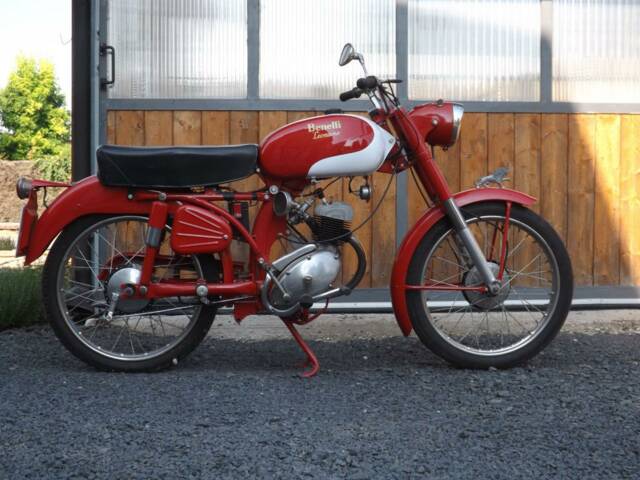

Benelli listing references from Classic Trader
Below you will find listings related to your search that are no longer available on Classic Trader. Use this information to gain insight into availability, value trends, and current pricing for a "Benelli" to make a more informed purchasing decision.
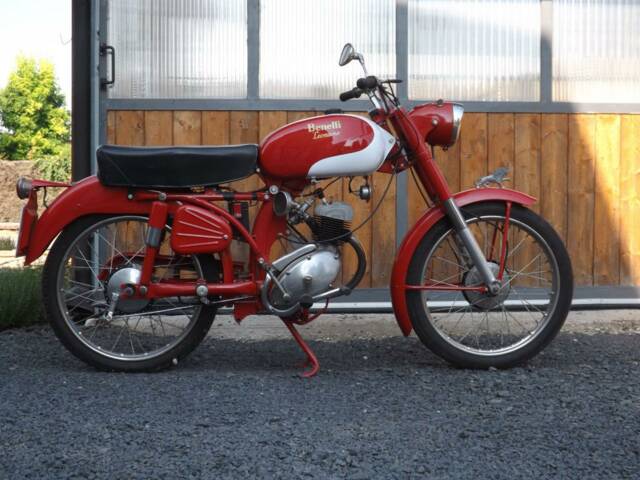
1959 | Benelli Leoncino 2T
-
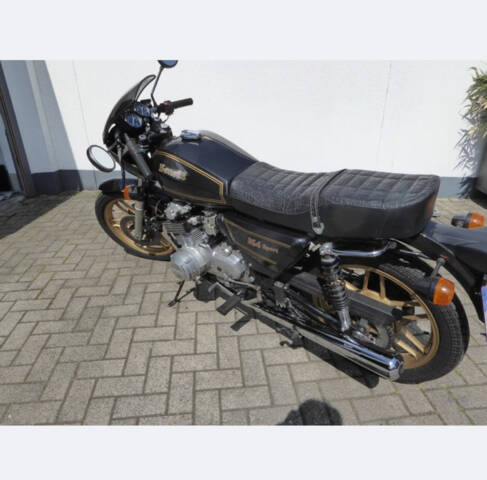
1984 | Benelli 354 Sport II
Benelli I 354 S-italienische Schönheit

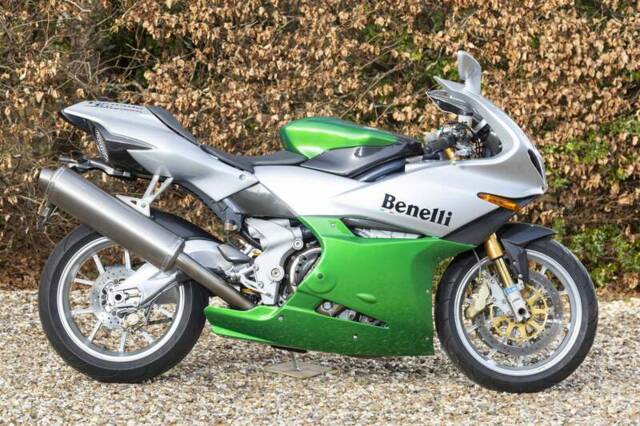
2003 | Benelli Tornado Tre 900
2003 Benelli Tornado Tre LE900 899cc

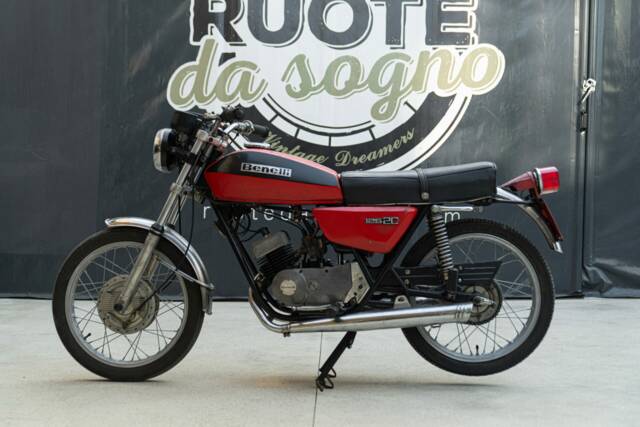
1971 | Benelli 125 Sport Special
Benelli 125 2C
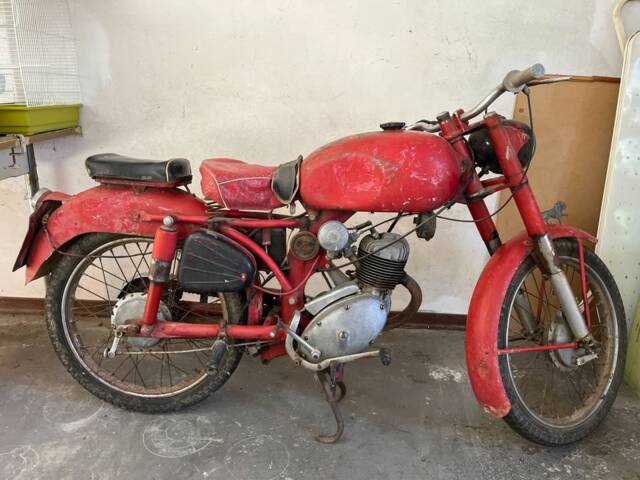
1955 | Benelli Leoncino 2T
1955 Benelli Leoncino da restaurare
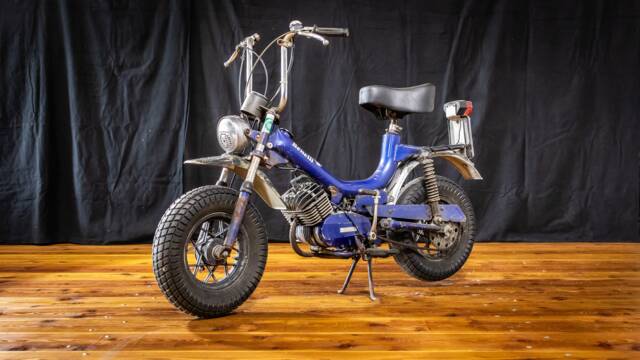
1978 | Benelli Magnum 5V
Built for RPM, dynamics and sporty demands

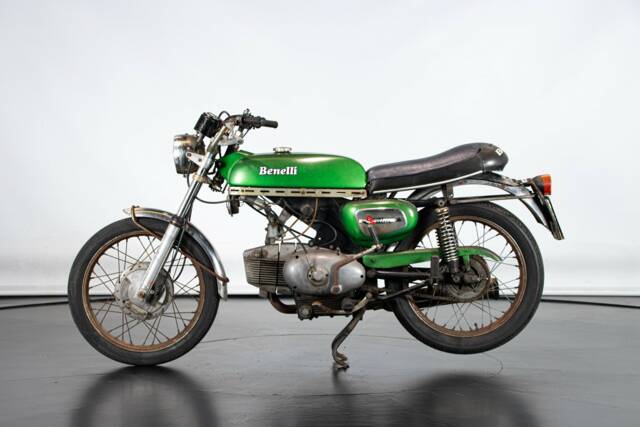
1976 | Benelli 125 Sport Special
Benelli 125 SPORT SPECIAL
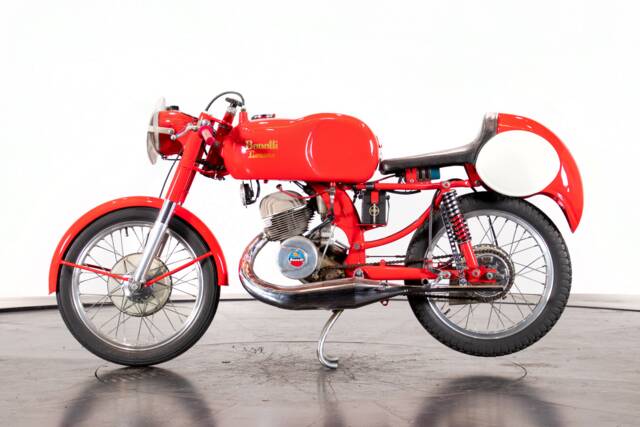
1954 | Benelli Leoncino Bassotto
Benelli Leoncino Bassotto
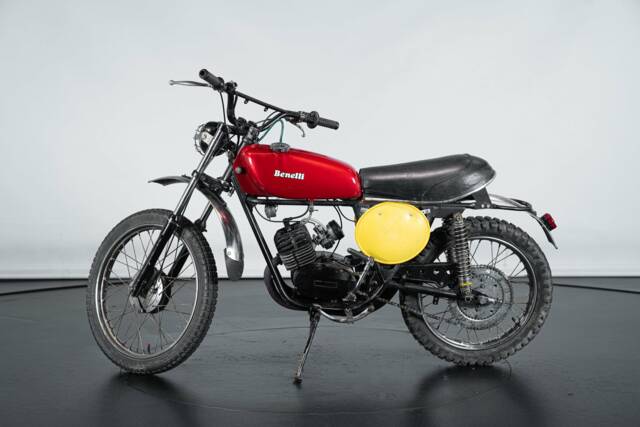
1978 | Benelli 50 Trial
-
History
Benelli’s story begins in Pesaro in 1911, when Teresa Benelli started a small workshop for her six sons. That family base became one of Italy’s most interesting motorcycle names, and over time the company moved from repair work and simple single-cylinder machines to some of the most distinctive multi-cylinder motorcycles ever sold.
For British riders, Benelli has always occupied a special corner of the classic motorcycle world. It is not a mass-market name in the UK in the way Triumph, Norton or Honda are. Instead, it belongs to that tighter circle of exotic 1970s motorcycles that combine racing pedigree, Italian style and a strong sense of individuality. If a classic British twin represented the accessible dream in the 1960s and early 1970s, Benelli offered the more adventurous answer: more cylinders, more novelty and, often, more theatre.
The company’s reputation was built as much in racing as on the road. Benelli scored two 250cc World Championship titles: Dario Ambrosini in 1950 and Kel Carruthers in 1969. That second title matters particularly for UK enthusiasts, because Carruthers also won the Isle of Man TT in 1969. Few motorcycle brands can connect road-bike collectors with one of the most iconic racing stages in British motorcycling history so directly.
Benelli’s most collectible era came under Alejandro de Tomaso, who took control in the early 1970s. His ambition was bold: if Japanese four-cylinder bikes were setting the pace, Benelli would respond with something more dramatic still. The result was the 650 Tornado, 500 Quattro, 750 Sei and 900 Sei. These models defined Benelli’s classic identity and remain the core of the market today.
Production was never large, and in the UK the brand stayed rare. The most famous example is the 750 Sei, launched in Britain at around £1,700, almost twice the price of a Honda CB750 at £979. That price gap helps explain why Benelli six-cylinder bikes remain scarce on British roads. They were always special, always expensive and always bought by riders who wanted something different.
Highlights
What makes Benelli fascinating is not just the shape of the machines, but the sheer audacity of the ideas behind them. The marque is remembered for technical bravery, elegant Italian styling and the refusal to follow the crowd.
The headline act is the Benelli 750 Sei, the world’s first six-cylinder production motorcycle. When it arrived in the mid-1970s, it looked unlike anything else in showrooms. At a time when most rivals were still refining the four-cylinder formula, Benelli simply added two more cylinders and created an engine concept that still feels extraordinary today.
Its design was handled by Carrozzeria Ghia, with Paolo Martin responsible for the visual language. The result was a bike that combined mechanical spectacle with clean, modern lines. The six-into-six exhaust system became the signature detail: six headers, six silencers, and a sound that is smoother and richer than almost any contemporary machine.
The 500 Quattro is another important model, and one that deserves more attention than it often gets. With a 498cc SOHC inline-four and around 45 PS, it brought proper multi-cylinder sophistication to a smaller and more attainable package. It was sold in the UK through Agrati Sales, which gave the model a local connection that collectors still value.
Then there is the 650 Tornado, Benelli’s answer to the traditional British twin. With its 643cc OHV parallel twin, it was built to compete with the Triumph Bonneville and BSA Lightning. Around 3,000 were made, so it remains a rare machine, but it also speaks directly to the tastes of classic British bike buyers: familiar layout, strong character and a more sporting edge than many rivals.
The 900 Sei took the six-cylinder theme further. Bigger, wider and more complex, it extended the Sei idea into the late 1970s and 1980s. With around 1,878 built, it is rarer than many period Japanese machines and still attracts collectors who want the full Benelli story without paying top money for the earlier 750.
Technical Data
The 750 Sei is the technical benchmark. Its 747cc six-cylinder engine uses a SOHC layout and three carburettors, one feeding every two cylinders. The chassis is a steel double cradle, with disc brakes at the front and a layout designed to keep the big engine manageable on the road.
The 500 Quattro uses a 498cc inline-four and was the more compact, less extravagant sibling. Although it is not as famous as the 750, it is a proper collector machine in its own right, especially for buyers who want a classic Italian four without committing to six-cylinder maintenance.
The 650 Tornado is mechanically simpler, and that is part of its charm. Its OHV twin configuration gives it a more traditional feel, and it was developed to appeal to riders who still loved the British twin formula but wanted an Italian alternative with stronger styling and a bit more exotic badge appeal.
The 900 Sei retained the six-cylinder architecture but increased capacity to 906cc. That brought more torque, but also greater width, more complexity and an even stronger need for careful ownership.
Market Overview & Buying Tips
Benelli classics are specialist purchases, but the market is healthier than many expect. In the UK, the strongest demand is for the 750 Sei, followed by the 900 Sei, while the 500 Quattro and 650 Tornado appeal to more focused collectors.
Recent UK and international auction results show how varied the market can be. A 1978 Benelli 750 Sei sold at Bonhams Stafford in April 2024 for £22,425. Another 1976 750 Sei changed hands at Gooding & Christie’s London in 2024 for £9,000, below its £12,000–18,000 estimate. Bonhams in June 2025 sold a 1974 750 Sei for £9,200, while Historics recorded a 1975 example at £13,720 in 2017. That spread shows how condition, originality and documentation matter.
For good used examples in the UK, budget around £8,000–£15,000 for a 750 Sei. Projects typically sit in the £4,000–£7,000 range. The 900 Sei usually trades at £7,000–£14,000, depending on condition and completeness. The 500 Quattro tends to sit between £3,500–£9,000, while the 650 Tornado usually falls in the £3,000–£8,000 range.
If you are looking for a 750 Sei, originality matters more than almost anything else. The six-into-six exhaust system is the expensive item, and while new systems can still be sourced from Turin, they are costly. A complete and correct bike with the right exhaust, correct instruments and original paint will always be easier to sell on later.
Early 750 Sei Series 1 machines, built before frame number 5294, deserve special scrutiny. They can suffer from gearbox and crankshaft tolerance issues, although these were largely sorted by 1975. If you are considering one, make sure the gearbox shifts cleanly and the motor feels mechanically precise under load.
Benelli ownership is rewarding, but it is not the same as running a mainstream Japanese classic. Valve clearances need regular attention, camchain tensioning should be watched, and points ignition is best replaced with an electronic conversion. Oil leaks are common, especially on the 900 Sei, and electrical connector blocks and switchgear can corrode if the bike has been stored badly.
UK buyers should also look out for weak fuel taps and weeping fuel caps, plus frequent failures of the tacho and speedo cables. These are not deal-breakers, but they tell you how the bike has been cared for.
Parts support is good for such a niche marque. Benelli-Bauer in Germany is a key European source, shared Moto Guzzi components are often easier to find than expected, and Benelli Club GB remains the best UK knowledge base. For British buyers, that club support is a major advantage and makes ownership much less daunting.
Performance
Benelli performance is about character as much as speed. These are motorcycles that feel engineered, not merely assembled. Even the smaller models have a sense of mechanical purpose that makes them stand out in a crowd.
The 750 Sei is the star. Its six-cylinder engine is famously smooth, and that smoothness changes the way the bike feels on the road. Instead of the pulse and vibration you associate with many classic British twins, the Sei delivers a more continuous wave of power. It is not a brutal machine. It is a fast, composed grand touring motorcycle that rewards a flowing riding style.
For many riders, the sound is half the appeal. A six-cylinder Benelli idles with an almost silk-like note and builds into a rich, mechanical howl as revs rise. The six pipes and the low, even delivery give the bike an unmistakable personality.
The 500 Quattro offers a different kind of performance. It is less dramatic, but it is still a proper sporting machine. Around 45 PS from 498cc was a serious figure in the mid-1970s, and the inline-four layout gives it a more eager, rev-hungry feel than the Tornado twin.
The 650 Tornado is the most obviously relevant model for riders who love British classics. Its OHV twin configuration brings familiar torque delivery and a more traditional feel, but Benelli’s chassis and finish give it a more exotic identity. It was intended to stand toe to toe with the Triumph Bonneville and BSA Lightning, and that competition still shapes how enthusiasts see it today.
The 900 Sei adds torque and presence, but it is not necessarily the better all-round rider’s bike. The engine is wider, the chassis feels bulkier, and the bike carries more mass. In return, you get the same distinctive six-cylinder refinement with a stronger mid-range. It is a machine for relaxed, intelligent road use rather than hard charging.
Design
Benelli design is one of the strongest reasons collectors are drawn to the brand. These motorcycles look purposeful, but they also look unusual enough to feel special even among other Italian bikes.
The 750 Sei is the purest expression of that philosophy. Paolo Martin’s work for Ghia gave the bike a clean, geometric look that matched the engine’s technical drama. The tank is slim and elegant, the side panels are neatly integrated, and the six-cylinder engine itself becomes the visual focal point.
The exhaust system is a masterpiece of period theatre. Six separate silencers make the bike appear wider and more serious, and they underline the engineering ambition behind it. No other production motorcycle of the era looked quite like a Sei.
The dashboard layout also helped define the bike’s identity. Clear instrumentation, warning lights and a modern presentation set it apart from more old-fashioned rivals. In the UK, that mattered: by the mid-1970s, British buyers were increasingly aware that style alone was no longer enough. Benelli offered style plus innovation.
The 500 Quattro has a more understated appearance, but it still carries unmistakable Benelli flair. Its proportions are tidier, and for many collectors that makes it easier to live with visually. It is the sort of machine that rewards close inspection rather than instant drama.
The 650 Tornado is perhaps the most traditionally handsome of the group. It has the sort of shape that would have appealed to British riders stepping up from familiar twins, because it looks serious, compact and mechanically convincing.
The 900 Sei is more controversial. Its wider engine and later styling changes give it a heavier visual impression, but that is part of its appeal for collectors who want the full evolution of the Sei concept.
Other
Benelli’s racing heritage is central to its identity, and it gives the brand a depth that many exotic classics lack. The two 250cc world titles are not just footnotes; they are proof that the company could build genuinely competitive machinery long before the Sei era.
Dario Ambrosini’s 1950 title helped establish Benelli’s early reputation, while Kel Carruthers’ 1969 championship linked the marque to one of the most respected eras of Grand Prix racing. For British readers, Carruthers’ Isle of Man TT win in 1969 adds another layer of relevance. The Isle of Man remains a touchstone for UK motorcycle culture, and any brand with TT success automatically feels more authentic to British enthusiasts.
That racing image also mattered when Benelli moved into larger road bikes. The 750 Sei was not just a styling exercise; it was a statement that Benelli could still think boldly. Even if the machine was never a mainstream success, it cemented the company’s reputation as one of Italy’s most inventive motorcycle makers.
Summary
Benelli classics are rare, distinctive and deeply rewarding for the right buyer. They are not the obvious choice, and that is exactly why they appeal. A Benelli offers a mix of Italian style, racing history and mechanical originality that few other marques can match.
For the UK market, the strongest collector focus remains on the 750 Sei, the 900 Sei, the 500 Quattro and the 650 Tornado. The 750 Sei is the icon: the world’s first production six-cylinder motorcycle, beautifully styled and still highly desirable. The 900 Sei extends the story for buyers who want a later and slightly more attainable Sei. The 500 Quattro and 650 Tornado offer smaller-scale routes into the brand, each with its own character.
Buying well matters. Check originality, service history, electrics, ignition, exhaust condition and engine health carefully. Use Benelli Club GB and established European parts sources to support your search. With the right bike, ownership is far more manageable than the reputation of a rare Italian classic might suggest.
If you are looking for a motorcycle that stands apart from the usual classic choices, Benelli deserves serious attention. Find your Benelli motorcycle on Classic Trader and discover one of Italy’s most charismatic motorbike marques.