Wolga M 21 Classic Cars for Sale
The Wolga M 21, manufactured by GAZ between 1956 and 1968, represents an enduring piece of automotive history from the USSR. Its distinctive 1950s-style ponton bodywork and robust technology have secured it a unique place among classic car fans. In Germany, this model is especially sought after due to its historic status and tax exemption.
Search results

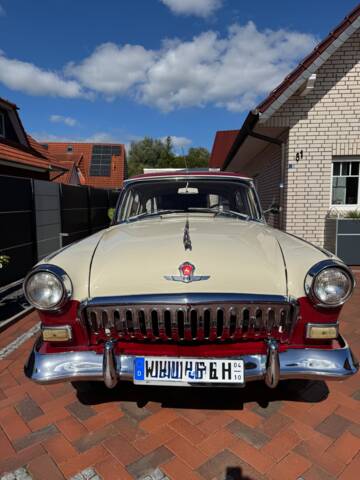
1960 | Wolga M 21
Museumsqualität Gaz Wolga M-21(1960) Vollrestauriert mit 100% Originalteilen

Wolga M 21 listing references from Classic Trader
Below you will find listings related to your search that are no longer available on Classic Trader. Use this information to gain insight into availability, value trends, and current pricing for a "Wolga M 21" to make a more informed purchasing decision.
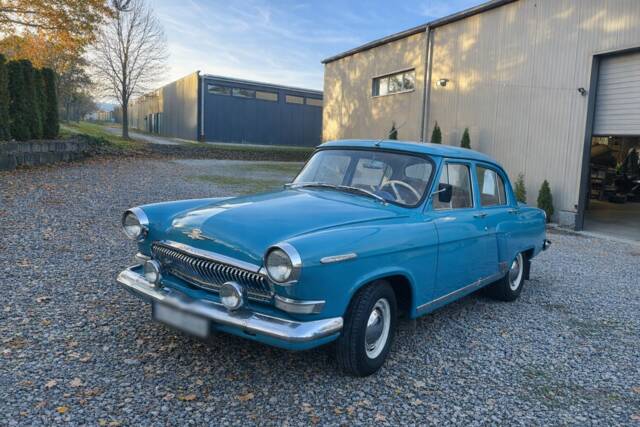
1964 | Wolga M 21
GAZ Wolga M21, Baujahr 01.01.1964
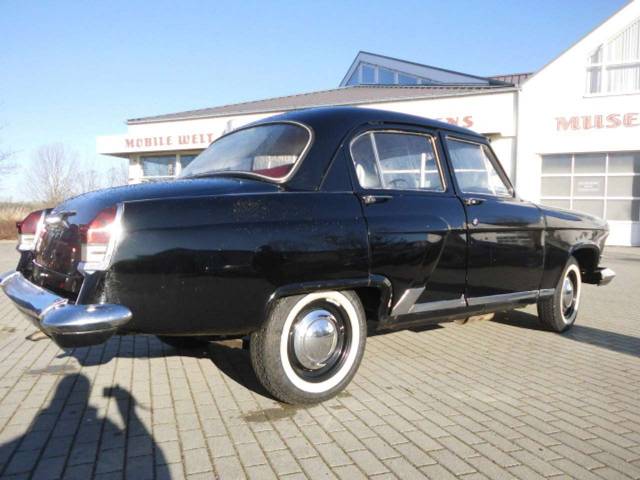
1963 | Wolga M 21
GAZ 24 Wolga M 21, GAZ 21
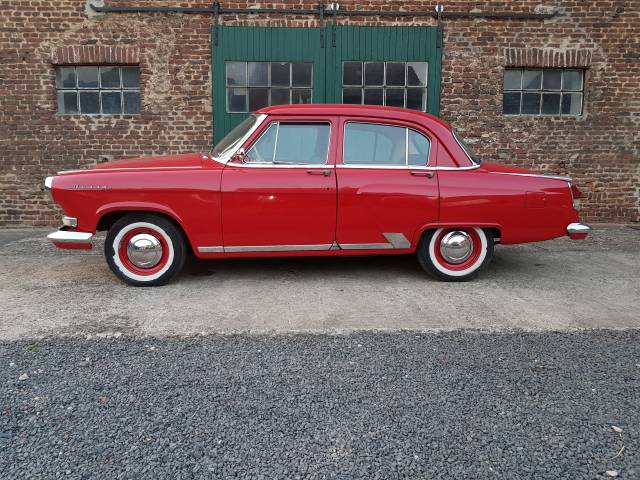
1965 | Wolga M 21
Scaldia Volga M21 Diesel
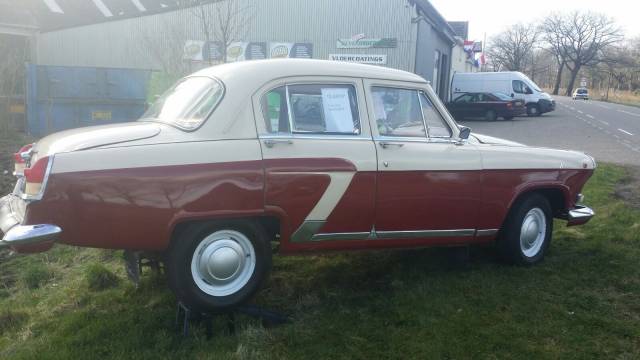
1964 | Wolga M 21
GAZ / Volga M21 uit 1964

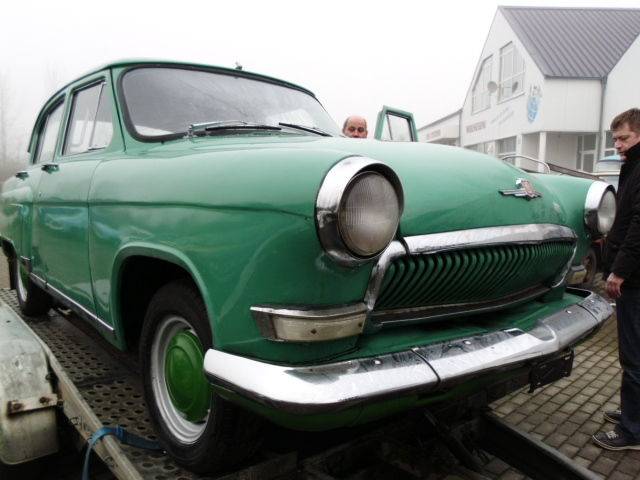
1961 | Wolga M 21
Wolga M21, GAZ 21,GAS 21
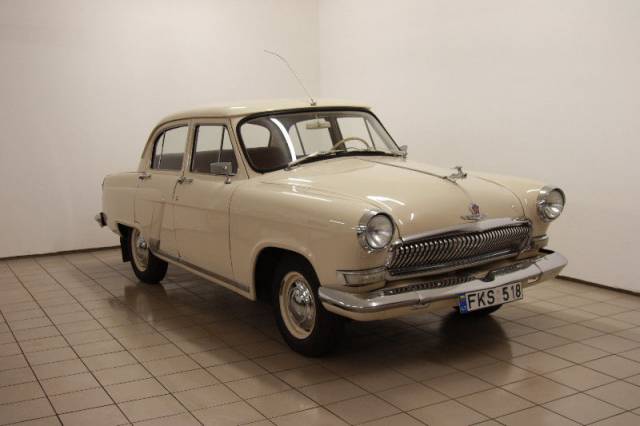
1960 | Wolga M 21
Wolga Top Restauriert!
Wolga M 21 Classic Cars: Prices & Market Values
History of the Wolga M 21
The GAZ M 21, marketed as 'Wolga', was introduced to the Soviet upper mid-size segment as the successor to the GAZ M 20 Pobeda. Production took place in the former Gorki, now Nizhny Novgorod, with the name 'Wolga' directly referencing the city’s location on the Volga River. The model broke away from its predecessor’s 'humpbacked' look, instead aligning itself stylistically with the clean lines common in 1950s US cars. Debuting in 1955 and produced in volume from 1957, the M 21 became known for its remarkable durability and simple mechanical layout—a practical response to Soviet road conditions.
Model History and Series Development
The M 21 replaced the GAZ M 20 Pobeda and remained in production until 1968. Several subvariants emerged in the early years, including the M 21A, M 21B, M 21G, and M 21W, each with minor technical differences. From 1957 onward, a standardised version entered serial production. Later, the M 21 experienced minimal visual and technical updates, focusing mainly on the front design. Its intended automatic gearbox never went into series production—GAZ stuck with manual transmissions, despite in-house development of an automatic.
Highlights and Market Insights
One remarkable feature of the Wolga M 21 was its exceptional longevity, credited to robust engineering. The overhead-valve engine represented a significant technological step up from the earlier Pobeda, even as fuel consumption remained relatively high. Exported widely, the M 21 saw use in East Germany as taxis and official vehicles, and found traction as a niche import in Belgium, Scandinavia, and even Western Europe—often adapted with Peugeot or Perkins diesel engines. In today’s market, the Wolga M 21 accounts for 100% of Wolga listings and buyers’ interest, underlining its singular status within the Classic Trader supply and demand statistics.
Technical Data
Special Editions and Rare Variants
Limited numbers of the Wolga M 21 were exported to Belgium fitted with economical diesel engines from Peugeot and Perkins, making these versions particularly rare in the classic car world. Additionally, export models often featured upgrades in trim and comfort compared to their domestic counterparts.
Weak Spots and Maintenance
The high fuel consumption—often cited at 12 to 14 litres per 100 kilometres—stands out as the main downside. While not a problem in the Soviet era due to low fuel prices, this is a factor for today’s enthusiasts. Due to simple mechanicals, maintenance is straightforward, but attention must be paid to corrosion on body panels and to the specific running gear, particularly if the car spent its life in harsh climates.
Engine, Performance and Handling
The M 21’s engine offers more power than its predecessor, the Pobeda, due chiefly to the improved valve design and higher compression ratios. Typical output was sufficient for comfortable cruising on poor roads, and the robust transmission withstood considerable abuse. Handling was tuned for comfort rather than sportiness, with solid rear axle suspension emphasising durability. Diesel-engined export models offer slightly improved economy and torque for long-distance use. These characteristics, combined with the sturdy drive train and soft suspension, make the M 21 fit for use over long distances and bad roads. - Wolga M 21 Benzin (manual, petrol/LPG, original motor setup)
- Wolga M 21 Diesel (Peugeot/Perkins powered export version)
- Wolga M 21 Bivalente (LPG conversion for enhanced economy)
Design and Features
The exterior of the Wolga M 21 is instantly recognisable by its 1950s-inspired ponton bodywork and marked chrome elements. The interior emphasises straightforward functionality, with durable seat materials and basic but reliable instrumentation. Export models sometimes offered more luxurious interiors, additional chrome, and even two-tone paintwork. Accessories were rare, though some units included original Soviet radios or auxiliary heating systems, adding to the period charm.
Other Relevant Features
The Wolga M 21 enjoys tax-exempt status as a classic car in Germany and is not required to pass regular main inspections (APK), greatly simplifying the ownership experience for enthusiasts. Paperwork for import and registration is typically complete, which removes considerable hurdles for collectors.
Summary
The Wolga M 21 stands as a testament to mid-20th-century Soviet engineering and design—a vehicle built to endure rugged conditions, offering simple but effective technology and featuring unmistakable styling. Its popularity among classic car aficionados, especially in Europe, is reflected in both market availability and demand. Enthusiasts value the robust mechanics, spartan but durable interiors, and ease of maintenance, making the M 21 a practical classic with a fascinating backstory.