- Car
- Willys-Knight
- Willys-Knight 88 (0 offers)
Willys-Knight 88 classic cars for sale
The Willys-Knight 88 is a distinct example of American engineering from the early 20th century, featuring the advanced Knight sleeve-valve engine and a robust, elegant chassis. This rare series, produced during Willys-Overland's golden years, represents a unique period of automotive progress. Read more to discover its technical and historical highlights.
Search results
Currently, there are no matching listings for your search.
Create search alert
Let yourself be notified as soon as a listing is published that matches your search filters.
Create listing
Do you have a Willys-Knight 88 that you want to sell? Then create a listing now.
Create listingWillys-Knight 88 listing references from Classic Trader
Below you will find listings related to your search that are no longer available on Classic Trader. Use this information to gain insight into availability, value trends, and current pricing for a "Willys-Knight 88" to make a more informed purchasing decision.
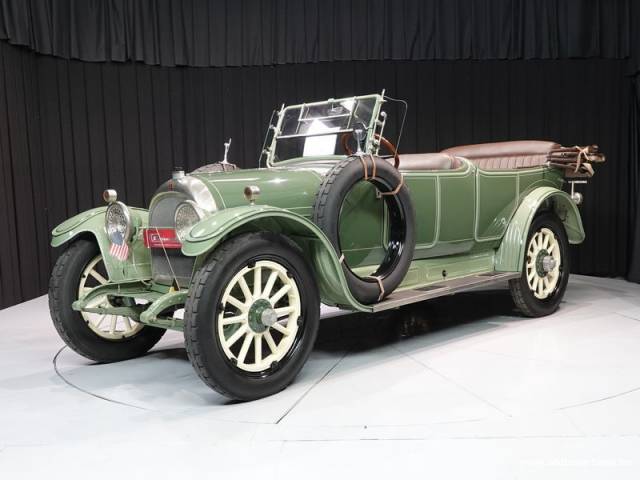
1917 | Willys-Knight 88-8
1917 Willys-Knight 88-8 Tourer '17
Create search alert
Let yourself be notified as soon as a listing is published that matches your search filters.
Create listing
Do you have a Willys-Knight 88 that you want to sell? Then create a listing now.
Create listingWillys-Knight 88 Classic Cars: Prices & Market Values
History of the Willys-Knight 88
The Willys-Knight was built between 1914 and 1933 by the Willys-Overland Company, based in Toledo, Ohio. The origins of the car track back to John North Willys, who acquired the Edwards Motor Car Company in 1913 and relocated its operations to Elyria, Ohio. There, production began with four-cylinder models before progressing to more complex engines. The key innovation was the use of the Knight sleeve-valve engine, which set the Willys-Knight apart from mass-market rivals. By 1915, assembly moved to Toledo, but engines continued to be built in Elyria. A significant moment for the marque was the introduction of a sleeve-valve V8 in 1917, offering more power and sophistication than most competitors. Production of the Willys-Knight became substantial after 1922, averaging 50,000 units annually, marking the model as a major player in the American automotive industry until the economic upheaval and Willys's bankruptcy in 1932 shifted focus to simpler, more populist models.
Model History
The Willys-Knight 88 forms part of the broader Willys-Knight series and is especially noted for its use of the Knight sleeve-valve engine architecture—a rare feature in its day. Predecessor models included the early four-cylinder variants. The 88 often compared favourably in period press thanks to its smooth running and technical refinement. Opposite its entry and exit stands the Willys 77, which the company built after 1932, concentrating on affordability following Willys-Overland’s financial collapse. The acquisition of Stearn-Knight strengthened the portfolio; Stearn-Knight models became the group’s showpieces but retained the fundamental sleeve-valve engineering. The final Willys-Knight vehicles were produced for the 1933 model year.
Highlights of the Willys-Knight 88
• Knight sleeve-valve engines in both four- and six-cylinder forms, later complemented by an advanced V8 (4689 cm³, 16-valve, producing 68 hp at 2,500 rpm).
• Large 317 cm (125 inch) wheelbase enabled a spacious and comfortable ride.
• Regular yearly production after 1922 reached around 50,000 units, reflecting commercial success within its niche.
• The Willys-Knight 88, based on trade statistics, accounts for 100% of Willys-Knight listings and demand among classic car enthusiasts, underlining its singular place in the market.
Technical Data
Special Editions and Collectible Models
No documented special or limited editions of the Willys-Knight 88 are referenced. However, models equipped with the V8 Knight sleeve-valve engine, produced briefly between 1917 and 1919, are of particular interest to connoisseurs due to their technical rarity and historical relevance.
Weak Spots and Common Issues
No specific known weak spots are documented in available sources. Generally, sleeve-valve engines require precise maintenance; wear on sleeves and oil consumption are typical technical topics experts note. Restoration projects often involve engine overhauls and attention to the carburettor and fuel system, given the age of surviving vehicles.
Engine and Performance, Transmission and Handling
The Willys-Knight 88 is defined by its smooth-running Knight V8 sleeve-valve engine, delivering 68 hp at 2,500 rpm, which provided solid power delivery for its era. The 3-speed manual gearbox and rear-wheel-drive layout were standard for luxury vehicles of the time, contributing to surefooted handling. The long wheelbase provided additional comfort, while the advanced engine design reduced mechanical noise and vibration, yielding a particularly refined ride. The most sought-after version is the V8 sleeve-valve variant, produced from 1917 to 1919, prized for both its unusual engineering and driving refinement.
Interior, Comfort, Exterior, and Design
With a 317 cm wheelbase, the Willys-Knight 88 was typically bodied as large tourers and sedans, offering generous interior space. Materials from the period would have included high-quality woods, leathers, and chromed hardware. Accessories such as period-correct tools, special paint schemes, or custom-fitted trunks occasionally appear in surviving examples. The exterior typically displayed formal, upright fenders and distinct radiator cowls, reflecting American luxury car design of the 1910s and 1920s.
Other Noteworthy Features
The Willys-Knight 88 benefitted from Willys-Overland’s practice of maintaining engine production at the original Elyria works while body assembly took place in Toledo, a setup that contributed to the model’s robust build quality. The company's purchase of Stearn-Knight further bolstered its technical credentials.
Summary
The Willys-Knight 88 combines advanced engineering with substantial build quality, the centrepiece being the Knight sleeve-valve engine in both V8 and six-cylinder forms. Figures from the market show that this model is the primary focus for Willys-Knight enthusiasts, reinforcing its status as a historical cornerstone and technical outlier in American classic car history.