- Automobile
- Williams
- Williams FW12 (0 offerte)
Williams FW12 classic car for sale
The Williams FW12 represents a pivotal moment in motorsport history: Williams' return to naturally aspirated engines for the 1988 Formula One season. This chassis captures a transition in technology and competitive philosophy, making it a focal point for collectors and enthusiasts with a passion for racing heritage.
Risultati della ricerca
Attualmente non ci sono annunci corrispondenti alla tua ricerca.
Create search alert
Let yourself be notified as soon as a listing is published that matches your search filters.
Create listing
Do you have a Williams FW12 that you want to sell? Then create a listing now.
Create listingWilliams FW12 listing references from Classic Trader
Below you will find listings related to your search that are no longer available on Classic Trader. Use this information to gain insight into availability, value trends, and current pricing for a "Williams FW12" to make a more informed purchasing decision.
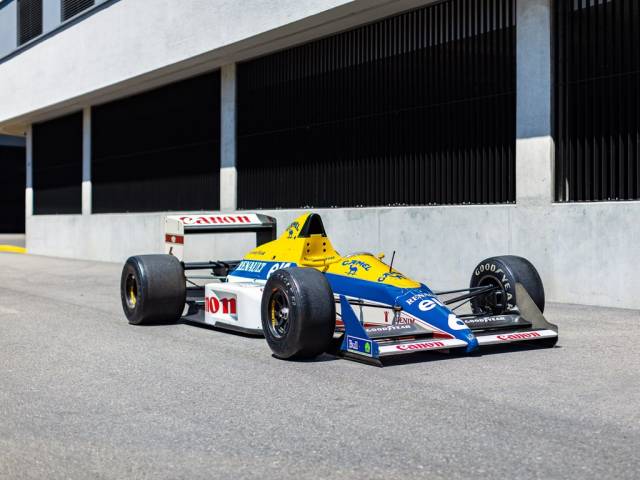
1989 | Williams FW12C
1989 Williams FW12C
Create search alert
Let yourself be notified as soon as a listing is published that matches your search filters.
Create listing
Do you have a Williams FW12 that you want to sell? Then create a listing now.
Create listingWilliams FW12 Classic Cars: Prices & Market Values
Introduction and history of the Williams FW12
Williams debuted the FW12 in the 1988 Formula One season, marking a clear departure from turbocharged power to naturally aspirated engines. This shift was both technical and strategic, responding to imminent changes in Formula One regulations. The FW12 was succeeded by an upgraded FW12C, which continued to compete through most of the 1989 season. Its introduction signalled Williams' readiness to adapt, setting the groundwork for their future championship successes.
Model history
The FW12 followed Williams' legendary turbocharged cars and replaced the FW11B. It represented Williams' first naturally aspirated competitor since the FW08/FW08C, last raced in the early 1980s. The FW12C, a significant update of the FW12, continued in 1989 before ultimately giving way to the FW13. Each incarnation marked significant technical advancements in chassis and engine integration, complying with F1's revised rules for non-turbo engines.
Highlights of the Williams FW12
The FW12 is notable as the point of transition for Williams from turbocharged to naturally aspirated engines. Its development reflected changing regulations and engineering priorities in late 1980s Formula One. Advanced aerodynamics and the debut of the Judd V8 engine made it a landmark in the Williams lineage.
Technical Data
Special Editions and Collectible Models
The FW12C, introduced during the 1989 season, was a notable evolution. While not strictly a special edition, the FW12C incorporated further developments and addressed several issues of the original FW12, serving as a critical link in Williams’ engineering continuity.
Weak Spots and Common Issues
There is no detailed public information about recurring issues specific to privately owned FW12 chassis, as these cars were used exclusively in professional racing and rarely appear in private hands. Maintenance requires F1-experienced technicians and access to rare parts, which can significantly affect upkeep.
Engine and Performance, Transmission and Handling
The FW12’s performance was shaped by the Judd CV V8 engine, which delivered sharp throttle response and reliability associated with naturally aspirated layouts. The FW12 was engineered for maximum aerodynamic stability, and its handling characteristics were optimised for circuit racing at the highest level. As regulations shifted away from turbo power, Williams focused on balancing power, weight, and aerodynamics. The FW12 and its updated FW12C remain the primary points of focus for collectors due to their technical significance in F1 history.
Interior, Comfort, Exeterior and design
Designed for pure speed and functionality, the FW12’s cockpit was minimalistic, with controls focused exclusively on racing requirements. Externally, its design was marked by advanced aerodynamic bodywork and functional aesthetics typical for late 1980s Formula One cars. Special colours reflected team sponsorship and period-correct livery rather than custom options.
Other relevant features
Due to the FW12's professional racing heritage, most remaining examples are not road legal and can only be operated in private track environments or events dedicated to historic Formula One machinery.
Summary
The Williams FW12 remains a unique piece of racing history and stands out as Williams’ key step into the naturally aspirated Formula One era. It is the only Williams model of this time actively traded on Classic Trader, cementing its place in the collector community focused on Grand Prix heritage.