Williams FW08 classic car for sale
The Williams FW08 stands out as a pivotal Formula 1 car, renowned for its engineering advancements and its pivotal role in securing the 1982 World Drivers' Championship for Keke Rosberg.
Search results
Currently, there are no matching listings for your search.
Create search alert
Let yourself be notified as soon as a listing is published that matches your search filters.
Create listing
Do you have a Williams FW08 that you want to sell? Then create a listing now.
Create listingWilliams FW08 listing references from Classic Trader
Below you will find listings related to your search that are no longer available on Classic Trader. Use this information to gain insight into availability, value trends, and current pricing for a "Williams FW08" to make a more informed purchasing decision.
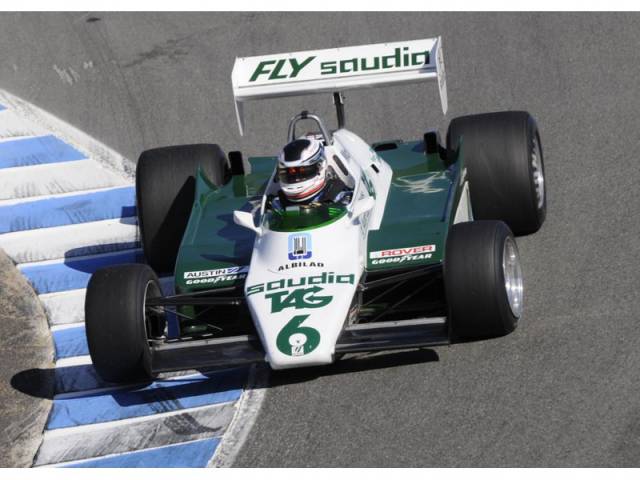
1982 | Williams FW08
ex-Keke Rosberg Williams FW08
Create search alert
Let yourself be notified as soon as a listing is published that matches your search filters.
Create listing
Do you have a Williams FW08 that you want to sell? Then create a listing now.
Create listingWilliams FW08 Classic Cars: Prices & Market Values
History of the Williams FW08
The Williams FW08 emerged in the 1982 Formula One season, marking a decisive period in the sport’s technical and competitive evolution. Designed by Frank Dernie, who had already made a name for himself at Williams, the FW08 embodied lessons learned from its successful predecessor, the FW07. Its debut came at the 1982 Belgian Grand Prix at Zolder, where it immediately showcased its capabilities. The car's first year proved intensely competitive, as the field was extremely close due to a combination of technical regulations and the unpredictability of the turbocharged competitors. Nevertheless, the FW08 quickly asserted itself as a reliable and effective contender, contributing directly to Williams' continued rise as a force within Formula One.
Model history: Predecessors and successors
The FW08 replaced the FW07, a model renowned for its ground effect efficiency and robust chassis. The FW07 had achieved multiple victories and world titles, setting a demanding benchmark. In turn, the FW08 refined the formula with several key updates, focusing on improved aerodynamics and chassis rigidity. Following the FW08’s success, particularly with Keke Rosberg’s championship win, Williams developed the FW08C and later moved on to the FW09, which embraced turbocharging as the sport’s technical direction shifted by the mid-1980s.
Highlights and unique features
The Williams FW08 is distinguished by its adaptation of ground effect aerodynamics within increasingly restrictive regulations, prioritising mechanical grip and reliability rather than outright power. The FW08 was the only Williams car to secure a drivers’ title in the 3-litre, naturally aspirated era before the team transitioned to turbo engines. Its historical accomplishment includes securing the 1982 title with Rosberg, who managed just one Grand Prix win that season—a testament to the FW08’s consistency and adaptability across various circuits.
Technical data
Special editions and collectible models
There are no official special editions of the Williams FW08, as Formula One regulations at the time precluded series production. Each chassis, however, was unique, built for competition use only, and some FW08 examples—including the chassis driven to the title by Rosberg—have gained special significance due to their racing provenance.
Engine and performance, transmission and handling
The Ford Cosworth DFV V8 engine delivered approximately 500 hp, judiciously managed by Williams through a lightweight and agile chassis. The FW08's handling benefits from its advanced ground effect aerodynamics and carefully tuned suspension, granting drivers precise feedback and control. While down on power compared to turbocharged rivals, the FW08 made significant gains through superior balance, mechanical grip, and adaptability to varying track surfaces. Its reliability, combined with effective pit strategy, played a crucial role in its championship campaign. The FW08 chassis driven by Keke Rosberg stands as the most celebrated, directly linked to the 1982 drivers’ title. Technical data highlights include a 5-speed manual Hewland FGB gearbox, adjustable suspension geometry, and standard magnesium wheels.
Interior, comfort, exterior and design
The FW08’s exterior is characterised by its compact, wedge-shaped monocoque, integrating classic Williams liveries of the era. The cockpit prioritises driver ergonomics with minimalistic instrumentation necessary for competitive clarity; instrumentation and switchgear are bespoke, designed for the demands of Grand Prix racing. No standard comfort features are present, as typical for F1 machines—weight saving always took precedence over luxury. Special equipment includes bespoke aerodynamic appendages adapted for each circuit and a disciplined, no-frills approach to component layout for optimal onboard serviceability.
Other features
The Williams FW08 marked the last full-season appearance of the naturally aspirated Ford Cosworth DFV engines at Williams before turbo power became the new norm in Formula One. Its mechanical simplicity and adaptability in setup make it a favourite among historic racing teams and privateers competing in historic F1 championships today.
Summary
The Williams FW08 captures a critical phase in Formula One history, symbolising the transition away from ground effect design and the conclusion of the naturally aspirated era at Williams. Its achievements, most notably Keke Rosberg’s championship win, coupled with its innovative engineering, ensure the FW08’s enduring interest among motorsport collectors and classic racing enthusiasts.