Wanderer W 23 classic cars for sale
The Wanderer W 23 stands out as one of the key representatives from the pre-war era of German automotive engineering, combining solid technology with understated, purposeful design. A favourite among knowledgeable collectors and fans of 1930s vehicles, the W 23 offers a distinctive ownership experience.
Search results
Currently, there are no matching listings for your search.
Create search alert
Let yourself be notified as soon as a listing is published that matches your search filters.
Create listing
Do you have a Wanderer W 23 that you want to sell? Then create a listing now.
Create listingWanderer W 23 listing references from Classic Trader
Below you will find listings related to your search that are no longer available on Classic Trader. Use this information to gain insight into availability, value trends, and current pricing for a "Wanderer W 23" to make a more informed purchasing decision.
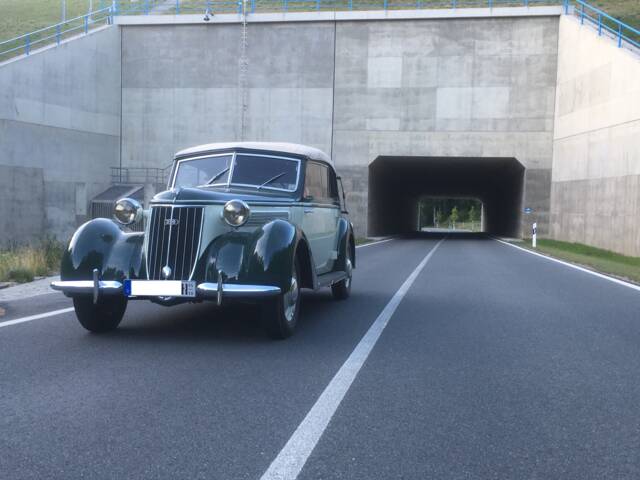
1939 | Wanderer W 23
Wanderer W 23 Gläser Cabriolet Auto Union 1939

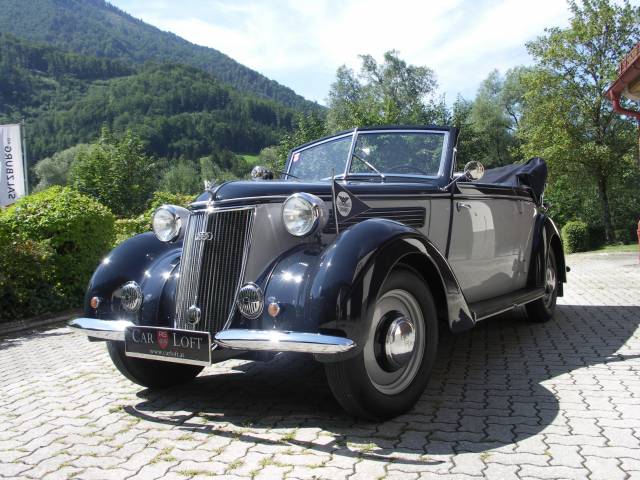
1939 | Wanderer W 23
"Das Bügeleisen der Landstraße"-hieß es in der Werbung Mitte der 1930er Jahre!

Create search alert
Let yourself be notified as soon as a listing is published that matches your search filters.
Create listing
Do you have a Wanderer W 23 that you want to sell? Then create a listing now.
Create listingWanderer W 23 Classic Cars: Prices & Market Values
History of the Wanderer W 23
Introduced in the mid-1930s, the Wanderer W 23 was developed by Wanderer, a manufacturer renowned for its innovative approach and robust build quality in the German automobile market. The W 23 entered production during a period marked by significant technological progress, right before the widespread upheaval of World War II. As part of the broader Auto Union conglomerate—alongside Audi, DKW, and Horch—Wanderer contributed crucially to pre-war motoring culture through models like the W 23. This vehicle was aimed at the middle-class segment, bringing modern engineering and reliable mechanics to discerning drivers of the time.
Model History
The Wanderer W 23 replaced earlier six-cylinder models within Wanderer’s line-up, representing an evolution in both chassis construction and drivetrain technology. Its production marked the culmination of Wanderer’s efforts to offer mature vehicles before the shift to war production. No direct successor followed the W 23 after the war due to the dramatic changes in Germany’s automotive landscape. The W 23 therefore remains unique in the marque’s history, bridging the gap between late-1920s Wanderers and pre-war models.
Highlights of the Wanderer W 23
A defining feature of the W 23 is its robust inline six-cylinder engine, known for providing smooth running and above-average reliability for the era. Buyers benefitted from a well-engineered chassis, hydraulic brakes (an advanced safety feature at the time), and elegant body shapes assembled by reputable coachbuilders. The car was available in several body variants, including saloons and cabriolets.
According to Classic Trader's statistics, the W 23 accounts for 100% of both the current supply and demand reported for classic Wanderers. This overwhelming share makes the W 23 the principal model associated with Wanderer within the classic car market today.
Technical data
Special Editions and Collectible Models
Information on special limited series or bespoke variants is limited due to incomplete pre-war documentation. However, surviving cabriolet and coachbuilt versions by selected independent companies are particularly sought after for their rarity and craftsmanship.
Weak Spots and Common Issues
Detailed information on common issues specific to the W 23 is scarce, likely due to the limited number of surviving vehicles and incomplete historic records. As with most pre-war cars, buyers should pay special attention to the condition of mechanical components, specifically the engine and gearbox, as well as potential corrosion in the frame and body panels. Availability of original replacement parts can be a challenge, making thorough evaluation and documentation essential during the purchasing process.
Engine and Performance, Transmission and Handling
The W 23’s inline six-cylinder engine delivers power in a refined, linear manner, well supported by a robust manual gearbox. Its rear-wheel drive layout provides classic dynamic qualities, with steering and handling characteristics typical for German saloons of the 1930s—stable in straight lines and predictable in bends. Braking performance marked an improvement over earlier models thanks to the adoption of hydraulic brakes, a progressive safety feature at the time. Saloon and cabriolet body variants are noticed more frequently among enthusiasts due to their balance of elegant styling and practical usability. The cabriolet, in particular, is appreciated for its open-top driving and higher level of coachbuilt detail.
Interior, Comfort, Exterior and Design
Inside, the Wanderer W 23 showcases a combination of functional dashboards, period-correct instrumentation, and quality upholstery—most frequently in wool cloth or leather. The exterior is defined by streamlined forms and flowing fenders, favoured among 1930s German vehicles. Cabriolet versions may sport contrasting colour combinations and extra chrome details. Original accessories, such as period luggage sets or bespoke wheel covers, are highly prized.
Other noteworthy features
As a pre-war vehicle, the Wanderer W 23 can be registered on historic plates in many European countries, making it eligible for vintage car rallies and classic motoring events.
Summary
The Wanderer W 23 stands as a singular representative of its make, embodying pre-war German engineering and automotive culture. With its six-cylinder engine, advanced hydraulic brakes, and attractive body styles, the W 23 remains the reference point for classic Wanderers on the market, offering historical depth and a distinctive driving experience for today’s collectors.