UAZ 469 classic cars for sale
The UAZ 469, introduced in 1971 as a robust off-road vehicle, was initially reserved for military and governmental use. With its practical engineering, simple mechanics and proven 75 hp UMZ-452MI engine, this Russian 4x4 combines rugged capability with straightforward maintenance—making it a favourite among enthusiasts seeking an authentic, utilitarian classic.
Search results

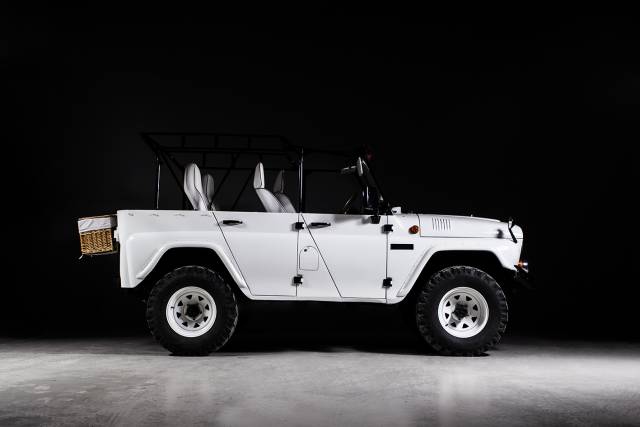
1989 | UAZ 469
UAZ-469

UAZ 469 listing references from Classic Trader
Below you will find listings related to your search that are no longer available on Classic Trader. Use this information to gain insight into availability, value trends, and current pricing for a "UAZ 469" to make a more informed purchasing decision.
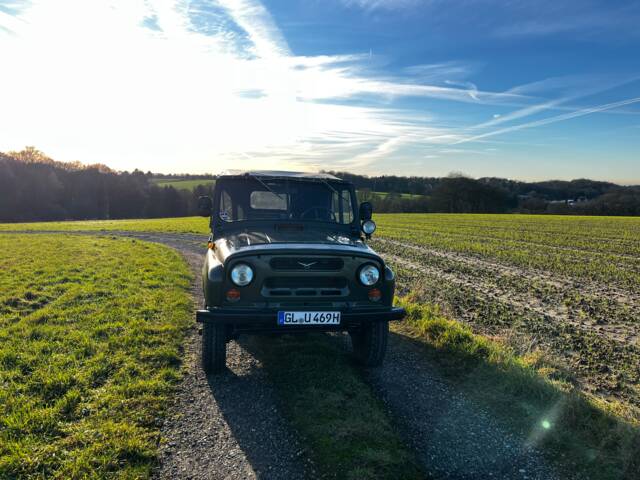
1981 | UAZ 469
UAZ 469 sehr guter Zustand - Portalachsen

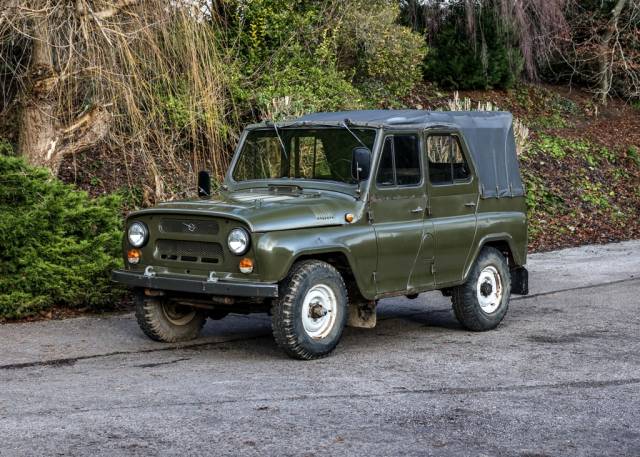
1980 | UAZ 469
UAZ 469 Jeep

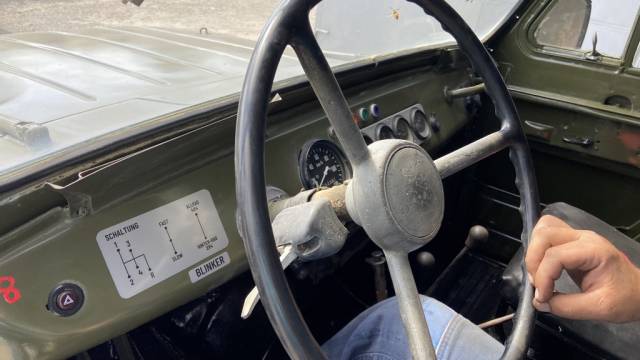
1974 | UAZ 469B
4-wheel with reduction
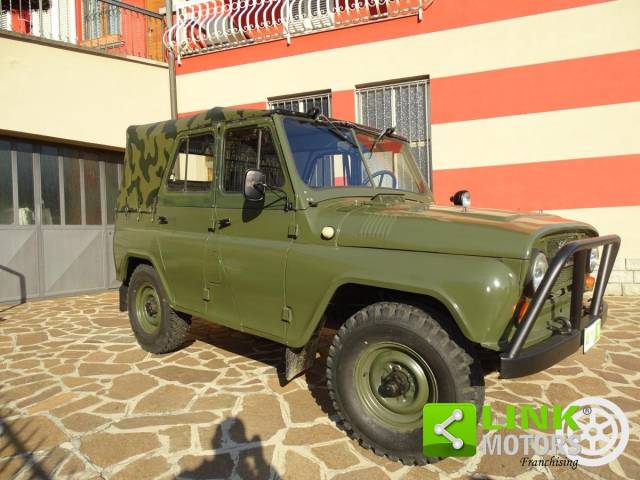
1986 | UAZ 469B
UAZ - 469 B - inscritta all'ASI

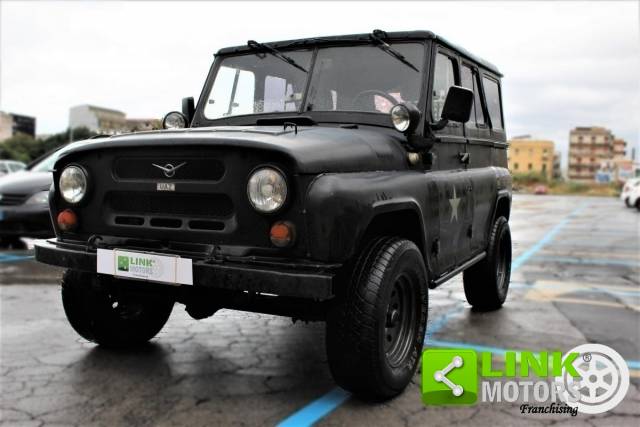
1988 | UAZ 469B
UAZ 469b 2.4 Turbodiesel Autocarro
UAZ 469 Classic Cars: Prices & Market Values
History of the UAZ 469
Launched in 1971, the UAZ 469 emerged as a direct successor to the GAZ-69 and was influenced by the earlier developments of the UAZ-471 and UAZ-460. Originally built for the Soviet military and state authorities, the model's design focused on simplicity, off-road ability, and straightforward repair. The vehicle was not intended for private use at first, but in later years, large numbers found their way into civilian hands as surplus. Built to operate under tough conditions, including fuel with a very low octane rating of 72, the UAZ 469 proved its reliability and became a staple in many Eastern Bloc countries and beyond.
Model series history
The predecessor of the UAZ 469 was the GAZ-69, followed by development stages through the UAZ-471 and UAZ-460. After its introduction, a significant update in 1985, in line with new industry standards, led to a name change: the UAZ-469 became the UAZ-3151, and the UAZ-469B was renamed UAZ-31512. Today, the UAZ Hunter continues this lineage with ongoing production and further modernization. Exported to around 80 countries, the platform has remained a staple of dependable military and civilian service for decades.
Highlights of the UAZ 469
The UAZ 469 features a robust ladder frame for superior off-road capability, a reliable 2.4-litre four-cylinder engine, and can seat up to seven passengers. Its design makes it renowned for restorable mechanics and straightforward technology. The optional soft top allows open-air driving even in challenging terrain. The fact that it operates reliably on low-octane fuel (down to 72 RON) underlines its suitability for less developed infrastructure. After military service, many surplus models moved into private ownership and became a practical alternative for off-road enthusiasts.
Technical data
Special Editions and Collectible Models
In the mid-1980s, the series split into the UAZ-3151 and UAZ-31512, representing lightly modernised versions of the 469 and 469B. The UAZ Hunter represents a modern development, still built and sold in international markets, occasionally under the name 'UAZ Tigr'. Short production runs for specific export markets did exist, but the mechanical basis always remained closely tied to the original 469.
Weak spots and common issues
No explicit documented weaknesses have been provided. However, the UAZ 469’s reputation was built on durability and field serviceability, which means that mechanical wear is usually straightforward to spot and address. Buyers should inspect for typical signs of age on older off-road vehicles, such as frame rust, worn bushings and leaks, though spare parts are relatively easy to obtain.
Engine and performance, transmission and handling
With a 75 hp four-cylinder and robust ladder-frame construction, the UAZ 469 is engineered for demanding off-road use rather than speed. The four-wheel drive system, simple suspension, and high ground clearance provide reliable traction on loose or uneven ground. The manual gearbox and mechanical layout prioritise reliability under all conditions.
Popular examples in the series include: - UAZ 469: Standard military/civil model with exchangeable soft top, up to 7 seats, classic steel wheels and straightforward mechanics.
- UAZ 469B (later 31512): More civilian-oriented, similar running gear, often with added comfort components.
- UAZ Hunter (and UAZ Tigr): Further development retaining core mechanical principles, sometimes offered with improved equipment for export markets.
Interior, comfort, exterior and design
The UAZ 469’s design is unapologetically functional. Body panels are easy to replace; paint schemes historically favour military green, sand, or khaki, while later civilian and export examples featured more varied colours. The spartan cabin is built for ease of cleaning and rapid maintenance, typically offering seating for seven, optionally with a removable roof. The interior includes rubber mats, simple dials, minimal plastic and heavy-duty levers. Optional equipment remains focused on practical needs, such as engine block heaters or additional jerrycan mounts for field use.
Other features
The UAZ 469’s export record is impressive: vehicles have been operated in over 80 countries, in climates ranging from Siberia to the Middle East. Its ‘drive anywhere, fix anywhere’ approach earned it a following outside the Soviet Union for special-purpose and utility applications—from forestry work to emergency services.
Summary
The UAZ 469 exemplifies the rugged, straightforward engineering characteristic of 1970s and 1980s Soviet vehicles. With its substantial production run, legendary status in off-road circles, and enduring presence thanks to direct successors like the UAZ Hunter, it continues to offer enthusiasts a unique blend of affordability, simplicity, and authentic Soviet-era utility.