Trabant Universal classic cars for sale
The Trabant Universal brought practical versatility to the landscape of East German motoring with its compact station wagon body and distinctive two-stroke engine. As a two-door estate, it offered rare flexibility for families and businesses, and remains today a symbol of GDR automotive ingenuity and resourcefulness.
Suchergebnisse
Zur Zeit sind keine passenden Inserate zu Ihrer Suche veröffentlicht.
Create search alert
Let yourself be notified as soon as a listing is published that matches your search filters.
Create listing
Do you have a Trabant Universal that you want to sell? Then create a listing now.
Create listingTrabant Universal listing references from Classic Trader
Below you will find listings related to your search that are no longer available on Classic Trader. Use this information to gain insight into availability, value trends, and current pricing for a "Trabant Universal" to make a more informed purchasing decision.
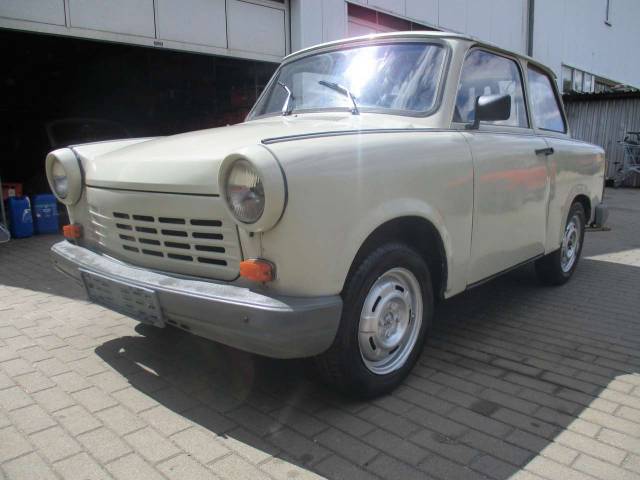
1990 | Trabant Universal 1.1
Trabant 1.1
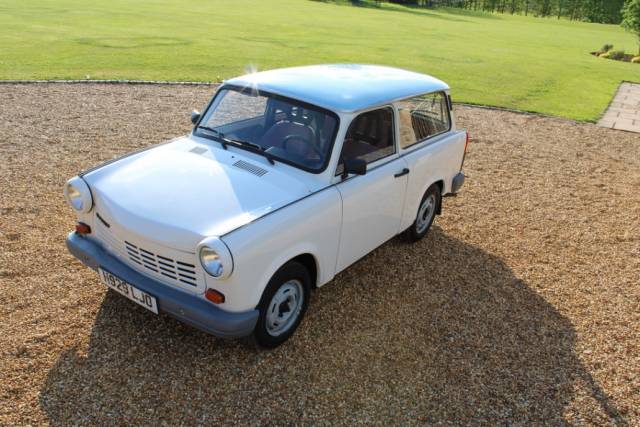
1990 | Trabant Universal 1.1
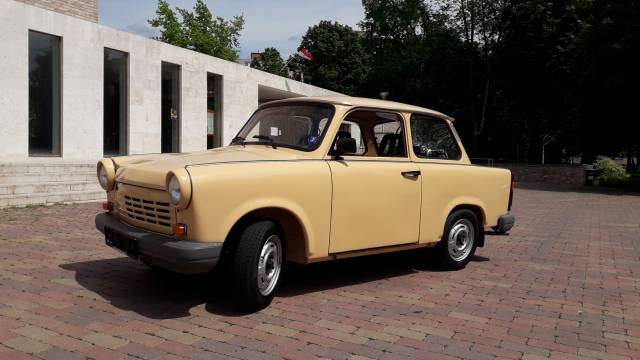
1990 | Trabant Universal 1.1
Trabant 1,1N Limusin
Create search alert
Let yourself be notified as soon as a listing is published that matches your search filters.
Create listing
Do you have a Trabant Universal that you want to sell? Then create a listing now.
Create listingTrabant Universal Classic Cars: Prices & Market Values
History of the Trabant Universal
The Trabant Universal, introduced in 1958, was the station wagon variant of the archetypal Trabant. Born out of the necessity for practical vehicles in the German Democratic Republic, the Universal added carrying capacity to the iconic compact body, all within a length of just 3.36 metres. The hallmark was a utilitarian design featuring a rear hatch, making it a favourite among families and craftspeople alike. The car's body was made of duroplast, a resin-plastic composite, which, combined with its two-stroke engine, underlined the resource-conscious engineering of East Germany. Despite its modest technology, or perhaps because of it, the Trabant Universal became a symbol of perseverance—particularly as waiting times for delivery stretched to years during its production run. Notably, this practical model played a visible role in the waves of emigration from East Germany, with Universals packed to the brim heading west after the opening of the borders in 1989.
Model History
The Trabant Universal was available throughout nearly all production phases of the Trabant. It debuted as part of the P50 series (later called the Trabant 500), fitted with a 500 cc two-stroke engine. Subsequent updates included the P60 (or Trabant 600) in 1962 with a larger 600 cc engine, increasing output to 23 hp. In 1964, the P601 brought most changes to bodywork and further solidified the Universal's presence. The final evolution arrived with the P1100 or Trabant 1.1 in 1989, adopting the cleaner and more modern 1.05-litre four-stroke engine from Volkswagen. Through every phase—even as aesthetic tweaks came and went— the Universal variant remained a mainstay, always offering unique practicality as a two-door estate with a generous boot and rear hatch.
Highlights of the Trabant Universal
Unlike many contemporaries, the Universal’s duroplast body was impervious to rust and remarkably easy to repair with simple materials. The Universal variant set itself apart by offering expanded cargo space while remaining exceptionally compact, making it especially practical for East German roads and city environments. The two-door layout with a rear hatch was, for its time and region, an uncommon but highly functional solution.
Technical Data
Special Editions and Collectible Models
Within the Trabant Universal lineage, changes primarily concerned engine upgrades or minor cosmetic revisions. No true factory special editions are separately documented for the Universal station wagon, but late Trabant 1.1 Universal models equipped with Volkswagen engines enjoy a certain collector status due to their relative scarcity and improved drivability.
Weak Spots and Common Issues
No specific weak spots are documented in the data provided. Generally, buyers should be prudent about typical Trabant issues: potential wear in the two-stroke powertrain, plastic body panels vulnerable to cracking, and general ageing of components—especially if the vehicle was stored under less than ideal conditions in the decades since production.
Engine, Performance, Transmission and Handling
All Universals shared the Trabant’s simple mechanical underpinning, making repairs straightforward for the mechanically inclined. Drive characteristics are marked by modest acceleration, basic drum brakes and an unassisted steering setup. Early models run on a noisy two-stroke that delivers barely more than 20 hp, but excel in keeping running costs ultra-low. The final Universal 1.1, thanks to its VW engine, provides a quieter, more refined drive with improved emissions. - Trabant Universal P50/P60: Basic, reliable transport, defined by spartan engineering.
- Trabant 601 Universal: Most numerous, slightly modernised, and remains widely recognised.
- Trabant 1.1 Universal: Most desirable for regular use due to four-stroke VW engine.
Interior, Comfort, Exterior and Design
Distinctively boxy, the Universal’s design foregrounds practicality—straight, functional lines, simple dashboards, and seating that prioritised space over comfort. Durable, basic cloth and vinyl interiors joined utilitarian plastic trim. Externally, subdued colours dominated, with light hues and pastels most common, although custom paint jobs have become a trend among current owners. The Universal’s roof rack was a popular accessory, making it even more useful for everyday needs. The vehicle’s two-door configuration with a generous tailgate and foldable rear seats maximised cargo versatility, cementing the Universal as an instrument of daily life in East Germany.
Other
Vintage car tours—such as the Trabi Safari in Berlin—see the Universal as a favourite due to its station wagon practicality and post-communist retro charm. Today, the Universal is often used for promotional or event purposes, standing out for its period-correct design and instantly recognisable profile.
Summary
The Trabant Universal stands as the practical branch of the Trabant family tree—unmistakably East German, time-tested against the demands of everyday life, and beloved for its reliability, easy repairs and unmistakable silhouette. Today, it appeals both to collectors interested in automotive history and to those seeking a quirky, practical classic for city driving and events.