- Car
- Stevens-Duryea
- Stevens-Duryea Model X (0 offers)
Stevens-Duryea Model X classic cars for sale
The Stevens-Duryea Model X stands out as a prestigious touring vehicle from the early 1910s, notable for its robust four-cylinder engine, distinctive brass fittings, and advanced engineering features for its era. With its sophisticated appearance and ease of operation, it represents both the luxury and technical ambition of American automaking during the Brass Era.
Search results
Currently, there are no matching listings for your search.
Create search alert
Let yourself be notified as soon as a listing is published that matches your search filters.
Create listing
Do you have a Stevens-Duryea Model X that you want to sell? Then create a listing now.
Create listingStevens-Duryea Model X listing references from Classic Trader
Below you will find listings related to your search that are no longer available on Classic Trader. Use this information to gain insight into availability, value trends, and current pricing for a "Stevens-Duryea Model X" to make a more informed purchasing decision.
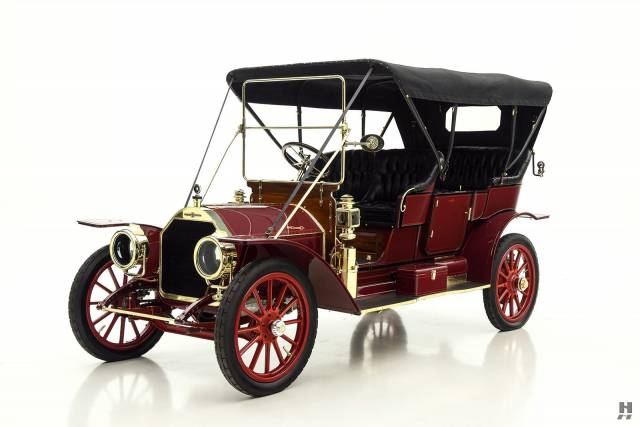
1910 | Stevens-Duryea Model X
Stevens Duryea Model X
Create search alert
Let yourself be notified as soon as a listing is published that matches your search filters.
Create listing
Do you have a Stevens-Duryea Model X that you want to sell? Then create a listing now.
Create listingStevens-Duryea Model X Classic Cars: Prices & Market Values
History of Stevens-Duryea Model X
Stevens-Duryea, founded after the J. Stevens Arms & Tool Company acquired Hampden Automobile & Launch Co., made its mark with robust, quality-built vehicles. The Model X emerged in 1910 as a showcase of their innovation, offering a lengthened 124-inch wheelbase and a foundation for both elegance and mechanical sophistication. Its introduction followed a successful run in motorsport hillclimbs, with Stevens-Duryea earning a reputation for building cars that could outperform rivals with even twice their power output. Financial turbulence impacted the brand through World War I, resulting in changes in ownership and a shift to an almost bespoke manufacturing approach in the 1920s before ceasing operations by 1927.
Model History
The Model X continued Stevens-Duryea's transition from utilitarian two-cylinder runabouts to high-powered, refined touring cars. Following the four-cylinder innovation in 1905, the line expanded to include both four- and six-cylinder vehicles by 1906. The Model X exemplified the company’s focus on the luxury market and incorporated technical concepts proven in competition cars. Its direct predecessor was the proven Stevens-Duryea F models, while later vehicles built after WWI, such as the Model S, evolved the concept further until the brand's insolvency in the 1920s.
Highlights of the Stevens-Duryea Model X
The Model X commands attention through a unique combination of technical refinement and period luxury: notably, its robust 24 hp T-head four-cylinder engine, the pioneering three-point engine mounting for smoother operation on poor roads, and characteristic all-brass fittings, including a Motometer radiator thermometer and full brass headlamps. Its interior with thick, quilted black leather seats and distinctive pyramid-pattern rubber mats set it apart, while standardised controls and the 'self-finding quadrant' gearbox underpin a user-friendly driving experience for its time. The instrument panel, though sparse, is functional, comprising a large Stewart speedometer and clock, underlining the era's focus on essential instrumentation.
Technical data
Special Editions and Collectible Models
While specific factory limited editions of the Model X are not widely documented, individual cars often featured custom coachwork, unique paint accents, or bespoke brass fittings upon request, reflecting their status as luxury machines often tailored to their owners' tastes. These unique combinations significantly influence collectability and value today.
Weak Spots and Common Issues
There is no dedicated list of weak spots for the Stevens-Duryea Model X available in the supplied data. However, as with all Brass Era vehicles, maintenance of the brass components, chassis timber elements, and mechanical simplicity are essential. Prospective owners should give special attention to the preservation of original fittings, the condition of leather upholstery, and the proper functioning of period-correct engine ancillaries and lighting systems.
Engine and Performance, Transmission and Handling
At its core, the Model X offers a smooth, robust driving character thanks to its high-torque, low-revving T-head four-cylinder engine. Period advertising praised its quiet running and effortless starting behaviour. The three-point engine mounting scheme was advanced for its era, significantly benefiting ride comfort over rough roads and terrain common at the time. Standardised controls and thoughtful ergonomics made both touring and daily driving more accessible to less experienced owners—an unusual characteristic among premium vehicles of its time. Among Stevens-Duryea models, the Model X stands out for blending the marque’s technical advances with a prestigious, touring-oriented design. The 1910 version is particularly noted for its long wheelbase and smooth running, making it a highlight for period motoring enthusiasts.
Interior, Comfort, Exterior and Design
Visually, the Model X captures the spirit of early American luxury: a combination of lacquered body panels with hand-painted striping, mounted on sturdy artillery wheels. Polished brass is used throughout—headlamps, radiator shell, horn, and windshield frame—delivering both functional value and period-appropriate look. The passenger compartment features spacious seating for five in hand-finished, buttoned black leather, pyramid-style rubber floor mats for grip and hygiene, and a split windshield that folds for open-air motoring. Dashboard instrumentation is strictly functional, echoing the era’s minimalist approach. Optional extras included a full folding roof, rare at the time for its usability, and individual detailing on bodywork and fittings reflecting customer preferences.
Other relevant features
The Model X is equipped with a Solar acetylene tank for lighting, a hallmark of Brass Era ingenuity. The reputable reliability and refined engineering are cited as reasons why the car is still considered approachable for historic motoring newcomers.
Summary
The Stevens-Duryea Model X is a well-engineered, bespoke luxury vehicle from the dawn of motoring, embodying the technical ambition and design elegance of its period. Its combination of robust mechanical components, pioneering three-point engine mounting, and elegant aesthetic cues in brass and leather marked it out as a premium choice in its time—and it remains a fascinating, usable classic to this day.