- Car
- Stevens-Duryea
- Stevens-Duryea Model C (0 offers)
Stevens-Duryea Model C Classic Cars for Sale
The Stevens-Duryea Model C epitomises early American automotive craftsmanship, targeting affluent drivers with its refined engineering, luxury cabin features, and commanding six-cylinder performance. Distinguished by lavish materials and technical innovation, the Model C stands as a benchmark for prestige and mechanical excellence among veteran touring vehicles.
Search results
Currently, there are no matching listings for your search.
Create search alert
Let yourself be notified as soon as a listing is published that matches your search filters.
Create listing
Do you have a Stevens-Duryea Model C that you want to sell? Then create a listing now.
Create listingStevens-Duryea Model C listing references from Classic Trader
Below you will find listings related to your search that are no longer available on Classic Trader. Use this information to gain insight into availability, value trends, and current pricing for a "Stevens-Duryea Model C" to make a more informed purchasing decision.
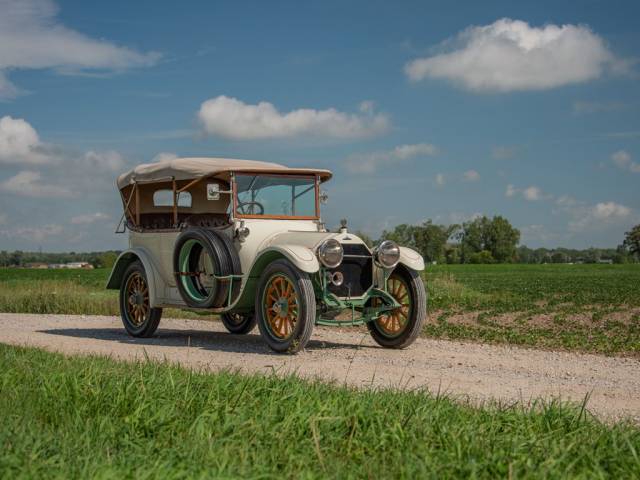
1913 | Stevens-Duryea Model C
1913 Stevens-Duryea Model C-Six Seven-Passenger Touring
Create search alert
Let yourself be notified as soon as a listing is published that matches your search filters.
Create listing
Do you have a Stevens-Duryea Model C that you want to sell? Then create a listing now.
Create listingStevens-Duryea Model C Classic Cars: Prices & Market Values
Introduction and history of Stevens-Duryea Model C
Production of Stevens-Duryea vehicles began in late 1901, rapidly establishing the brand as a mark of uncompromising quality in the North American market. Initial offerings, such as lightweight two-cylinder runabouts, set the brand's technological tone—incorporating robust three-speed gearboxes and wire-spoked wheels, at a time when most rivals offered more basic solutions at a fraction of the price. This early commitment to advanced engineering and exclusivity solidified Stevens-Duryea's reputation among discerning buyers. The company’s ethos, embodied in their motto 'There is No Better Motor Car', was more than marketing: it reflected a rigorous attention to detail and innovation. By the 1910s, models like the Model C were firmly geared towards wealthy clientele, with frequent upgrades to components and interior comfort, demonstrating a relentless pursuit of excellence.
Model history
The Model C traces its lineage back to the earliest Stevens-Duryea vehicles, evolving out of the firm’s original runabouts. These foundational models gave way over the years to increasingly sophisticated vehicles, culminating in the large six-cylinder touring cars of the 1910s. The Model C-Six, introduced in 1913, sat on a prodigious 138-inch wheelbase and was powered by a 48 HP, 8.1-litre twin-ignition engine, rivalling the performance and luxury of contemporaries such as Packard. Production remained highly exclusive, typically under 100 units per year, and after the company’s acquisition by Ray M. Owen’s consortium in the early 1920s, manufacturing shifted to a bespoke, by-order basis. The Stevens-Duryea marque was ultimately retired around 1927.
Highlights of the Stevens-Duryea Model C
The Stevens-Duryea Model C distinguishes itself with a raft of technical and comfort-oriented features—wooden instrument panels integrating Warner drum speedometers, period-accurate instrument clocks, and a full suite of dashboard controls. Seating is notably generous, with 'sofa-sized' leather upholstery hand-finished with cotton-buttoned padding. Exterior equipment includes a grand beige canvas top, ventilated windshield, and twin spare tyres. With its large, technically advanced engine and prestigious branding, it attracted an elite clientele, such as George Vanderbilt.
Technical data
Special Editions and Collectible Models
Among Stevens-Duryea’s Model C variations, the Model C-Six is particularly notable due to its oversized motor, bespoke luxury fitments, and high price point. Limited production numbers and the frequency of custom orders following the early 1920s have resulted in considerable variation among surviving examples, further enhancing their exclusivity and collector appeal.
Weak Spots and Common Issues
No specific common technical issues or weak spots have been reported for the Model C in the summary information provided. That said, potential owners should expect the typical maintenance and sourcing challenges associated with pre-WWI American luxury vehicles, including availability of bespoke mechanical parts and period-correct trim components.
Engine and Performance, Transmission and Handling
The Model C, particularly in its six-cylinder 'C-Six' configuration, delivers considerable performance for its time, featuring a twin-ignition 8.1-litre engine rated at 48 HP. The three-speed manual box provides commendable flexibility for touring, while steering precision and braking were strong for the period. Its chassis layout, with elongated wheelbase and robust running gear, prioritises ride comfort and stability over sporting agility. Especially highlighted is the Model C-Six, recognised for its advanced engine layout and technical accoutrements, earning its place as a flagship amongst the Model C range.
Interior, Comfort, Exterior and Design
Design and execution in the Model C series is unapologetically stately—large green-lacquered chassis and wheels, a single-piece timber-framed windscreen with an articulated lower half for ventilation, and a high-quality beige canvas top for weather protection. Inside, the immense, button-tufted leather seating epitomises period luxury. Dashboards employed fine woodwork, hosting period-appropriate clocks, tachometers, and air-start system gauges. Exterior fitments—like nickel-finish headlamps, multiple spare wheel mounts, and a large touring trunk—underscore its orientation to comfortable, long-distance touring. Details such as green-tinted lamps and MotoMeter radiator adornments further characterise the model’s attention to both aesthetics and functionality.
Other relevant features
The Model C’s market positioning as a vehicle of 'prestigious conservatism' and its use by wealthy families like the Vanderbilts signal its status beyond mere transportation. Owners can expect a driving experience tailored for leisurely grand touring, embodied by thoughtful features like a right-sided bulb horn and a ventilated windscreen.
Summary
The Stevens-Duryea Model C is a paragon of early twentieth century American engineering—rare, technically sophisticated, and unashamedly luxurious. Targeted at an exclusive clientele and specified with period leading-edge equipment, it remains a touchstone for connoisseurs seeking both historical authenticity and artisanal manufacture in a pre-war classic car.