Solyto TC-7 classic cars for sale
The Solyto TC-7 stands out in the world of classic microvans for its unique French agricultural heritage and innovative lightweight design. As a rare three-wheeler, it combines utilitarian practicality with unmistakable vintage charm, making it a sought-after curiosity among enthusiasts and collectors.
Search results
Currently, there are no matching listings for your search.
Create search alert
Let yourself be notified as soon as a listing is published that matches your search filters.
Create listing
Do you have a Solyto TC-7 that you want to sell? Then create a listing now.
Create listingSolyto TC-7 listing references from Classic Trader
Below you will find listings related to your search that are no longer available on Classic Trader. Use this information to gain insight into availability, value trends, and current pricing for a "Solyto TC-7" to make a more informed purchasing decision.
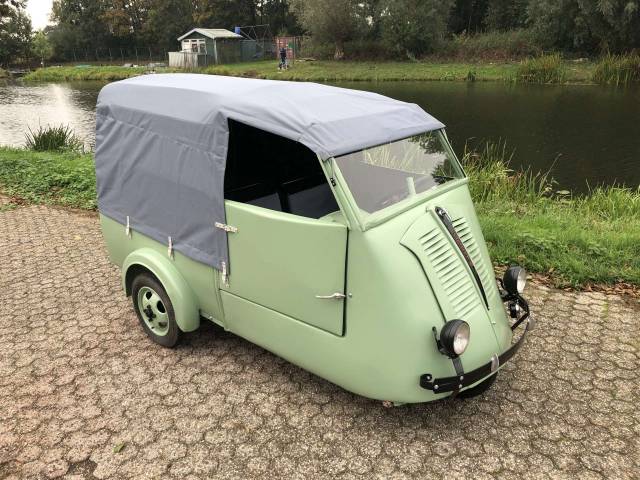
1957 | Solyto TC-7
Create search alert
Let yourself be notified as soon as a listing is published that matches your search filters.
Create listing
Do you have a Solyto TC-7 that you want to sell? Then create a listing now.
Create listingSolyto TC-7 Classic Cars: Prices & Market Values
History of the Solyto TC-7
The Solyto TC-7 was developed in France during the 1950s as a practical solution for urban and rural deliveries. Designed by the New-Map company, known for lightweight vehicles and motorbikes, the TC-7 fits neatly into the post-war trend of affordable, efficient transport for small businesses and independent tradesmen. Unlike mainstream vans of its era, the Solyto TC-7 embraced a minimalist three-wheeled layout, allowing for low production costs and high maneuverability in tight town environments. Its production run extended through the late 1950s into the early 1960s, marking a short but significant chapter in the evolution of micro-commercial vehicles.
Model History
The TC-7 charted its own niche, being a part of Solyto’s limited series of compact utility vehicles. Its precursor, the Solyto microcar, provided the platform but the TC-7 differentiated itself with a van-like cargo area to meet commercial needs. No direct successor followed after the eventual halt in production, and the TC-7 remains a distinct relic from the microvan era that faded as the European car market shifted towards more robust and conventional four-wheeled vans.
Highlights of the Solyto TC-7
The standout feature of the Solyto TC-7 is indisputably its three-wheeled configuration paired with a lightweight chassis, yielding extraordinary agility for city transport. Its compact dimensions enabled nimble navigation through narrow urban streets and courtyards, while the simple mechanical setup kept running costs down. The characteristic round headlights and functional cargo area lend it a unique appearance, and its rarity ensures high interest among collectors.
Technical Data
Special Editions and Collectible Models
There are no widely documented special editions of the Solyto TC-7, as the model’s entire production was limited and variants were largely utilitarian, with differences mainly related to cargo configurations or optional extras for specific trades.
Weak Spots and Common Issues
Due to the absence of modern comforts and reliance on basic mechanicals, the Solyto TC-7 generally requires attention to standard issues of elderly microvans. Watch for corrosion in the sheet metal body, wear in the suspension components due to the three-wheeled layout, and fatigue in the small displacement engine. Finding original parts is often the main challenge for restoration, as is the case with many rare French classics.
Engine and Performance, Transmission and Handling
The Solyto TC-7 is tailored for low-speed, urban driving. Its engine delivers enough power for city logistics but little more, making it unsuitable for fast intercity travel. The three-wheel arrangement provides a tight turning radius but demands cautious driving, especially with full loads or on uneven surfaces. Manual shifting is straightforward thanks to the minimal power and simple clutch system. The TC-7 model itself is the highlight within the Solyto lineup due to its van body, with slight technical differences noted between early and late production; some examples may have minor modifications reflecting their use in specific sectors.
Interior, Comfort, Exterior and Design
The exterior is utilitarian, integrating round headlamps, exposed rivets, and a pronounced cargo bed, giving it undeniable retro character. Interiors are spartan, often featuring only basic seating, a simple instrument panel, and minimal sound insulation. Original paint schemes favoured muted commercial hues, but period custom liveries exist from ex-businesses. Special accessories could include period-correct racks, boxes, or canvas covers specific to customer requirements, further boosting its functional appeal.
Other relevant features
Some Solyto TC-7 survivors have been restored with custom signwriting or adapted for light leisure use at events and shows. Its rarity means club and enthusiast support is concentrated, but a small dedicated community is passionate about keeping these characterful machines on the road.
Summary
If you are looking for a classic commercial microvan with unique mechanical character and French post-war ingenuity, the Solyto TC-7 offers a compelling slice of motoring history. Its compact footprint, rarity, and pure utilitarian design provide a distinctly different experience from mainstream classics.