Rochdale GT classic cars for sale
The Rochdale GT stands out as a pioneering British sports car featuring a lightweight fibreglass body and a focus on customisation. Known for its approachable engineering, the GT presents a unique opportunity for enthusiasts keen on hands-on motoring and vintage car culture.
Search results

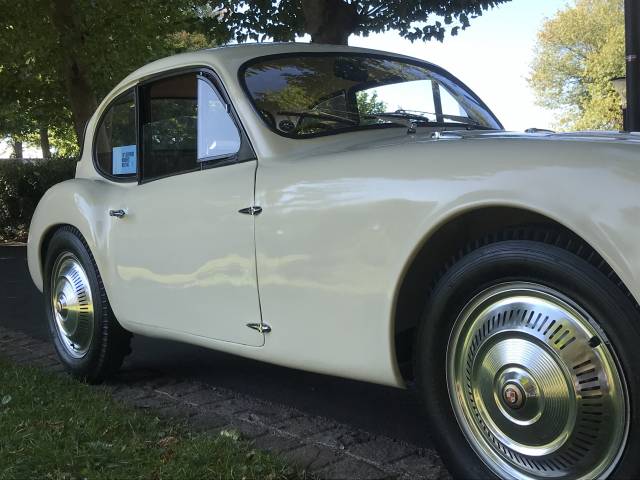
1960 | Rochdale GT
ROCHDALE GT 1 VON 5 ORIGINAL FAHRZEUGEN 1367GJJ

Rochdale GT listing references from Classic Trader
Below you will find listings related to your search that are no longer available on Classic Trader. Use this information to gain insight into availability, value trends, and current pricing for a "Rochdale GT" to make a more informed purchasing decision.

1957 | Rochdale GT
Rochdale MKVI Roadster 1955 Ford Special Teilrestauriert
Rochdale GT Classic Cars: Prices & Market Values
History of the Rochdale GT
The Rochdale GT emerged in the late 1950s, designed by the Rochdale Motor Panels company in Greater Manchester as one of the first affordable fibreglass-bodied sports cars in the UK. Targeting the growing kit car market, its body was sold both as a standalone shell and in ready-to-assemble kits, attracting hands-on car builders. Its purpose was to provide an attainable route to high-performance driving during an era when new car taxes and postwar austerity made sports cars unaffordable for many.
Model History of the Rochdale GT
The GT followed Rochdale’s earlier models, such as the Mark VI, but marked a shift to a more refined, stylish coupé. Its popularity led to the development of successors like the Rochdale Olympic – a more advanced monocoque design. The GT remains significant for being the most emblematic and commonly seen Rochdale, both in period and in today’s historic motorsport circles.
Highlights of the Rochdale GT
The Rochdale GT’s main features include a robust fibreglass body, which not only made it lighter than rival offerings but also resistant to rust. Owners could mount the bodyshell on a variety of donor chassis (often Ford or Austin), customising the drivetrain and suspension to their liking. Its sleek two-door coupé shape has nostalgic appeal among kit car enthusiasts and those interested in British sports car innovation of the 1950s and 1960s.
Technical Data for the Rochdale GT
Special Editions and Collectible Models
No official factory special editions existed for the Rochdale GT, but individuality was guaranteed by the kit format. Some cars were equipped with higher-spec engines, custom dashboards, or period racing components, adding to their uniqueness. A handful were prepared for historic motorsport, making those with competition history especially interesting to collectors.
Engine and Performance, Transmission and Handling
Performance characteristics of the Rochdale GT depend entirely on the mechanical components used during the build. With a lightweight fibreglass shell and a low centre of gravity, GTs can exhibit nimble handling and sprightly acceleration even with modest engines. The mechanical simplicity appeals to those who enjoy spirited, analogue driving and easy home maintenance. Some models with upgraded drivetrains and tuned suspensions have been quite successful in club-level classic motorsport. By far the most widespread variant is the two-door coupé GT on either Ford or Austin chassis, often powered by Ford’s 'pre-crossflow' or 'A-series' engines. Cars upgraded with period racing parts and contemporary suspension improvements are particularly valued by enthusiasts interested in vintage motorsport.
Interior, Comfort, Exterior and Design
The GT’s design is best described as purposeful: a curvaceous coupé silhouette with minimalist interior trim, often finished by the first owner. Fibreglass construction allowed for distinctive shapes and custom touches. Accessories from era-appropriate wood-rimmed steering wheels to bespoke dashboards are common, making each GT unique. Most GTs were painted in bold period colours – reds, blues, and greens dominate – and features such as light-weight Perspex glazing were typical for those aiming for competition use.
Other Notable Features and Context
The Rochdale GT is a key representative of Britain’s postwar kit car movement, a scene that spurred innovation due to high vehicle taxation and restrictive new-car costs. Survivors today are cherished by club communities, who offer support with period-correct restoration and sourcing of original parts.
Summary
As the most significant model from Rochdale, the GT encapsulates a do-it-yourself ethos in classic car culture. Its dominance in both supply and demand figures demonstrates its status among British kit cars. For drivers seeking a hands-on classic experience—whether for restoration, historic racing, or weekend drives—the Rochdale GT remains a fascinating chapter of motoring history.