- Car
- Polski FIAT
- Polski FIAT 125p (0 offers)
Polski FIAT 125p classic cars for sale
The Polski FIAT 125p stands out with its unique blend of Italian design and Polish engineering, produced domestically between the late 1960s and early 1990s. With its easily recognisable squared-off silhouette, simple mechanics, and distinctive driving character, the 125p is a benchmark for Eastern Bloc saloon cars. Its proven reliability and historical significance make it an unmistakable presence on the classic car market.
Search results
Currently, there are no matching listings for your search.
Create search alert
Let yourself be notified as soon as a listing is published that matches your search filters.
Create listing
Do you have a Polski FIAT 125p that you want to sell? Then create a listing now.
Create listingPolski FIAT 125p listing references from Classic Trader
Below you will find listings related to your search that are no longer available on Classic Trader. Use this information to gain insight into availability, value trends, and current pricing for a "Polski FIAT 125p" to make a more informed purchasing decision.
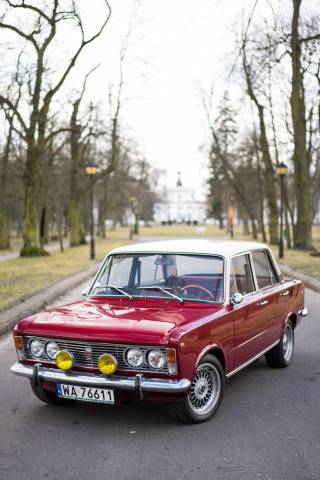
1968 | Polski FIAT 125p
2.0 DOHC
Create search alert
Let yourself be notified as soon as a listing is published that matches your search filters.
Create listing
Do you have a Polski FIAT 125p that you want to sell? Then create a listing now.
Create listingPolski FIAT 125p Classic Cars: Prices & Market Values
History of the Polski FIAT 125p
In the second half of the 1960s, under a licence agreement between Poland and Fiat, Fabryka Samochodów Osobowych (FSO) in Warsaw began production of the Polski FIAT 125p. The car was based on the Fiat 125 platform but was simplified for Eastern European infrastructural conditions. While the body style closely followed the Italian original, mechanics were robustified using proven Fiat 1300/1500 technology. This allowed for easier maintenance in Poland's challenging environment. Through state contracts and private ownership, the 125p became a staple of Polish roads and a symbol of social mobility – both as taxis and family saloons.
Model History of the Polski FIAT 125p
Production of the 125p began in 1967 and ran until 1991, outliving many Western saloon contemporaries. The initial versions used 1.3 or 1.5-litre inline-four engines, mostly carburetted for simplicity. Over time, minor facelifts and mechanical upgrades occurred, including updates to safety equipment and the introduction of estate (Kombi) and pick-up variants. In the late 1970s and 1980s, as licensing expired, the car was sometimes called the FSO 125p. The 125p did not have a direct predecessor in Poland – it replaced the Warsaw FSO Syrena in higher market segments. Its successor was the FSO Polonez, which inherited much of its running gear.
Highlights of the Polski FIAT 125p
The 125p’s large-format body, unpretentious trim, and straight-line aesthetics set it apart from domestic contemporaries. Simplicity of construction, high ground clearance, and forgiving mechanics made the 125p a practical choice for Eastern Bloc roads. The car is notable for its straightforward rear-wheel-drive setup and robust steel construction, resulting in excellent longevity if properly maintained.
Technical Data
Special Editions and Collectible Models
Special series of the 125p included the Kombi estate version, offering greater cargo capacity, and the 125p Pick-up adapted for commercial use. Limited editions were occasionally produced for export markets, which featured unique paint finishes or upgraded interior trim. Early series models manufactured in the late 1960s and select export models equipped with Italian Fiat engines are valued by specialists due to their rarity and increased performance compared to standard domestic variants.
Weak Spots and Common Issues
The 125p’s mechanical simplicity benefits longevity, but buyers should examine for corrosion around wheel arches, sills, and floor pans. These models, especially those built before the 1980s, can suffer from poor rustproofing. The carburettor and ignition system require routine fine-tuning for reliable running. Interior fittings and dashboard plastics have moderate durability and may show wear on vehicles exposed to harsh conditions. Gearbox syncros and rear axle seals demand specific attention during pre-purchase inspection.
Engine and Performance, Transmission and Handling
The inline-four engines (1.3 or 1.5L) produce between 60 and 75 bhp. This provides practical but not sporty acceleration, with top speeds spanning 135–145 km/h depending on variant. The driving experience is defined by direct, mechanical steering feel and a soft suspension setup – suited for rough and uneven road surfaces common in its home market. The 4-speed gearbox is robust, but period reviews noted long throws and a notchy shift action. Road holding is predictable at modest speeds, although tendency to body roll is present when cornering enthusiastically. Popular variants include the early 'chromówka' (chrome-bumper) saloons, the Kombi estate for utility fans, and export models with full Fiat engines and additional extras. Each version has its own enthusiast following based on usability and period distinction.
Interior, Comfort, Exterior and Design
The 125p’s body, styled under Fiat’s direction, uses straight lines and large glass surfaces for excellent visibility. Interior design prioritises functionality, with hard-wearing vinyl seats and simple dashboard layouts. Some export models received wooden dash overlays and improved trim. Standard equipment was modest, but the Kombi boasted folding rear seats for added practicality. No electronic luxuries were available, in line with the car’s utilitarian mission. Certain Polish colours – such as pastel blue and olive – are now particularly sought after.
Other Relevant Features
With production spanning more than two decades, the 125p was available as both left- and right-hand drive for export. The 125p’s visibility in period films and as a police and taxi vehicle cemented its position in Polish automotive culture.
Summary
The Polski FIAT 125p represents straightforward engineering and honest design, specifically developed and adapted for the Eastern Bloc’s requirements. Its high supply and consistent demand underscore lasting interest. For collectors and enthusiasts, the 125p offers an accessible classic with historical worth, availability of parts, and an unmistakable character on European roads.