Penske PC classic cars for sale
The Penske PC series consists of highly respected racing cars that defined Penske's approach to innovation in motorsport engineering. Known for their competitive prowess in American open-wheel racing, these distinguished vehicles are a sought-after find for collectors passionate about historic racing technology.
Search results
Currently, there are no matching listings for your search.
Create search alert
Let yourself be notified as soon as a listing is published that matches your search filters.
Create listing
Do you have a Penske PC that you want to sell? Then create a listing now.
Create listingPenske PC listing references from Classic Trader
Below you will find listings related to your search that are no longer available on Classic Trader. Use this information to gain insight into availability, value trends, and current pricing for a "Penske PC" to make a more informed purchasing decision.
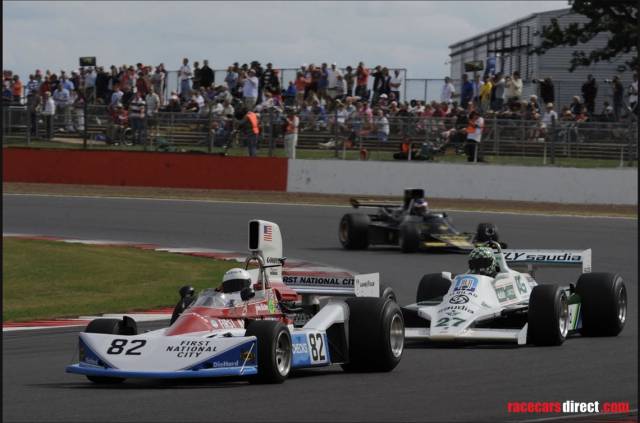
1976 | Penske PC3
1976 Other Penske PC3 Formula 1 Ford Cosworth DFV
Create search alert
Let yourself be notified as soon as a listing is published that matches your search filters.
Create listing
Do you have a Penske PC that you want to sell? Then create a listing now.
Create listingPenske PC Classic Cars: Prices & Market Values
History of the Penske PC series
Roger Penske’s race team revolutionised American single-seater racing, especially with the introduction of the Penske PC series in the 1970s and 1980s. Designed by renowned engineers such as Geoff Ferris, the PC series dominated the IndyCar circuit, regularly fighting for wins at the Indianapolis 500 and across the Champ Car calendar. Each Penske PC chassis was a technical leap forward, utilising advanced aerodynamics, lightweight materials, and integration of team-driven innovations. This combination set standards in racing performance and construction quality for the era.
Model history of the Penske PC
The Penske PC lineage began in the early 1970s, with sequential numbering marking significant evolutionary steps—such as PC1, PC4, PC6, up through PC23 and beyond. These models reflect Penske’s relentless pursuit of speed and efficiency. Earlier PCs, such as the PC1, focussed on reliability, while later editions like the PC17 and PC23 became race winners, adapting to changing regulations, new engines (notably Cosworth and Ilmor units), and advancing safety technology. The continuous refinement makes tracing PC development a snapshot of innovation in American motorsport history.
Highlights of the Penske PC series
The hallmark of the Penske PC cars is their fusion of aerodynamics and engineering precision—an approach that yielded victories at major events and provided Penske Racing with its trademark consistency. Noteworthy features include ground effects from the late 1970s, adaptable chassis, and seamless integration between car and power unit. Many PCs were tailored to specific circuits or seasons, making each car a unique technical achievement.
Technical data for the Penske PC series
Special Editions and Collectible Models
Some Penske PCs achieved legendary status in motorsport history—for example, the Penske PC23, which powered Al Unser Jr. to Indianapolis 500 victory in 1994 with the unique Mercedes-Benz 500I engine. Cars that won major races or carried notable drivers are especially valued among collectors and historic racers.
Engine and Performance, Transmission and Handling
Penske PC models are famous for their race-bred performance. Engine options evolved over time, starting with the Ford Cosworth DFX turbo V8, with later versions employing Ilmor-Chevrolet power units. Power output typically exceeded 700 hp, with top speeds well north of 220 mph on superspeedways. The chassis engineering delivered impressive mechanical grip, while the finely-tuned aerodynamics enabled precise handling on fast ovals and road circuits alike. Highlights in the range include the PC6 (which won the 1979 Indy 500 with Rick Mears), the PC10 (notable for multiple wins in the 1982 season), and the PC23 (dominant in 1994 with the Mercedes secret engine). All employed innovative transmission systems and high downforce set-ups tailored for each track.
Interior, Comfort, Exterior and Design
Every Penske PC was purpose-built for competition, focused on minimal weight and maximum driver ergonomics in the cockpit. Carbon fibre and Kevlar panels characterised later versions, while early PCs used aluminium skins. Distinctive features include wide, low-slung bodywork, integrated sidepods, and functional rear wings optimised for different circuits. Cockpits were designed with a view to safety during high-speed accidents, integrating the best available harness and fire-suppression technology of their day. Livery and graphics often reflected team sponsors and changed yearly.
Other relevant features
Given their race car nature, Penske PC models are typically found either in museum-quality restored form or as ongoing competition vehicles in historic racing series. Documentation, provenance, and evidence of major race entries substantially increase the relevance of each example.
Summary
The Penske PC series stands as a testament to the peak of American-developed racing technology during the era of ground effect and turbocharged IndyCar competition. Exclusively represented in the current market, these machines captivate buyers looking for authentic, competitive, and influential single-seaters from one of motorsport’s most innovative teams.