NSU 1000 classic car for sale
The NSU 1000 stands out among compact classic saloons for its engineering, dynamic capability and motorsport provenance. Produced from 1964, its lightweight rear-engine layout and tunable four-cylinder engine make it a favourite among enthusiasts and those seeking a competitive entry point into historic motorsport. The range includes highly sought-after performance derivatives such as the TT and TTS.
Suchergebnisse
Zur Zeit sind keine passenden Inserate zu Ihrer Suche veröffentlicht.
Create search alert
Let yourself be notified as soon as a listing is published that matches your search filters.
Create listing
Do you have a NSU 1000 that you want to sell? Then create a listing now.
Create listingNSU 1000 listing references from Classic Trader
Below you will find listings related to your search that are no longer available on Classic Trader. Use this information to gain insight into availability, value trends, and current pricing for a "NSU 1000" to make a more informed purchasing decision.
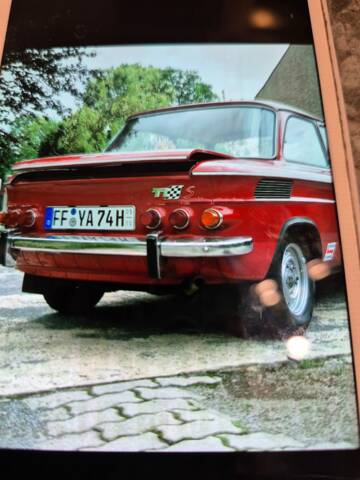
1967 | NSU 1000
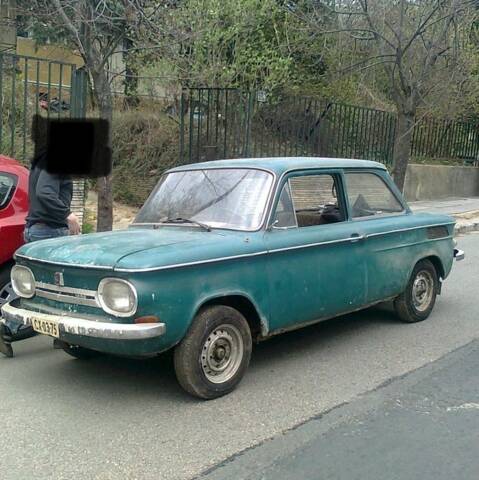
1969 | NSU 1000
NSU - 1000c - NO RESERVE - 1969
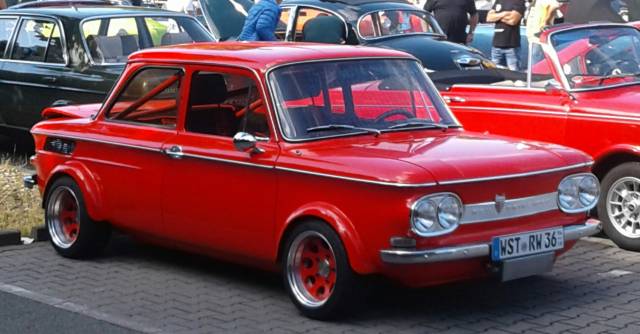
1971 | NSU 1000
1240er Doppelzünder
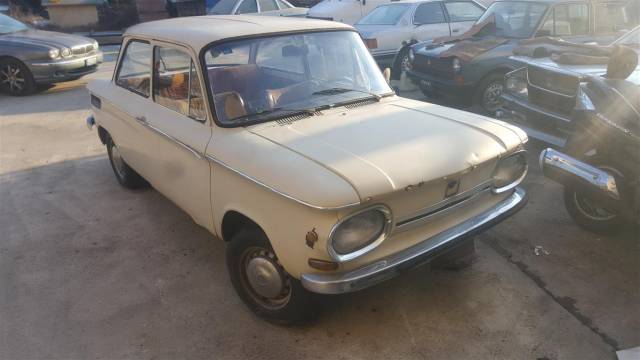
1972 | NSU 1000
Auto gespeichert, um wiederhergestellt zu werden
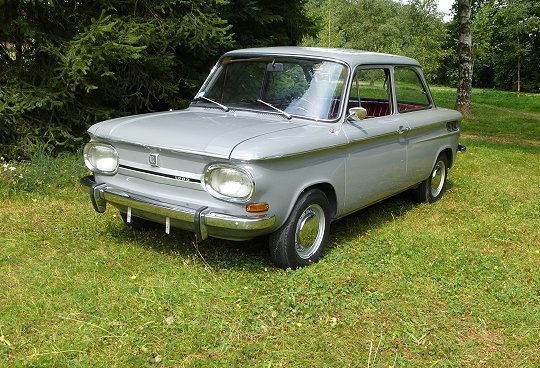
1970 | NSU 1000
NSU 1000 CL
Create search alert
Let yourself be notified as soon as a listing is published that matches your search filters.
Create listing
Do you have a NSU 1000 that you want to sell? Then create a listing now.
Create listingNSU 1000 Classic Cars: Prices & Market Values
History of the NSU 1000
Introduced in 1964, the NSU 1000—known initially as the NSU Prinz 1000—was NSU’s evolution of the Prinz 4 platform. Measuring 3.8 metres in length, its proportions were slightly enlarged, and it featured a rear-mounted, air-cooled four-cylinder engine producing 43 PS. The NSU 1000 was only available as a two-door saloon. Its modern independent rear axle delivered dynamic handling, a trait that set it apart from other economy cars of the era.
The car’s design was influenced by the transatlantic trend towards rounder bodywork, reminiscent of the Chevrolet Corvair. Although conceived for the budget-conscious family market, its excellent power-to-weight ratio led to a strong presence in motorsport, especially rallying and hill climbs.
Though the first-generation NSU 1000 ended production in 1967, the platform lived on as the NSU 1000 C until 1972, after which almost 200,000 cars of the series had been produced.
Model series history
The NSU 1000 line succeeded the NSU Prinz 4 and eventually gave rise to the high-performance TT and TTS models. The name 'Prinz' was dropped in 1967, and the car became known as the NSU 1000 C, marking the introduction of adaptations to run on regular-grade petrol with slightly reduced output (40 PS) and a small weight increase. A notable evolution was the introduction of the NSU 1000 TT and TTS variants, purpose-built for motorsport with lighter kerb weights, reinforced drivetrains, and enhanced power units. The series concluded with the end of 1000 C and TTS production in 1972. Its successor in the sporting small car segment was the NSU 1200 and later the NSU 1200 TT.
Highlights and unique features
One of the remarkable aspects of the NSU 1000 is its technical sophistication relative to its market segment. The independent rear suspension, rear engine placement and compact drivetrain provided excellent road holding and weight distribution. Details such as the tail lamps with downward-projecting rear reflectors, and the wide-ranging options for tuning, set the NSU 1000 apart from contemporary rivals. The vehicle’s modularity has led to a thriving aftermarket for performance modifications, and its suitability for competitive motorsport is well established. Features often found on upgraded or competition cars include dual carburettors, performance camshafts, adjustable suspension, enhanced brakes and lightweight racing accessories.
Technical data
Special editions and collectible models
The NSU 1000 TT and TTS are particularly noteworthy. The TT, aimed for more spirited driving, featured higher output, while the rare TTS variant—produced in limited numbers from 1967—offered up to 85 PS from the same 996cc block, recognition for its still-unobtainable weight-to-power ratio, and specific upgrades (such as external oil coolers and alloy wheels). Only around 2,400 examples of the TTS were built, explicitly for motorsport homologation.
Weak spots and common issues
Although robust, classic NSU 1000 models may present certain age-related challenges such as corrosion (especially in untreated cavities and around the sills), as well as mechanical wear on suspension and drivetrain components due to the car’s sporting use and high-revving nature. Performance versions and tuned examples can have modified or stressed components, so it is important to check the documentation and the condition of engine internals, gearbox, and braking system. Proper maintenance and documentation are crucial, especially for vehicles with substantial modifications.
Engine, transmission and handling
With a naturally aspirated engine capable of thriving at high revs, paired with a rear-wheel-drive chassis and independent suspension at the back, the NSU 1000 was considered among the best handling compact saloons of its time. The innovative rear axle design set a high benchmark in driving dynamics, especially notable in the TT and TTS variants, which benefited from tuned motors, uprated brakes and tighter suspensions. Many vehicles have been heavily modified for motorsport with features such as double carburettors, short-shift gear levers, reinforced engine mounts, custom alloy wheels, and additional instrument clusters. - NSU 1000 TT: Upgraded engine, rally-proven reliability.
- NSU 1000 TTS: Rare model, 85 PS, built for competition with distinctive accessories (e.g., additional oil coolers).
- NSU 1000 C: Everyday usability, modern engine tune, modest output (40 PS), highest production number.
Interior, comfort, exterior and design
The NSU 1000, styled with smooth, round lines and a compact silhouette, drew inspiration from larger American compacts, notably the Chevrolet Corvair. Early cars featured distinctive design touches like chrome bumpers, downward-facing tail lamps, classic round dials and purposeful, minimalist dashboards. The standard specification was spartan, but sports variants or retrofitted cars frequently include bucket seats, sports steering wheels, and optional racing harnesses. Common visual enhancements include racing stripes, widened wheel arches, custom light alloy wheels (such as Spiess 7x13"), and period-correct accessories such as external oil coolers and roll cages. Some models are seen with tinted Perspex racing windows and lightweight body panels due to motorsport preparation.
Other features and noteworthy details
A considerable number of NSU 1000s, especially TT and TTS variants, undergo extensive modification for competitive events. Accessories and technical improvements are widely available—from specialist suppliers (like Spiess or Sälzer Motorsport) providing bespoke suspension, reinforced anti-roll bars and upgraded oiling systems. Restoration and preservation work is common, given the car’s motorsport fame and scarcity of unrestored examples. Many vehicles have had motorsport-specific modifications added to the registration papers, with some no longer road legal, but retained for historic racing.
Summary
The NSU 1000 is a genuine standout in the market for classic, compact saloons, offering engaging dynamics, tunability and competition heritage. It enjoys a prominent supply and demand within the NSU brand according to Classic Trader statistics. Thanks to a thriving scene for period-correct modifications and a respected motorsport history, both standard and performance variants such as the TT and TTS are much sought-after by enthusiasts looking for authentic driving experiences or eligible cars for historic competition.