- Car
- Mitsubishi
- Mitsubishi L300 (1 offer)
Mitsubishi L300 classic cars for sale
The Mitsubishi L300 offers a unique take on the classic van, blending Japanese engineering with a distinctive cabover design. Known for its versatility as both a commercial workhorse and a robust passenger transporter, the L300 has proven its durability across generations. Prospective buyers will find a model with global appeal, recognised under various names in export markets, that delivers practical utility and mechanical reliability.
Search results
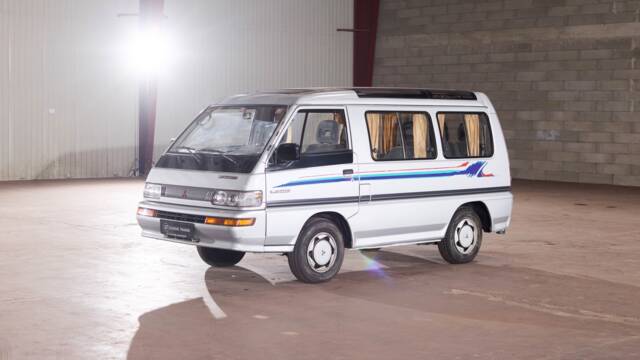
1993 | Mitsubishi L300
Mitsubishi L300 Luxury/Panorama with Crystal Lite Roof, original paint and original decals – in collector ownership since 2018

Mitsubishi L300 Classic Cars: Prices & Market Values
History of the Mitsubishi L300
The Mitsubishi L300, launched as part of the Delica family in 1968, quickly found traction in markets far beyond Japan. Developed from the delivery-focused Mitsubishi Delica, the L300 became a staple van in many countries due to its cabover architecture, which maximised space and utility. Unlike most vans of its era, the L300 wore many badges, known as the 'Express' or 'Starwagon' in Australia, and simply as Mitsubishi Van or Wagon in the US. Its passenger variants gained the moniker 'Delica Star Wagon' in certain markets, distinguishing themselves through thoughtful space utilisation and robust build quality. Over the decades, the L300's straightforward mechanical layout and adaptability ensured its appeal, making it a favourite among tradespeople, families, and off-road enthusiasts alike.
Model Evolution
The L300 traces its lineage back to the original Delica range, built in the late 1960s as cabover vans and pickups. Early models prioritised functionality, with later generations adding more comfort and safety features without sacrificing the rugged dependability the model was known for. In the early 1990s, the Delica van series further diversified, with the Space Gear iteration evolving to meet changing market demands for more refined people movers. Most markets phased out the L300 name eventually, with follow-ups like the Delica D:5 continuing the philosophy of robustness and versatility. While no direct 'successor' to the classic L300 exists, its DNA can be traced in many subsequent Mitsubishi light commercial vehicles worldwide.
Highlights and Special Features
The Mitsubishi L300 stands out with its cabover design, compact footprint, and impressive space efficiency. Designed originally for export flexibility, it was offered with multiple engine choices and body layouts, including van, minibus, and pickup forms. European and Australasian markets received versions with advanced four-wheel drive options, making the L300 particularly capable off the beaten path. Its robust chassis construction and utilitarian nature have led to an enduring reputation for longevity, with many high-mileage examples still in regular use. Older models are now appreciated for their straightforward mechanics, making restoration and maintenance accessible even for DIY enthusiasts.
Technical Data
Special Editions and Collectible Models
Notable special editions include four-wheel drive variants, often equipped with higher ground clearance and enhanced suspension for use on unpaved roads. In some markets, the 'Starwagon' trim became particularly sought after among enthusiasts due to its added seating and comfort features. Australian 'Express' models and certain limited-run minibus versions with bespoke interior conversions are also regarded as collectible within specialist circles.
Weak Spots and Common Issues
The L300 is renowned for its mechanical simplicity, but like many older cabover vans, it can experience chassis rust—especially in regions with wet climates or where salt is used on roads. The cabover engine placement, while maximising space, means engine heat management and access can be challenging in some cases. Suspension bushings and sliding door mechanisms are common wear points and should be checked during inspections. Regular maintenance of the diesel variants is critical for longevity, specifically paying attention to timing belt intervals and fuel system integrity.
Engine, Performance, Transmission and Handling
Depending on the market, the L300 was available with a selection of modest but reliable petrol and diesel engines. Power output ranged from efficient city-friendly units to more torquey options suitable for heavier load carrying or off-road use. Four-wheel drive variants are valued by rural and adventure communities for their traction and ground clearance. The ride is typically firm but comfortable for the segment, with a turning circle smaller than most competitors thanks to the short wheelbase and cabover layout. Highlights among enthusiasts include the four-wheel drive L300s, diesel-powered variants for economical running, and minibus configurations known as Delica Star Wagon or Express.
Interior, Comfort, Exterior and Design
The L300's design philosophy prioritised utility: the cabover design maximises cargo and passenger space within a compact footprint. Later models featured more refined cabin materials, improved sound insulation, and flexible seating configurations to cater to shifting family and business needs. Some versions offered factory-fitted roof racks, sliding side doors, and reconfigurable seating as standard, with a palette of commercial-friendly exterior colours like white, silver, and blue dominating the range. While not crafted for luxury, the L300's interior remains practical, durable, and easy to customise for owner requirements.
Other Noteworthy Features
The L300's adaptability across diverse climates and markets is a testament to its robust engineering. Its global use as both a people mover and trades van has fostered a strong aftermarket network for spare parts and accessories, from camper conversions to enhanced off-road modifications.
Summary
The Mitsubishi L300 is a classic that thrives on practicality and adaptability. From urban deliveries to adventurous road trips in the four-wheel drive variants, this van suits enthusiasts valuing function over flair. Robust mechanics and parts availability make it an ideal candidate for restoration or continued utility—an enduring entry in the world of classic Japanese transport solutions.