- Car
- Mitsubishi
- Mitsubishi Carisma (0 offers)
Mitsubishi Carisma classic cars for sale
The Mitsubishi Carisma, produced between 1995 and 2004 for the European market, offers technical innovation with models like the GDI and notable motorsport involvement. A favourite platform for racecar engineering, especially in touring car championships, it delivers engineering highlights that set it apart from other compact sedans.
Search results
Currently, there are no matching listings for your search.
Create search alert
Let yourself be notified as soon as a listing is published that matches your search filters.
Create listing
Do you have a Mitsubishi Carisma that you want to sell? Then create a listing now.
Create listingMitsubishi Carisma listing references from Classic Trader
Below you will find listings related to your search that are no longer available on Classic Trader. Use this information to gain insight into availability, value trends, and current pricing for a "Mitsubishi Carisma" to make a more informed purchasing decision.
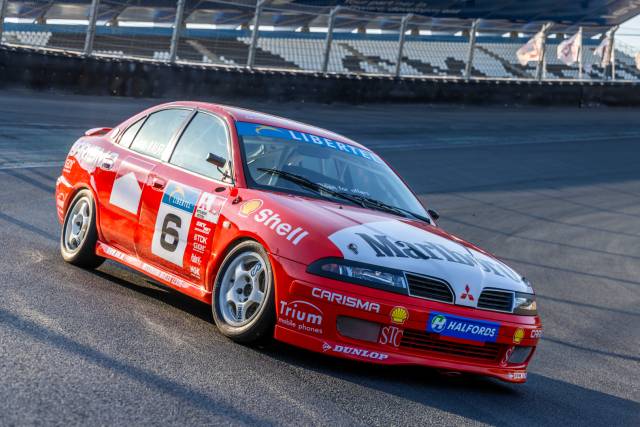
1999 | Mitsubishi Carisma 1.6i
Original “works” entry by Cavallino Engineering for DTCC and BTCC

Create search alert
Let yourself be notified as soon as a listing is published that matches your search filters.
Create listing
Do you have a Mitsubishi Carisma that you want to sell? Then create a listing now.
Create listingMitsubishi Carisma Classic Cars: Prices & Market Values
History of the Mitsubishi Carisma
The Mitsubishi Carisma debuted in 1995, targeting the European small family car segment—a market dominated by the likes of Ford, Opel, and Volkswagen. Developed specifically for Europe, production took place in the Netherlands. Mitsubishi positioned the Carisma between the Lancer and Galant, offering a balance of practicality, reliability, and innovative technology. The Carisma played a crucial role as one of the first mass-production models to use direct injection petrol engines (GDI), setting new technical standards in its class.
Model History
The Carisma's initial generation—codenamed DA1A—appeared in 1995. In 1999, a facelift introduced new design aspects and improved features, known as DA2A. The Carisma benefitted from collaboration with Volvo (notably for the S40/V40 platform). There was no direct predecessor, but the model slot between the Lancer and Galant. Production ended in 2004 with no direct successor, as Mitsubishi shifted its focus toward the Lancer and new models for the compact segment.
Highlights and Special Features
One of the Carisma’s standout technical innovations was the introduction of its GDI engine—among the first of its kind in a mass-production car. Motorsport enthusiasts know the GDI-based Carisma for its use in touring car series (DTCC, BTCC), where Cavallino Engineering, led by Wiet Huidekoper, constructed competitive race versions. Features such as direct petrol injection, high-revving 1.8-litre 16V engines, sophisticated suspension setups, and robust roll cages demonstrate its racing pedigree.
Technical Data
Special Editions and Collectible Models
The motorsport-prepared Carisma GDI models, especially those built by Cavallino Engineering for touring car series, stand out as unique collector’s vehicles. FIA-homologated with bespoke components like Gemini/Drenth racing gearboxes, air jacks, and advanced data acquisition systems, they represent the peak of Carisma engineering and motorsport development.
Weak Spots and Common Issues
While the GDI engine brought efficiency gains, it requires attentive maintenance, especially regarding fuel injector cleanliness and carbon build-up. Motorsport variants demand regular inspection of bespoke parts, such as the race differential, suspension bushings, and roll cage mountings. Original replacement parts, including Gemini gearboxes and data logging systems, can sometimes be sourced via specialist networks or motorsport support packages.
Engine, Performance, Transmission and Handling
Carisma race models deliver spirited performance highlighted by a 1.8-litre direct injection engine, approximately 200 hp output, and a close-ratio Gemini/Drenth dog-leg gearbox. Track-focused suspension and fully adjustable dampers ensure precision handling, especially important in touring car competition. AP Racing 4-piston calipers and adjustable brake bias offer high-level control under competition conditions. - 1999 Mitsubishi Carisma GDI Touring Car: 1.8-litre 16V DOHC, direct petrol injection, 200 hp, 6-speed Gemini/Drenth dog-box gearbox, FIA-certified roll cage, full race suspension.
Interior, Comfort, Exterior and Design
While road-going Carismas followed conservative styling cues, motorsport variants distinguished themselves by their reinforced bodies, FIA-approved chrome-molybdenum roll cages, integrated air jack systems, and racing instrumentation (PI dash/data logging). Unique paintwork and sponsor decals (notably Marlboro) appeared on official team cars. Practical yet performance-focused, with adjustable chassis setups and lightweight construction, the Carisma’s motorsport editions emphasised function over frills.
Other Relevant Features
Parts support for race-prepared Carismas is bolstered by the availability of dedicated spare part packages, often including gearboxes and other specialist components. FIA homologation documents and certificates add traceable competition pedigree, enhancing vehicles’ authenticity and appeal for motorsport collectors.
Summary
The Mitsubishi Carisma stands out for its technical innovations, particularly the adoption of GDI technology and its successful transformation into a race-ready platform. Models prepared for touring car championships, with robust engineering and traceable motorsport history, offer a distinct proposition for motorsport-minded collectors and classic car fans.