Miller Indy classic cars for sale
The Miller Indy is a pivotal racing car with deep ties to American motorsport, most notably in the legendary Indianapolis 500. This page showcases the rare Miller Indy models currently available for sale, making it an essential stop for collectors who value motorsport history and authentic engineering.
Search results
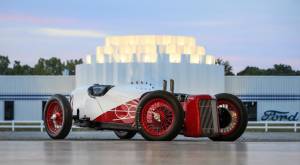
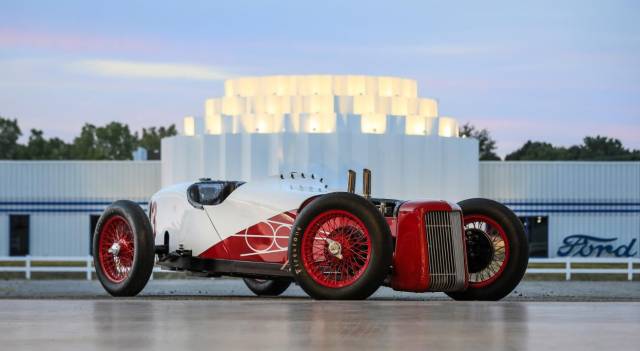
1935 | Miller Indy Tribute (Ford)
1935 Ford Indy Miller Tribute

Miller Indy Classic Cars: Prices & Market Values
History of the Miller Indy
Miller's Indy cars, built by Harry Miller and his team, defined American racing in the 1920s and early 1930s. Celebrated for their technical innovations and direct influence on open-wheel racing, Miller Indys were purpose-built for competition at the Indianapolis 500. Harry Miller’s workshop in Los Angeles became a centre for technological advancement, introducing features such as front-wheel drive, supercharged engines, and lightweight aluminium construction, setting benchmarks for decades. Miller chassis dominated the Indy 500 grid through an era where technical innovation made the difference between victory and obscurity.
Model history
The Miller Indy series evolved rapidly, with each season bringing technical advancements. Early iterations were rear-wheel drive, but quickly shifted to front-wheel drive as Miller sought improved handling and efficiency. Predecessors to the Miller Indy were largely heavier, less technically advanced racers built by other manufacturers. Successors included the cars of Fred Offenhauser, a former Miller employee who used Miller's blueprints to carry motorsport design forward after the Miller business ceased operations in the 1930s. The Miller-Indy lineage is thus a direct precursor to the Offenhauser-powered race cars that dominated American circuits after WWII.
Highlights of the Miller Indy
Miller Indy cars achieved remarkable success owing to their innovative engineering—featuring supercharged straight-eight engines, advanced aluminium construction, and streamlined bodywork optimised for the high-speed ovals. They were among the first racecars to employ four-wheel hydraulic brakes and front-wheel drive in major competition. Their ride height and weight-saving construction set new benchmarks for racing. These cars are seldom found outside of museums, making every available example a significant artefact of motorsport technology and history.
Technical Data
Special Editions and Collectible Models
Certain Miller Indy entries were commissioned by factory-backed or privateer teams, leading to customised, one-off variants with unique technical features. Notably, the 1928 Miller 91 front-drive and select supercharged models with significant Indianapolis 500 results are especially prized, due to their innovative design and race achievements. These limited-production configurations were tailored for maximum competitiveness at the Brickyard.
Weak Spots and Common Issues
Preservation and restoration of Miller Indy cars demands specialist knowledge. Aluminium engine blocks and chassis components can suffer from fatigue over decades, and sourcing original or matching-spec components is increasingly challenging. Supercharged engines require expert tuning and regular maintenance, and braking systems—early hydraulic types—often need complete rebuilds with modern seals and materials to ensure safety and longevity. Reliable documentation is essential, as modifications were common even during active racing careers.
Engine and Performance, Transmission and Handling
Miller Indy cars deliver an experience steeped in motorsport purity: lightweight, direct steering, powerful acceleration, and a chassis tuned for oval racing. Front-wheel-drive models stand out for their superb handling at speed compared to their contemporaries. Engines, often supercharged inline-eights, deliver both substantial performance and a unique soundtrack. Gearboxes were designed to sustain high speeds and frequent shifting under race conditions. While not intended for regular road use, their on-track manners set the blueprint for generations of American open-wheel racecars. Most notable is the Miller 91 front-drive model, lauded for its advanced chassis balance and technical sophistication—direct descendants to the later Offenhauser-powered race cars.
Interior, Comfort, Exterior and Design
Miller Indys are purpose-built monoposto racing machines. The bodywork is slim, aerodynamic aluminium, designed for maximum speed and minimal drag. The exposed wheels, limited driver instrumentation, and simple seating reflect pure racing intent. Interior comforts are nonexistent; the focus remains on driver control and visibility. Notable are the louvres for cooling, external mechanical brake linkages, and distinctive Miller nose cones. Any surviving period accessories—such as original steering wheels, instruments, and custom-painted liveries—are highly valued among collectors.
Other features
Some Miller Indy cars have continuous competition records, accompanied by detailed provenance and archival records, enhancing authenticity. Surviving spares boxes, original blueprints, or historic trophies further set specific vehicles apart.
Summary
A Miller Indy car stands as a reference point in the progress of motorsport engineering, exhibiting an unmatched blend of innovative design, competition pedigree, and rarity. Their presence in any collection immediately signals a profound understanding of pre-war automotive history and technical competition. Buying a Miller Indy is investing in a tangible, running chapter of American racing heritage.