- Car
- MIAG (0 offers)
Buy MIAG Classics
MIAG classics sit at the crossroads of German industrial history and specialist collector appeal. From compact tractors to the unusual Motorkarren MK2000, these are rare machines with real character, and the British scene has taken note.
Search results
Currently, there are no matching listings for your search.
Create search alert
Let yourself be notified as soon as a listing is published that matches your search filters.
MIAG listing references from Classic Trader
Below you will find listings related to your search that are no longer available on Classic Trader. Use this information to gain insight into availability, value trends, and current pricing for a "MIAG" to make a more informed purchasing decision.
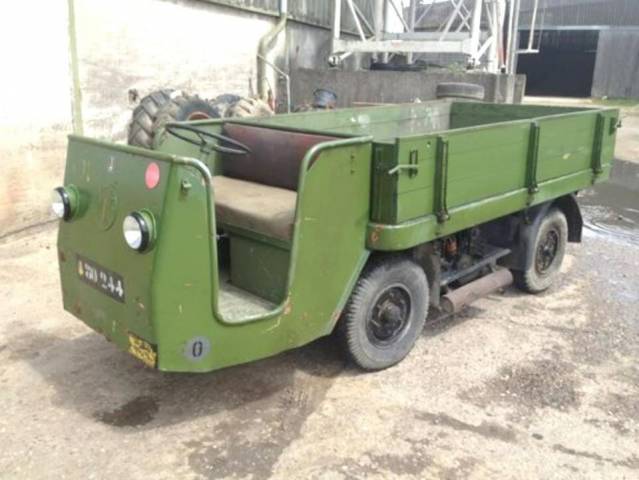
1953 | MIAG Motorkarren MK2000

Create search alert
Let yourself be notified as soon as a listing is published that matches your search filters.
History
MIAG is one of those names that reward the buyer who likes a story with their steel. The marque grew out of the German milling and industrial machinery world rather than the glamour end of the motor trade, and that background shaped every vehicle it built: practical, heavy-duty and engineered for work first. By the time MIAG turned seriously towards vehicle production, it was already part of a much larger industrial ecosystem, with roots in machinery, factory equipment and the kind of robust engineering that rarely makes headlines but often survives for decades.
That industrial DNA is central to the appeal today. MIAG did not build cars for the open road in the way that a British enthusiast might think of Austin, MG or Triumph. Instead, it produced tractors, road tractors, tug vehicles and transporters for farms, factories and military use. The result is a brand that feels slightly outsider, even within the classic commercial-vehicle world. Yet that outsider status is exactly why collectors are drawn to it: MIAG vehicles are scarce, technically interesting and full of period detail.
The pre-war MIAG tractors and road tractors belong to a wider European story of mechanised agriculture and freight support in the late 1930s. These were years when manufacturers were still finding the right balance between simplicity and power, and MIAG leaned towards solid construction and dependable diesel torque. After the war, like many German firms, the company had to rebuild under difficult conditions. That post-war phase produced some of the rarest and most interesting MIAG machines, including the Motorkarren MK2000.
The MK2000 is especially important for British buyers and collectors because it links several worlds at once: German industrial utility, French military service, and modern UK historic-vehicle registration. The machine was sold to the French military, and at least one example ended up in British collections, where it has become a talking point at events and in specialist circles. That journey alone sums up the appeal of MIAG: these are not polished show cars, but working machines with provenance, movement and cross-border lives.
For the British market, this matters. UK collectors often respond strongly to vehicles with military, agricultural or industrial backstories, especially when the machine is rare enough to stand out at a show and still road-legal enough to be used. MIAG fits that pattern neatly. Whether the vehicle is a tractor, a tug or the MK2000 transporter, the attraction lies in authenticity, scarcity and mechanical honesty.
Highlights
What makes MIAG stand out is not flashy styling or racing fame, but the depth of its engineering personality. The vehicles are purposeful and often a little severe in appearance, yet they are never dull. The name has a strong following among collectors who appreciate industrial history, tractor heritage and military transport equipment.
One of the main draws is rarity. MIAG production volumes were small, and surviving examples are fewer still. That scarcity gives each vehicle a distinct identity. A MIAG at a show is rarely mistaken for anything else, and that is worth a great deal in a sector where many collectors already know the common names inside out.
Another strength is mechanical character. MIAG vehicles tend to feel substantial, with slow-revving diesel or utilitarian petrol powertrains, heavy castings and a straightforward approach to control layout. They reward patient driving and careful maintenance rather than speed. In a world of highly polished restorations, that directness is refreshing.
The British classic vehicle scene has also become more open to industrial and military hardware. Tractorfest, HCVS gatherings and mixed classic commercial events all provide a stage where a MIAG can be appreciated by the right audience. It may not have the instant recognition of a Land Rover or a Ferguson, but it will draw the experts, and often the most interesting conversations.
The Motorkarren MK2000 deserves particular attention. Its unusual place in MIAG history makes it a genuine conversation piece, and the fact that at least one UK-registered example exists gives the model a special relevance for British collectors. Registration 317XVN has become a point of interest because it proves the machine can be brought into the UK road-legal world, not just admired as a static exhibit.
For many buyers, that is the key point. MIAG is not about fantasy ownership; it is about usable rarity. If you want a machine that can appear at a rally, a military event or an agricultural show and still feel genuinely unusual, MIAG is right in the sweet spot.
Technical Data
MIAG’s specification sheets make one thing clear: these were working vehicles, not performance machines. The tractors and road tractors were built around sturdy MWM diesel units, while the MK2000 used the familiar Volkswagen flat-four. That makes the range especially interesting to collectors, because it brings together two very different engineering philosophies under one badge.
The pre-war and post-war tractors share the usual period traits: slow gearing, practical layouts, heavy metal and modest power outputs by modern standards. Yet those figures should not be read as a weakness. For field work, factory towing and low-speed haulage, torque and durability mattered far more than speed.
The MK2000 is the outlier. Its 25 PS VW engine gives it a lighter, more familiar character than the diesel tractors, and the compact transporter format makes it one of the most usable MIAG vehicles. For British roads and events, that matters, because road-legal classics are easier to enjoy than static projects.
Market Overview
The MIAG market is small, specialist and very condition-sensitive. In practical terms, that means buyers usually choose between three paths: a rare but complete survivor, a restored showpiece, or a project with major missing parts. Because production was so limited, there is no broad, liquid market in the way you might find for more mainstream tractors or ex-military vehicles.
In GBP terms, UK buyers should think in ranges rather than fixed values. A tidy, usable tractor may sit in the low five-figure bracket once import and preparation costs are considered, while an exceptional restored example can move well beyond that if the right collector is watching. Projects can appear cheaper on paper, but the economics can change fast if body panels, engine parts or correct period fittings need to be sourced from Europe.
For the British market, import considerations are a real part of the equation. Many MIAG vehicles will arrive from continental Europe, and the buyer must factor in transport, duty if applicable, VAT treatment, paperwork, and the practicalities of proving age and identity. With historic vehicles, documentation matters. Original number plates, factory data, old photographs, military paperwork and restoration invoices can make the difference between a straightforward registration and a long exercise in evidence gathering.
That registration side is especially important in the UK because many buyers want more than a display item. Historic vehicle registration can open the door to road use, club runs and public events, but only if the machine is presented properly and meets the relevant standards. The MK2000 is a useful example of what can be achieved. A road-legal UK example proves the category is not theoretical; it is achievable with the right vehicle, the right paperwork and patient preparation.
British collecting culture also gives MIAG a natural home. Tractor shows, heritage transport events and military vehicle gatherings all value originality and rarity. A MIAG diesel tractor at Tractorfest will appeal to agricultural enthusiasts; a MK2000 at an HCVS event will attract commercial-vehicle people; and a French-military-connected example will also interest ex-military collectors. That crossover appeal helps keep the market alive.
As always in this niche, originality is key. A carefully restored MIAG with correct castings, the right engine type and period-correct trim will usually be more desirable than a heavily modified example. Equally, an honest but complete machine may be a better buy than a glossy restoration with hidden fabrication work. Buyers should look for completeness, usable documentation and evidence that the vehicle still reflects its original purpose.
Driving Feel
Driving a MIAG is more about atmosphere and rhythm than acceleration. These vehicles ask the driver to slow down, think ahead and accept that every action has weight. A tractor with a diesel throb or a transporter with a flat-four hum offers a very different experience from a post-war car, and that is exactly why enthusiasts enjoy them.
The steering is typically heavy at low speed, the gear changes deliberate, and the brakes something you learn to respect rather than trust blindly. You do not rush a MIAG. You settle into it. That is part of the appeal for British owners who already enjoy tractors, military trucks and early commercial vehicles: the pleasure comes from mechanical involvement.
The MK2000 feels especially distinctive because it bridges the gap between agricultural machine and road-going utility vehicle. The Volkswagen engine gives it a familiar note, but the whole vehicle still feels industrial. On the move it is compact, purposeful and slightly unusual in the best way. For a collector, that oddness is a strength. It means every outing becomes a small event.
At shows and club gatherings, MIAGs are the sort of vehicles that make people stop and ask questions. They are not fast, and they do not try to be. They are vehicles you admire because they did real work and survived. In the British context, that practical heritage resonates strongly. Many collectors are drawn to machines that feel honest and usable, and MIAG fits that brief perfectly.
Design
MIAG design is function-led, but not without charm. The shapes are shaped by duty: strong chassis rails, practical bonnet lines, exposed working components and cabs or bodies that put utility ahead of ornament. Yet the visual language is still distinctive enough that a MIAG reads immediately as something special.
The tractors have a solid, compact stance that suits their role. Nothing about them is decorative, but the proportions are pleasing in a workmanlike way. The motor karren and road tractors are especially interesting because they show how German industrial design evolved in the late 1930s and early 1950s, moving between pre-war severity and post-war austerity.
Colour also matters. MIAG machines are often remembered in practical industrial finishes rather than bright showroom hues, and that reinforces their authenticity. A correct paint scheme and the right level of patina can add a great deal to the appeal. Over-restoring one of these vehicles can sometimes strip away the very character that makes it interesting in the first place.
For British collectors, the design appeal is partly contextual. At a local event full of familiar tractors, a MIAG has a more unusual silhouette and a less familiar badge. At a military show, the MK2000’s utilitarian look and French-service backstory give it an edge. Design, here, is not about beauty in the conventional sense; it is about credibility.
The best restorations respect that. They keep the surfaces honest, the details correct and the working identity intact. The result is a machine that looks believable from every angle.
Other
MIAG’s strongest secondary appeal lies in its crossover with several collector communities. Agricultural collectors value the tractors. Commercial-vehicle enthusiasts appreciate the road tractors and transporters. Military collectors are drawn to the MK2000 and its service history. That breadth helps explain why, despite tiny production numbers, the name still appears in specialist conversations.
Parts support is a mixed picture. Some mechanical components are shared with more common German industrial or automotive systems, which helps. Other MIAG-specific items are much harder to source, especially bodywork, trim, castings and rare fittings. A sensible buyer should assume that the engine may be the easiest part of the car to maintain, while the obscure brackets and panels may take patience, fabrication skill or a lucky parts-hunt across Europe.
This is where documentation and club knowledge become crucial. A good file of photos, old invoices, registration papers and restoration notes can save serious time later. In a niche like this, the paper trail is often as valuable as the metalwork.
The British scene also rewards vehicles with an event-friendly presence. Tractorfest, HCVS meets and military displays all favour machines that start reliably, travel short distances and tell a good story. MIAG has all three qualities when properly prepared. The MK2000 is particularly well suited to this environment because it combines a recognisable drivetrain with a rare badge and a strong narrative.
Summary
MIAG classics are not obvious buys, and that is exactly why they appeal. They are rare, workmanlike, historically interesting and strongly individual. For buyers in Britain, they offer something particularly attractive: a chance to own a German industrial classic that fits naturally into the UK’s tractor, military and commercial-vehicle culture.
The tractors and road tractors reward the buyer who values authenticity, while the MK2000 adds road-legal potential and a more unusual story. The French military connection, the British collection trail and the known UK-registered example 317XVN all strengthen the case for collectors who want something genuinely different.
If you want a classic with instant recognition, MIAG may not be your first stop. If you want a machine that combines rarity, engineering character and serious conversation value, it deserves a place on your shortlist. Find the right example, check the paperwork carefully, and buy with patience: that is how MIAG ownership becomes rewarding.