- Car
- Maybach (6 offers)
Buy Maybach Classic Cars
Maybach classics sit at the very top end of pre-war luxury motoring: hand-built, technically advanced and rare enough that every surviving chassis matters. Find the most desirable Maybach offers on Classic Trader and discover now why British collectors value the marque’s mix of engineering, provenance and quiet authority.
Search results
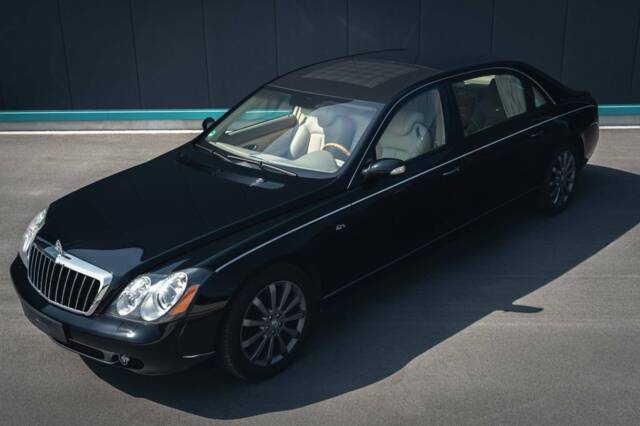

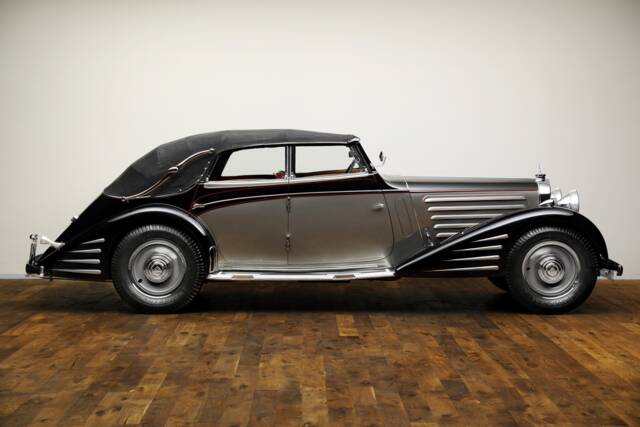
1934 | Maybach Zeppelin DS 8
Streamline Convertible, original One-off body
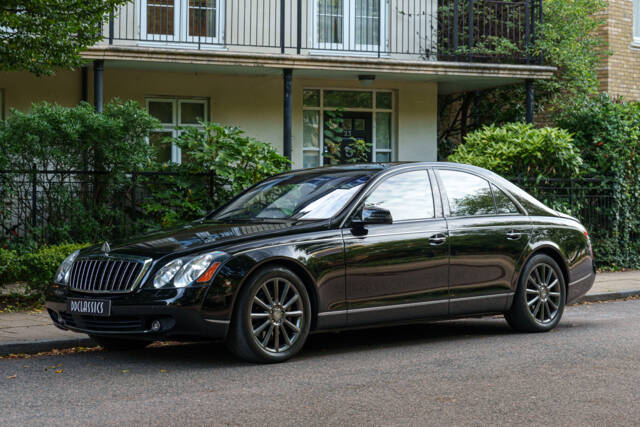

2004 | Maybach 57
Maybach 57
Newsletter
The best Maybach listings, straight to your inbox
Get hand-picked Maybach listings, plus the best of cars, motorbikes, and auctions on Classic Trader — all in one place.
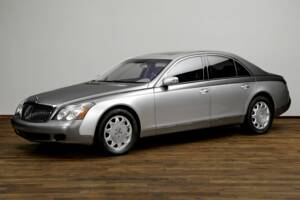
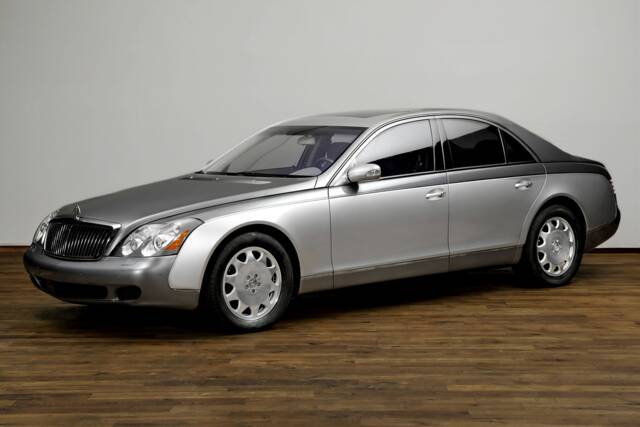
2003 | Maybach 57
Top condition with only 36,500 km
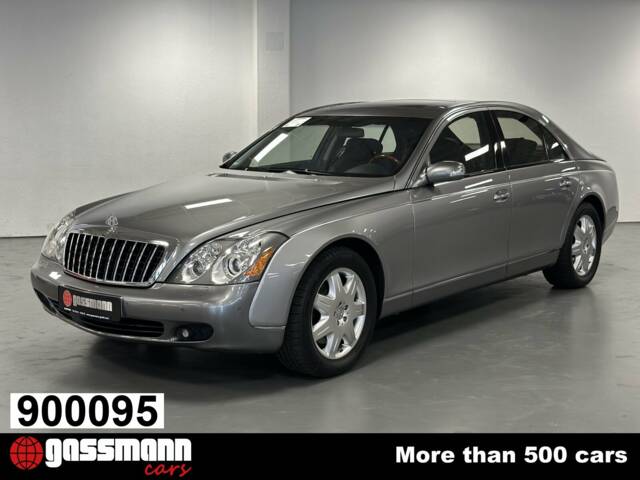
2005 | Maybach 57
57 - Deutsches Fahrzeug
VAT is reclaimable
Maybach listing references from Classic Trader
Below you will find listings related to your search that are no longer available on Classic Trader. Use this information to gain insight into availability, value trends, and current pricing for a "Maybach" to make a more informed purchasing decision.
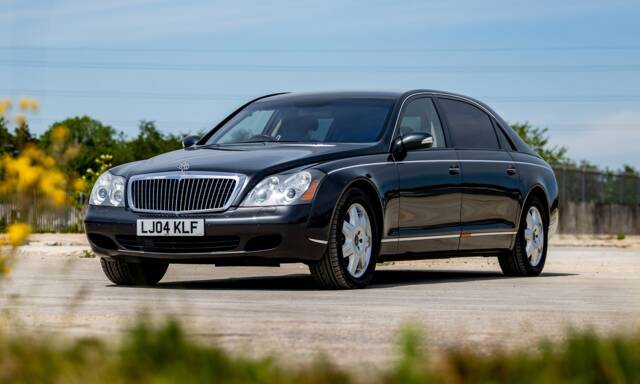
2004 | Maybach 62
2004 Maybach 62
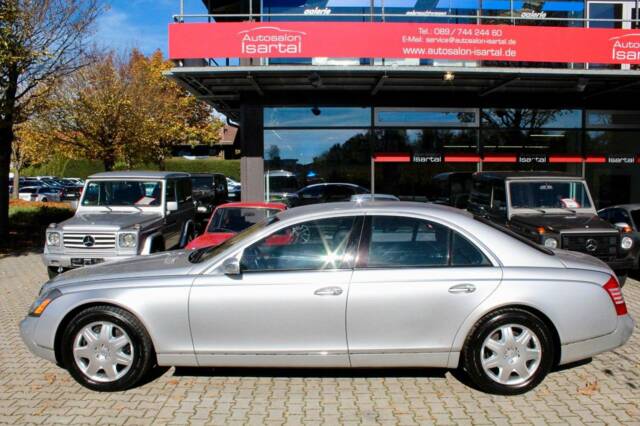
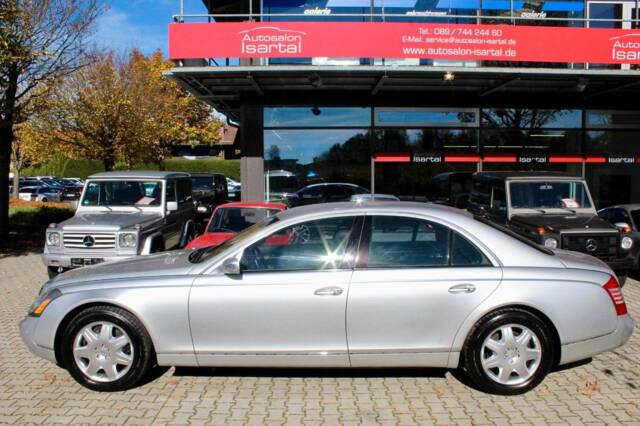
2004 | Maybach 57
Maybach 57 - dt. Werkswagen - toporiginal - 69tkm !
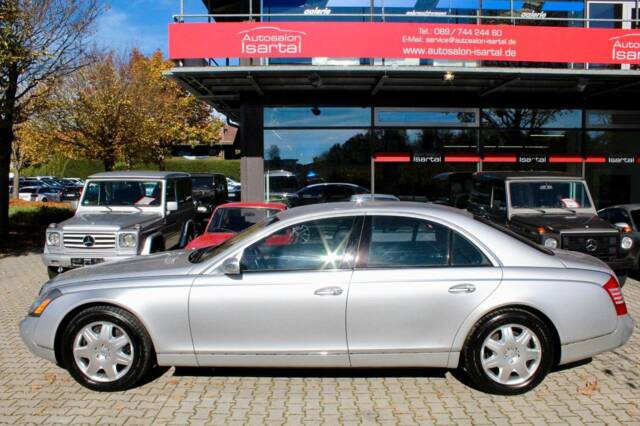
2004 | Maybach 57
Maybach 57 - dt. Werkswagen - toporiginal - 69tkm !
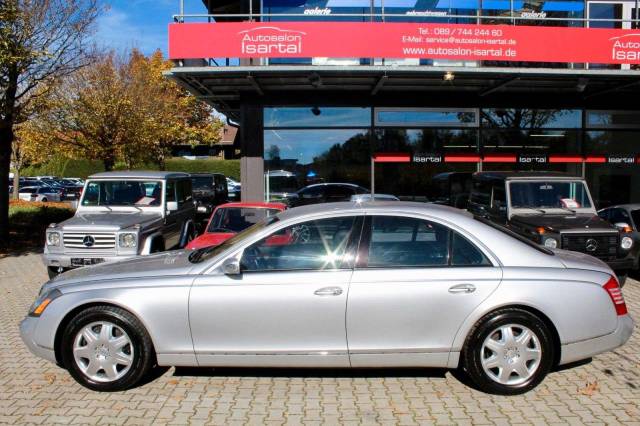
2004 | Maybach 57
Maybach 57 - dt. Werkswagen - toporiginal - 69tkm !
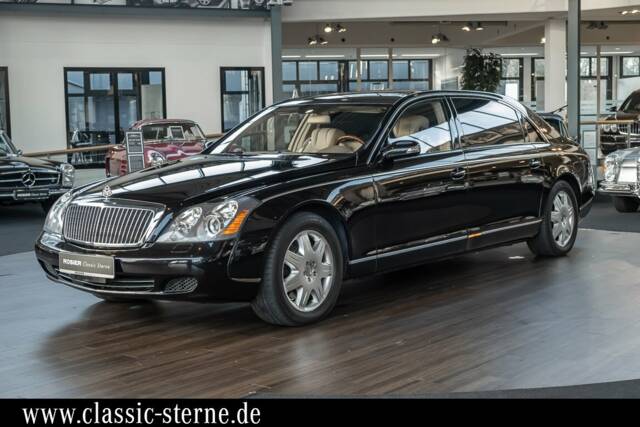
2004 | Maybach 62
62
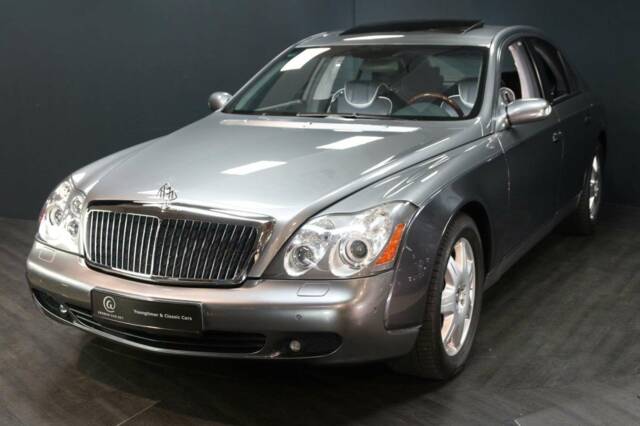
2007 | Maybach 57
Maybach 57 nur 51.500 km, EU-Auto !
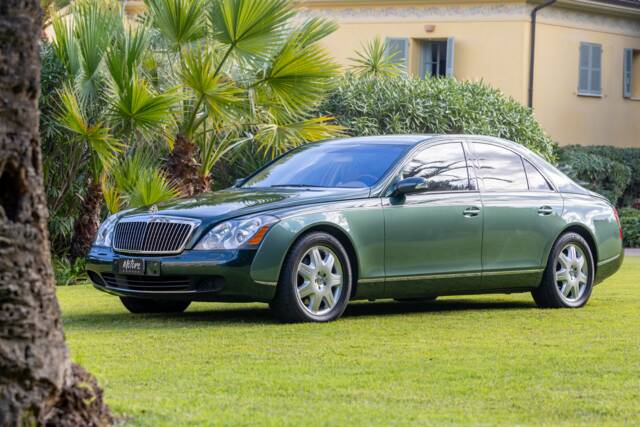
2003 | Maybach 57
MAYBACH 57 de juillet 2003, limousine

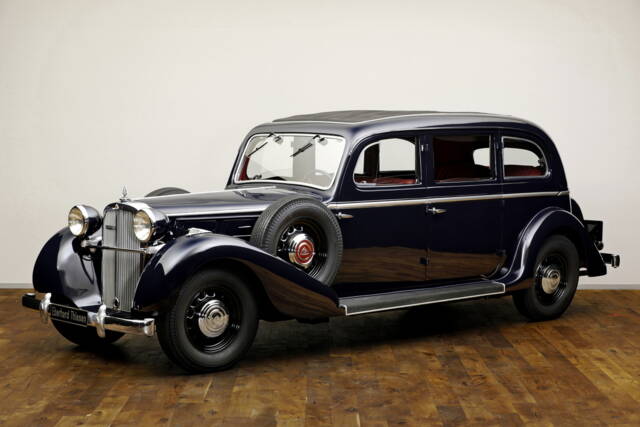
1939 | Maybach SW 42
Pullman Saloon by Spohn
History
Maybach is one of those names that does not need hype. For collectors, it stands for the golden age of German luxury engineering, when a car was designed as a rolling statement of wealth, taste and technical confidence rather than as a product for the mass market. The marque’s roots lie in the world of high-performance engines: Wilhelm Maybach worked closely with Gottlieb Daimler, while Karl Maybach developed the company’s reputation for precision machinery before turning towards complete automobiles after the First World War.
The first Maybach cars arrived in the early 1920s, and they were never intended to be ordinary. The W 3, shown in 1921, already had four-wheel brakes and a large, refined six-cylinder engine. From there, Maybach built a tiny but legendary line-up of luxury chassis that became famous for long-distance comfort, immense build quality and bespoke coachwork. By the late 1920s and 1930s, the company had established the grand Type 12 and the Zeppelin DS range, followed by the SW family — the cars most buyers today will encounter most often.
For British buyers, the appeal is partly historical and partly emotional. Maybach belonged to the same pre-war aristocratic world as Rolls-Royce, Hispano-Suiza and Mercedes-Benz Spezial, yet it has remained more elusive in the UK market. That rarity matters. A Maybach is not a car that turns up at every auction or every club meeting; it is a special event when one appears. That scarcity helps explain why serious collectors, museums and marque specialists continue to follow the surviving cars closely.
The pre-war story is especially strong in the SW38 and SW42, which used the company’s advanced swing-axle chassis and high-output six-cylinder engines. The SW38 in particular became the most relevant Maybach for modern buyers because it combines usable performance with relatively broader survival numbers. Even so, “broad” is a relative term: these are still rare cars, often with long and fully documented histories. Chassis 1798, for example, is a right-hand-drive SW38 bodied by Spohn and originally delivered to the Johann Klais organ factory in Bonn — a reminder that Maybach chassis were commissioned by carefully chosen, often industrial, owners rather than anonymous customers.
The great V12 Zeppelin models, especially the DS8, sit at the absolute summit. These were among the most prestigious German cars of the era, and today they are treated as blue-chip collector pieces. Some surviving cars have strong links to famous owners, coachbuilders and export markets, including the United States. That international movement is important for the UK market too, because British buyers often compete for cars that spent decades abroad before re-entering Europe.
After 1945, the marque’s passenger-car story ended, but the legend did not. Maybach’s name returned in the 2000s on the 57 and 62 luxury saloons, though those are a separate market from the classic pre-war cars covered here. For Classic Trader buyers, the real focus is the original Maybach era: W 3, W 5/W 6, Type 12/Zeppelin, and SW 35, SW 38, SW 42. These are the models that define the make and shape today’s collector demand.
Highlights
What makes a Maybach special is not just rarity. It is the combination of engineering ambition, coachbuilt individuality and sheer presence. These cars were built to make their owners feel insulated from the ordinary world. In a good Maybach, every touch point reflects hand work: the dashboard fittings, the veneer, the door latches, the suspension tuning and the careful mechanical finish under the bonnet.
Bespoke coachwork is one of the strongest attractions. Maybach supplied chassis and driveline; bodies came from firms such as Spohn, Erdmann & Rossi, Wendler, Gläser and others. This means no two cars are quite the same, and provenance can be as valuable as mechanical originality. For buyers, that also means understanding the exact body builder, original specification and later modifications is essential.
Advanced engineering came naturally to Maybach. The pre-selector and DSG transmissions, the finely made engines and the carefully designed chassis show why the marque was admired far beyond Germany. The SW38’s 3.8-litre six-cylinder and eight-speed DSG arrangement make it one of the most technically fascinating pre-war luxury cars to own and use.
Strong provenance culture adds depth to the market. The surviving cars are usually recorded in registers, club records and auction archives. Well-documented histories can lift value sharply, while gaps in history or mismatched components can hurt confidence. With Maybach, paper trails matter almost as much as paint.
Rare right-hand-drive cars are a real point of interest for British buyers. They are not common, but they do exist. That matters because a right-hand-drive SW38 or similar chassis can be especially attractive for UK road use, concours presentation and club events.
Auction visibility has improved in recent years. High-profile sales, especially in the US and Europe, have helped define modern values and reminded the market that Maybach belongs in the very top tier of collectable classics. A 1938 Maybach SW38 Sport Cabriolet by Spohn sold at RM Sotheby’s for $522,000 in 2024, while a 1936 SW38 cabriolet offered in the same Rudi Klein collection was presented as a serious restoration or parts source. Those results show that condition, completeness and body style change the economics dramatically.
For British enthusiasts, this is a marque to buy with your eyes open and your heart engaged. The right car offers immense character, but the wrong one can consume time and budget quickly. Find the best-documented example you can afford, then buy on certainty rather than hope.
Technical Data
The figures above matter because Maybach buyers often pay for specification as much as for condition. The SW38 is usually the sweet spot for those who want the marque’s advanced engineering without stepping into the even narrower and more expensive Zeppelin V12 world. The DS8, by contrast, is the statement piece — bigger, rarer and usually far more costly to restore properly.
Market Overview & Buying Tips
The British market for Maybach classics is tiny, but it is serious. In Great Britain, pre-war continental luxury cars have long found homes among marque specialists, museum collectors and members of strong club networks. That culture matters: a Maybach is not only a purchase, it is a project that benefits from expert storage, specialist mechanics and access to people who understand pre-war engineering.
Current price picture
Recent auction evidence suggests that Maybach values remain firm at the top end and very sensitive to originality. In 2024, RM Sotheby’s sold the 1938 Maybach SW38 Sport Cabriolet by Spohn for $522,000. Another SW38 from the same collection was offered as a difficult restoration candidate, underlining how much value sits in body condition, completeness and history. For the rarer Zeppelin DS8, market references from leading houses typically sit well into the seven-figure USD range, especially for fully restored cars with known provenance and attractive coachwork.
In UK money, that means buyers should think in rough bands rather than fixed numbers. A project or incomplete SW38 can still require a very large budget once transport, restoration, coachwork, engine work and sourcing of specialist components are added. A presentable and well-documented SW38 may sit around the £400,000–£700,000 territory depending on body style and history, while exceptional Zeppelin cars can move much higher. The upper limit is determined less by mileage than by certainty: original body, correct chassis, excellent documentation and a sympathetic restoration command the strongest premiums.
There is also a collector premium for right-hand drive. A British-usable car avoids some compromises and can feel more natural at club events, touring and concours. Because few Maybachs were built that way, right-hand-drive cars may attract extra interest when they appear.
What UK buyers should check
Identity first. Confirm chassis number, engine number, body builder and known history. On a marque this rare, a mismatched car is not a detail problem; it is a value problem.
Coachwork condition. Wood-framed bodies need close inspection. Rot, old accident repairs, poor hinge geometry and hidden corrosion are expensive to correct. This is especially true on open cars and coupés with complex timber structures.
Mechanical completeness. Missing pre-selector parts, correct carburation, instruments and period fittings can take years to source or reproduce. A car that looks complete but lacks key transmission or trim pieces may be a much larger restoration than expected.
Documentation. Look for factory records, register entries, old photographs, auction catalogues, club correspondence and historic invoices. Good paperwork can make the difference between a difficult project and a viable top-tier restoration.
Specialist support. In the UK, it helps to have access to classic-car engineers experienced with pre-war luxury cars, plus coachbuilders capable of wood and aluminium restoration. This is not a marque for generalist workshops.
Historic vehicle treatment in Great Britain
Britain is friendly to historic vehicles, and that is a practical advantage for Maybach ownership. Under current DVLA guidance, vehicles built or first registered more than 40 years ago may be MOT exempt if they have not had substantial changes, and cars built before 1 January 1986 can qualify for historic tax class from 1 April 2026. The older pre-1960 exemption history still shapes the way many classic owners think about the market, even though the current rule is based on age and modification status.
That is useful for Maybach buyers because most surviving pre-war cars are far beyond the threshold. However, the exemption does not remove the need for a roadworthy car. A buyer should still expect specialist inspection, safe brake systems, correct tyres and a careful check of steering, suspension and fuel systems before any road use.
Importing a Maybach after Brexit
Post-Brexit importation is manageable, but it needs planning. HMRC requires notification through NOVA within 14 days of import, and VAT/customs duty can apply depending on the route, age, origin and status of the car. Historic vehicles over 30 years old may qualify for reduced customs duty treatment as collectors’ items, but buyers should still budget for shipping, brokerage, documentation and VAT exposure where applicable. If you are bringing a Maybach into Great Britain from the EU or the US, ask your agent about reliefs, proof of origin and whether the car qualifies for any historical-vehicle treatment.
Buyer profile
The best Maybach buyers are usually one of three types:
- The top-tier collector seeking a blue-chip pre-war car
- The marque specialist who values provenance and mechanical sophistication
- The connoisseur driver who wants something rarer than a Rolls-Royce and more technically intriguing than many rivals
In all cases, the advice is the same: buy the best, most complete, most honest car you can find. A cheap Maybach is rarely cheap for long.
Driving Feel
A Maybach does not drive like a generic pre-war luxury car. It feels engineered, deliberate and calm, with a kind of mechanical dignity that only the best large classics manage. Once you sit behind the wheel, the scale becomes obvious: long bonnet, high cowl, substantial mass and a sense that every movement should be made with intention.
At low speed, especially in town, these cars ask for respect. Steering effort is significant, visibility is formal rather than relaxed, and the size can feel daunting until you learn the car’s corners. Yet that is part of the ownership experience. A Maybach rewards patience. It is not trying to be playful; it is trying to be effortless once underway.
On the open road, the character changes. The six-cylinder SW cars have enough torque and flexibility to feel fluent rather than frantic, and the DSG transmission allows a surprisingly relaxed rhythm when everything is in good order. The big Zeppelin V12s go even further, with a refined, almost silent surge that made them world-class touring cars in their day. The sensation is less “sporty” than immense composure: the car glides, but it also communicates that a great deal of engineering is working beneath you.
For British roads, that matters. A Maybach can suit long, quiet runs through the countryside far better than stop-start urban use. It belongs on good surfaces, in the company of other serious classics, and ideally where its size and pace can be appreciated properly. In a well-sorted car, the experience is not about drama. It is about authority, isolation and that rare feeling that the machine beneath you has been built by craftsmen who expected excellence.
Design
Maybach design is formal rather than flamboyant. That is why it lasts. The great pre-war cars carry proportion first: long bonnet, upright grille, heavy yet elegant wings, a strong shoulder line and coachbuilt bodies that vary widely while still feeling unmistakably Maybach.
The front end is one of the marque’s strongest visual signatures. The grille is substantial without becoming ostentatious, and the double-M badge is restrained. That restraint is important. Maybach never relied on excess chrome or theatrical styling to impress. Instead, the cars projected confidence through scale, precision and quiet detail.
Coachbuilders gave the marque its real visual range. Spohn is perhaps the most recognisable name today, producing elegant saloons, cabriolets and sport bodies with clear German conservatism. Wendler brought more streamlined shapes in later years, including post-war rebodies. Erdmann & Rossi often created more ceremonial and formal bodies, while Gläser and others contributed their own interpretations. For the buyer, this means design is not a footnote. It is part of the value equation.
The interiors are equally telling. Maybach cabins tend to favour fine wood, deep leather, clear instruments and a measured layout. They are luxurious without being noisy about it. In the right car, the whole interior feels like a private lounge from another era. Special features such as division windows, fold-flat front seats, luggage solutions and bespoke trim make each chassis feel personal.
British collectors often appreciate this restrained approach. Compared with some more extroverted continental rivals, Maybach feels almost architectural. It is stately rather than flashy, and that gives it long-term appeal. A well-restored Maybach does not need to shout; it only needs to stand still for people to understand its importance.
Other
Maybach’s modern reputation is strongly helped by the wider club and provenance world. The Classic Car Club of America (CCCA) classifies select pre-war Maybachs as Full Classics, which is useful because it places them within the wider international prestige-car ecosystem. That recognition matters for owners who tour, exhibit or sell across borders. It also reflects how highly the marque is regarded beyond Germany.
British collectors benefit from a strong home culture around pre-war and continental classics. The UK has long had active clubs, dating and identity services, concours events and specialist gatherings for cars from the 1920s and 1930s. That environment supports Maybach ownership well, especially for cars that need informed custodianship rather than casual use.
Auction houses continue to reinforce the marque’s status. The 2024 RM Sotheby’s sale in the US showed that even a car from the controversial Rudi Klein collection could command a major figure when the specification and history were strong enough. On the other hand, restoration projects remain exactly that: projects. For British buyers, the lesson is clear — provenance, completeness and body quality drive the market, not just the badge.
There is also a practical collector truth here: Maybach ownership is often as much about stewardship as possession. Many surviving cars are known to the small international community of specialists, and the best examples often move discreetly. That means the right dealer relationships, club contacts and research discipline are valuable assets.
Summary
Maybach classics are among the most desirable pre-war cars you can buy. They combine rare engineering, coachbuilt individuality and genuine historical weight, with the SW38 often emerging as the most realistic entry point and the Zeppelin DS8 sitting at the very top of the tree. For British buyers, the marque offers a compelling mix of rarity, club culture and relative historic-vehicle friendliness.
If you are searching for a Maybach in Great Britain, focus on identity, provenance and completeness first, then on cosmetics. The best cars are expensive, but they are also the safest place to put money in this tiny market. Find the strongest example, buy with expert support, and enjoy one of the great names in classic luxury motoring.
On Classic Trader, you can discover current Maybach offers and buy with far more confidence once you know what separates a true survivor from a difficult restoration. Search carefully, ask the hard questions and act quickly when the right car appears.