March 792 classic cars for sale
The March 792 is a purebred Formula 2 racing machine from the late 1970s, renowned among motorsport enthusiasts for its balance of British engineering and competitive track pedigree. As one of the pivotal models in the March engineering legacy, the 792 offers sensation for collectors and historic racers alike.
Search results
Currently, there are no matching listings for your search.
Create search alert
Let yourself be notified as soon as a listing is published that matches your search filters.
Create listing
Do you have a March 792 that you want to sell? Then create a listing now.
Create listingMarch 792 listing references from Classic Trader
Below you will find listings related to your search that are no longer available on Classic Trader. Use this information to gain insight into availability, value trends, and current pricing for a "March 792" to make a more informed purchasing decision.
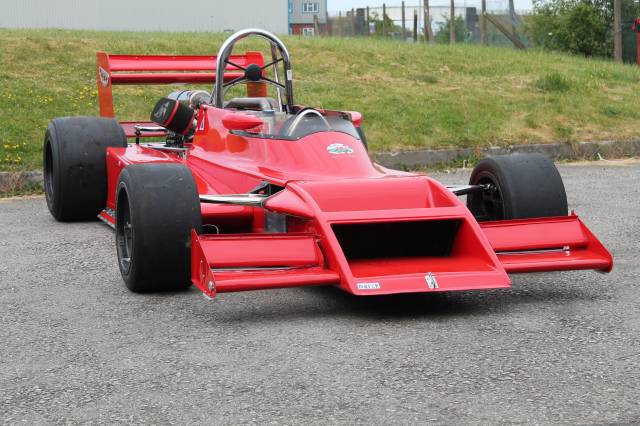
1979 | March 792
1979 March 792
Create search alert
Let yourself be notified as soon as a listing is published that matches your search filters.
Create listing
Do you have a March 792 that you want to sell? Then create a listing now.
Create listingMarch 792 Classic Cars: Prices & Market Values
History of the March 792
The March 792 hit the Formula 2 grids in 1979, crafted in Bicester by March Engineering, a notable force in motorsport throughout the decade. March's approach was always to provide customer teams with advanced, nimble, and affordable single-seaters—while the 792 was no exception. It carried the brand’s tradition of technical innovation and competitiveness, making it a familiar sight at European circuits during its era. International drivers favoured the March 792 for its adjustability and robust chassis, frequently pushing it into the top ranks in competitive series.
Model history of the March 792
Within the March Formula 2 line, the 792 succeeded the 782 and faced subsequent evolution in the 802. The 792 simplified and improved several key aspects over its predecessor, refining aerodynamics and updating suspension geometry. It represents March's response to tightening competition in European open-wheel formulas, and often received various engine installations—most notably the BMW and Hart units—to adapt to client needs or race regulations.
Highlights of the March 792
The March 792 was renowned for its high downforce ground-effect aerodynamics and lightweight monocoque construction. Its suspension, both front and rear, allowed for extensive tuning—a feature highly regarded by professional teams. The car's modular engine bay made engine swaps and maintenance during race weekends more straightforward compared to its rivals.
Technical Data of the March 792
Special Editions and Collectible Models of the March 792
The March 792 was mainly delivered to privateer teams and did not have explicit factory-backed special editions. However, specific chassis with notable race victories or former works cars driven by prominent drivers (recorded by chassis number provenance) are regarded as more collectible and command higher attention in the historic motorsport market.
Weak Spots and Common Issues with the March 792
There is no public data on systematic weak spots of the March 792. As with any vintage Formula 2 car, buyers should expect age-related wear on aluminium chassis elements, potential fuel cell and rubber component perishing, and the necessity for regular gearbox, suspension, and engine overhaul due to intensive competition use.
Engine, Performance, Transmission and Handling of the March 792
The March 792 was lauded for its tactile and communicative chassis, balanced by effective ground-effect aerodynamics that enabled high speeds in fast corners. With a typically fitted BMW M12/7 engine, the car achieved upwards of 300 hp at over 10,000 rpm, paired to a robust, race-proven Hewland manual gearbox. Handling advantages stemmed from stiff suspension and a short wheelbase, aiding quick direction changes crucial in tight European circuits. Popular choices among collectors are cars with known racing history, especially those fitted originally with the BMW or Hart power units. Chassis documented with period podium finishes or driven by renowned drivers remain sought after in historic racing circles.
Design, Interior and Exterior of the March 792
The March 792 epitomises purpose-built open-wheel design, with its exposed suspension components, cockpit roll-over protection, and minimalistic single-seater cockpit. Standard in racing specification, the cockpit contains only the essentials: period racing instruments, a competition steering wheel, and harness-equipped composite seat. The bodywork, shaped for optimal ground effect, is typically finished in fibreglass panels which were commonly painted in sponsor or team liveries—no luxury features, but technical design is paramount. Special team-specific paint jobs and period sponsor decals add to the character of each car.
Other Information
Spare parts availability can vary, but the active historic Formula community in Europe offers specialist providers for components. Many surviving cars compete in contemporary historic Formula 2 championships, ensuring technical knowledge remains accessible for restoration and upkeep.
Summary of the March 792
The March 792 stands as a fine representative of late 1970s Formula 2 innovation—lightweight, fast, and tailored to the privateer racing spirit. With its motorsport pedigree, meticulous chassis setup possibilities, and ongoing relevance in historic racing paddocks, it is a model for both collectors and serious competitive drivers seeking authentic track performance from a classic British constructor.