Laffly W15T classic cars for sale
The Laffly W15T stands as a testament to French engineering in the pre-war era, widely recognised for its unusual all-terrain capability and technical innovations. With its robust construction and rare occurrence on today’s market, the W15T is a unique highlight for classic commercial vehicle enthusiasts.
Search results
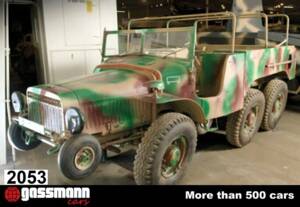
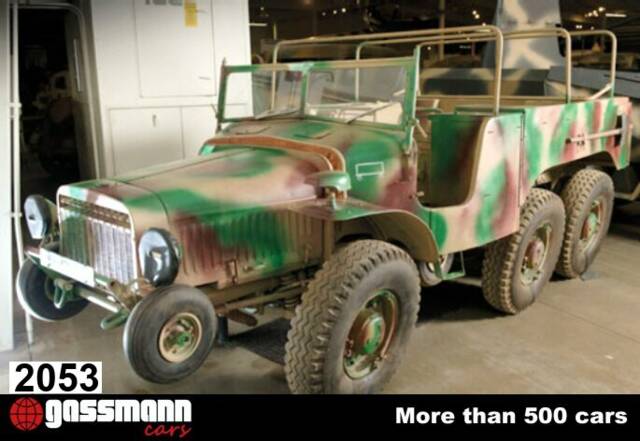
1939 | Laffly W15T 6x6
HOTCHKISS & CO ( F ) W15T 6x6, German 257th

Laffly W15T Classic Cars: Prices & Market Values
History of the Laffly W15T
Developed in France in the late 1930s, the Laffly W15T was engineered as a light all-terrain truck, primarily intended for military logistics. Laffly, famed for its inventive vehicle concepts, focused on designing trucks that could traverse poor roads and rugged landscapes. The W15T entered service shortly before World War II, embodying the distinctive pre-war industrial spirit. Its production period was marked by France’s active search for technological solutions amidst the uncertain climate of the late 1930s. Very few have survived wartime and postwar usage.
Model history of the W15T series
The W15T is one of Laffly’s better-known all-terrain trucks and fits between the company’s smaller V series and larger military transporters. The W15T did not see a direct civilian successor as Laffly’s production focus shifted during the war, and the company eventually ceased operations in the postwar years. As a result, the W15T is often regarded as a standout example of Laffly’s peak engineering achievements.
Highlights and distinct features of the Laffly W15T
What sets the W15T apart is its innovative approach to all-terrain mobility. The front axle is flanked by small auxiliary wheels that help prevent the truck from getting stuck, a concept remarkable for its era. Additionally, the suspension and drivetrain are constructed to withstand punishing conditions—features rarely seen on light trucks of this period. Today, the rarity of surviving W15T models further increases their fascination among collectors and historians.
Technical Data
Special Editions and Collectible Models
Occasionally, W15T chassis were adapted for specific military or fire brigade roles. Some versions were bodied as troop carriers or light rescue vehicles, fitted with tailored coachwork to suit mission needs. These adaptations are exceedingly rare today and command significant attention due to their unique layouts and surviving historical context.
Weak Spots and Common Issues
Given their age and the utilisation in tough environments, surviving W15T trucks frequently present challenges with chassis corrosion, worn suspension bushings, and aged driveline components. Spares for the proprietary axle and wheel systems can be difficult to source outside of specialist networks. Careful inspection of running gear, frame welds, and lubrication systems is highly recommended for prospective buyers.
Engine, Transmission, and Handling of the W15T
Engineered to excel off-road, the W15T is much more at home at low speeds on unpredictable terrain than on tarmac. The 6-cylinder engine delivers sufficient torque for heavy loads, but top speed is modest. The manual gearbox is robust but can be heavy to operate due to its period design. Low-range gearing ensures the W15T can tackle inclines and soft ground with surprising effectiveness. Handling is utilitarian: the ride is firm, steering effort substantial and the auxiliary wheels subtly influence steering feel on rough tracks. The standard W15T military configuration, particularly those with original auxiliary wheel setups, is most sought-after among collectors. These vehicles represent the technical height of the model's engineering focus.
Interior, Comfort, Exterior and design
The W15T’s external profile is unmistakable: a forward-set cab, pronounced fenders and the visibly mounted small auxiliary wheels at the front. Interiors were utilitarian—minimalist seating, spartan controls, and tough trim, reflecting the focus on function over comfort. Exterior paint schemes often featured military drab or fire brigade red, depending on final application. Fabrics and materials in surviving examples are usually rugged, sometimes with heritage-accurate restorations. Factory accessories could include primitive tool kits and shovel mounts.
Other relevant features
In the context of classic truck preservation, the Laffly W15T’s innovative solutions—such as its additional rolling elements—ahead of their time, make it a reference point for collectors with a particular interest in pre-war French automotive ingenuity. Its visibility at shows is extremely rare, often making its appearance an event in itself.
Summary
A surviving Laffly W15T offers a direct glimpse into the ingenuity, engineering priorities, and utilitarian demands of pre-war France. Its status as both an engineering oddity and historical milestone ensures high engagement from both collectors and classic truck specialists. The very limited supply and unique technical configuration make every example an individual experience worth in-depth exploration.