Kaiser Henry J classic cars for sale
The Kaiser Henry J stands as a distinct entry in automotive history, reflecting the ambitions of post-war car manufacturing in the United States. With its compact design and unique position among American classics, the Henry J today offers an authentic driving experience and remains of particular interest to purist collectors and those fascinated by mid-century innovation.
Résultats de la recherche
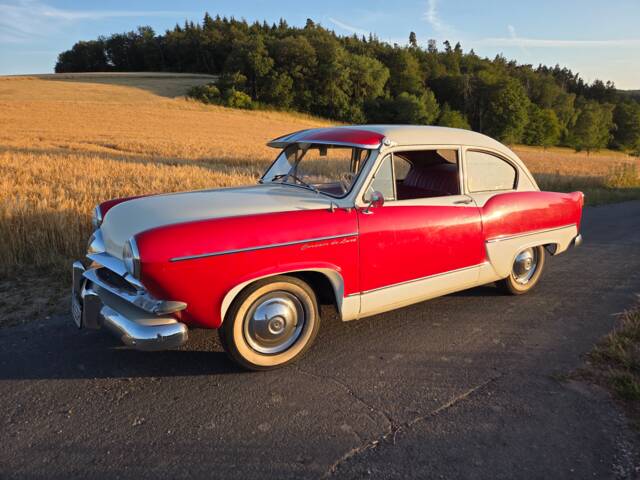
1953 | Kaiser Henry J
A classic you'll almost never see on European roads

Kaiser Henry J listing references from Classic Trader
Below you will find listings related to your search that are no longer available on Classic Trader. Use this information to gain insight into availability, value trends, and current pricing for a "Kaiser Henry J" to make a more informed purchasing decision.
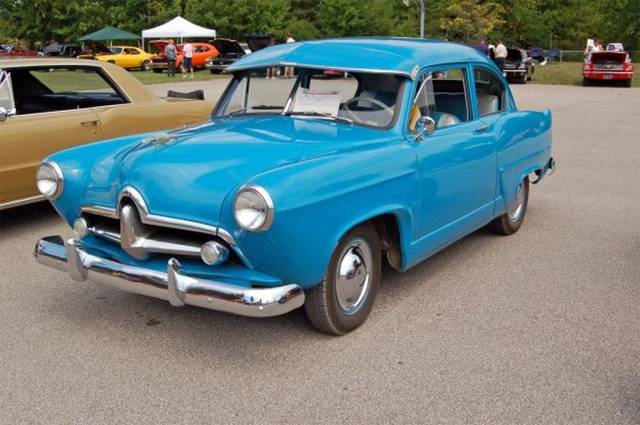
1953 | Kaiser Henry J
Kaiser - Kaiser Henry J, 1953

Kaiser Henry J Classic Cars: Prices & Market Values
History of the Kaiser Henry J
Kaiser-Frazer introduced the Henry J in 1950 as an economical compact aimed at providing affordable yet reliable motoring. At a time when the American market favoured large, ornate vehicles, the Henry J embodied a different philosophy: lightweight construction, simple mechanics, and minimal frills. Named after Henry J. Kaiser, the industrialist behind the project, the model was produced until 1954. It was a result of ambitious strategies to deliver a car for the masses, similar to post-war efforts in Europe. The Henry J’s production marked an important phase in American car history, directly targeting buyers who previously used public transport or motorcycles.
Model History of the Henry J
The Henry J did not have a direct predecessor, as it was developed from scratch by Kaiser-Frazer to fill a perceived gap in the US market for basic transportation. Initial models were spartan, often lacking opening boot lids or ventilation. Over the years, improvements were gradually introduced in response to customer feedback, including upgraded trim, better upholstery, and the introduction of the 'Vagabond' variant with improved comfort. The Henry J’s production ended in 1954, succeeded indirectly by other Kaiser models like the Darrin, though there was no official successor within the same compact category.
Highlights of the Kaiser Henry J
The most notable feature of the Henry J is its sheer simplicity and honest engineering. With a streamlined body and focus on weight reduction, it achieved impressive fuel economy for its time. Early versions were stripped down to minimise costs—many lacked even a boot lid or glovebox as standard. Another notable aspect was Kaiser’s attempt at keeping prices competitive against the likes of the Chevrolet 150 and Ford Mainline by minimising options and production costs.
Technical Data
Special Editions and Collectible Models
Certain variants of the Henry J—most notably the 'Corsair' trim level—offered additional interior features, flashier chrome detailing and, in rare cases, two-tone paint schemes. Additionally, some Henry J models were rebadged as 'Allstate' for the Sears Roebuck chain, featuring minor differences such as unique badging and trim, making these especially rare today.
Weak Spots and Common Issues
While mechanically straightforward, restoration of the Henry J poses unique challenges due to the scarcity of model-specific trim and body parts. The car’s simple construction means that mechanical repairs are generally manageable, but corrosion in structural components, especially the sills and frame rails, can be a concern. Upholstery and trim pieces are difficult to source as few reproduction parts are available.
Engine and Performance, Transmission and Handling
The Henry J focused on fuel efficiency and practicality over sheer power. The 2.2-litre engine delivered modest acceleration but provided good reliability and easy maintenance access. Handling was light and predictable, with emphasis on straightforward, unfiltered road feedback. Brakes and steering were purely mechanical, giving a direct connection to the car’s dynamics. The six-cylinder version provided a noticeable improvement for those seeking more highway capability. • Henry J Corsair – Known for its upgraded trim and six-cylinder engine • Allstate Henry J – Rare rebadged variant for Sears with unique badging • Early base models – Noted for their ultra-basic, stripped-down configuration, highly valued among purists
Interior, Comfort, Exterior and Design
The Henry J’s exterior lines reflect early-50s American design cues in a reduced, almost European form: flush fenders, a simple grille, and minimal chrome. Most models were offered in subdued single-tone paint, though rare two-tone versions exist. The interior matched the minimalistic philosophy, offering basic instrumentation, painted metal dash, and vinyl or cloth upholstery depending on trim. Optional extras were sparse, but some later cars received accessory heaters and radio units. Unique design features include the compact overall dimensions and large greenhouse area for improved visibility.
Other Relevant Features
The Henry J’s straightforward mechanics and accessible layout made it popular for gasser drag builds in later decades, a testament to its lightweight structure. The Henry J is also notable for its role in the post-war American compact segment, influencing later designs and proving a stepping stone for affordable car ownership.
Summary
The Kaiser Henry J remains a fascinating classic that highlights a unique chapter in American automotive engineering. Its simplicity, combined with honest mechanicals and rarity, makes it a compelling choice among classic car enthusiasts who appreciate purity of design and a direct link to mid-century motoring history.