- Car
- Iveco Magirus
- Iveco Magirus Eurofire (1 offer)
Iveco Magirus Eurofire classic cars for sale
The Iveco Magirus Eurofire stands as a hallmark in firefighting vehicle engineering, widely recognised for its functional design, technical robustness, and essential role in fire and emergency services across Europe. This model embodies the shift towards modern chassis engineering and operator-focused ergonomics. It represents a crucial era when operational effectiveness and fleet standardisation became driving forces in emergency vehicle design.
Search results
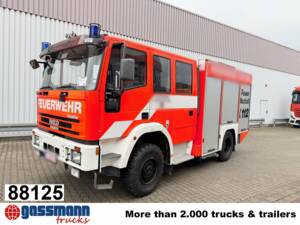
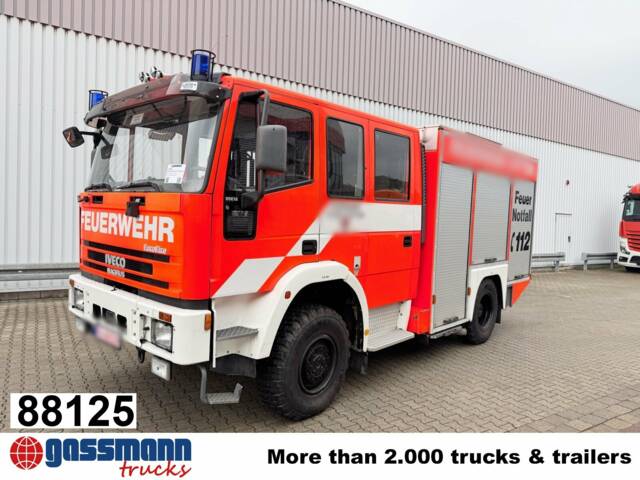
1995 | Iveco Magirus Eurofire FF 95 E 18
FF 95 E 18 4x4 Doka, Euro Fire, LF 8/6 Feuerwehr

Iveco Magirus Eurofire Classic Cars: Prices & Market Values
History of the Iveco Magirus Eurofire
The Eurofire series by Iveco Magirus was engineered in response to evolving requirements of fire brigades and emergency services throughout the 1990s and early 2000s. The series consolidated the expertise of Magirus and Iveco, reflecting over a century of experience in utility vehicle and emergency apparatus construction. The move towards the Eurofire chassis was motivated by the need for a platform capable of supporting varying superstructures and equipment standardisation, enabling European fire brigades to modernise their fleets and streamline their operational maintenance.
Eurofire Model Range Development
Within the context of Iveco Magirus, the Eurofire series represented a comprehensive rethink of emergency vehicle production. Featuring modular chassis options, it bridged the gap between prior generations of fire engines, often custom-built and locally adapted, and newer, scalable designs meeting pan-European standards. The Eurofire generally succeeded older Magirus-Deutz and Iveco models, and paved the way for later developments like the MultiStar and Firefighter ranges. Its legacy includes contributions to interoperability among European firefighting authorities.
Eurofire Series Distinctions and Market Share
Key features of the Eurofire line include its adaptable chassis, compatibility with a variety of body builds, emphasis on safety for occupants, and ease of maintenance for municipal and volunteer operators. The Eurofire’s modularity also enabled tailored solutions for urban, rural, and industrial firefighting alike. The model's reputation for mechanical dependability and longevity means vehicles from this series remain active and supported by communities with robust spare-parts logistics.
Technical Data
Special Editions and Collector Models
Depending on local firefighting requirements, several limited configurations and commemorative editions have been built—most often for anniversaries of fire brigades or as demonstration/show trucks. These may include bespoke livery, upgraded lighting or communication systems, and enhanced comfort for crew members. Details can vary by municipality and country—provenance is key for identification.
Weak Spots and Common Issues
While the Eurofire series is known for its robust construction, common issues for high-mileage or heavily utilised units include wear on suspension components, corrosion on welded or bolted frame elements—especially for vehicles exposed to salt or chemicals—and electrical faults due to complex operational equipment. Pump maintenance and bodywork attention should be closely monitored, as original parts for firefighting systems may be challenging to source in some regions.
Engine, Transmission and Driving Dynamics
Eurofire vehicles prioritise predictable handling under load, with robust diesel engines—often turbocharged for improved torque—providing consistent performance in challenging environments. Gearbox selection was engineered for both agility in urban deployment and endurance during prolonged emergency operations. The chassis and suspension tuning are configured for both comfort and stability, reducing crew fatigue on long operations. Braking systems include heavy-duty air brakes, and many models come standard with advanced hydraulic supports for body-mounted equipment like ladders and water tanks. - Crew cab versions with larger seating capacity for municipal fire brigades
- Chassis adapted for turntable ladders or hydraulic platforms
- Tanker variants optimised for rural or industrial applications
Design, Comfort and Equipment
The exterior design of the Eurofire emphasises both visibility—through extensive use of reflective striping and high-mount rotating beacons—and easy access, via wide-opening cab doors and sturdy grab handles. Cabins are designed for ergonomic ease, with well-placed controls for both driving and equipment operation. Frequent options include climate-controlled interiors, advanced radio/intercom systems, and specialist lockers for hoses and rescue tools. Many units offer rear-facing seats, facilitating rapid crew deployment at emergency scenes. Paint schemes often reflect the national or regional standard for emergency vehicles, enhancing recognition and authority.
Additional Information
Many Eurofire vehicles now entering the classic market have a full service history and detailed log of operational duties, reflecting the importance of transparency and provenance in the emergency services sector. Retired units are often favoured for conversion into showpieces or mobile workshops, given their adaptable chassis and robust build quality.
Summary
Iveco Magirus Eurofire vehicles epitomise a significant phase in firefighting engineering, where reliability, modular adaptability, and serviceability became paramount. Their unrivalled presence in current classic commercial vehicle listings demonstrates the continued relevance and respect these workhorses command. For collectors, restorers and emergency vehicle specialists, the Eurofire offers a tangible link to the evolution of operational standardisation in European emergency fleets.