IFA P2M classic cars for sale
The IFA P2M stands out as a rare and intriguing commercial vehicle from the early GDR era, renowned for its robust engineering and unique design language from East Germany. Its rarity and distinct technical features make it a notable find for collectors seeking vehicles with a clear historical reference to mid-20th-century Eastern European automotive design.
Search results
Currently, there are no matching listings for your search.
Create search alert
Let yourself be notified as soon as a listing is published that matches your search filters.
IFA P2M listing references from Classic Trader
Below you will find listings related to your search that are no longer available on Classic Trader. Use this information to gain insight into availability, value trends, and current pricing for a "IFA P2M" to make a more informed purchasing decision.
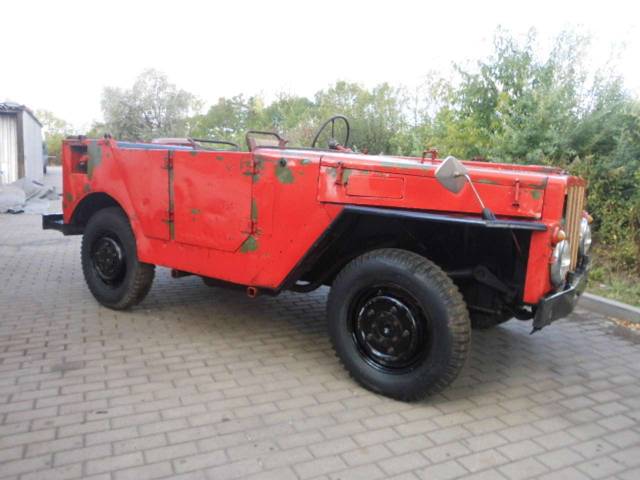
1958 | IFA P2M
Oldtimer IFA IFA P2M

Create search alert
Let yourself be notified as soon as a listing is published that matches your search filters.
IFA P2M Classic Cars: Prices & Market Values
History of the IFA P2M
Emerging from the iconic Industrieverband Fahrzeugbau (IFA) in East Germany, the P2M was a product of necessity and ingenuity in the post-war years. Built mainly during the 1950s, the P2M was intended as a versatile light commercial vehicle tasked with a variety of delivery and service needs in the rapidly changing GDR economy. With its utilitarian form, the P2M carries traces of prewar German engineering practice, updated for efficiency and the resource limitations of its era. While numbers produced were limited compared to Western competitors, the IFA P2M is now a rolling symbol of East German industrial history and resourcefulness.
Model History of the IFA P2M
The P2M's lineage reflects the evolution of East German light transport design. Developed as a successor to prewar DKW commercial vehicles, the P2M introduced incremental improvements in chassis stability and payload capacity. Production was primarily focused in the early to mid-1950s, with later models featuring minor updates to accommodate available parts and materials. As industrial strategies shifted and more advanced models like the Barkas B1000 entered production, the P2M was eventually phased out. Today, it occupies a distinctive niche as a transitional model linking prewar and postwar engineering in East Germany.
Highlights of the IFA P2M
Key attractions of the IFA P2M include its simplistic yet reliable drive technology and historically faithful body styles, which ranged from van to pickup variations. Enthusiasts appreciate the P2M for its clear mechanical layout—rear-wheel drive, robust suspension, and straightforward maintenance routines. Owing to limited production numbers during the GDR period, the P2M is seldom seen outside of specialist gatherings or private collections.
Technical Data of the IFA P2M
Special Editions and Collectible Models
Records and documentation about limited or special editions of the P2M are scarce. Most vehicles were built according to specific utility needs, leading to minor variant differences rather than officially designated series. Some surviving examples feature bespoke bodywork or period-correct modifications applied by state enterprises, which may attract collectors focused on unique stories within the P2M range.
Weak Spots and Common Issues
As with many East German utility vehicles of the era, the P2M requires attention to its engine seals, fuel system integrity, and electrical wiring, particularly after decades of use or storage. Chassis rust and spare part scarcity pose challenges, requiring owners to have strong sourcing contacts or fabrication skills. Routine preventive maintenance is essential to keep the P2M in working order due to its age and the original utilitarian build quality.
Engine, Performance, Transmission, and Handling
Performance in the IFA P2M is defined by its pragmatic engine technology, typically a simple two-stroke, and a manual transmission optimised for low-speed reliability. Acceleration and top speed are modest, prioritising load capacity and serviceability over outright speed or driving dynamics. On-road, the ride comfort is basic, reflective of mid-century Eastern European standards for light commercial vehicles. As the only model from IFA represented here, the P2M sets the standard for this class—its appeal lies in the technical authenticity and robust simplicity rather than high performance.
Interior, Comfort, Exterior, and Design
Design decisions were function-driven, resulting in a rugged exterior with flat body panels and minimal decorative elements. The interior is purely utilitarian: basic seating, simple instrumentation, and straightforward controls. Colour options were largely dictated by availability of materials rather than extensive palettes. Any presence of original optional extras—such as factory-fitted roof racks or partitions—is particularly valuable and hints at the specific commercial role the vehicle once played.
Other Relevant Features
The P2M stands as a document of its times not only for design but also for the social and economic context in which it was operated. Surviving vehicles may carry operator plaques, original GDR registration documentation, or unique modifications specific to public service use.
Summary
The IFA P2M offers a direct connection to East German motoring history through its rare blend of utilitarian engineering and historical authenticity. With supply and demand both almost exclusively focused on this model within the IFA brand, every surviving P2M becomes a particularly significant opportunity for those interested in preserving the mechanical heritage of the GDR.