- Car
- Hispano-Suiza
- Hispano-Suiza K6 (0 offers)
Hispano-Suiza K6 classic cars for sale
The Hispano-Suiza K6 represents a distinct chapter in the story of luxury automobiles from pre-war Europe. Built with technical innovation and refined craftsmanship, the K6 stands out with its unmistakable engineering pedigree and exclusive character. Learn about its origins, features, and what makes the K6 unique among classic cars.
Search results
Currently, there are no matching listings for your search.
Create search alert
Let yourself be notified as soon as a listing is published that matches your search filters.
Create listing
Do you have a Hispano-Suiza K6 that you want to sell? Then create a listing now.
Create listingHispano-Suiza K6 listing references from Classic Trader
Below you will find listings related to your search that are no longer available on Classic Trader. Use this information to gain insight into availability, value trends, and current pricing for a "Hispano-Suiza K6" to make a more informed purchasing decision.
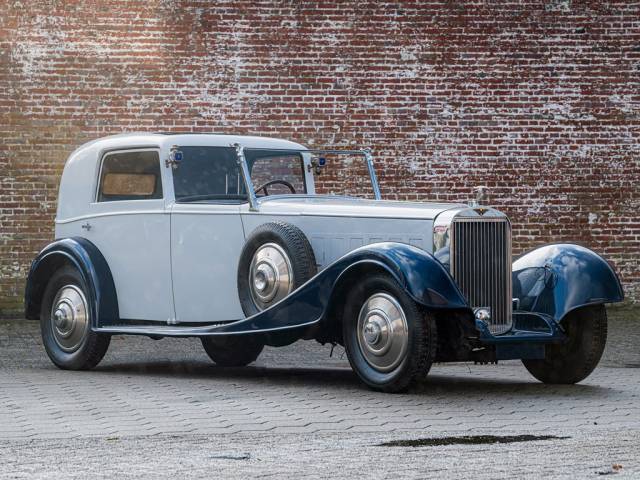
1934 | Hispano-Suiza K6/Typ 70
1934 Hispano-Suiza J12 Coupé Chauffeur by Kellner

Create search alert
Let yourself be notified as soon as a listing is published that matches your search filters.
Create listing
Do you have a Hispano-Suiza K6 that you want to sell? Then create a listing now.
Create listingHispano-Suiza K6 Classic Cars: Prices & Market Values
History of the Hispano-Suiza K6
The Hispano-Suiza K6 was introduced in 1934, during an era when the marque was celebrated for its sophisticated engineering and stylish presence among luxury automakers. Developed as a replacement for the highly respected H6 model, the K6 continued the brand’s legacy of combining advanced mechanical concepts with elegant bespoke coachwork. Hispano-Suiza collaborated with some of the most renowned French coachbuilders of the pre-war years—such as Saoutchik and Vanvooren—to deliver unique bodies tailored to individual client tastes. Production of the K6 continued until 1937, firmly placing it in a select club of rare, pre-war luxury vehicles.
Model History of the K6 Series
Succeeding the H6, the K6 adopted a slightly smaller six-cylinder engine, reflecting a trend towards efficiency and lighter weight without sacrificing the marque’s high standards for smoothness and silent running. The K6’s mechanical developments and revised proportions differentiated it from both its predecessor and the larger J12, another contemporaneous model by Hispano-Suiza. Each K6 was typically built as a chassis and then sent to a coachbuilder for custom bodywork, resulting in a wide array of surviving one-off configurations.
Highlights of the Hispano-Suiza K6
The K6 stands out for its blend of technical finesse and exclusivity. It was known for its inline six-cylinder engine with aluminium block and overhead camshaft, a rarity at its time, delivering notable reliability and refinement. Most K6s were delivered as bespoke commissions to prominent clientele, often featuring elaborate Art Deco styling details. The model's robust chassis, advanced braking system, and signature Hispano-Suiza stork mascot set it apart from other luxury cars of the era.
Technical Data of the Hispano-Suiza K6
Special Editions and Collectible Models
The Hispano-Suiza K6 was almost exclusively produced as a bespoke vehicle, so every car is effectively unique. However, certain coachbuilt versions by renowned ateliers—such as Saoutchik, Vanvooren, and Kellner—are considered particularly significant by collectors due to their craftsmanship and distinctive designs. Notable examples include models with streamlined coupe or cabriolet bodies, often displayed at international concours d’élégance events.
Weak Spots and Common Issues
As with most pre-war luxury vehicles, the Hispano-Suiza K6 requires specialist knowledge for maintenance and restoration. Attention should be paid to the preservation and function of the braking system, especially the complex servo assistance. Engine components, especially parts unique to the Hispano-Suiza six-cylinder design, can be challenging to source and require authentic materials and machining. The wiring and electrical systems, typical of vehicles from this era, may demand careful inspection and occasional overhaul to ensure reliability.
Engine and Performance, Transmission and Handling
Fitted with a six-cylinder engine and advanced four-wheel servo-assisted braking, the K6 was designed for reliable, comfortable touring rather than outright speed. The smooth powerplant and long-legged gearing offer effortless cruising, while the solid chassis design ensures stability and composure on period road surfaces. Manual transmission and responsive steering round out the driving experience, reflecting pre-war luxury touring ideals. Among notable K6 variants, Saoutchik-bodied coupes and Vanvooren cabriolets are often highlighted for both their engineering and aesthetic achievements. Technical data from these examples consistently reflects engine sizes around 5.2 litres and sophisticated, coachbuilt custom features.
Interior, Comfort, Exterior and Design
Each K6 features custom-bodied exteriors, ranging from sweeping coupes to elegant cabriolets, often executed by leading French designers. Interiors were tailored to client specifications with materials such as leather, rare woods, and intricate metalwork. Art Deco influences are visible in many dashboard layouts, trim details, and exterior lines. Optional accessories included elaborate luggage arrangements, integrated clocks, and personalised hardware—features that are as much a hallmark of the K6 as its mechanical underpinnings.
Other Features
From a historical context, K6s frequently appeared in the hands of aristocrats, politicians, and creatives in 1930s France and Switzerland. Surviving examples may have documentation that traces ownership and provenance, supporting both historical interest and long-term value retention.
Summary
The Hispano-Suiza K6 occupies a unique place as a coachbuilt luxury automobile from the 1930s, blending advanced engineering with individual design. As the most represented Hispano-Suiza model among current listings, its significance is assured for collectors who value technical distinction and artisanal craftsmanship in a classic car.