GP Buggy Classic Cars for Sale
The GP Buggy stands for pure driving enjoyment, built on a straightforward VW chassis and engine, offering open-air fun with distinctive looks. Its reputation for playful handling and bold design ensures it stands out on any road or beach.
Suchergebnisse
Zur Zeit sind keine passenden Inserate zu Ihrer Suche veröffentlicht.
Create search alert
Let yourself be notified as soon as a listing is published that matches your search filters.
Create listing
Do you have a GP Buggy that you want to sell? Then create a listing now.
Create listingGP Buggy listing references from Classic Trader
Below you will find listings related to your search that are no longer available on Classic Trader. Use this information to gain insight into availability, value trends, and current pricing for a "GP Buggy" to make a more informed purchasing decision.
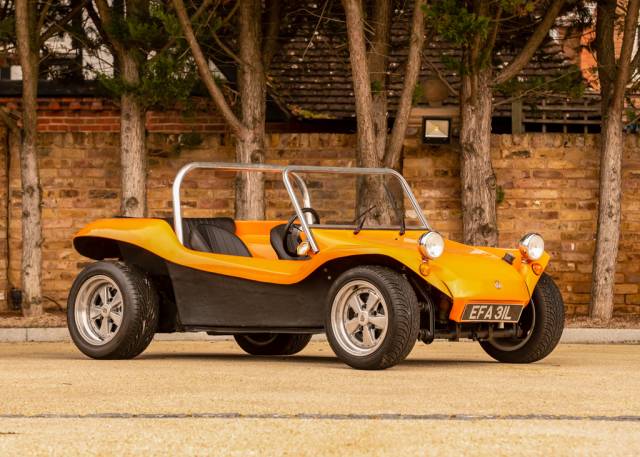
1973 | GP Buggy
Volkswagen GP Mk. I Beach Buggy
Create search alert
Let yourself be notified as soon as a listing is published that matches your search filters.
Create listing
Do you have a GP Buggy that you want to sell? Then create a listing now.
Create listingGP Buggy Classic Cars: Prices & Market Values
History of the GP Buggy
The GP Buggy emerged as a European answer to the desire for lightweight, agile vehicles that could handle both tarmac and sand. Built on the reliable Volkswagen Beetle chassis, the GP Buggy leveraged the simplicity, durability, and parts availability of the VW platform. Its roots go back to the late 1960s when the dune buggy trend, often associated with West Coast America, caught on in the UK and across Europe. The GP Buggy soon became a staple of the British and continental scene, finding favour for its robustness and ease of maintenance.
Model History
The GP Buggy took the fundamental concept of the dune buggy and adapted it to European conditions. Unlike the Meyers Manx from the US, the GP Buggy was developed by GP in the UK for European buyers, featuring a four-seater configuration as well as notable design updates over its production run. Typically based on the VW 1200 or 1300 chassis, the model could be fitted with motors ranging up to the spirited 1600GT, further adding to the variety and appeal of the GP Buggy.
Highlights of the GP Buggy
Key features of the GP Buggy include its light weight, agile handling, and playful driving characteristics. The radical bodywork design, with its open cockpit and pronounced fender lines, is instantly recognisable. GP Buggies were often personalised, with many examples featuring Porsche Fuchs wheels, supportive bucket seats in the front, and vibrant colour choices reflecting the era's tastes. The model is well known across Europe, particularly in the UK.
Technical Data
Special Editions and Collectible Models
Certain GP Buggies stand out thanks to factory upgrades or rare configurations, such as models delivered with the potent 1600GT engine or specific colour and trim combinations that were available only in limited runs. Factory-fitted Porsche Fuchs wheels, often borrowed from period Carrera models, are sought after among enthusiasts.
Weak Spots and Common Issues
With its Volkswagen underpinnings, the GP Buggy benefits from a durable mechanical base, and most issues are predictable: look for rust in the chassis, wear in the suspension, and correct operation of engine and transmission. As many Buggies are custom assembled, checking the build quality and the documentation—especially for MoT certificates and UK registration papers—is crucial.
Engine and Performance, Transmission and Handling
The GP Buggy's light body, rear-mounted engine, and robust VW running gear come together to create direct, responsive handling and lively acceleration—especially in models equipped with the 1600GT engine. Steering feels direct thanks to lightweight construction, while the short wheelbase delivers engaging turn-in. Most examples use manual transmission, maintaining the classic driving feel. - GP Buggy 1600GT: Notable for strong performance; shares mechanicals with period VW 1600GT.
- Four-seater GP Buggy: Rare among Buggies, offering extra practicality.
Interior, Comfort, Exterior and Design
The GP Buggy is defined by its open, gesture-rich bodywork and minimalist cabin. The body lines convey movement even at rest, making a bold statement wherever it goes. Early GP Buggies often received bright paint finishes, while the front bucket seats offered more support than typical period alternatives. The use of Porsche Fuchs wheels on many examples hints at motorsport heritage. Accessories such as custom roll bars, tonneau covers, and period-correct external mirrors are common special touches.
Other Notable Features
Legal documents such as UK MoT certificates and correct registration papers are often available and should be verified for all GP Buggy purchases. The GP Buggy holds a familiar place in both British and broader European classic car culture, thanks in part to its adaptability and simple engineering, making it a popular choice for both custom builds and period-correct restorations.
Summary
The GP Buggy represents a unique fusion of playful design with proven Volkswagen engineering, offering both robust mechanics and standout styling. It has become the reference point for classic European Buggies, thanks to its build quality, open-road fun, and a thriving scene in the UK and beyond. Buyers should focus on authenticity, documentation, and the quality of any custom features when seeking out a GP Buggy.