- Car
- Gatsby (0 offers)
Buy Gatsby Classic Cars
Gatsby Coachworks built some of the most theatrical neoclassic cars of the 1980s, mixing American V8 engineering with pre-war style and coachbuilt flair. For British buyers, they offer rarity, presence and a very different kind of classic ownership experience.
Search results
Currently, there are no matching listings for your search.
Create search alert
Let yourself be notified as soon as a listing is published that matches your search filters.
Gatsby listing references from Classic Trader
Below you will find listings related to your search that are no longer available on Classic Trader. Use this information to gain insight into availability, value trends, and current pricing for a "Gatsby" to make a more informed purchasing decision.
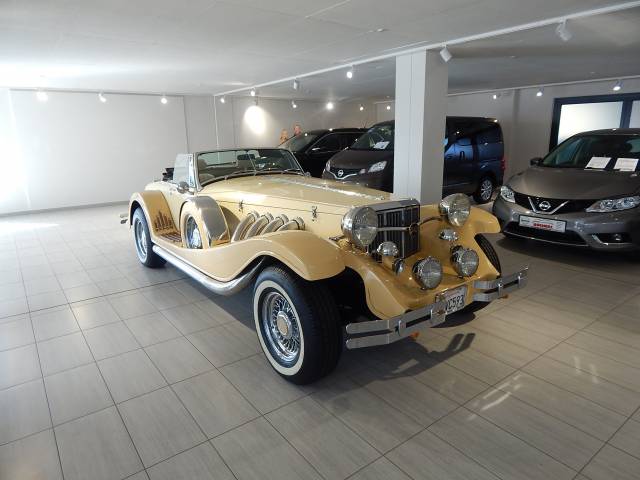
1985 | Gatsby Cabriolet
Einzelstück - H-Kennzeichen - Deutsche Papiere

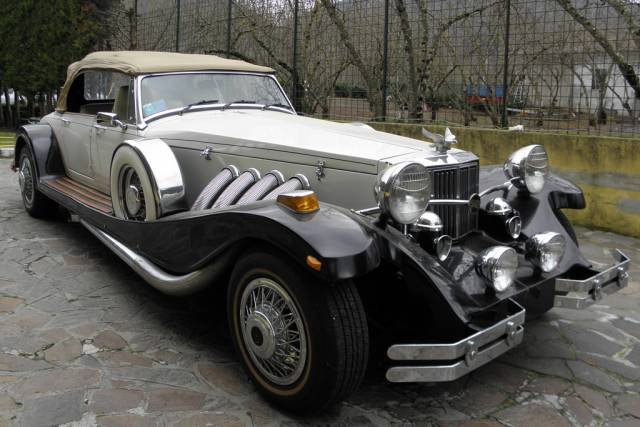
1985 | Gatsby Cabriolet

Create search alert
Let yourself be notified as soon as a listing is published that matches your search filters.
History & Heritage
Gatsby Coachworks Ltd. was founded on 10 April 1979 in San José, California, by Sky Clausen and Larry Munson. The company emerged at the right moment for a very particular slice of American taste: buyers who wanted the look and ceremony of the pre-war era, but with the convenience of contemporary American mechanicals. Gatsby was never a mass-market brand. It was a specialist coachbuilder operating in the same broad neoclassic space as Excalibur, Zimmer and Clénet, and it understood that spectacle mattered as much as engineering.
The first Gatsby model was the Cabriolet, introduced in 1979 and built through 1988. It used Ford Thunderbird or Mercury Cougar chassis hardware and combined it with MG Midget body elements, producing a small-batch interpretation of an old-world roadster rather than a direct replica. That approach defined the marque: Gatsby did not simply copy one historical car, but mixed references into something recognisable, dramatic and slightly surreal.
The company first built cars with steel bodies, then began offering fiberglass bodywork from 1983. That shift was important. Steel gave the early cars a more substantial, hand-built feel, while fiberglass opened the door to lower weight and easier reproduction of complex shapes. For a low-volume manufacturer, that flexibility helped maintain production.
In 1981 came the De Courville Roadster, the most collectable Gatsby for many enthusiasts today. It used a Ford LTD chassis and a Lincoln 302ci V8, and production was limited to just 250 cars, each individually numbered. That limited run is one reason the model now attracts serious attention in the market.
The Speedster followed in 1983 and ran through 1993. With Ford or Chevrolet V8 power and Auburn-style proportions, it pushed the Gatsby idea further towards the lavish end of the neoclassic spectrum. Later, the Griffin Roadster arrived in 1988 and continued until 1998, with JPR Cars taking over in 1997/98. At its peak in the early 1980s, Gatsby could build up to 50 turn-key cars per year, a notable output for such a niche manufacturer.
For British readers, Gatsby sits in an interesting historical gap. It belongs to the same world as British roadster culture in spirit only: not in origin, not in engineering, and not in daily practicality. Yet that is precisely what makes it appealing. It offers the showmanship often associated with British classics, but through an American lens, on American running gear, and with far more overt nostalgia.
What Makes Gatsby Special
Gatsby cars stand out because they are not modest about what they are. They are deliberately stylised, highly visible, and built to create an entrance. The company’s cars are part homage, part fantasy, and part practical road car. That combination is rarer than it sounds.
One of the key appeals is the balance between theatre and usability. Beneath the long bonnet, wire wheels and sweeping wings sits proven Ford or Chevrolet V8 hardware. That means the car may look like a roaring 1930s special, but it behaves more like a sturdy American cruiser. For a buyer, that is a major advantage: the car’s identity is dramatic, yet its core mechanicals are familiar and relatively well documented.
Another Gatsby strength is its small-scale craftsmanship. These cars were not stamped out by a large factory. They were built in low volumes, often with individual customer preferences and variations. Details such as trim, fixtures, interior finish and even body material can differ from car to car. That makes each example feel more bespoke, and it also means provenance matters.
The De Courville Roadster is especially important because it represents the most clearly defined Gatsby model line: numbered, limited and comparatively well documented. The Cabriolet is often seen as the earliest and most original expression of the concept, while the Speedster is the most flamboyant. The Griffin Roadster extends the theme into the 1990s, showing that Gatsby’s formula had staying power beyond the first wave of neoclassic fashion.
For British collectors, rarity is only part of the attraction. Gatsby is unusual even within the classic car world. It is not a Morgan, not a Jaguar, and not a period original; it is a conversation piece with a genuine production history. That makes it a strong choice for buyers who want to stand apart from the usual UK classics and are happy to own something with a more specialised backstory.
Technical Data
The figures above should be treated as period guidance rather than hard factory specifications. Gatsby frequently built cars to order, so individual examples can vary in details such as trim, drivetrain specification, equipment and finish.
Mechanically, the big advantage is shared parts logic. Ford-based V8s, automatic transmissions, steering components and many consumables are broadly understood by specialists. That is helpful in Britain, where ownership cost often depends less on the headline rarity of the car and more on whether the mechanical package can be maintained without endless custom fabrication.
The body construction also matters for inspection. Early steel-bodied cars deserve a careful rust check, especially in seams, lower edges and underbody areas. Later fiberglass examples remove rust from the equation in the body shell, but they introduce the usual concerns around repair quality, cracking and ageing repairs.
Market Overview & Buying Tips
Gatsby remains a niche market, but it is a market with real transactions and real interest. That matters for UK buyers because it means these cars are not just catalogue curiosities; they are being bought, sold and valued internationally. The Bonhams UK auction listing for a 1983 Gatsby Convertible is especially useful evidence that there is genuine British market recognition for the marque, even if the cars are still rare on local roads.
Recent pricing gives a sensible picture of the spread. A De Courville Roadster sold on Bring a Trailer in June 2023 for $15,500, despite having only around 22,000 miles. That suggests the market can be surprisingly accessible for cars that need attention. At the other end of the spectrum, a restored De Courville was offered by a French dealer in 2023 for €50,000, showing that excellent examples with proper presentation can command a much stronger figure. Bonhams’ estimate of £17,000–22,000 for a 1983 Gatsby Convertible fits neatly between those two poles.
For British buyers, the first question is usually not just price but practicality. LHD cars are legal in the UK, but they are less convenient for daily use, especially on narrow roads, in town parking and at tolls or drive-throughs. That said, many classic buyers accept LHD as part of the ownership experience, especially for rare imports. Gatsby fits that profile well: it is more a special-occasion car than a commuter.
Import costs also matter. UK buyers bringing in a Gatsby from the US should budget for shipping, insurance, customs handling, import duty and VAT, plus any compliance work needed before registration. Even when the purchase price looks attractive, landed cost can move quickly. This is especially relevant because Gatsby cars are usually imported from North America, where the supply is stronger than in the UK.
When inspecting a Gatsby, look closely at the basics first. Check for corrosion on steel-bodied examples, evidence of past repairs, panel fit, and whether the car has been restored in a sympathetic or over-restored way. On fiberglass-bodied cars, inspect for stress cracking, paint quality and alignment. Many Gatsby cars wear extensive chrome and decorative trim, so the condition of brightwork is a major value factor. Replating or sourcing missing trim can be costly.
The mechanical side is easier, but not automatically cheap. A Ford or Chevrolet V8 is reassuring, yet a neglected neoclassic can still hide tired cooling systems, ageing brakes, weak wiring and second-rate conversions. Ask for evidence of routine maintenance, not just cosmetic restoration. A car that looks spectacular but has patchy mechanical history can become expensive quickly.
Documentation is especially important for limited-run models such as the De Courville. Numbered plaques, factory paperwork and matching identities all support value. In a market as small as Gatsby’s, originality of identity can matter as much as mileage. A car that can be tied back to its model and build record will usually be easier to resell.
For UK classics fans, Gatsby occupies a different lane from British-built neoclassics such as Morgan. Morgan’s appeal lies in continuity, artisanal British manufacture and a more grounded roadster identity. Gatsby is brasher, heavier and more overtly American. If you want something that speaks the language of British club culture but answers in V8 volume, Gatsby is a compelling alternative.
Also consider how you plan to use the car. Gatsby can work for club events, weddings, shows and relaxed weekend driving, especially in dry weather. It is less convincing as a practical modern classic for year-round use. MOT exemption may apply to pre-1977 vehicles in the UK, but many Gatsby cars are newer than that, so they will usually remain subject to MOT testing. That is worth checking before purchase, especially for imported examples whose first registration dates can be misleading.
Driving Feel
Driving a Gatsby is about pace, presence and sensation rather than outright performance. The seating position, long bonnet and high styling create a sense of occasion even before the engine starts. Once under way, the car settles into the relaxed character of an American cruiser, not a sharp sports car.
The V8 soundtrack is central to the experience. Depending on specification, the car may use Ford or Chevrolet power, but the effect is similar: a deep, easy rumble that suits relaxed throttle inputs and long, open roads. In British terms, it is happiest on A-roads, scenic runs and town centre promenades where the visual drama matters as much as the actual journey.
Steering and ride reflect the donor chassis rather than the vintage styling. That is a plus and a minus. On the one hand, the car is generally easier to live with than a genuine pre-war machine. On the other hand, it will not feel nimble. In tight UK streets, multi-storey car parks or narrow village lanes, its size and turning circle can be a challenge.
The automatic transmission encourages unhurried driving. Gatsby is not about heel-and-toe precision or rapid gear changes. It is about smooth progress and strong torque. That makes it suitable for buyers who enjoy classic motoring as a relaxed ritual. If you want a car to sit low, feel light and take corners eagerly, this is not the right machine.
British road conditions also change the experience. On smooth motorway stretches, the Gatsby can feel composed and self-assured. On broken urban surfaces or narrow rural roads, the size and weight become more obvious. That is why many UK owners would likely keep one for events rather than as their only classic.
Design & Coachwork
Gatsby’s styling is the brand’s headline feature. The cars borrow the visual language of the pre-war era, but they do so with a 1970s and 1980s sense of abundance. Long bonnets, exposed or strongly suggested wings, upright grilles, sweeping body sides and lots of chrome give the cars a highly recognisable silhouette.
The Cabriolet is the most eclectic of the bunch, with MG Midget body elements used in the overall concept. That detail says a lot about Gatsby’s approach: this was not a purist exercise in historical accuracy, but a creative reworking of old themes with available components and a clear eye for theatrical effect.
The De Courville Roadster is perhaps the cleanest expression of the brand’s design intent. It has the look of a coachbuilt luxury car from an alternate history, with a more disciplined shape and a strong sense of proportion. In the market, that often translates into stronger desirability because the model feels more coherent.
The Speedster is the extrovert. With Auburn-style cues and a broader, more aggressive stance, it leans into the fantasy side of neoclassic design. For some buyers, this is the whole point. A Gatsby should not be subtle. It should look like it has arrived with a brass band.
In Britain, that makes Gatsby an interesting counterpoint to home-grown roadster culture. British classics often value delicacy, restraint and a certain engineering honesty. Gatsby values spectacle, custom flair and old-world romance reinterpreted through American muscle. Both are valid; they simply serve different emotional needs.
The quality of coachwork on individual cars can vary, so close inspection is essential. Look at panel alignment, door fit, chrome detailing, hood mechanisms, seals and the quality of any repaint. A good Gatsby should look expensive even before you open the door. A tired one can look impressive in photos but disappointing in person.
Other
For enthusiasts in the UK, Gatsby ownership tends to sit at the intersection of classic car collecting, American import culture and neoclassic nostalgia. That means club scene support is more specialised than mainstream British classics, but it is still there. Owners may find more relevance in American car clubs, import gatherings and mixed classic events than in marque-specific British circles.
That said, Gatsby suits the British show circuit well. It has visual impact, strong provenance and enough rarity to spark conversation. At VSCC or HCVCC events it will stand out sharply from the usual pre-war originals, but that difference can be an advantage if the car is presented thoughtfully. People may come to admire a Gatsby because it is unusual; they stay because it tells a story.
Spare parts are another practical point. Because the underlying mechanicals are often Ford or Chevrolet-based, routine service items are usually manageable. Body-specific trim is the harder part. Chrome, badges, bespoke lights and coachwork details can be time-consuming to source, so buyers should factor in patience as well as cash.
Insurance and storage should not be overlooked either. Gatsby cars are not everyday classics, and they deserve dry storage if possible. Their scale, brightwork and custom bodywork reward careful maintenance. If you plan to buy one in the UK, choose a cover level that matches the car’s rarity and value rather than treating it like a standard cruiser.
Import legality is straightforward in principle but not always simple in practice. Left-hand drive is legal. The challenge is often in the paperwork, registration details, lighting compliance and ensuring that the car’s identity matches its build records. A good specialist can help, but buyers should not assume an imported Gatsby will be plug-and-play.
Summary
Gatsby Classic Cars offer a rare mix of American V8 engineering, coachbuilt drama and low-volume exclusivity. For buyers who want something beyond the usual British classic landscape, the marque delivers a strong visual identity and a genuinely interesting ownership story.
The best-known cars are the De Courville Roadster, the Cabriolet and the Speedster, with the Griffin Roadster extending the story into the 1990s. Market evidence shows that values can range widely depending on condition, originality and documentation, from affordable project-level cars to well-presented examples with serious asking prices.
For UK buyers, the key is to balance emotion with practical checks. LHD usability, import costs, MOT status, parts access and body condition all matter. If you do that homework, a Gatsby can be one of the most distinctive classics you can buy: rare, dramatic and unmistakably different.
Find Gatsby classic cars for sale on Classic Trader and discover now.