Fordson Model F classic car for sale
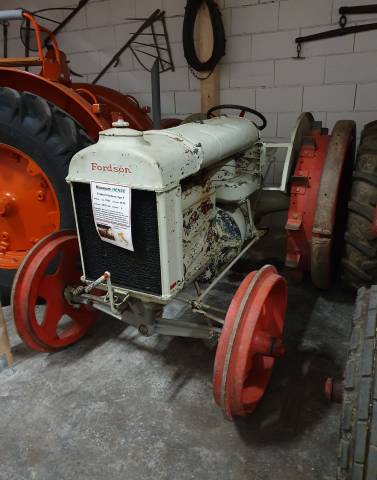
The Fordson Model F is renowned as one of the most influential early agricultural tractors, bringing affordable mechanisation to farming in the 20th century. Its robust engineering and historical significance make it a fascinating classic for collectors and enthusiasts looking for an original working machine.
Search results
Currently, there are no matching listings for your search.
Create search alert
Let yourself be notified as soon as a listing is published that matches your search filters.
Create listing
Do you have a Fordson Model F that you want to sell? Then create a listing now.
Create listingFordson Model F listing references from Classic Trader
Below you will find listings related to your search that are no longer available on Classic Trader. Use this information to gain insight into availability, value trends, and current pricing for a "Fordson Model F" to make a more informed purchasing decision.
1920 | Fordson Model F
Ford Fordson Model N 1931 Cork ähnl. TYP F
Create search alert
Let yourself be notified as soon as a listing is published that matches your search filters.
Create listing
Do you have a Fordson Model F that you want to sell? Then create a listing now.
Create listingFordson Model F Classic Cars: Prices & Market Values
History of the Fordson Model F
Launched in 1917 by Ford & Son, the Fordson Model F was among the first mass-produced tractors, offering an accessible alternative to horse-drawn farming. The vehicle was built in the USA, UK, and Ireland, and played a pivotal role in the mechanisation of agriculture in both Europe and North America. It served extensively during World War I and the following decades, transforming field work and setting a new standard with its affordability and reliability. The Model F's introduction marked a decisive turn away from steam and animal labour on farms.
Model history
The Model F succeeded early experimental Ford tractors. After its introduction, it remained in production until 1928, being succeeded by the Fordson Model N and subsequently other improved versions in the Ford tractor lineage. The consistent evolution of the model kept Fordson at the forefront of agricultural innovation for decades.
Highlights and statistics of the Fordson Model F
The Fordson Model F stood out immediately at launch as it was affordable for many small and medium-sized farms, unlike previous tractors. Its innovative design featured a lightweight frame, three forward gears, and a reputation for ease of use and reliability on the field, which contributed to its vast sales across many continents.
Technical Data
Special Editions and Collectible Models
No official limited editions of the Fordson Model F are known. However, certain production variants—such as early US-produced units or models with unique regional features—are particularly sought after for historical value and authenticity among collectors.
Engine and Performance, Transmission and Handling
The Fordson Model F featured a four-cylinder engine which, despite modest performance by today’s standards, was well-matched to the needs of early 20th-century farming. Its simple transmission, solid rear axle, and relatively low weight gave it dependable traction and capability in fields and on unpaved surfaces. Cold starts could be challenging in winter, and attention to regular lubrication was critical for long life and reliability. Popular references for performance include US-built pre-1920 examples with their original engine specification, as well as UK-built post-1923 units, which sometimes included minor improvements in cooling and durability.
Interior, Comfort, Exterior and Design
The Fordson Model F’s industrial design was spartan and purposeful, reflecting its role as a workhorse for agricultural environments. There were no enclosed cabs or comfort features—just an open driver’s seat, exposed mechanicals, and metal mudguards. Some later examples featured minimalistic weather protection or added toolboxes as accessories. Authentic paint colours included typical Ford blue and grey schemes. Optional steel wheels with cleats were standard for field work, but some tractors had period conversions to rubber tyres for road use.
Other features
Occasionally, Model F tractors appear with unique regional adaptations, such as modified starting mechanisms or added implements compatible with local farming needs. Documentation and period accessories enhance originality and collector value.
Summary
The Fordson Model F set a benchmark in agricultural mechanisation, remaining a mechanical archetype well after its production ceased. Its robust engineering and historical relevance make it a fascinating acquisition for enthusiasts. For anyone searching for a classic piece of industrial history, the Model F stands out as a tangible link to the transformation of modern agriculture.