- Car
- Eunos (0 offers)
Buy Eunos Classic Cars
Eunos was Mazda’s sporty, upmarket Japanese marque from 1989 to 1996, best known in Britain for the Eunos Roadster. From lightweight open-top fun to rare rotary grand tourers, Eunos cars offer JDM charm with genuine collector appeal.
Search results
Currently, there are no matching listings for your search.
Create search alert
Let yourself be notified as soon as a listing is published that matches your search filters.
Eunos listing references from Classic Trader
Below you will find listings related to your search that are no longer available on Classic Trader. Use this information to gain insight into availability, value trends, and current pricing for a "Eunos" to make a more informed purchasing decision.
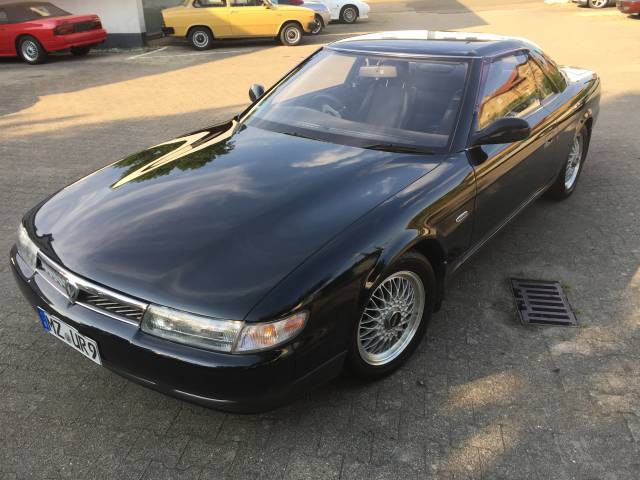
1993 | Eunos Cosmo SX 20B
3 Scheiben Wankel; 53500km; RHD

Create search alert
Let yourself be notified as soon as a listing is published that matches your search filters.
History
Eunos was Mazda’s answer to the late-1980s premium boom in Japan. In 1989, alongside Autozam and ɛ̃fini, Mazda created a separate brand network for different types of buyer. Eunos sat in the middle of that strategy: more style-led and more driver-focused than a regular Mazda, but not as formal as a luxury saloon marque. The idea was to sell cars with a sense of occasion, stronger design identity and a little more emotional pull.
That positioning is exactly why Eunos still matters today. The brand only lasted until 1996, but it produced some of Mazda’s most admired cars of the era. The most famous is the Eunos Roadster — the Japanese domestic market version of the MX-5/Miata — but the range also included the Eunos Cosmo, Eunos Presso and Eunos 500. Each model reflects a different side of Mazda’s engineering confidence in the 1990s: lightweight sports cars, rotary power, compact coupés and neatly executed executive cars.
For British buyers, Eunos has an extra layer of appeal. The UK has always been receptive to right-hand-drive Japanese imports, and the Roadster arrived here at the perfect moment. In spirit, it felt like a direct continuation of the British roadster tradition once defined by the MGB, Triumph Spitfire and Lotus Elan. By the time many enthusiasts were looking for a simple, reliable, affordable open-top car, the Eunos Roadster had become the modern answer.
The wider Eunos story is also one of ambition. Mazda was trying to build something distinctive at home, and it used the marque to showcase technical ideas and a more premium presentation. The Cosmo, especially, was astonishingly advanced for its day. It offered a triple-rotor engine, turbocharging, and equipment that was genuinely ahead of the curve. While the market strategy itself did not last, the cars did — and they have aged into collector’s items with real personality.
In Britain, Eunos cars are usually seen as grey imports, particularly the Roadster. That status does not reduce their desirability; if anything, it adds to the appeal. A well-sorted right-hand-drive import is often exactly what classic roadster buyers want: familiar ergonomics, Japanese reliability, and a driving experience that feels both nostalgic and usable on modern roads.
Highlights
Eunos cars combine Mazda engineering with a slightly more exclusive identity. The result is a range that feels coherent without being repetitive. Each of the key models has a very different character, but there are common themes: lightness, careful packaging, good visibility, driver engagement and an emphasis on usability.
Eunos Roadster (NA) is the star of the range and the model most British enthusiasts know best. Built from 1989 to 1997, it weighs around 940–980 kg, which remains one of its great strengths. The early NA6CE cars use the 1,597cc B6ZE engine with 120 bhp, while later NA8C cars gained the 1,839cc BP engine with about 130–133 bhp. Neither figure sounds dramatic by modern standards, but the Roadster’s low mass, slick five-speed manual gearbox and perfectly judged chassis make the power feel more than sufficient.
Eunos Cosmo is the technological headline act. The rarest and most extravagant Eunos model, it offered Mazda’s remarkable 20B-REW triple-rotor engine: 1,962cc, twin turbocharged and rated at 280 bhp. The slightly less exotic 13B-REW version produced around 230 bhp. All Cosmo models were automatic, which suits the car’s luxury GT brief, but also makes the rotary experience feel uniquely smooth and relaxed. For collectors, the Cosmo is one of the most fascinating Japanese classics of the 1990s.
Eunos Presso took a different route. Known as the MX-3 in other markets, it was a compact coupé with a playful chassis and a neat, compact shape. It does not have the headline status of the Roadster or Cosmo, but that makes it a more left-field choice for buyers who want rarity without the cost of a cult icon.
Eunos 500 sits at the more restrained end of the scale. It was a mid-size saloon with a 1990s Japanese premium feel, designed for buyers who wanted an upmarket badge and a polished package rather than a full-blooded sports car.
For British classic-car fans, the big attraction is not just rarity. It is the sense that Eunos cars were built around the driver, yet remain easy to live with. That balance is why the Roadster built such a strong club following, why rotary devotees continue to chase the Cosmo, and why the marque’s short life has not stopped it from developing a proper enthusiast base.
Technical Data
Market Overview & Buying Tips
The UK market for Eunos cars is led overwhelmingly by the Roadster. Britain is a natural home for right-hand-drive Japanese imports, and the Eunos Roadster fits the market beautifully. It arrived here as a grey import before the MX-5 name became universally dominant, and many buyers still prefer the Eunos badge because it marks the car out as a Japanese domestic market special.
UK prices and auction reality
Values depend heavily on body condition, rust, originality and service history. In the UK classic market, cars with a clean MOT history and good presentation tend to sell quickly, especially if they have already been converted or registered correctly for road use.
Recent UK auction results give a useful sense of the lower end of the market. Manor Park Classics recorded Eunos Roadster sales in 2024 around £2,500–£3,910, while Mathewsons in May 2026 sold an Eunos Roadster for £2,500. Hampson Auctions has also offered Eunos Roadsters at auction. These results show that usable cars can still be bought at accessible prices, although better examples and desirable special editions command much more.
For the Roadster, a broad UK guide might look like this:
- Project cars needing welding: from around £2,500–£5,000
- Usable drivers with sensible history: £7,000–£12,000
- Very clean, rust-free cars: £12,000–£18,000
- Special editions and low-mileage cars: £18,000–£30,000+
The Cosmo is harder to price because UK supply is so thin. When one appears, condition and originality matter far more than mileage alone. A genuine 20B car in good order is an event in itself, and buyers should budget for specialist inspection.
Import and registration points in Britain
Many Eunos Roadsters in the UK are already registered, but some cars still arrive as imports. If you are buying one, check the paperwork carefully. A properly documented import should have its Japanese export certificate or equivalent import history, UK registration documentation, and a valid MOT where applicable.
For many imported classics, the key step is DVLA registration. Right-hand-drive JDM cars usually avoid the complications associated with steering conversion, but the car still needs to meet UK standards for lighting, odometer display and general roadworthiness. In some cases, especially where modifications or unusual specification details are involved, IVA (Individual Vehicle Approval) may be relevant. Always confirm whether the car has already passed the necessary checks.
MOT compliance matters too. A car with fresh MOT history is reassuring, but it should not replace a proper inspection. Rust can lurk in places that are not obvious during a quick test drive, and some imported cars may have been cosmetically freshened up without structural repair.
Rust and structural checks
Rust is the Roadster’s main enemy. Before buying, inspect:
- Sills: the most common and often most expensive corrosion area
- Rear wheel arches: especially around seams and inner lips
- Floor pans: look for damp carpets and evidence of patching
- Front subframe mounts: structurally important and easy to overlook
- Boot floor and drainage areas: less famous, but still worth checking
If you can, inspect the car on a ramp or with the underside exposed. On many cars, the visible bodywork may look respectable while the hidden structure needs attention.
Mechanical buying tips
- Early 1.6 cars (1989–1991): check the crankshaft pulley carefully. Failure here can lead to serious engine damage.
- Timing belt: the engine is interference type, so replacement every 60,000 miles or 5–6 years is sensible. Documentation is vital.
- Cooling system: age can affect hoses, radiator and thermostat performance.
- Soft top: check for leaks, rear window condition and frame operation.
- Suspension bushings: tired bushes can blunt the Roadster’s sharp handling.
- Cosmo electronics: on the rotary flagship, check everything. Luxury electronics and age do not always mix well.
Special editions
The Eunos Roadster has a strong special-edition scene, and that matters in the UK market. Notable versions include V-Special, S-Special, RS Limited and J-Limited. The RS Limited is particularly desirable thanks to features such as Bilstein suspension and a Torsen limited-slip differential. The J-Limited, with its Sunburst Yellow paint, is a collector favourite because it stands out visually and feels period-correct.
Britain’s club culture also helps values. Cars associated with the MX-5 Owners Club and other marque groups tend to benefit from better knowledge sharing, parts sourcing and community support. That makes ownership easier and often improves long-term preservation.
Driving Feel
The Eunos Roadster’s reputation rests on a simple truth: it feels right at any sensible speed. You do not need huge power or a large engine to enjoy it. The seating position is low and natural, the pedals are well spaced, and the gearshift has the kind of mechanical precision that makes even an ordinary commute feel more deliberate.
On the road, the chassis is the star. The Roadster’s light weight means responses are immediate, and the suspension is tuned to give genuine feedback rather than isolation. Turn the wheel and the car settles into the bend with honesty. There is balance, but there is also tactility. It is one of those classics that tells you what the tyres are doing without becoming nervous or difficult.
The 1.6-litre cars feel especially lively because the car is so light. The 1.8-litre versions bring a little more flexibility and, depending on the condition of the example, can feel a touch easier for relaxed road use. Neither version is about outright pace. Both are about rhythm.
That is why the Eunos Roadster works so well in Britain. Our roads suit compact, agile cars, and our weather gives plenty of excuses to use the roof. When the sun appears, the Eunos delivers the same basic pleasure that made British roadsters so beloved in the first place: open-air motoring, light controls, and a chassis that encourages involvement rather than intimidation.
The Cosmo is a different flavour entirely. Its rotary engines are smoother and more turbine-like than piston alternatives, and the car’s automatic gearbox gives it a relaxed grand touring character. Instead of being playful and nimble, it feels sophisticated, unusual and slightly otherworldly. For some buyers, that is exactly the attraction. It is less about back-road precision and more about the novelty of a lavish 1990s Japanese GT with a triple-rotor heart.
The Presso and Eunos 500 sit between those extremes. They are not as celebrated, but they still show Mazda’s interest in building cars with balance, personality and good ergonomics. For drivers who want a less obvious choice, that can be a big part of the appeal.
Design
The Eunos Roadster’s design is one of the main reasons it became such a modern classic. It is compact, clean and instantly understandable. Tom Matano and Shunji Tanaka shaped a car that looked familiar enough to feel rooted in roadster tradition, yet fresh enough to define a new era. The styling owes an obvious debt to the British sports cars that came before it, but it never feels like a copy. Instead, it reinterprets the idea with Japanese precision.
The proportions are a big part of the charm. The bonnet is long enough to look purposeful, but not so long that the car feels heavy. The cabin sits back in the body. The arches are gently muscular without becoming overdrawn. And of course there are the pop-up headlights, which give the car a friendly, recognisable face.
Inside, the Roadster is deliberately simple. There is little to distract from the driving experience. The dash layout is uncluttered, the controls are easy to understand, and the cabin feels intimate rather than spacious. That is exactly what many buyers want from a classic roadster. It is not trying to be a lounge or a luxury saloon. It is a tool for pleasure.
The Cosmo takes a more dramatic approach. It is low, sleek and elegantly stretched, with a grand touring silhouette that suits its flagship status. The interior is where it really surprises: digital displays, technology-rich presentation and a sense of ambition that was exceptional for 1990. It looks and feels like a car from a manufacturer that wanted to prove it belonged on the world stage.
The Presso is more compact and playful, with a coupé profile that gives it a distinct identity. It does not shout, but it has enough shape and character to stand out. The Eunos 500, meanwhile, is a neater, more formal design. It reflects the understated premium taste of its era rather than overt sporting flair.
Viewed together, the range shows how flexible the Eunos badge was. It could support a tiny open-top sports car, a rotary luxury flagship, a stylish coupé and a saloon without losing coherence. That is part of what makes the brand so interesting now.
Heritage
Eunos matters because it captures a moment when Japanese brands were willing to experiment boldly. Mazda did not just build individual cars; it tried to create a whole identity around them. Eunos was the sporty, upmarket side of that identity, and its best-known car became one of the most important sports cars of the modern era.
The Roadster’s heritage is especially strong in Britain. It sits naturally in the line of open-top cars that British enthusiasts have always loved. If the MGB, Triumph Spitfire and Lotus Elan represented the earlier British idea of accessible motoring fun, the Eunos Roadster updated that formula for the 1990s. It kept the same basic promise — light weight, low running costs, tactile controls and roof-down enjoyment — but added Japanese reliability and better day-to-day usability.
That is why the model found such a loyal following here. It was not just affordable; it was believable. You could use it regularly, maintain it sensibly and still enjoy the feeling that you were driving something with real character. Club culture amplified that effect. Owners’ groups, track-day communities and specialist forums helped preserve knowledge, and the MX-5 ecosystem gave the Roadster access to parts, expertise and upgrades.
The Cosmo has a different kind of heritage. It represents Mazda’s rotary confidence at its most extravagant. The 20B triple-rotor engine became a legend because it was so technically unusual and so rarely used. That makes the Cosmo important not just as a car, but as a statement of intent. It shows how far Mazda was prepared to go.
The Presso and Eunos 500 round out the story. They may not be as celebrated, but they demonstrate that Eunos was never meant to be a one-car brand. It was a complete expression of Mazda’s premium ambitions. Today, collectors value that breadth because it offers different entry points into the same story.
In the UK, the classic car auction scene has helped Eunos remain visible. Cars appear at sales run by names such as Historics, H&H and Silverstone Auctions, alongside regional specialists and online auctions. That visibility matters because it confirms the market: these are not just nostalgic imports, but recognised classics with a real buyer base.
Summary
Eunos may have been short-lived, but its cars have outlasted the brand in the best possible way. The Roadster became a global icon, the Cosmo became a rotary legend, and the Presso and Eunos 500 added depth to a range that was unusually ambitious for its time.
For British buyers, the Eunos Roadster is the obvious starting point. It fits the UK market, the RHD layout suits local use, and the car’s roadster formula makes perfect sense on British lanes, motorways and summer Sunday runs. A good example rewards careful ownership and is backed by a strong club scene, an active parts supply and plenty of specialist knowledge. Just make sure the rust is under control, the timing belt history is clear and the import paperwork is in order.
If you want something rarer, the Cosmo is one of the most intriguing Japanese classics money can buy. It is exotic, advanced and deeply unusual, but it also demands a more cautious approach and specialist care. The Presso and Eunos 500 are for buyers who want a more discreet route into Eunos ownership, with plenty of character and less mainstream attention.
Overall, Eunos represents Mazda at its most imaginative. These are cars built with heart, engineering intelligence and a genuine sense of purpose. If you are looking for a classic with driver appeal, Japanese quality and a story worth telling, an Eunos is an excellent place to start. Find current Eunos listings on Classic Trader and buy the one that suits your style.