- Automobile
- Dixi
- Dixi 3/15 (0 offerte)
Dixi 3/15 Classic Cars for Sale
The Dixi 3/15 stands as a milestone in German automotive history—a compact car produced by Fahrzeugfabrik Eisenach from 1927, later continued under BMW, based on the British Austin 7 but re-engineered for left-hand drive. With options spanning closed saloon, cabriolet, and even a van body, this model is notable for its technical ingenuity and light weight, as well as being the starting point for BMW's entry into car manufacturing.
Risultati della ricerca
Attualmente non ci sono annunci corrispondenti alla tua ricerca.
Create search alert
Let yourself be notified as soon as a listing is published that matches your search filters.
Create listing
Do you have a Dixi 3/15 that you want to sell? Then create a listing now.
Create listingDixi 3/15 listing references from Classic Trader
Below you will find listings related to your search that are no longer available on Classic Trader. Use this information to gain insight into availability, value trends, and current pricing for a "Dixi 3/15" to make a more informed purchasing decision.
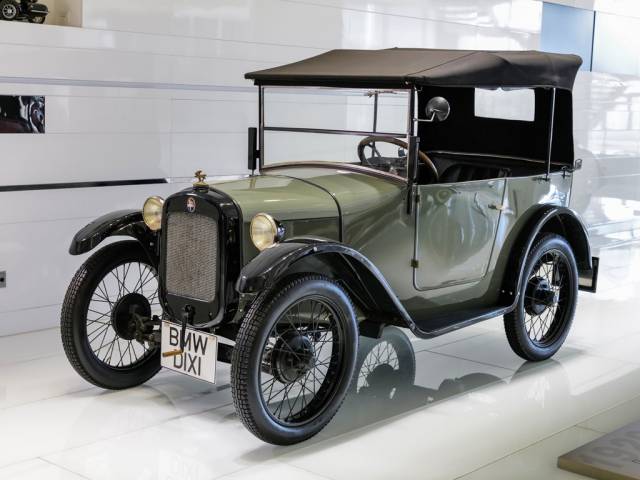
1928 | Dixi 3/15 DA
1928 Dixi 3/15 DA-1 Open Tourer

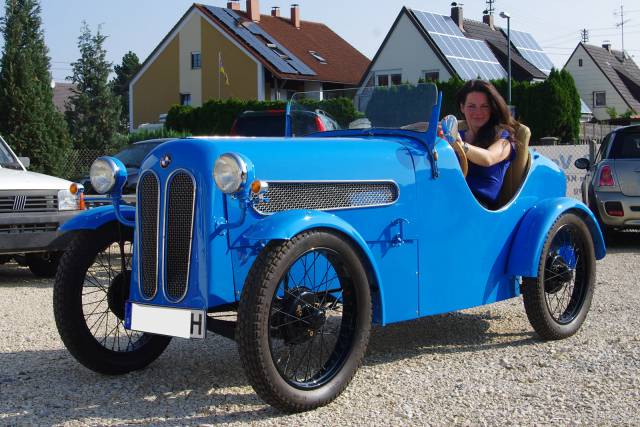
1929 | Dixi 3/15 DA1
Ihle Roadster

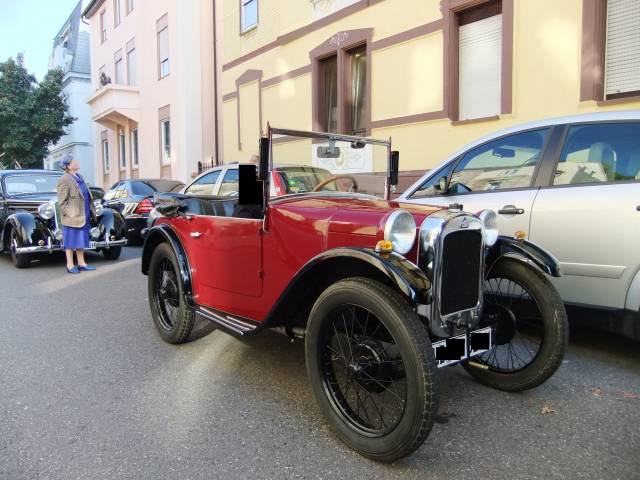
1929 | Dixi 3/15 DA1
DIXI DA1 2-Sitzer Cabrio für Liebhaber
Create search alert
Let yourself be notified as soon as a listing is published that matches your search filters.
Create listing
Do you have a Dixi 3/15 that you want to sell? Then create a listing now.
Create listingDixi 3/15 Classic Cars: Prices & Market Values
History of the Dixi 3/15
The Dixi 3/15 traces its roots back to the late 1920s, when Fahrzeugfabrik Eisenach secured a licence to build the Austin 7 in Germany. The first 50 units were assembled with right-hand drive as direct imports. These cars laid the groundwork for the locally produced version, which from 1927 onwards was significantly reworked to adopt left-hand drive—a major technical effort that involved mirror-imaging the steering and engine placement. This 'Deutsche Ausführung' (DA) marked the shift to the more familiar Dixi 3/15 DA. Following BMW’s acquisition of the Eisenach factory in 1928, production carried on under BMW management, marking the manufacturer's transition into car production. The Dixi 3/15 series ultimately paved the way for further developments, leading to the BMW 3/15 and the sporting BMW Wartburg DA3 variants.
Model History and Evolution
The original Dixi 3/15 was the licensed Austin 7, evolving first into the DA (Deutsche Ausführung), then the DA1 under BMW after the 1928 takeover. Subsequent improvements led to the BMW 3/15 DA2 and later the DA4, each refining aspects of chassis and bodywork. The DA3 Wartburg was produced as a sporty, racing-oriented open model, extending the series’ appeal. No direct predecessor existed, as the Dixi 3/15 itself brought Eisenach into modern small car manufacturing, while successor models bore the first BMW badges and foundation for later BMW engineering.
Highlights and Unique Features
A compact, lightweight, and remarkably versatile car for its time, the Dixi 3/15 was available as a two-door saloon, tourer, cabriolet, roadster, commercial van, or even as a bare rolling chassis—demonstrating an uncommon degree of adaptability in a small car of the late 1920s. The use of a water-cooled four-cylinder engine along with a three-speed gearbox brought good driveability and robustness. The shift to left-hand drive not only set it apart from its Austin 7 predecessor but also made it practical for the continental market.
Technical Data
Special Editions and Collectible Models
The Dixi 3/15 DA3 Wartburg stands out as the prominent sport variant, featuring an open body and enhancements for motorsport. Production was limited relative to standard models, elevating its status among collectors. The DA2 and DA4 models represent further developmental steps with upgraded features, but the DA3 Wartburg remains the special model due to its racing heritage and rarity.
Weak Spots and Common Issues
As with most vehicles of this era, regular attention to the cooling system, chassis lubrication, and brakes is required. Rust can be an issue due to the non-loadbearing body and period materials. Parts for gearbox and differential may require custom solutions or specialist suppliers, and the electrics, based on early 20th-century technology, warrant expert inspection. Meter readings are often unverifiable, making documented maintenance more important than mileage figures.
Engine and Performance, Transmission and Handling
The Dixi 3/15’s 15-hp engine delivers reliable performance for a prewar small car. The car's low weight, simple rear-wheel drive layout, and basic suspension provide nimble handling in city and low-speed country conditions. Braking is mechanical and must be adjusted regularly to assure adequate stopping power. The three-speed manual transmission demands precise operation due to lack of synchronisation. With a cruising speed of 65 km/h, motorway drives are unrealistic, but for its day-to-day context, the Dixi 3/15 excelled as a practical and robust solution. - Dixi 3/15 DA: Original left-hand drive Deutsche Ausführung.
- Dixi 3/15 DA1: Assembled under BMW oversight, robust and widely produced.
- Dixi 3/15 DA3 Wartburg: Sport roadster variant, sought after for its sporting lineage and rarity.
Interior, Comfort, Exterior and Design
The Dixi 3/15’s body comes with non-loadbearing construction—allowing for diverse variants, including closed saloon, open tourer, cabriolet, and even a panel van. Interiors are austere but practical; period-accurate upholstery is rare but highly prized among enthusiasts. The minimalist dashboard and simple instrument layout reflect the car’s utilitarian roots, while bodywork proportions are compact and well-suited to tight urban environments. Unique options included purchasing the chassis only, allowing owners or coachbuilders to fit bespoke bodies—an approach lost to modern car manufacturing. Special colours and trim depended on coachbuilder or buyer’s preferences rather than factory 'special editions.'
Other Notable Features
A historical registration (H-plate) is feasible due to the model’s age and preservation, and authenticity can be validated with certificates from BMW Classic. Each car is equipped with a frame number (VIN equivalent), essential for historical records and authenticity. However, odometer readings generally lack documentation reliability typical for vintage vehicles.
Summary
The Dixi 3/15 marks the beginning of both the Dixi and BMW car-building legacy. Its engineering, adaptability, and role as a prewar city car highlight an era of innovation and industrial transition in Germany. Today, the Dixi 3/15 is notable for its mechanical simplicity, available body styles, and historical status—especially as every Dixi on the market relates to this specific series.