- Car
- Dixi (0 offers)
Buy Dixi Classic Cars
Dixi cars connect Britain’s Austin Seven to the first BMW-built automobiles in Eisenach. Find an exceptionally rare Dixi classic on Classic Trader and buy with the provenance, originality and registration evidence this small but important marque demands.
Search results
Currently, there are no matching listings for your search.
Create search alert
Let yourself be notified as soon as a listing is published that matches your search filters.
Dixi listing references from Classic Trader
Below you will find listings related to your search that are no longer available on Classic Trader. Use this information to gain insight into availability, value trends, and current pricing for a "Dixi" to make a more informed purchasing decision.
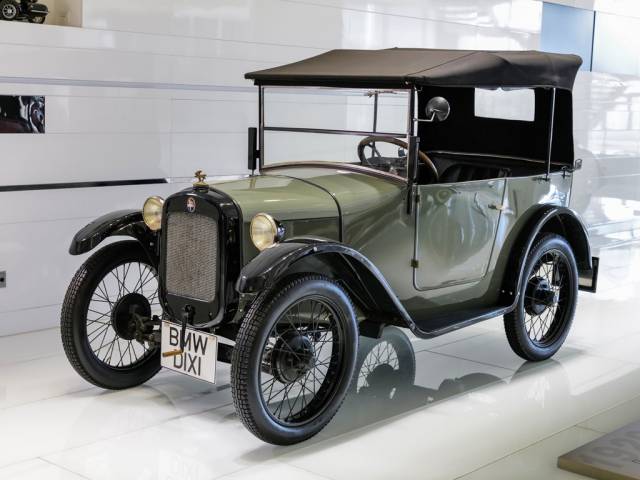
1928 | Dixi 3/15 DA
1928 Dixi 3/15 DA-1 Open Tourer

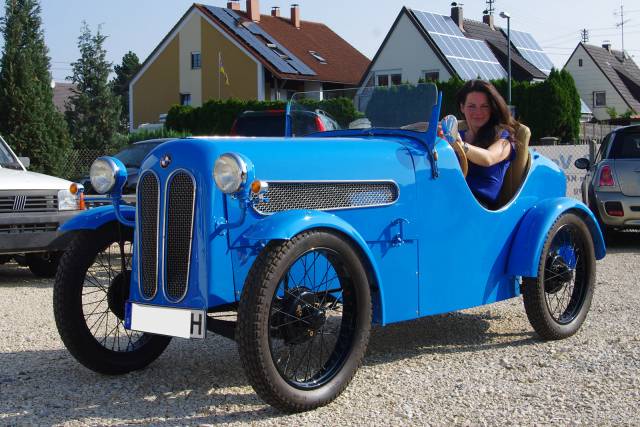
1929 | Dixi 3/15 DA1
Ihle Roadster

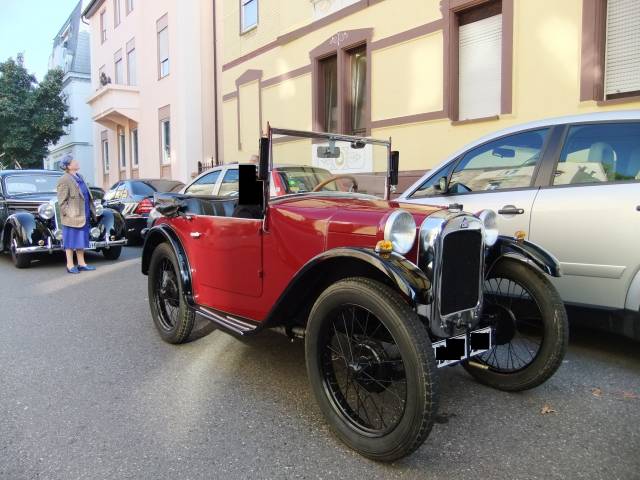
1929 | Dixi 3/15 DA1
DIXI DA1 2-Sitzer Cabrio für Liebhaber
Create search alert
Let yourself be notified as soon as a listing is published that matches your search filters.
Dixi history: from Eisenach luxury cars to the Austin Seven licence
Dixi is a make with two very different chapters. The name first appeared on cars made at Eisenach, Thuringia, from 1904, after the earlier Wartburg concern changed direction. Before the First World War and into the 1920s, Dixi offered substantial, expensive cars: the sort of six-cylinder or large four-cylinder machine that belonged to an industrialist, doctor or local dignitary rather than to the mass market. That background matters when viewing a Dixi advertisement. A pre-1927 Dixi is not an early BMW in miniature; it is a scarce German light or medium car from a small manufacturer, and its engineering, bodywork and parts situation require a separate assessment.
Economic reality altered the company’s course. In the unstable post-war German market, large cars were difficult to sell and a manufacturer in Eisenach could not cheaply design a modern volume light car from a blank sheet. Britain supplied the answer. Austin’s Seven, introduced in 1922 at Longbridge, had made individual motoring attainable for thousands of British families and had demonstrated how much utility could be packaged into a very small chassis. On 18 December 1926, the Austin Motor Company and the Gothaer Waggonfabrik, owner of the Eisenach works, signed the licence agreement.
The British connection is unusually direct. Dixi first obtained one hundred complete Austin Sevens for evaluation and sale, then further cars as kits. The earliest assembled examples were right-hand drive, an appealing detail for a UK buyer trying to establish precisely what is being offered. By December 1927, Eisenach-built cars were leaving the line as the Dixi 3/15 PS, later commonly identified as the DA or DA-1. The name described three taxable PS and roughly fifteen actual PS. Dixi had not merely pasted a badge on an English import: production drawings had to be converted to metric dimensions and mirrored for left-hand drive manufacture.
The 3/15 was the final and by far best-known Dixi. Contemporary production information records 6,743 DA-1s during 1928 alone, including 4,590 tourers, 1,497 roadsters, 132 coupés, 407 saloons and only 16 delivery vans. Total Dixi 3/15 production is generally recorded as 9,307 or 9,308 cars for 1927–29. That sounds substantial until one considers survival, war, restoration economics and the fact that many cars have subsequently been described loosely as “BMW Dixi”. A surviving independent-marque Dixi with an identifiable chassis, engine and period body is therefore much rarer than a surviving Austin Seven.
BMW purchased the Eisenach works in October 1928, acquiring the licence and the little Dixi with it. In 1929, the successor became the BMW 3/15 DA-2; the Dixi name then disappeared from new-car badging. BMW continued the basic concept through the sporting Wartburg DA-3 and the revised DA-4 before replacing it with the more independent BMW 3/20 in 1932. Those later cars are valuable reference points for a Dixi buyer because they share ancestry and many ideas, but they are not Dixi-branded automobiles. A correct catalogue description should preserve that distinction.
For the British enthusiast, the story runs in the opposite direction too: a home-grown Austin design crossed the Channel, was adapted in Germany, and gave BMW its route into car manufacture. Dixi is consequently one of the clearest examples of pre-war European industrial exchange. It belongs at an Austin Seven gathering as much as a BMW historic display, but its identity should not be lost between the two.
Dixi highlights and defining models
The attraction of a Dixi is not outright performance. It is the compactness, mechanical candour and historical significance of the car. An original 3/15 weighs about 400–440 kg, has a 748 cc side-valve four and a three-speed gearbox. Every journey is audible and visible: the narrow body, exposed mudguards, upright screen and low seating put the driver close to the workings of a 1920s light car. At sensible road speeds, it is an involving alternative to a larger vintage tourer.
At make level, four groups explain the marque without pretending they are interchangeable:
- Early Dixi cars, 1904–c.1926: substantial and now exceptionally scarce Eisenach products. Their individuality is their appeal, but the limited specialist parts network means that restoration should be led by the actual car, not a generic price guide.
- Dixi 3/15 tourer: the mainstream version and the best starting point for most collectors. Its simple open body and Austin-derived mechanical layout make condition and provenance more important than elaborate specification.
- Dixi 3/15 roadster and coupé: lower-volume body styles whose period coachwork, frame integrity and surviving fittings can change value markedly. A roadster should not be assumed to have begun life as one simply because it looks attractive today.
- Dixi 3/15 saloon and delivery van: practical forms that demonstrate the ambition of the programme. The tiny 1928 van output makes an authentic survivor a specialist proposition; it needs unusually strong documentary support.
- BMW 3/15 derivatives: DA-2, DA-3 Wartburg and DA-4 are not Dixi make cars, yet they provide essential context. They reveal the post-takeover improvements and explain why sellers sometimes use overlapping language.
The central feature is the Austin Seven licence with German execution. The Dixi’s left-hand-drive controls, metric fasteners and Bosch friction dampers distinguish it from a standard British Seven. On an original car these details are evidence, not inconvenience. They also explain why a Dixi cannot be restored solely from an Austin parts list. Some consumables and architecture have a shared basis; chassis details, hardware, body fittings and documentation do not automatically do so.
The Dixi also offers an unusually concentrated piece of BMW history without the scale or cost of a later 328, 327 or 507. That does not make it a budget BMW. It is a rare pre-war car first, with the premiums and risks of a rare pre-war car. The best examples feel coherent: period body, matching or convincingly period-correct mechanical specification, an uninterrupted ownership story where possible, and a restoration file that says what was replaced rather than merely declaring the work “complete”.
Dixi technical data
Figures below relate principally to the Dixi 3/15 PS DA-1, the only Dixi model likely to be encountered with any regularity in the UK. Early Dixi models varied considerably, while BMW-era successors had detail changes. Period sources and surviving cars can differ in quoted kerb weight, so treat this table as an identification aid rather than authority over a chassis record.
The DA-1’s A-shaped frame with U-section side members, beam front axle and transverse front leaf spring are compact but not primitive in purpose. Friction dampers, quarter-elliptic rear springs, worm steering and cable-operated brakes belong to the design. The foot brake acts on the rear wheels; the handbrake operates the fronts. This split arrangement must be understood before a test drive. It will never provide modern braking balance, but properly adjusted cables, sound drums, correctly bedded linings and an alert driver make the car usable within its period limits.
Its 20-litre tank, Zenith or Solex updraught carburettor, dry single-plate clutch and 4.90:1 axle ratio tell the same story: the Dixi was engineered for economical local and inter-town transport, not sustained modern motorway running. A top speed of around 47 mph is a period claim, not a promise that every surviving car will comfortably maintain it. Engine temperature, oil pressure, steering play and braking confidence are more meaningful on inspection than an ambitious speed demonstration.
Market overview and buying tips
Supply is the first market fact. There are seldom enough genuine Dixi listings in Britain to form a dependable model-by-model price index. A buyer should resist the temptation to value a car by multiplying the price of an Austin Seven by a “BMW connection” factor. Scarcity can raise the ceiling for an authentic, beautifully documented Dixi; it can also make an incomplete project expensive because the missing pieces are difficult to identify, let alone replace.
Public results demonstrate the spread rather than a fixed tariff. RM Sotheby’s sold a 1928 Dixi 3/15 DA-1 Open Tourer, chassis and engine 7877, for €52,900 in Munich in September 2022. The catalogue noted its museum-display history and advised mechanical inspection before use, a useful reminder that presentation and roadworthiness are different propositions. In Britain, Bonhams sold a 1931 BMW 3/15 Ihle Sports for £28,125 in December 2021; it is later BMW production rather than a Dixi, but it helps place a desirable related sporting body in the UK market. Classic Trader’s UK archive also records older BMW 3/15 asking prices, including £29,199 for a 1930 DA-2 and £23,102 for a 1931 DA-4. These are historical asks, not realised prices and not substitutes for a current valuation.
Because recent public Dixi auction comparables are so thin, ask a selling dealer for the basis of any 2024–26 valuation: sale date, body style, chassis identity, restoration date, commission and taxes should be separated. For an exceptional Dixi, obtain an independent pre-war specialist’s appraisal rather than treating a related BMW result as proof. Transport from continental Europe, customs treatment, insurance and immediate recommissioning can materially alter the effective purchase cost.
What to inspect before buying
Identity first. Verify the chassis stamping against the registration document, factory or club records where available, auction catalogues and restoration invoices. The engine number deserves equal attention. A matching unit is valuable evidence, but a period-correct replacement with a transparent history is preferable to a vague claim of “matching” that cannot be substantiated. Confirm whether the seller means Dixi 3/15 DA-1, BMW Dixi, or BMW 3/15: these are related terms, not automatic synonyms.
Chassis and body next. Examine the full frame for perforation, thin repairs, cracked spring mounts and distortion around crossmembers. A little light car can hide major structural compromise under fresh paint. On a tourer, inspect the timber body frame, scuttle, door posts, hood sticks and floor. Bubbling at the lower body is only the visible part of possible timber decay. On a saloon or coupé, assess the roof, door alignment, original window mechanisms and evidence of coachbuilt reconstruction. Photograph the underside before committing.
Mechanical condition is simple but not cheap to correct well. Cold-start the side-valve engine, listen for bearing rumble and valvetrain noise, inspect for water leaks and let it reach temperature. Low oil pressure when hot, excessive blow-by, smoke, a noisy timing gear train or a carburettor that will not hold a stable idle deserve a proper diagnosis. Check the three-speed gearbox for jumping out of gear and listen to the axle under load and overrun. Test the clutch for clean engagement. Worn steering box, kingpins, spring bushes and friction dampers can transform a charming car into a tiring one.
Brakes require a road test with period sympathy. Confirm the unusual division of rear foot brake and front handbrake, cable condition, drum condition and equal pull. Do not test a newly acquired Dixi on fast traffic until the brakes, tyres, wheel bearings and lights have been inspected by someone accustomed to vintage machinery. Modern traffic is faster; judgement, visibility and a conservative route are part of safe ownership.
Originality is more than paint colour. Metric hardware, left-hand-drive layout, Bosch dampers, instruments, lamps, radiator shell, wheels and body details may be harder to replace accurately than engine service parts. Austin Seven club knowledge and suppliers are valuable in Britain, but compare a proposed part against Dixi evidence before fitting it. An Austin item that makes a car mobile may not make it historically correct.
Importing a Dixi into Great Britain
Many candidates will be in Germany or elsewhere in Europe. Before transport, retain the original foreign registration certificate, bill of sale, chassis-number evidence, photographs and all provenance. HMRC must be told about a permanent import through NOVA within 14 days; the application must be processed before DVLA registration. VAT and customs duty, if payable, need to be established from the individual import circumstances rather than assumed from a seller’s invoice.
DVLA registration of a used import normally uses form V55/5 and requires supporting original documents; DVLA may inspect the vehicle. GOV.UK states that it may accept alternative proof of manufacturing date, such as a letter from a manufacturer or enthusiast club, when an original foreign registration certificate is unavailable. For a Dixi, secure that corroboration before money changes hands. The £55 registration fee, insurance, transport, possible valuation and any duty should be included in the buying budget.
A Dixi more than forty years old is normally eligible for the historic vehicle tax class and MOT exemption only if it has not undergone substantial changes. Exemption does not waive the duty to keep the car roadworthy. An imported or heavily reconstructed car should be assessed carefully: changed chassis, body, axles or engine can affect both the declaration and the vehicle’s identity. Confirm the current requirements directly with GOV.UK, HMRC and DVLA before import; rules and individual evidence requirements can change.
The Dixi driving experience
Drive a good Dixi on a quiet B-road and its modest figures become beside the point. The little four-cylinder has to be worked, but the car is light enough for fifteen horsepower to feel purposeful rather than apologetic. The narrow track and short wheelbase make it nimble at village speeds. Its upright screen, open-air body and small controls provide the physical vocabulary that made British light cars so popular in the 1920s.
The driver has to participate. There is no synchromesh to disguise a rushed downchange; double-declutching becomes part of the rhythm. Steering is deliberate, the suspension responds to cambers and poor surfaces, and the braking system demands anticipation. It is not a car for a long, wet dash on an A-road surrounded by modern lorries. It is a car for an early start, a properly planned route, a thermos in the boot or rear compartment and a willingness to let the countryside set the pace.
Compared with an Austin Seven, the Dixi delivers a familiar mechanical conversation but a different historical perspective. Left-hand drive feels natural when touring continental Europe and reminds the driver that Eisenach was adapting, not copying blindly. A larger early Dixi, by contrast, offers a more formal and solitary pre-war experience: greater mass, more bespoke engineering and much less shared knowledge. The 3/15 is the sociable Dixi; the earlier cars are research projects as much as transport.
In UK club use, an original pre-1931 Dixi sits naturally within the broad vintage world. The Vintage Sports-Car Club defines Vintage as built on or before 31 December 1930, while competitive eligibility remains an individual matter rather than an entitlement attached to an age label. The VSCC’s Austin Seven guidance is useful background for related architecture, but a Dixi owner should obtain confirmation for the actual car, specification and event. A road tour, local Austin Seven gathering, BMW historic display and continental rally will each place different demands on preparation.
Design and coachwork
The Dixi 3/15’s design is direct, not decorative. Its tall radiator, narrow wings, exposed spare wheel and compact passenger compartment are all consequences of fitting useful transport around a tiny chassis. The tourer is the clearest expression: a straight waistline, folded hood and short overhangs create a purposeful silhouette. Roadsters add a little sporting theatre; saloons demonstrate how efficiently the package could shelter a family.
What makes the Dixi visually interesting in Britain is its familiar-unfamiliar quality. At a glance it belongs to the Austin Seven family. At a second glance, its left-hand-drive arrangement, metric German execution and Dixi identification reveal another story. That difference makes accuracy especially important. Incorrect BMW emblems, Austin trim or a non-period sports body may make an entertaining car, but they diminish the clarity of a surviving Dixi.
BMW’s DA-2 revision moved the family toward more modern construction, including all-steel bodies supplied through Ambi-Budd and four-wheel brakes. The Dixi DA-1 therefore represents the point immediately before BMW began to reshape its new acquisition. For a collector, that is a stronger design argument than trying to make it look like a later BMW: the appeal lies in seeing the British template and the Eisenach response together.
Dixi legacy, clubs and provenance
Dixi is important because it marks the moment BMW entered car manufacture, but it should not be reduced to a footnote. Eisenach had built automobiles long before BMW arrived, and the 3/15 was a serious effort to keep a German works viable through a difficult period. The BMW takeover ensured continuation of the small-car programme; it also ended Dixi as an independent badge.
For owners in Great Britain, the overlap of communities is an advantage. Austin Seven specialists understand the basic light-car engineering and the era’s driving practice. BMW historic clubs can help interpret the transition from Dixi to BMW 3/15. Dixi-focused German enthusiasts are valuable for chassis data, body references and German-language documentation. Use all three, but retain copies of every answer in the car’s history file. A future buyer should be able to see which facts came from factory-related records, club research, old registration documents and restoration assumptions.
That file is often the car’s most valuable accessory. Include customs and NOVA documents for an import, the foreign title, UK V5C, photographs before and during restoration, invoices with part numbers, engine and chassis-number photographs, correspondence about identity, and evidence of club or event participation. In a market where very few comparable cars are offered publicly, a transparent file is a practical part of value.
Summary: choosing a Dixi classic
A Dixi is a rare, rewarding way to own a pivotal European light car. The 3/15 DA-1 combines the proven Austin Seven idea with distinct German manufacture and leads directly to BMW’s first automobiles. Earlier Dixi models offer a far rarer, more individual proposition; BMW 3/15 derivatives supply useful context but must not be mistaken for Dixi-badged cars.
Buy the clearest example, not simply the most highly polished one. Prioritise verified identity, sound chassis and timber, correct period detail, candid restoration records and a mechanical inspection. For a continental import, resolve NOVA, DVLA evidence, tax and roadworthiness before transport. Find a Dixi with those foundations on Classic Trader, and it can provide both a remarkably engaging vintage drive and a properly documented place in the Austin, Eisenach and BMW story.