Davis Divan classic cars for sale
The Davis Divan is an extremely rare three-wheeled convertible, designed and built in California at the end of the 1940s. Its futuristic body, unique driving layout, and ambitious history set it apart from other classic vehicles. This is the only model produced by Davis, making every example a unique conversation piece for collectors.
Search results
Currently, there are no matching listings for your search.
Create search alert
Let yourself be notified as soon as a listing is published that matches your search filters.
Create listing
Do you have a Davis Divan that you want to sell? Then create a listing now.
Create listingDavis Divan listing references from Classic Trader
Below you will find listings related to your search that are no longer available on Classic Trader. Use this information to gain insight into availability, value trends, and current pricing for a "Davis Divan" to make a more informed purchasing decision.
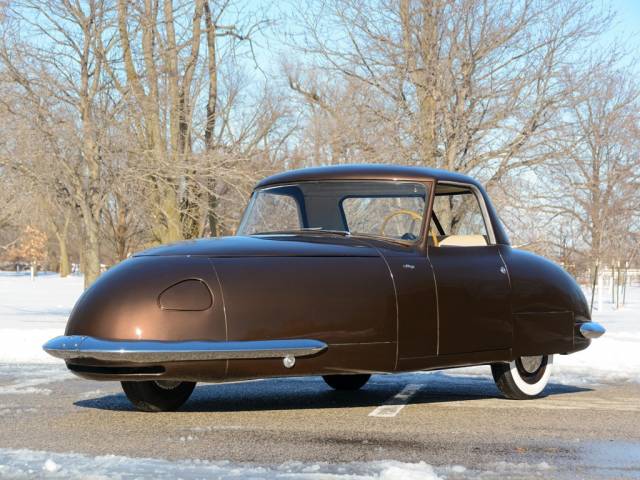
1948 | Davis Divan
1948 Davis Divan
Create search alert
Let yourself be notified as soon as a listing is published that matches your search filters.
Create listing
Do you have a Davis Divan that you want to sell? Then create a listing now.
Create listingDavis Divan Classic Cars: Prices & Market Values
History of the Davis Divan
The Davis Divan was introduced by the Davis Motorcar Company, founded by Glen Gordon 'Gary' Davis in California. Its origins trace back to 'The Californian,' a custom three-wheeled roadster built by Frank Kurtis for Joel Thorne. Davis saw potential in this innovative concept and in 1947, built two prototypes. The Divan's launch was accompanied by a bold promotional campaign, including a high-profile unveiling at the Ambassador Hotel in Los Angeles and a coast-to-coast publicity tour, capturing the public's imagination during the post-war American car boom. The vehicle was intended to revolutionise car design with its aerodynamic body and three-wheel layout but the company faced production and business difficulties, resulting in only a handful of cars ever being completed.
Model history and production
The Divan stands as the sole production model under the Davis brand, with no predecessor or successor models. Its production run was brief, lasting from 1947 to 1949. The ambitious plans for high-volume manufacturing never materialised, and with financial problems and legal trouble affecting Davis Motorcar Company, the Divan remained a very rare and notable footnote in American automotive history.
Highlights and unique features of the Davis Divan
The most striking feature of the Davis Divan is its three-wheeled platform, paired with a fully enclosed, aircraft-inspired bodywork. The convertible top, futuristic design, and wide cabin provided seating for four—a rare trait for a three-wheeler. It was a bold attempt to redefine practical motoring after WWII. Davis leveraged massive publicity efforts to promote the Divan, ensuring its presence in national magazines and at prestigious venues. The Divan is the only model ever produced by the manufacturer, representing 100% of both supply and demand within Davis listings according to our database.
Technical data
Special editions and collectible models
There are no special editions or variants of the Divan. Every vehicle is unique due to the extremely limited number produced, with most cars differing slightly due to hand-built construction methods.
Weak spots and common issues
Due to the lack of mass production, many components of the Divan were custom-fabricated. Potential buyers should be aware that sourcing original mechanical and body parts is challenging. In addition, restoration projects require skilled craftsmanship and ingenuity due to the car’s bespoke engineering and non-standard parts. Detailed inspection of the bodywork, frame, and the integrity of three-wheel-specific suspension and steering components is highly recommended.
Engine and performance, transmission and handling
The Divan’s engineering is focused on lightweight construction and minimal mechanical complexity. Its drivetrain commonly features modest, off-the-shelf engines of the late 1940s, optimising reliability over outright performance. The three-wheel layout creates unorthodox handling characteristics, requiring careful manoeuvring, particularly at higher speeds or during abrupt changes of direction. The wide cabin offers surprising comfort for its type, but ride and handling are tailored more for gentle cruising than spirited driving. As there is only one model and configuration, every Davis Divan is both representative of its type and unique due to slight construction variations.
Interior, comfort, exterior and design
The Davis Divan showcases streamline modern design cues: a rounded, aircraft-inspired nose, fully faired wheel arches, and a convertible roof. The wide bench seats accommodate four adults, a rarity in three-wheel vehicles. The dashboard and interior layout are influenced by aviation: simple, functional, and focused forward visibility. Most bodies were produced to a similar template but may display unique finishes or accessories, reflecting the hand-built nature of each car. No documented factory-fitted special accessories, but survivors today may carry period-correct custom touches.
Other relevant features
The historical notoriety of the Davis Divan is amplified by its flamboyant marketing and the legal disputes that led to the company's eventual closure. Owners today are part of a very exclusive group, with the Divan symbolising the mixture of post-war optimism and the risks of automotive entrepreneurship.
Summary
The Davis Divan remains one of the most original American vehicles of the late 1940s. Its limited production, three-wheel chassis, and unique design make it a highly unusual and sought-after addition within niche classic car circles. For those with a passion for rare post-war innovations and unconventional engineering, the Davis Divan is an unmistakeable highlight.