- Coche
- Auto Union
- Auto Union 3=6 (0 ofertas)
Auto Union 3=6 Classic Cars for Sale
The Auto Union 3=6 stands out with its characteristic three-cylinder, two-stroke engine, distinctive styling, and advanced front-wheel drive, representing a fascinating chapter in automotive history. Built in the 1960s as a precursor to the Audi brand, this model combines engineering uniqueness with a memorable design.
Resultados de la búsqueda
Actualmente no hay anuncios que coincidan con su búsqueda.
Create search alert
Let yourself be notified as soon as a listing is published that matches your search filters.
Create listing
Do you have a Auto Union 3=6 that you want to sell? Then create a listing now.
Create listingAuto Union 3=6 listing references from Classic Trader
Below you will find listings related to your search that are no longer available on Classic Trader. Use this information to gain insight into availability, value trends, and current pricing for a "Auto Union 3=6" to make a more informed purchasing decision.
1957 | Auto Union 3=6
Create search alert
Let yourself be notified as soon as a listing is published that matches your search filters.
Create listing
Do you have a Auto Union 3=6 that you want to sell? Then create a listing now.
Create listingAuto Union 3=6 Classic Cars: Prices & Market Values
History of the Auto Union 3=6
The Auto Union 3=6 encapsulates a pivotal era in post-war German automotive engineering. Emerging from Auto Union, an antecedent of today's Audi, the 3=6 was introduced in the 1960s as both a technological statement and a reinvention of compact motoring. Its name, 3=6, refers to the unique three-cylinder two-stroke engine that, due to its firing frequency, was promoted as delivering smoothness comparable to a six-cylinder four-stroke. The car was specifically engineered for robust urban and intercity use, capitalising on technological advances derived from DKW—a key brand in the Auto Union group. The model built a reputation for dependability and practical performance, marking a transition toward the future Audi identity.
Model History
The roots of the Auto Union 3=6 trace back to the successful DKW F91/F93 models, which set the standard for two-stroke front-wheel-drive vehicles in Germany. The 3=6 directly replaced these during the 1960s, sharing much of the innovative technical philosophy but offering improvements in power output and drivability. Over the production run, subtle developments were made to the drivetrain, and comfort features became more refined. Ultimately, the 3=6 paved the way for the evolution that would culminate in the Audi F103 series, which shifted away from two-stroke engines toward modern four-stroke units.
Highlights of the Auto Union 3=6
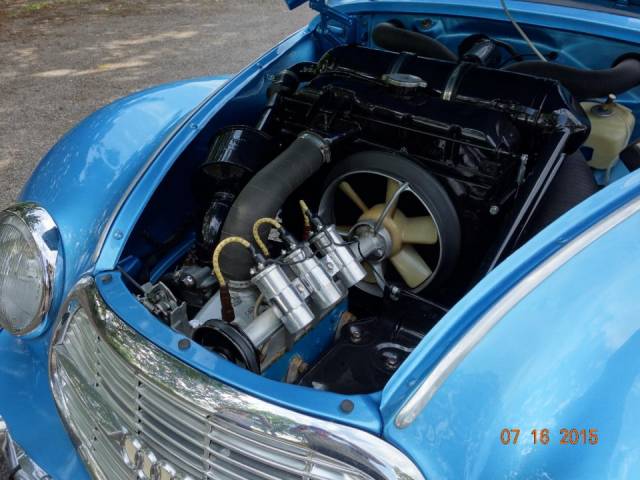
A defining trait of the Auto Union 3=6 is its three-cylinder two-stroke engine configuration paired with front-wheel drive—unconventional and advanced for its time. This combination resulted in agile handling, resonant engine acoustics, and a low centre of gravity, enhancing road holding. The model also gained popularity for its distinctive, eye-catching design, often described as quirky and a genuine "headturner." It featured left-hand drive as standard and the practicality necessary for daily use in the 1960s.
Technical Data
Special Editions and Collectible Models
There is no documentation of factory special editions or strictly limited variants for the main 3=6 production run. However, individual models might feature unique trim levels or period accessories reflecting local market preferences or customer customisation.
Weak Spots and Common Issues
Specific weak spots for the Auto Union 3=6 are not detailed here due to a lack of data, but as with most two-stroke-engine vehicles of the era, attention should be given to the lubrication system, engine seals, and exhaust cleanliness. The front-wheel-drive layout requires regular inspection of drive shafts and rubber boots.
Engine, Performance, Transmission, and Handling
The hallmark of the 3=6 is its lively 1000 ccm, three-cylinder two-stroke engine, which delivers over 50 bhp and yields a distinct, spirited character. This engine, together with lightweight construction and front-wheel drive, imparts direct and nimble handling, particularly in urban and twisty rural environments. The top speed of roughly 80 mph puts it in line with direct competitors of its time, and acceleration is brisk for a car of this displacement and era. Noteworthy alternatives and technical highlights in the compact two-stroke front-drive segment include the preceding DKW F93 and the subsequent Audi F103 (which transitioned to four-stroke engines). These vehicles share certain technical elements but diverge in engine concept and refinement.
Interior, Comfort, Exterior, and Design
The visual language of the Auto Union 3=6 is defined by curvaceous lines and a pronounced grille, capturing the spirit of early ‘60s motoring. Inside, functional materials are combined with signature details such as the expansive dashboard and simple-but-ergonomic controls. The model was available in striking colour options and period-typical fabrics, often complemented by chrome decorative elements and practical accessories. While basic by today’s standards, the cabin provided useful space and decent comfort for its day. Hardware like floor-mounted shifters and straightforward instruments cater to the enthusiast seeking authenticity and tactile feedback.
Further Information
The Auto Union 3=6 established core engineering values that would later be embodied by the Audi brand, such as front-wheel drive and progressive engineering for its class. For enthusiasts, sourcing period-correct parts might be challenging, but this is balanced by the lively owner communities and restoration networks.
Summary
Auto Union's 3=6 offers a disciplined exploration of two-stroke technology, front-wheel-drive dynamics, and retro design appeal. As one of the key links between DKW and Audi, it has a distinct place in automotive history, capturing a blend of progressive mechanics and stylistic flair. Anyone considering this model should appreciate both its unique engineering and its lasting aesthetic impact from the early 1960s.