Jeep DJ classic cars for sale
The Jeep DJ stands out as a purpose-built, two-wheel drive variant of the renowned CJ series. Produced initially by Willys from 1955, and later by Kaiser Jeep and AMC, the DJ series combines rugged off-road DNA with simplified mechanics suited for lighter commercial use. Below, you'll find everything you need to know about the DJ's unique background, technical details, and features.
Search results
Currently, there are no matching listings for your search.
Create search alert
Let yourself be notified as soon as a listing is published that matches your search filters.
Jeep DJ listing references from Classic Trader
Below you will find listings related to your search that are no longer available on Classic Trader. Use this information to gain insight into availability, value trends, and current pricing for a "Jeep DJ" to make a more informed purchasing decision.
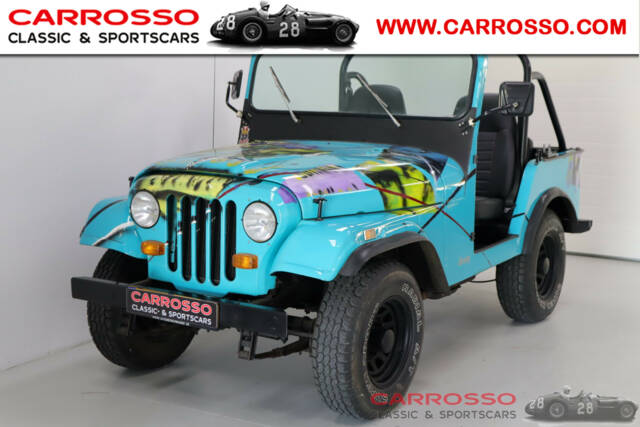
1978 | Jeep DJ-5F
Jeep 4x4 DJ5 Canvas Cabriolet - Painted by Herman Brood

Create search alert
Let yourself be notified as soon as a listing is published that matches your search filters.
Jeep DJ Classic Cars: Prices & Market Values
History of the Jeep DJ
The Jeep DJ, introduced in 1955 by Willys, emerged as a specialised offshoot of the CJ (Civilian Jeep) series. Unlike its four-wheel drive siblings, the DJ was developed with a focus on urban and commercial applications, making it a popular choice for postal delivery and light utility work in the United States. Production shifted from Willys to Kaiser Jeep in 1963 following a corporate rebranding, marking a continuity in Jeep's approach to practical utility vehicles. In 1970, American Motors Corporation (AMC) acquired Kaiser Jeep, leading to the creation of AM General—a subsidiary responsible for continuing DJ production up to 1984.
Model History of the DJ Series
The Jeep DJ started as a rear-wheel drive variant of the CJ family, specifically designed to meet commercial demand for delivery vehicles that did not require four-wheel drive capabilities. Predecessors consisted of the utilitarian CJ models, while successors evolved under AMC's management, eventually giving way to other utility-focused models as the line concluded in 1984. Key evolutions within the DJ line included configuration changes, with some versions offering cargo versatility and varying cab options to suit different business needs throughout its nearly three-decade run.
Highlights of the Jeep DJ Series
One key feature of the DJ series lies in its rear-wheel drive layout, which differentiates it from the CJ's off-road focus, allowing the DJ to achieve greater efficiency and simplicity for commercial duties. Notable technical attributes include the robust 3.8-litre six-cylinder engine and a 3-speed automatic gearbox—uncommon for the period and well-suited to frequent stop-start operation in an urban setting. The DJ's interior offers room for two additional passengers with a practical, fold-down rear seat arrangement. Safety is enhanced by a roll bar, while features such as a soft-top convertible roof, radio/CD player, spare wheel, and off-road tyres make it versatile for a range of uses.
Technical Data
Special Editions and Collectible Models
Several DJ models were configured for very specific commercial tasks—most famously the Jeep DJ-5, widely adopted as the US Postal Service Mail Jeep, which can be recognised by its right-hand drive layout and enclosed hardtop body. Other notable versions include soft-top configurations with additional accessories such as off-road tyres and reinforced roofs for delivery or light transport duties.
Engine, Performance, Transmission and Handling
With its 3.8-litre 6-cylinder engine and a 3-speed automatic, the DJ is tuned for simplicity and reliability, favouring low-maintenance operation in urban or light off-road contexts. The vehicle’s lighter kerb weight and rear-wheel drive layout ensure it is nimble on city roads but limit its capabilities compared to a full 4x4 in more demanding terrain. The all-wheel drive configuration available in select models expands its range of use. Wide off-road tyres and functional design contribute to stable handling, while the addition of a roll bar enhances safety for the driver and rear passengers. The DJ-5 stands out for its association with postal delivery work, notable for its reliability and characteristic design with a right-hand drive and functional hardtop. Soft-top variants also draw enthusiasts seeking a more open-air driving experience.
Interior, Comfort, Exterior and Design
The DJ's appearance maintains clear links to the broader Jeep family, but with functional elements adapted for commercial use. Its soft top (cabrio roof) option, sturdy roll bar, and utilitarian off-road tyres speak to both its adaptable role as a light workhorse and a leisure vehicle. Interiors are basic yet functional, usually offering seating for four, with a fold-down rear bench, and minimum equipment such as a radio/CD player. Finishes tend to prioritise durability over luxury, with robust materials and straightforward controls. The exterior’s simple, boxy profile not only aids visibility and practicality but also reinforces the Jeep's easy identification on the road.
Other Relevant Features
Accessories commonly found on the DJ include a full-size spare wheel mounted externally, robust off-road tyres for added versatility, and a radio/CD player as one of the few available comforts. These practical additions enhance the DJ's role as a utility vehicle.
Summary
The Jeep DJ occupies a unique niche as a rear-wheel drive, commercially oriented member of the Jeep family. Its combination of a robust six-cylinder engine, automatic transmission, lightweight build, and practical equipment has made it a notable choice for utility and delivery purposes from the 1950s through the early 1980s. With every supply and demand listing at Classic Trader relating directly to the DJ model, it proves its ongoing appeal among classic utility vehicle enthusiasts.