Framo V 501 classic cars for sale
The Framo V 501 stands as a distinctive representative among classic utility vehicles from post-war East Germany. Purpose-built and robust, the V 501 is a draw for those interested in the roots of commercial vehicles and the ingenuity of automotive production during a time of resource scarcity. Its enduring simplicity and mechanical honesty attract enthusiasts and professionals alike.
Resultados de la búsqueda
Actualmente no hay anuncios que coincidan con su búsqueda.
Create search alert
Let yourself be notified as soon as a listing is published that matches your search filters.
Create listing
Do you have a Framo V 501 that you want to sell? Then create a listing now.
Create listingFramo V 501 listing references from Classic Trader
Below you will find listings related to your search that are no longer available on Classic Trader. Use this information to gain insight into availability, value trends, and current pricing for a "Framo V 501" to make a more informed purchasing decision.
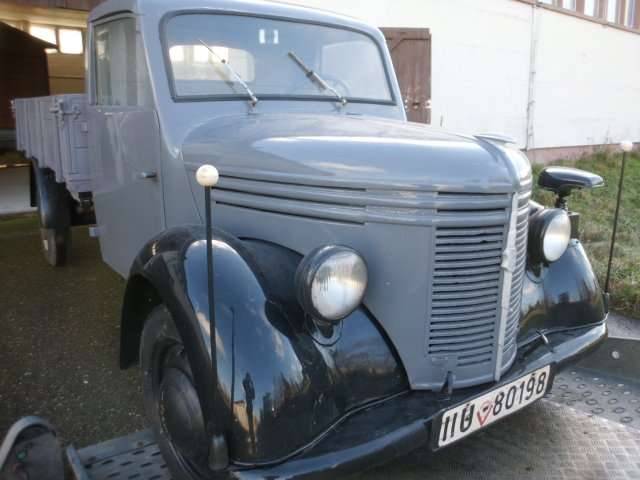
1940 | Framo V 501/1
Wartburg Framo Framo V 501 Doppelkolbenmotor

Create search alert
Let yourself be notified as soon as a listing is published that matches your search filters.
Create listing
Do you have a Framo V 501 that you want to sell? Then create a listing now.
Create listingFramo V 501 Classic Cars: Prices & Market Values
History of the Framo V 501
Emerging from the ruins of World War II, the Framo V 501 was developed in East Germany as a practical response to the need for reliable transportation and delivery vehicles. Built by VEB Barkas-Werke, the model debuted in the late 1940s and filled crucial roles in trade and industry across the GDR. Its design focused on practicality, with an emphasis on solid construction and ease of maintenance, features that contributed to its longevity in everyday use. The V 501’s role extended into various commercial sectors, establishing it as a backbone of local transport during the challenging years of reconstruction.
Model history
The V 501 was one of Framo’s pivotal series in the post-war period. It continued the brand’s tradition of compact light commercial vehicles, following up on earlier models such as the pre-war V 500. Later years saw the evolution of the V 501's concept into larger, more modern platforms, eventually leading toward the Barkas B1000—another significant DDR commercial vehicle. The V 501 itself was produced in several variants, typically as a flatbed, panel van, or even as an ambulance, reflecting its versatile application.
Highlights of the Framo V 501
The Framo V 501 is characterised by its straightforward engineering, robust chassis and adaptability to various commercial roles. With a utilitarian design philosophy, it is known for being serviceable and practical rather than luxurious. Its mechanical layout reflects the shortages and priorities of the post-war era—simplicity, durability and reparability were paramount. Every aspect of the design supports these requirements, from the easily accessible engine compartment to the minimalistic interior devoid of unnecessary embellishments.
Technical data
Special Editions and Collectible Models
No information available on specific special editions or collector’s variants for the Framo V 501. Most models were utilitarian in nature, and variations were mainly in the form of different body types to cater to specific trade requirements.
Weak Spots and Common Issues
Due to a lack of advanced features, the primary areas to check on a Framo V 501 are basic mechanical wear—particularly in the engine, transmission, and chassis components. Rust is a persistent issue in the bodywork, especially in vehicles that have been used intensively for decades or stored in poor conditions. Replacement parts are generally available among specialist suppliers, but certain components may require refurbishment or fabrication due to their age.
Engine and Performance, Transmission and Handling
The V 501’s engine, typically an inline two-stroke, is designed for durability and operational simplicity. Power delivery is modest, matched to the vehicle’s utilitarian objectives, and the transmission is typically a manual setup with straightforward gear changes. Handling is predictable and stable given the vehicle’s narrow track and low centre of gravity, but comfort and speed should not be priorities when driving a V 501. The suspension allows for robust resilience on challenging surfaces—as was often required in its original working environment. Given the focused production range, most interest centres on examples with surviving original features or unique histories—such as those that served in specific public sectors (fire brigade, ambulance) or with documented GDR heritage.
Interior, Comfort, Exterior and Design
Inside, the Framo V 501 provides functional rather than decorative space, with durable materials chosen for longevity rather than opulence. The seating, dash and controls are arranged for utility and maintenance ease. The exterior retains the clear lines common to 1950s East German vehicles, marked by a boxy silhouette, prominent fenders, and easy-to-replace panels. Period colours were often muted, though military and state service versions could appear in specific livery. Special accessories were typically uncommon, though some commercial clients equipped vehicles with features for specialised use (tool compartments, racks, signage).
Other Relevant Features
An important aspect of Framo V 501 ownership is the connection to Germany’s social and economic history. Ownership often appeals to those with a passion for GDR-era technology or those seeking to preserve a chapter of commercial vehicle history seldom seen on Western roads.
Summary
The Framo V 501 shines not through luxury or speed, but through its embodiment of post-war automotive pragmatism, reliability, and straightforward mechanics. Uniquely tied to East German history, its continuing presence on the classic market testifies to its practical origins and the enduring appeal of robust engineering from a significant period in Germany’s industrial story.