- Motorcycle
- Rumi (1 offer)
Buy Rumi Motorcycles
Rumi represents Italian engineering at its purest: the legendary 125cc horizontal twin two-stroke made the Bergamo marque a legend between 1949 and 1969. From the Junior Corsa that dominated racetracks to the elegant Formichino scooter and the Turismo tourer – Rumi combined technical innovation with artistic design.
Search results
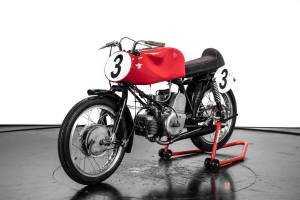
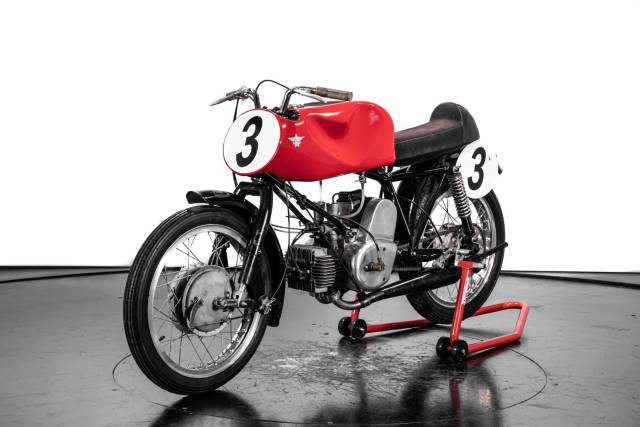

Rumi listing references from Classic Trader
Below you will find listings related to your search that are no longer available on Classic Trader. Use this information to gain insight into availability, value trends, and current pricing for a "Rumi" to make a more informed purchasing decision.
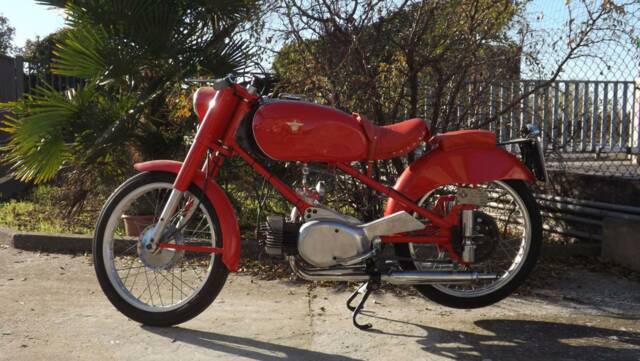
1960 | Rumi 125
-
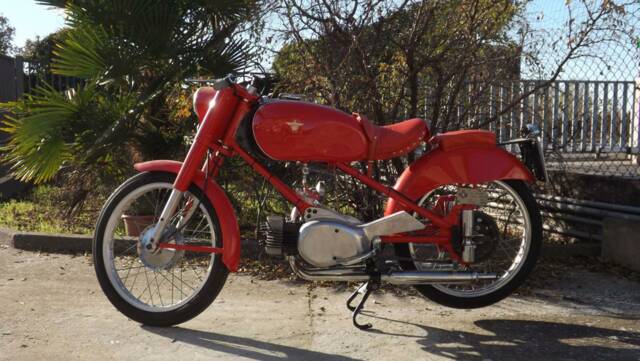
1960 | Rumi 125 Super Sport
-
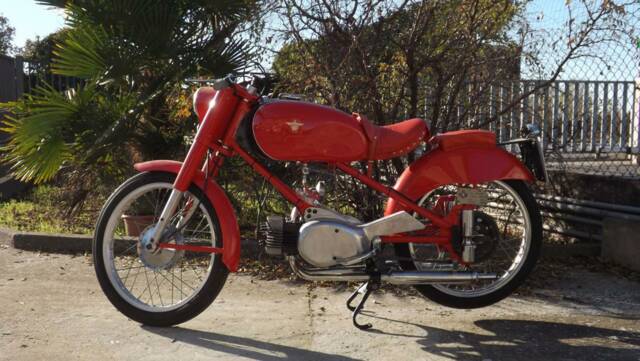
1960 | Rumi 125 Turismo
-
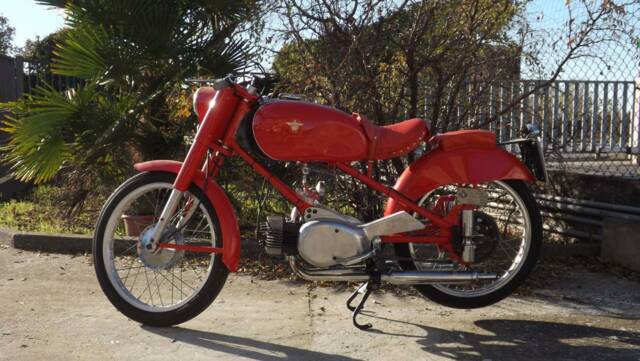
1960 | Rumi Formichino 125
-
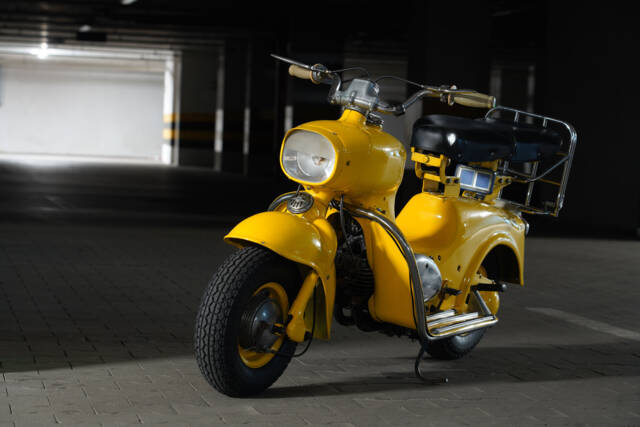
1956 | Rumi Formichino 125
A long-standing part of Collezione Umberto Panini Motor Museum

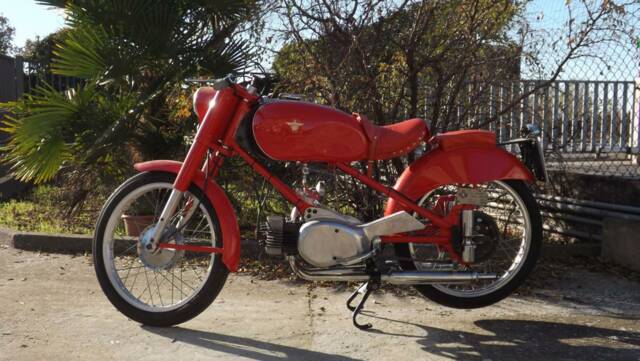
1960 | Rumi 125 Regolarita
-
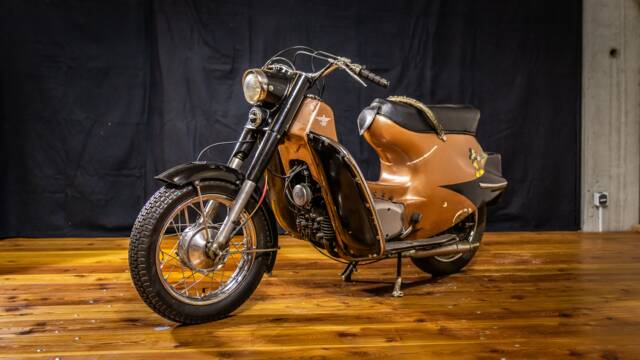
1955 | Rumi 125 Scoiattolo
Elegant lightweight scooter with Italian signature

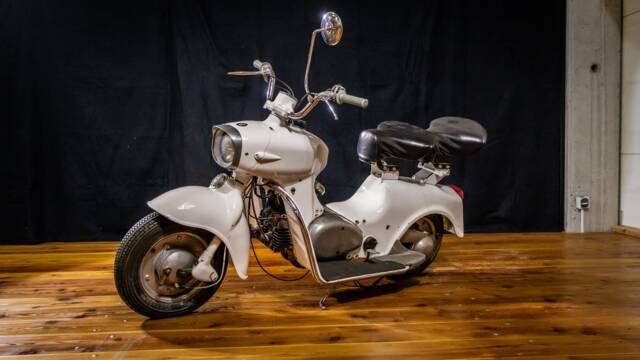
1962 | Rumi Formichino 125
Technically sophisticated and aesthetically exceptional
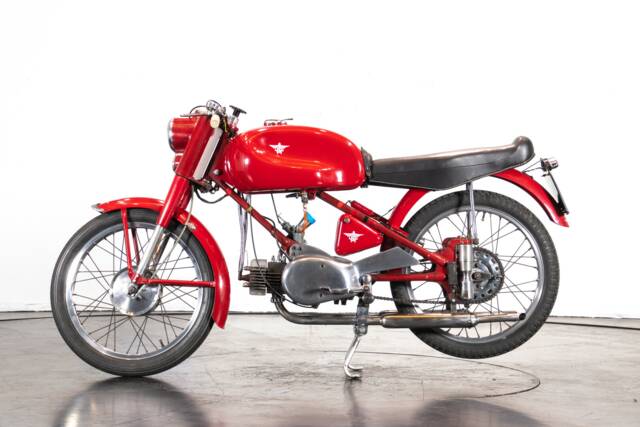
1970 | Rumi 125 Turismo
Rumi 125
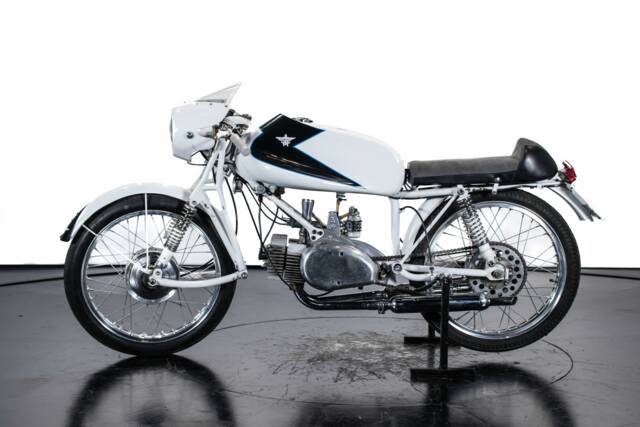
1960 | Rumi Junior Gentleman 125
Rumi Junior 125
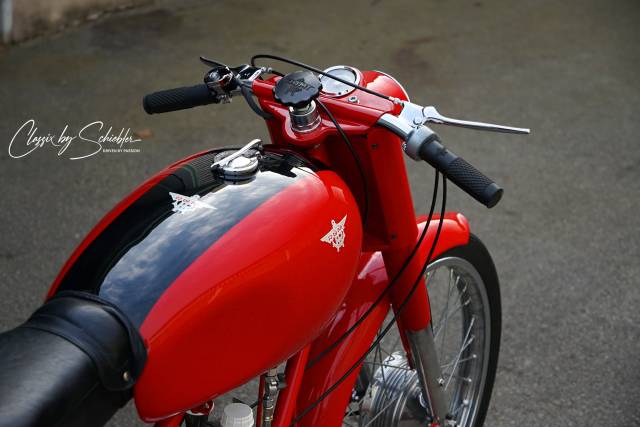
1953 | Rumi 125
Rumi Super Sport TT. Twostroke, two cylinder, two carburettor, two exhaust

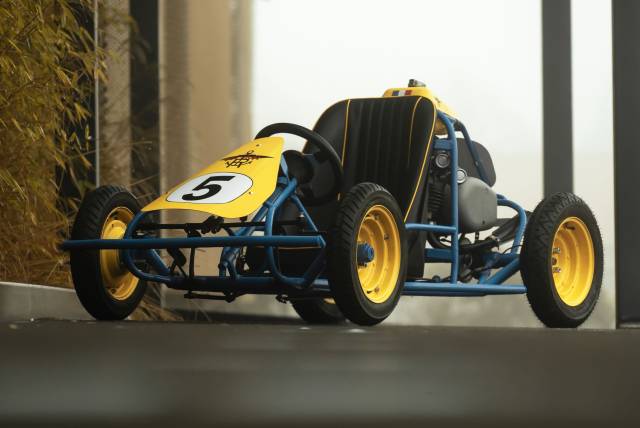
1964 | Rumi Dogi Go-Kart
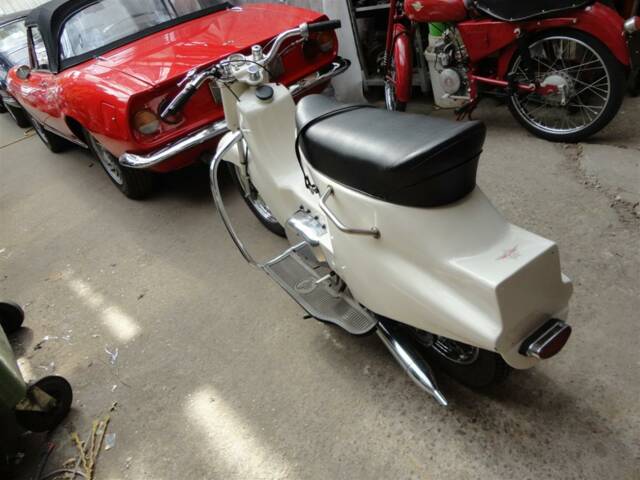
1960 | Rumi 125 Scoiattolo
2 cil

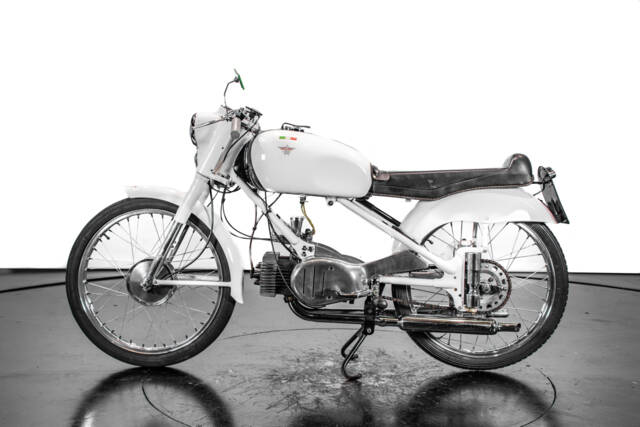
1962 | Rumi Gobbetto
-
History
Moto Rumi's story doesn't begin on the racetrack, but in the foundry halls of Bergamo. Fonderie Officine Rumi was founded in 1906 by Achille Rumi, initially supplying cast components to the textile machinery industry. During World War II, the company produced propellers, periscopes, and even miniature submarines – precision manufacturing expertise that would later shape motorcycle production.
Donnino Rumi, Achille's son and classically trained artist (painter and sculptor), took over the family business in the 1920s. After the war ended in 1948, he had a vision: to build lightweight, technically advanced motorcycles. Donnino drew all the designs himself, modelled them in clay, and had prototypes cast in iron and aluminium – an artistic approach that gave Rumi machines their distinctive aesthetics.
The heart of all Rumi motorcycles was the 125cc horizontal twin two-stroke engine, developed by engineer Pietro Dossena. This engine was revolutionary: compact, powerful, and with a characteristic sound. The first prototype, the Rumi Turismo, was built in 1949 and presented at the Milan trade fair in April 1950.
The golden years (1950-1956) brought a model range that cemented Rumi's reputation:
- 1950-1956: Rumi Turismo – The entry-level road model, reliable and practical
- 1951-1956: Rumi Scoiattolo (Squirrel) – The first scooter with monocoque aluminium bodywork, 3-speed gearbox (from 1954: 4-speed), considered the fastest scooter of its time
- 1952: Rumi Gobbetto – Racing machine that achieved success in Italian road races
- 1953-1959: Rumi Junior/Junior Corsa – The legend. Developed for Italian Formula Junior (18mm carburettor restriction), it became the class favourite. With 9bhp at 7,300-8,000rpm and weighing just 75kg, it was a racing tool for the road. Gianni Zonca won the 1955 Italian championship on a Rumi – afterwards, the Italian flag adorned the Rumi logo.
- 1955-1960: Rumi Formichino (Ant) – The most elegant scooter of the era, with cast aluminium chassis, dual seat, and 4-speed gearbox
Rumi was also active in racing: The 248cc DOHC racing machines (designed by Salmaggi) with parallel twin and double overhead camshaft represented the pinnacle of technical development in the mid-1950s.
The end of an era: With the rise of Japanese mass manufacturers in the 1960s, Rumi lost competitiveness. In 1962, the company ceased motorcycle production; by 1969, the marque ended completely. Donnino Rumi returned to his first love – painting.
Modern revival: In the 1990s, Oscar Rumi (Donnino's nephew) attempted a comeback with the Rumi RM701, based on a modified Honda NX650 engine. From 1990 to 2016, Rumi even returned to racing – Stefano Rumi developed modern 125cc GP and Moto3 machines.
Highlights and Features
What makes Rumi so special? It's the symbiosis of engineering and art.
The legendary horizontal twin: All Rumi motorcycles shared the 125cc horizontal twin two-stroke. This layout (bore x stroke: 42 x 45mm) was compact, lowered the centre of gravity, and enabled optimal weight distribution. With compression ratios up to 10.5:1 and twin Dell'Orto carburettors (UB 18 or UB 22, racing versions SS 23c/22c), the engine produced 6-9bhp depending on tune – impressive for 125cc in the 1950s.
Aluminium casting expertise: Rumi's precision casting experience showed in the scooters. The Scoiattolo and Formichino had monocoque aluminium bodies (cast in three main sections), with the engine as a stressed member. This construction was lighter and stiffer than the pressed steel of competitors (Vespa, Lambretta).
Artistic design: Donnino Rumi's sculptor background is visible in every line. The Formichino is still considered one of the most beautiful scooters ever made – with deeply valanced mudguards, chrome trim on the leg shields, fully enclosed engine unit, and comfortable dual seat. Many Rumis were painted in bright red, the characteristic "Rumi Red".
Racing DNA: The Junior Corsa wasn't a converted road bike, but a purpose-built racing machine. Earles fork (later telescopic), multi-plate oil-bath clutch, 4-speed gearbox with close ratios, lightweight special steel frame – everything optimised for speed and handling. Many privateers bought the Junior Corsa to compete in classic Italian races like the Milan-Taranto.
The logo: Rumi's emblem shows three elements – bird's wing (sky), anvil (earth), and anchor (sea) – symbolising the company's product spectrum. From 1955, the Italian flag was added.
Technical Data
Engine (typical for 125cc models):
- Type: Twin-cylinder two-stroke, horizontal side-by-side
- Bore x stroke: 42 x 45mm
- Compression: 10.5:1 (racing versions)
- Carburettors: 2x Dell'Orto UB 18 (standard) or UB 22 (sport) or SS 23c/22c (racing)
- Ignition: Flywheel magneto with twin breakers, 6V, 30W
- Clutch: Multi-plate oil-bath
- Primary drive: Gears
- Secondary drive: Chain
Chassis (Junior Corsa):
- Frame: Lightweight special steel tube
- Wheelbase: 1,220mm (Earles fork) / 1,250mm (telescopic fork)
- Front suspension: Earles fork with shock absorbers (early models) or telescopic fork (later models)
- Rear suspension: Swinging arm with shock absorbers
- Brakes: Drum brakes front and rear
- Tyres: 2.75-19 (motorcycles) / 4.00-10 (scooters)
Market Overview & Buying Tips
The Rumi market is small but passionate. These machines are rare – only a few thousand units were produced between 1949 and 1969, and many haven't survived.
Price ranges by model and condition:
- Rumi Turismo/Sport: £3,500-7,000 (restored), £1,800-3,500 (project)
- Rumi Junior Corsa: £10,000-22,000 (restored, with race history up to £30,000+)
- Rumi Scoiattolo: £5,000-10,000 (restored), £2,500-5,000 (project)
- Rumi Formichino: £7,000-13,000 (restored, original), £3,500-7,000 (project)
- Rumi Gobbetto/248 DOHC Racer: £25,000-50,000+ (extremely rare, auction prices vary widely)
Which model for which buyer?
- Beginners: Rumi Turismo or Scoiattolo (2nd series with 4-speed). More practical, easier to maintain, more affordable.
- Scooter collectors: Formichino – the most beautiful scooter of the era, but parts harder to find than Vespa/Lambretta.
- Racing history enthusiasts: Junior Corsa – the crown jewel of any collection. Documented race history significantly increases value.
- Advanced collectors: Gobbetto or 248 DOHC – extremely rare, require expertise and deep pockets.
General marque characteristics (what to check on all Rumis):
- Engine: The horizontal twin is robust, but spares are scarce. Check compression (should be even), crankshaft bearings (play?), pistons/cylinders (wear?). Original Dell'Orto carburettors are worth their weight in gold.
- Frame: Steel tube frames on motorcycles – check welds and tube joints for cracks. On scooters: check aluminium castings for cracks (especially at mounting points).
- Gearbox: 4-speed gearboxes are reliable, but replacement gearboxes are hard to find. Test all gears.
- Originality: Original paint, chrome parts, seats, and badges significantly increase value. Many Rumis were "restored" with incorrect parts – documentation is crucial.
Parts availability: Challenging. There's a small but dedicated Rumi community (e.g., formichino.com forum) that trades parts and produces reproductions. Some specialists in Italy (Cristiano Luzzago) and the UK offer parts. Expect long waiting times and high prices for rare components.
Market trends: Rumi prices have risen steadily over the past 10 years, especially for Junior Corsa and Formichino. The marque is gaining recognition among collectors seeking alternatives to the usual suspects (Ducati, Moto Guzzi). Value appreciation is likely, but liquidity is limited – it can take months to find the right buyer.
Insurance and registration: Rumi motorcycles qualify for historic vehicle status. Classic insurance is affordable, but you'll need a valuation for rare models.
Engine, Performance, Transmission, Handling
Riding a Rumi is like time-travelling to the golden era of Italian motorcycle sport.
The engine: Turn the ignition key, kick the starter – and the horizontal twin awakens with a characteristic, slightly rough two-stroke sound. Not the shrill scream of a Vespa, but a deeper, more mechanical burble. At idle, the machine vibrates slightly but not unpleasantly – you feel the two pistons working horizontally back and forth.
Acceleration: The Turismo and Scoiattolo are leisurely – 6bhp is enough for relaxed cruising at 40-45mph. The Junior Corsa is another world. Open the throttle, and 9bhp catapults the 75kg machine forward. The engine loves high revs – at 7,000rpm it comes alive, at 8,000rpm it sings. The 4-speed gearbox shifts precisely, ratios closely stacked for racing.
Handling: Here Rumi's engineering shines. The low centre of gravity (thanks to the horizontal engine) and short wheelbase make the motorcycles nimble and stable. The Earles fork of the early Junior Corsa offers surprisingly good feedback, the later telescopic fork is more comfortable. In corners, the Rumi sits planted; the drum brakes are adequate for the power (but not excessive).
The scooters: Scoiattolo and Formichino ride completely differently from Vespa or Lambretta. The aluminium bodywork is stiffer, handling more precise. The wide tyres (4.00-10) and low seating position inspire confidence. The Formichino is particularly comfortable – the dual seat and full enclosure make longer rides pleasant. Top speed? 50mph – fast enough for country roads, but not a motorway machine.
Two-stroke character: Don't forget: this is a two-stroke. You must mix oil with petrol (typically 1:25 to 1:33), the engine smokes slightly when pulling away, and you must keep revs in the optimal range. But the reward is direct, immediate response – no turbo lag, no delay, just pure mechanical connection.
Long distance: Rumi motorcycles aren't tourers. The tank holds 10-12 litres, range ~125 miles. Riding position is sporty (Junior Corsa) or upright (Turismo). After 60 miles, you feel every bump. But for Sunday runs, classic meets, or short track sessions? Perfect.
Design, Interior and Accessories
Rumi design is Donnino Rumi's artistic legacy.
The motorcycles: Lean, minimalist, functional. The Turismo and Sport have classic 1950s lines – teardrop tank, narrow seat, exposed engine, chrome headlamp. But the details reveal the artist: the curved exhaust routing, finely worked engine covers, elegant side panels. Colours were typically red (Rumi Red), black, or cream, often with gold lining.
The Junior Corsa is pure functionalism – not a gramme wasted. Narrow tank, minimal fairing, exposed mechanicals. The Earles fork is a work of art in steel tubes and struts. Later models with telescopic forks look more modern but lose some of the raw aesthetic.
The scooters: Here Donnino's sculptor's eye shines. The Formichino is a sculpture on wheels. Deeply valanced mudguards fully enclose the 10-inch wheels, chrome trim on the leg shields catches the light, the dual seat in forest green or red invites you aboard. The fully enclosed engine unit is smooth and clean – no cables, no hoses, just polished aluminium (many Formichinos were later stripped and polished, revealing the cast structure).
The Scoiattolo is more functional but still elegant. The first series (1951-53) has a more compact form, the second series (1954-56) looks more modern with larger wheels (14-inch) and improved ergonomics.
Target audience: Rumi aimed at discerning buyers – not mass customers, but enthusiasts who appreciated engineering and design. The motorcycles were more expensive than comparable singles, the scooters more expensive than Vespas. But buyers got Italian craftsmanship, not mass production.
Special design elements:
- Cast aluminium engine cases: Finely ribbed, with Rumi script
- Chrome headlamp: Round, with Rumi badge
- Instrumentation: Minimalist – speedometer, oil pressure gauge (on some models), warning lights
- Seats: Leather (motorcycles), vinyl (scooters), often two-tone
- Exhaust: Chrome-plated, with characteristic curve
Preservation: Original paint and chrome are rare. Many Rumis were "restored" in the 1970s-80s with incorrect colours or parts. An originally preserved Formichino in Rumi Red with intact chrome is a museum piece.
Other
Racing culture: Rumi was a fixture of Italian road racing in the 1950s. The Junior Corsa dominated Formula Junior, the Gobbetto fought in the 125cc class. Gianni Zonca's 1955 championship was the pinnacle. Many privateers bought Rumis to compete in classic races like Milan-Taranto, Giro d'Italia, or local hill climbs. The machines were competitive against MV Agusta, Mondial, and Morini.
Export markets: Rumi exported to the UK (marketed as "Junior Sport"), USA, Australia, and South America. In Argentina, some models were built under licence. Export models often had different carburettors or electrics for local regulations.
Parts availability and community: The Rumi community is small but dedicated. The formichino.com forum is the central hub – owners trade parts, knowledge, and restoration tips. Some specialists reproduce parts (gaskets, bearings, chrome parts), but original parts are worth gold. Expect a restoration to take years and cost multiples of the purchase price.
Value development: Rumi is a niche marque, but prices are rising. A well-documented Junior Corsa with race history can fetch £30,000+ at auction. The Formichino is gaining recognition as a design icon. Long-term value appreciation is likely, especially for original, unrestored examples.
Popular culture: Rumi is less well-known than Ducati or Moto Guzzi, but highly regarded among connoisseurs. The marque embodies the golden era of Italian motorcycle sport – when small family firms fought giants with passion and engineering.
Summary
Rumi is a marque for connoisseurs. Not the most famous, not the most successful, but one of the most fascinating Italian motorcycle marques of the post-war era.
What you need to know:
- The engine: The 125cc horizontal twin is the heart – robust, characterful, but spares are scarce.
- The icons: Junior Corsa (racing legend), Formichino (design icon), Scoiattolo (technical pioneer).
- For whom: Collectors seeking alternatives to mainstream marques. Enthusiasts who appreciate engineering and art. Racing history fans.
- Challenges: Parts availability, long restoration times, limited liquidity on resale.
- Reward: A machine that tells a story. An engine that sings. A design that's timeless.
When you buy a Rumi, you're not just buying a motorcycle – you're buying a piece of Italian engineering, shaped by an artist who treated machines like sculptures. That's Rumi's legacy.