- Motorcycle
- Malanca (2 offers)
Buy Malanca Motorcycle
Between 1956 and 1986, Bologna produced motorcycles that collected World Championship victories and six national titles in five years. Today, these Italian 50cc and 125cc racers are sought-after collectors' pieces.
Search results
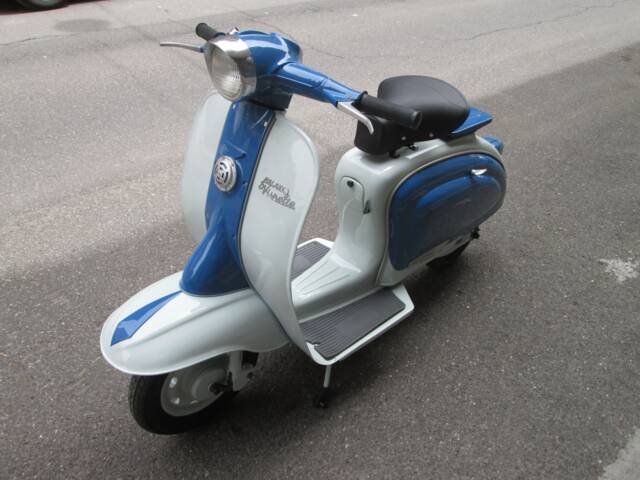
1963 | Malanca Vispetta
Morini-Zweitakter, unrestauriert erhaltene Substanz, originale Papiere

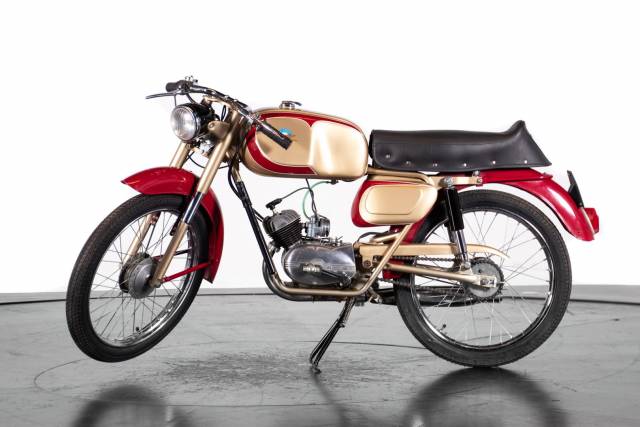
Malanca listing references from Classic Trader
Below you will find listings related to your search that are no longer available on Classic Trader. Use this information to gain insight into availability, value trends, and current pricing for a "Malanca" to make a more informed purchasing decision.
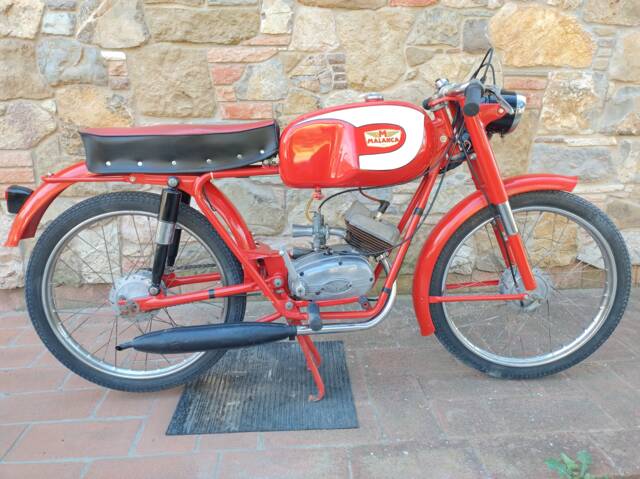
1963 | Malanca NicKi Sport
Moto d'epoca Italiana MALANCA Nicki Sport Tubo, con libretto originale.
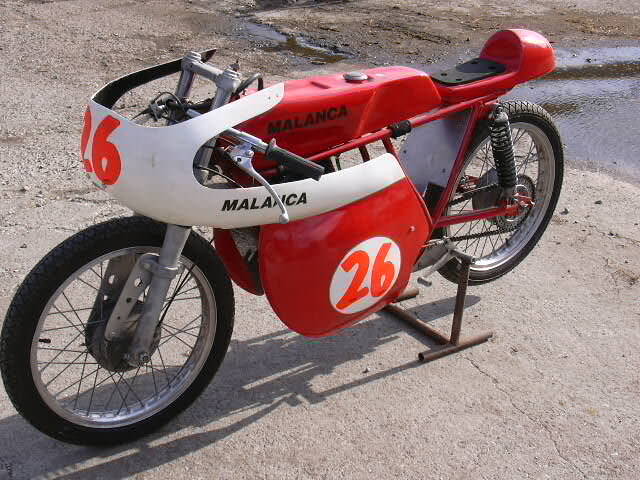
1966 | Malanca 50 Sport
50CC Moped

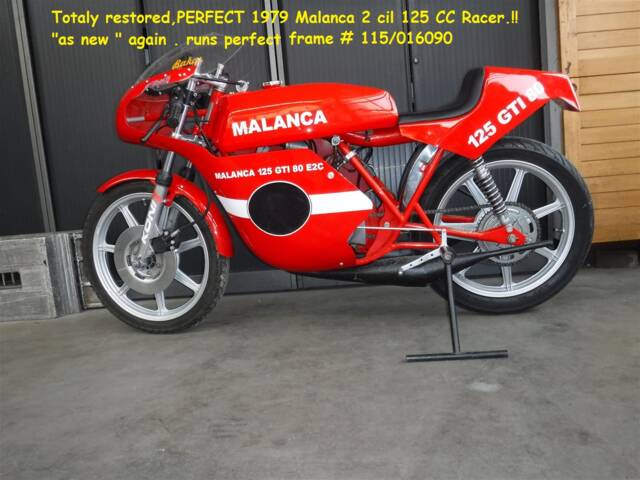
1979 | Malanca GTI 80
Malanca GTI 80
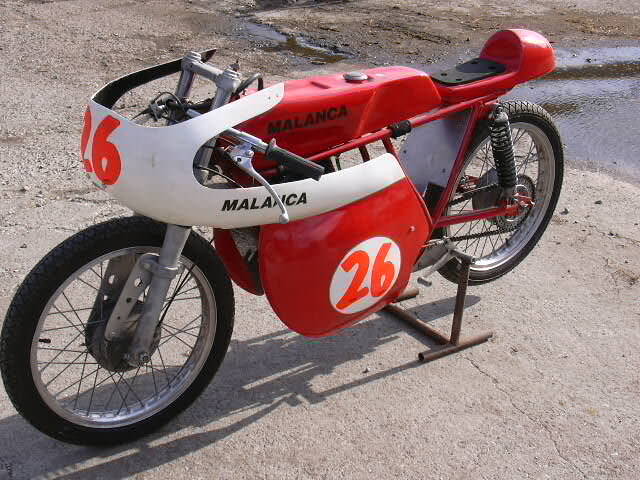
1966 | Malanca 125
motor
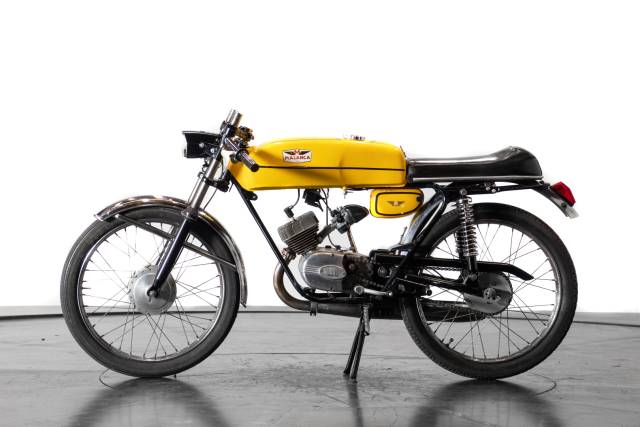
1974 | Malanca DTR
-
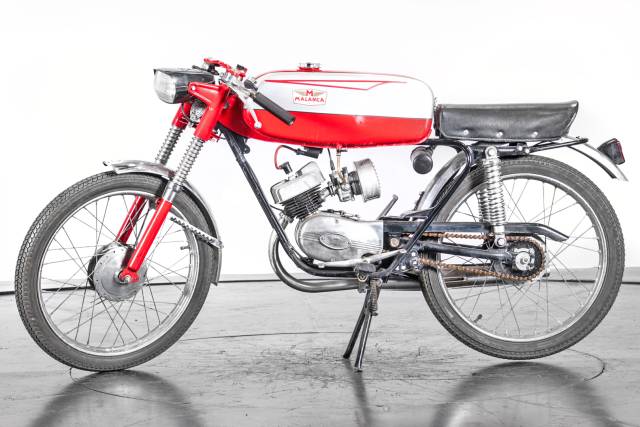
1963 | Malanca 50 Sport
-
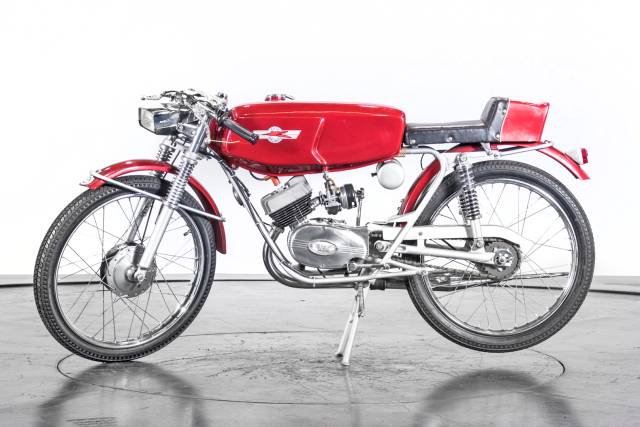
1963 | Malanca 50 Sport
-
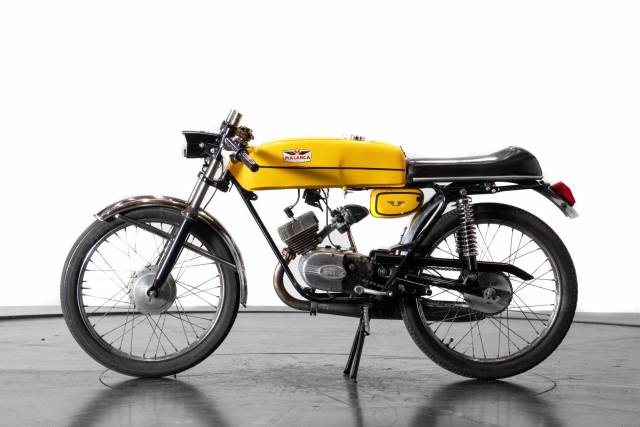
1974 | Malanca 50 Sport
COMPETIZIONE
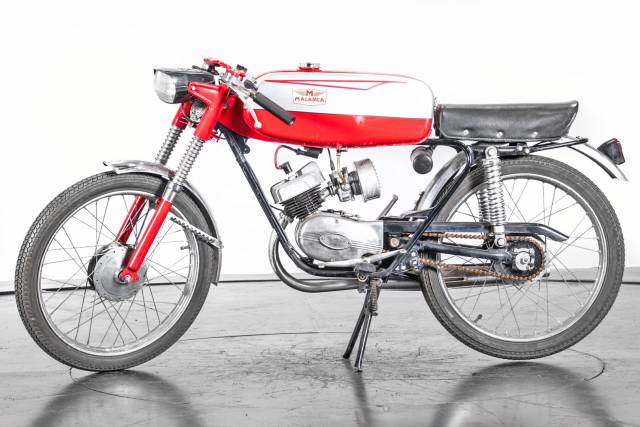
1963 | Malanca 50 Sport
-
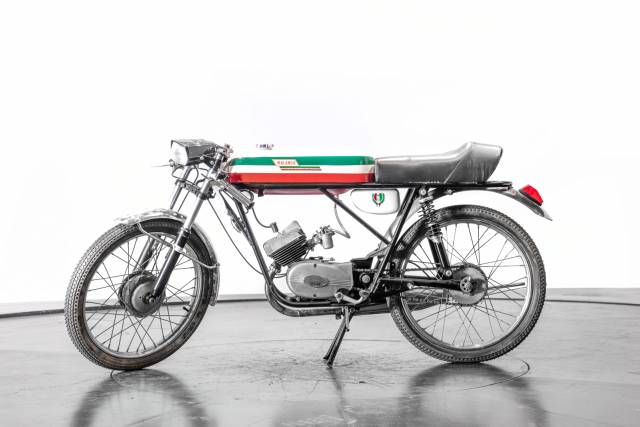
1971 | Malanca Testa Rossa
-
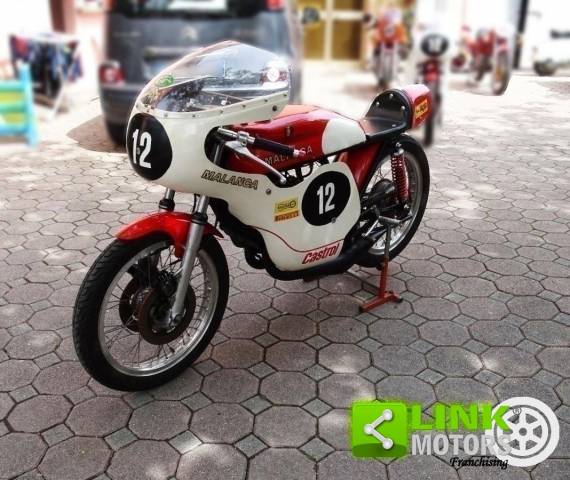
1977 | Malanca H 20 SPORT
Malanca - H 20 SPORT 6 MARCE RAFFREDDAMENTO AD ACQUA
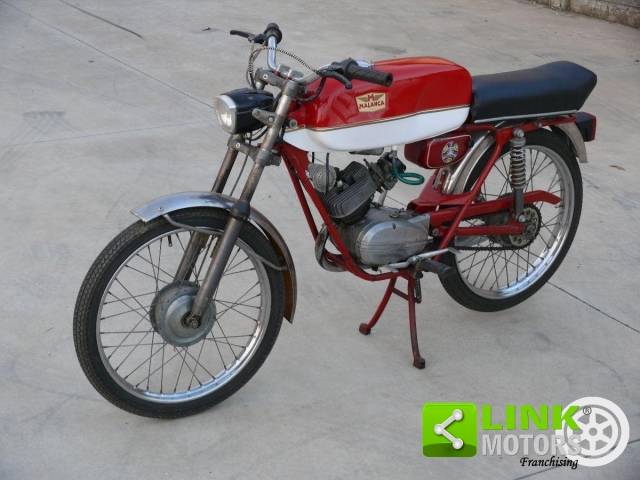
1971 | Malanca 50 4M
MALANCA 50 4 MARCE 1971
History & Heritage
Mario Malanca launched his entrepreneurial venture in post-war Bologna. The former air force mechanic and Ducati employee established his workshop on Via della Crocetta in 1947, initially specialising in mechanical parts and wheel hubs for motorcycles. The leap to complete motorcycle production came in 1956—a gamble that would pay dividends.
The first Malanca models were 50cc two-strokes that stood out for robust construction and punchy motors. By the early 1960s, Malanca was supplying markets in America and Asia, building a reputation as a manufacturer of reliable small-capacity machines. In 1960, the company expanded production to include in-house engine manufacturing—a decisive step toward independence.
The sporting breakthrough arrived in 1968 when Malanca entered racing with riders Othello Buscherini and Walter Villa. In just five years, the Bologna team collected six Italian championship titles in the 50cc and 60cc classes. The pinnacle: Buscherini's victory at the Brno Grand Prix on 15 July 1973, followed by another triumph in Imatra on 29 July—two historic wins in the 125cc World Championship.
The model range evolved continuously: alongside successful racers came road models like the 50 Sport, the Nicki Sport, and from 1969 the famous Testa Rossa (Redhead), named for its distinctive red cylinder head. The 1970s brought larger-displacement variants with 125cc, including the GTI 80 and sporting versions like the 125 SS. Production also encompassed lightweight bikes and mopeds for everyday use.
Decline began in the mid-1980s when the market for small-capacity motorcycles collapsed and Japanese manufacturers with larger engines dominated the European market. Malanca ceased production in 1986—after four decades of innovation and motorsport success.
Highlights & Features
Malanca motorcycles are defined by their racing pedigree and uncompromising sporting character. Three models stand out:
The Malanca Testa Rossa (1969-1979) is the marque's most recogn
ised model. The name refers to the characteristic red alloy cylinder head. With a 49cc two-stroke engine producing around 4 bhp, the Testa Rossa exceeded 90 km/h—impressive for a fifty. Responsible for this were the generous 20mm Dell'Orto carburettor, optimised inlet timing, and free-flowing exhaust system. The four-speed gearbox enabled sporting riding, the Daspa frame provided necessary rigidity. The Testa Rossa was built in various evolutionary stages (3M, 4M, 5M, 7M), identifiable by frame numbers.
The Malanca 50 Sport was the entry model for sporting riders. With classic lines and solid engineering, it offered typical Malanca character at an accessible price. The two-stroke engine frequently came from Franco Morini—a proven supplier to Italian lightweightmanufacturers.
The Malanca Nicki Sport (also spelled Nicky) combined sporting design with everyday usability. Characteristic were the tubular frame construction and specification with Morini cylinders and large Dell'Orto carburettors (frequently UA17S). The four-speed gearbox with foot operation followed racing machine concepts. Wheels from Facem Radaelli and Italcerchio underlined the quality ambition.
Distinguishing features across all Malanca motorcycles: twin-sided front brake on sport models, premium Italian components (Dell'Orto, Marzocchi, CEV), consistent weight reduction, and tuning clearly prioritising performance over comfort. These were race machines for the road—uncompromising, loud, and fast.
Technical Data
Note: Technical data varies by year and specification. Malanca used different suppliers and adapted specifications for various markets.
Market Overview & Buying Tips
The market for Malanca motorcycles is small but stable. The marque enjoys excellent reputation among Italian lightweight collectors, yet remains relatively unknown outside this scene—keeping prices moderate.
Price ranges (2024/2025):
Malanca Testa Rossa (restored, roadworthy): £6,000-£10,000. At British auctions, examples achieved £1,840-£1,950 in 2024 (Bonhams, Mathewsons). A fully restored example with original parts can reach £8,000-£10,000. Unrestored projects: £2,000-£3,500.
Malanca 50 Sport / Nicki Sport (restored): £2,500-£6,000. A 1963 Nicki Sport was offered at Classic Driver for €7,900. Everyday condition with patina: £1,500-£3,000.
Malanca Race Machines (Competizione): Very rare, prices heavily dependent on condition and race history. With documented provenance: £6,500-£12,000.
Typical weak points:
- Engine sealing: Two-strokes prone to leaking crankshaft seals. Check for oil traces on crankcase and excessive smoke on cold start.
- Carburettors: Dell'Orto carbs are robust, but original parts (jets, slides) grow scarce. Reproductions often don't fit precisely.
- Electrics: CEV components vulnerable to corrosion. Ignition coils and flywheels can develop cracks—test ignition under load.
- Frame: Tubular frames rust from inside. Tap frame tubes and inspect welds in headstock area.
- Parts availability: Malanca vanished in 1986. Spares are extremely difficult to source. Engine internals (pistons, conrods) often require adaptation from Morini or Minarelli. Specific bodywork, tanks, and seats are rare—restorations often take years.
Buying recommendations:
- Documentation is invaluable: Original owner's manuals, data plates, and purchase receipts increase value by 20-30%. Italian vehicle documents help with DVLA registration.
- Prefer Testa Rossa: As the best-known model, the Testa Rossa has the best parts situation and highest resale prospects.
- Condition over originality: Given parts scarcity, a running motorcycle with adaptations often beats an original project without engine. Compromises on exhausts and carburettors are acceptable.
- Test engine condition: Compression test (min. 7 bar), gearbox for stiff shifts, clutch for slip. Engine rebuilds cost £1,200-£2,800.
- Factor shipping costs: Most Malanca examples are continental. Shipping from Italy/France adds £300-£600. Parts from Bologna specialists (if found) are expensive to ship to the UK.
Buyer profiles: Malanca attracts two groups: Italian-marque collectors seeking rarities beyond Ducati and Moto Guzzi, and racing historians interested in World Championship history. For beginners, these machines aren't ideal—the parts situation demands patience and mechanical skill.
Riding Experience & Performance
Malanca motorcycles ride like tamed race machines—agile, direct, uncompromising. Those expecting comfort are in the wrong place.
The Testa Rossa reveals its character from the kickstart: the engine fires with a sharp bark, the two-stroke screaming at higher revs like a chainsaw at full throttle. Power delivery kicks in from 6,000 rpm abruptly—typical for racing two-strokes with expansion chamber. To maximum revs (estimated 10,000-11,000 rpm), the engine pulls relentlessly. The four-speed gearbox demands precise shift work: changes are short, ratios closely stacked. In fourth gear, you reach just over 90 km/h on level ground—impressive performance for a fifty.
Handling is phenomenal: at under 60 kilograms dry weight, the Testa Rossa can be thrown through corners. Riding position is sporting-crouched, footrests high-mounted. The twin-sided front brake stops surprisingly well, the telescopic forks work stiffly with little travel—potholes are felt directly. In rain or on wet cobbles it gets tricky: narrow tyres and short wheelbase (c. 1,200mm) demand respect.
The 50 Sport and Nicki Sport are less extreme but still no touring machines. Engines run smoother in the lower rev range, power delivery is more linear. Vibrations are noticeable but not unpleasant—the single-cylinder two-stroke has character. On A-roads the limitation shows: modern traffic flows at 60 mph can't be maintained. Malanca motorcycles are B-road machines for enthusiasts valuing experience over speed.
The two-stroke sound is unmistakable: a metallic ring on revving, followed by rich popping on overrun. The smell of castor oil and petrol goes with it—as does blue exhaust smoke at full throttle. Nostalgics love it, neighbours less so.
Who suits? Experienced riders comfortable with old two-stroke quirks. Malanca demands active riding: constant shifting, anticipating braking distances, keeping engine on the boil. The reward is riding feel utterly foreign to modern machines—pure, mechanical, immediate.
Design & Accessories
Malanca motorcycles follow the Italian school of functional design: every line serves aerodynamics or weight reduction, ornament largely absent.
The Testa Rossa is the exemplar: the eponymous red cylinder head forms the visual centrepiece, flanked by chromed cooling fins. The tank is narrow and elongated, the seat a miniature pad—both saving weight and improving weight distribution. Frame geometry targets agility: short wheelbase, steep steering head angle, tail kicked up. Colour schemes varied: classic red with white stripes, occasionally blue or yellow. Later 4M and 5M models received aerodynamic tank fairings and seat humps—clearly racing-machine oriented.
The 50 Sport and Nicki Sport appear more conservative: round headlights, chromed mudguards, classic side panels. Yet details betray sporting nature: exposed exhaust systems, minimal seat forms, tiny luggage racks. Paint quality matched Italian standards of the era—vulnerable to stone chips but colourful.
Accessories and tuning: Original Malanca accessories are virtually unobtainable. Period tuning parts comprised:
- Expansion chambers: Sito, Gianelli, Marzocchi—the classics for power gains. Now hard to find and expensive (£250-£650 for originals).
- Larger carburettors: Dell'Orto UA20, UB20S, SS20—deliver 0.5-1 bhp more but require jet tuning.
- Cylinder heads: Modified heads with optimised ports and higher compression. Racers port cylinders themselves.
- Clip-ons and rearsets: For more extreme riding positions.
Modern restorations turn to aftermarket parts: Marzocchi forks (often direct fit), Grimeca or Fontana brake drums, Sito exhausts (50cc universal). Seats usually require re-trimming—original patterns no longer exist.
Design philosophy: Mario Malanca was an engineer, not a stylist. His machines emerged from the drawing board with function focus: minimum weight, maximum rigidity, optimal weight distribution. The result is timeless—the Testa Rossa doesn't look dated 50 years on, but like pure concentration.
Racing & Culture
Malanca is inseparable from Italian lightweight racing of the 1960s and 1970s. Success in the 50cc and 125cc classes wasn't flukesbut the result of consistent development.
Factory riders Othello Buscherini and Walter Villa (who later became 250cc and 350cc World Champion with Harley-Davidson) took Malanca to international honours. The two 1973 Grand Prix victories at Brno and Imatra remain brand history highlights—proving even small manufacturers with limited budgets could compete against established makers.
Today, Malanca is celebrated at Italian veteran races. The Testa Rossa is a welcome entrant at historic racing events, where the 50cc class often delivers the closest battles. Machines are maintained in race trim by enthusiasts—often with modern ignitions and carburettors but original character.
Culturally, Malanca remains an insider's tip: while Ducati, Moto Guzzi, and Benelli enjoy international recognition, Malanca is barely known even in Italy outside the scene. There are no marque clubs, no official parts suppliers, no anniversary events. The community exists in online forums and at veteran meets—small, close-knit, knowledgeable.
Export and international presence: Malanca exported in the 1960s to overseas markets, especially South America and Southeast Asia. In these markets, the robust fifties served as reliable transport. Today, examples occasionally surface from Brazil or Argentina—often with divergent specifications and local modifications.
Summary
Malanca motorcycles are time capsules of Italian racing—uncompromising, loud, fast, and demanding. They embody an era when 50cc machines were serious sporting equipment and small manufacturers won World Championships.
For collectors, they offer exclusivity beyond established marques: Malanca is rare, historically significant, and still affordable. The Testa Rossa is the flagship—technically fascinating, visually distinctive, and with solid appreciation potential.
For riders, Malanca motorcycles are challenges: parts sourcing requires creativity, handling demands experience, maintenance needs two-stroke knowledge. Those accepting this receive a riding experience no modern machine can replicate—mechanical, immediate, unvarnished.
Three reasons for Malanca: Motorsport history from Bologna, technical sophistication despite small displacement, rarity without unaffordability.
Three reasons against: Catastrophic parts availability, high maintenance demands, limited everyday usability.
Malanca isn't a beginner's classic. But for connoisseurs of Italian lightweights, a Testa Rossa belongs in the collection—as proof that size isn't everything in motorsport.