- Motorcycle
- Lohner
- Lohner Sissy III (0 offers)
Lohner Sissy III classic cars for sale
The Lohner Sissy III captures a unique chapter in the story of Austrian automotive engineering. With its distinctive approach to compact and practical mobility, this model stands as a genuine curiosity for collectors interested in the evolution of urban transport solutions.
Search results
Currently, there are no matching listings for your search.
Create search alert
Let yourself be notified as soon as a listing is published that matches your search filters.
Create listing
Do you have a Lohner Sissy III that you want to sell? Then create a listing now.
Create listingLohner Sissy III listing references from Classic Trader
Below you will find listings related to your search that are no longer available on Classic Trader. Use this information to gain insight into availability, value trends, and current pricing for a "Lohner Sissy III" to make a more informed purchasing decision.
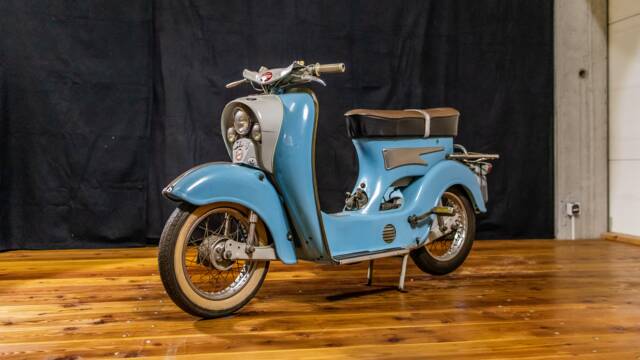
1961 | Lohner Sissy III
Charming Two-Wheeled Classic from Lohner's Success Story

Create search alert
Let yourself be notified as soon as a listing is published that matches your search filters.
Create listing
Do you have a Lohner Sissy III that you want to sell? Then create a listing now.
Create listingLohner Sissy III Classic Motorbikes: Prices & Market Values
History of the Lohner Sissy III
Founded in Vienna, Lohner built its name on innovative concepts long before the Sissy III emerged. The Sissy III, produced in the early 1960s, was Lohner’s interpretation of functional city motoring in postwar Europe, responding to increased demand for economical transportation during a period marked by a growing need for personal mobility and urbanisation. Lohner’s earlier engineering experience, from carriages to electric prototypes, is reflected in the Sissy III’s practical design ethos. Production volumes remained modest, catering predominantly to the Austrian market and a handful of neighbouring countries.
Model Evolution and Milestones
The Sissy III was a further development of earlier Lohner microcars, building on lessons learned from the Sissy I and Sissy II. Each iteration refined aspects such as cabin comfort, mechanical reliability, and urban usability. The Sissy III represents the final stage of this brief but intriguing subseries. After production ceased, Lohner withdrew from automobile manufacturing, focusing elsewhere, and no direct successor followed the Sissy III in the Lohner line-up.
Distinctive Features and Supply Statistics
The Lohner Sissy III sets itself apart with a combination of lightweight construction and intelligent use of space, targeting postwar city dwellers. Its compact form allowed easy navigation of congested streets, while simple mechanicals kept running costs low. While not a vehicle for long-distance travel, its footprint and agility were ideally suited for short-journey urban contexts. The Sissy III is rarely encountered at auctions or classic dealerships, and its distinctive Austrian roots enhance its rarity among collectors outside Central Europe.
Technical Data
Special Editions and Collectibility
There are no known factory-authorised special editions for the Sissy III. Any notable variations are usually the result of owner modification rather than official production changes. Given the car’s limited run and market presence, even standard variants are regarded as rare.
Maintenance, Weak Spots and Common Issues
Due to low production numbers and the passage of decades, Sissy III parts and expertise are scarce. When sourcing a Sissy III, collectors should expect challenges related to bodywork corrosion, aged mechanicals, and limited documentation. Engine components and original trim parts can be difficult to replace. As with many microcars, the simplicity that once made repairs easy can be a hurdle today, simply due to the scarcity of original spare parts.
Engine, Performance and Handling
The Sissy III’s performance is tailored for city streets, with a small-displacement petrol engine coupled to a manual gearbox. Acceleration is modest, but the car’s lightweight chassis enables nimble handling and short turning circles—an advantage for tight urban spaces. Braking and suspension systems are straightforward, designed for low-speed reliability rather than spirited driving. Given its extremely limited range and lack of derivatives, the Sissy III itself is the highlight of the series. Models may differ slightly in equipment due to owner modifications rather than factory differences.
Design, Interior and Accessories
The Sissy III features minimalist design, focused on maximising cabin space within a compact exterior shell. The body is generally finished in factory-standard colours, although personal touches are common owing to age and owner preferences. Interior appointments are basic: vinyl seats, steel dash, and simple instrumentation. Accessories and optional equipment were extremely limited, reflecting the Sissy III’s utilitarian focus and price segment. Material quality is functional rather than luxurious, in line with microcar standards of the era. Any period-specific Lohner badges or original trim elements are particularly valued by enthusiasts.
Other Notable Aspects
Despite its understated role in automotive history, the Sissy III offers insight into Austria’s approach to postwar mobility and urban transport. Surviving examples often serve as conversation pieces at classic car events for their unusual design and rare presence.
Summary
The Lohner Sissy III represents an unusual strand in the tapestry of European microcar heritage. Engineered for short-distance urban travel and shaped by its time and place, it appeals most to collectors interested in obscure vehicles with a clear historical context. Its survival is testament to Austria’s innovative contributions to the story of practical motoring.