- Motorcycle
- Lohner (0 offers)
Buy Lohner Motorbike
From the world's first hybrid automobiles to the elegant scooters of the post-war era, Lohner shaped the history of mobility. Discover rare collector's items like the Sissy or the Superroller L 200, which today stand as witnesses to Viennese engineering and pioneering spirit.
Search results
Currently, there are no matching listings for your search.
Create search alert
Let yourself be notified as soon as a listing is published that matches your search filters.
Lohner listing references from Classic Trader
Below you will find listings related to your search that are no longer available on Classic Trader. Use this information to gain insight into availability, value trends, and current pricing for a "Lohner" to make a more informed purchasing decision.
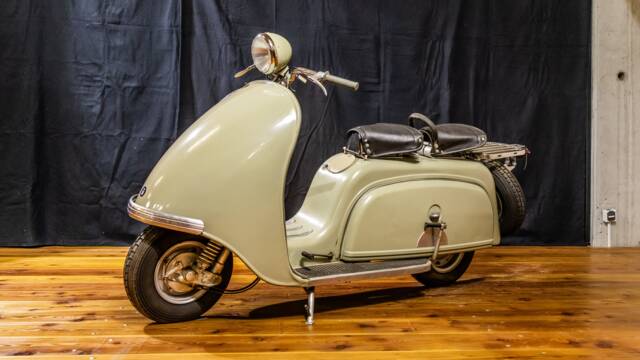
1958 | Lohner L 125
Charming collector's piece from the golden age of the scooter era

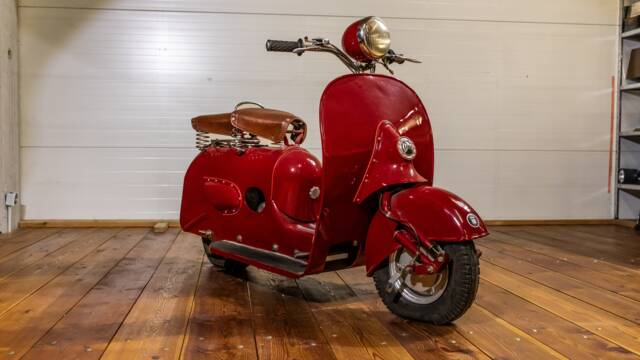
1952 | Lohner L 98
Classic of the Austrian scooter era
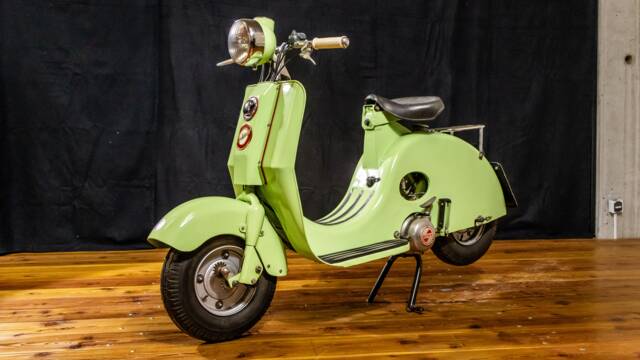
1951 | Lohner L 98
Rare cult model and milestone in Austrian two-wheeler history
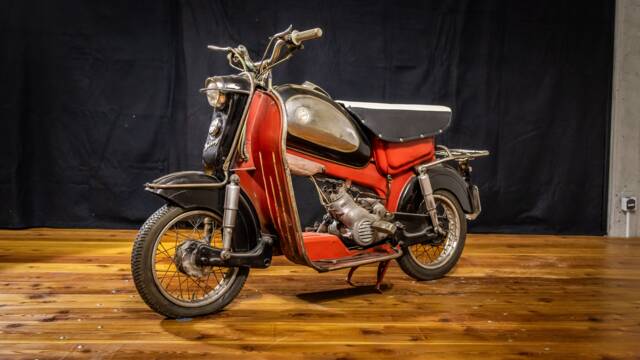
1959 | Lohner Sissy I
Classic Austrian moped from the late 1950s
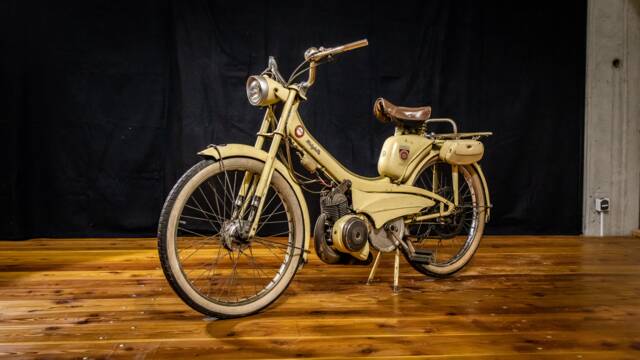
1962 | Lohner Motobécane Mobylette AV44
Licensed model from Vienna production
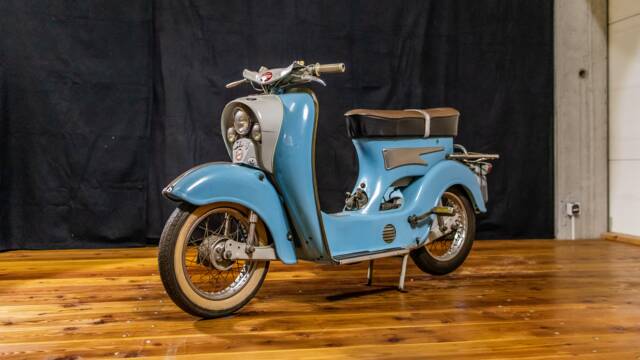
1961 | Lohner Sissy III
Charming Two-Wheeled Classic from Lohner's Success Story
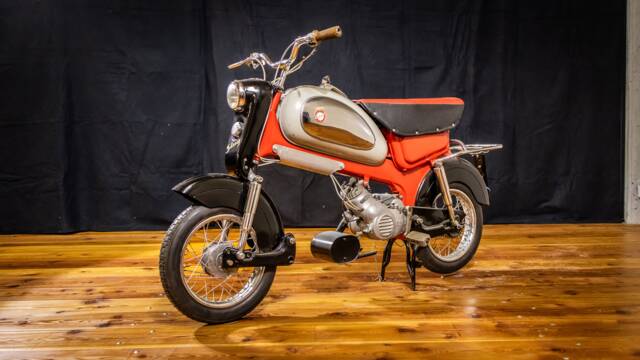
1959 | Lohner Sissy II
Classic Austrian moped from the late 1950s
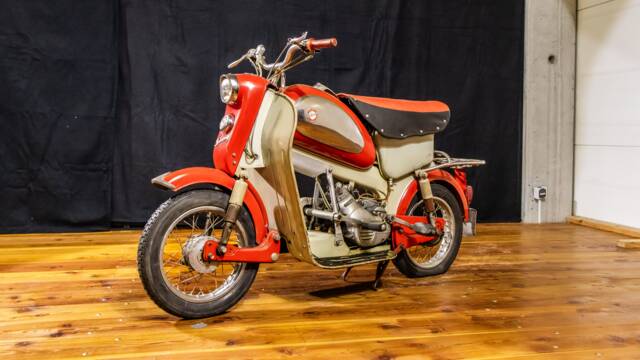
1958 | Lohner Sissy I Luxus
Stylish luxury moped from Lohner model history
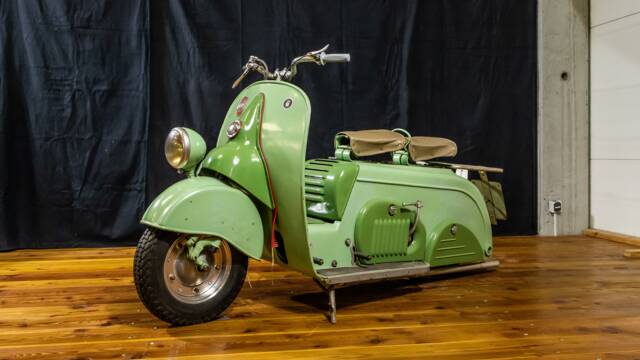
1954 | Lohner Superroller L 200
Rare top model and milestone in domestic scooter history
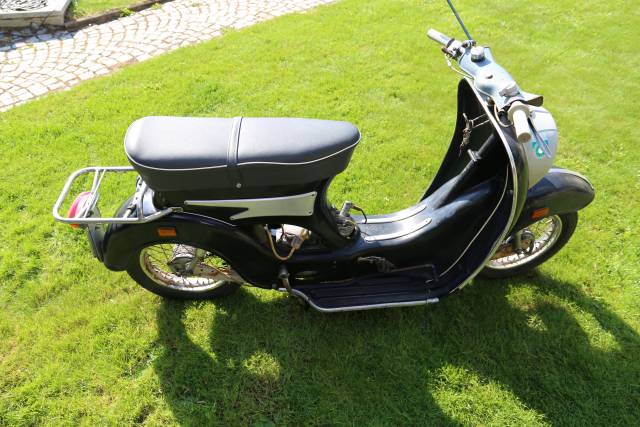
1960 | Lohner Sissy I
Lohner Sissy Modell 61
Create search alert
Let yourself be notified as soon as a listing is published that matches your search filters.
The History of Lohner-Werke
The history of Lohner-Werke is inextricably linked with the industrial development of Austria and the city of Vienna, but it also holds a special fascination for Australian enthusiasts of engineering history. It all began in 1821 when master cartwright Heinrich Lohner moved from Mayen in the Rhineland to Vienna to avoid conscription into the French army. In the Danube metropolis, he laid the foundation for a company that would push the boundaries of mobility for five generations. Originally founded as a coach-building business, Lohner developed under Heinrich's son Jacob Lohner into one of the most renowned bodybuilders in Europe. The "k.u.k. Hof-Wagenfabrik Jacob Lohner & Comp." supplied not only the Austrian imperial house but also the royal courts of Sweden, Norway, and Romania.
The decisive turning point towards motorised transport occurred at the end of the 19th century. Ludwig Lohner, who led the company in its third generation, recognised early on that the era of horse-drawn carriages was coming to an end. In 1898, he hired a young, then completely unknown engineer named Ferdinand Porsche. Porsche, just 23 years old, was to celebrate his first major successes at Lohner. Together they developed the Lohner-Porsche, an electric vehicle with wheel hub motors that caused a worldwide sensation at the Paris World Exhibition in 1900. However, the limited range of the batteries at the time was already a problem. The solution was as ingenious as it was forward-looking: the Lohner-Porsche "Semper Vivus" (1900) and the production model "Mixte" (1901) were the world's first functional hybrid automobiles. A petrol engine drove a generator, which in turn supplied the wheel hub motors with electricity – a principle that today, over 120 years later, is more relevant than ever.
After the First World War, in which Lohner functioned as a significant aircraft producer (Lohner Pfeilflieger), the company had to reinvent itself once again. The production of trams and buses became the main pillar. However, the true passion for individual mobility flared up again after the Second World War. In a time when people longed for freedom and affordable transport, Lohner began developing motor scooters. In 1949, Richard Lohner and engineer Kauba presented the first prototype, which went into series production in 1950 as the Lohner L 98. It was the beginning of an era in which Lohner scooters shaped the Austrian streetscape and were regarded as symbols of the economic miracle.
Highlights & Special Features
What set Lohner scooters apart from the mass of two-wheelers at the time was the combination of technical solidity and an almost aristocratic design claim. While brands like Puch focused more on mass appeal and sportiness, Lohner embodied a certain Viennese elegance that also found fans among Australian collectors looking for something more exclusive than the ubiquitous Italian brands. A standout feature was the fully enclosed bodywork, which protected the rider from dirt and weather – an aspect that was particularly important for commuters and "Sunday riders" in suits.
A technical highlight was the use of Sachs and Rotax engines. These powerplants were considered virtually indestructible and offered remarkable smoothness for the time. The Lohner L 125, often referred to as a "miniature road cruiser," set standards in terms of comfort. With its generous floorboard, comfortable saddle, and striking headlight housing that flowed seamlessly into the bodywork, it was an appearance one would expect on the boulevards of Paris or Vienna rather than on dusty country roads.
Another milestone was the introduction of the Lohner Sissy in 1957. It was the world's first moped with two seats (pillion capability from the factory). In a time when mopeds were usually only registered for one person, the Sissy offered young couples the opportunity to explore the world together. The design of the Sissy was revolutionary: a mix of motorbike looks in the front and scooter comfort in the rear. With its 50cc engine, it was no powerhouse, but its versatility made it a bestseller.
For lovers of more power, Lohner offered the Superroller L 200. With a 200cc ILO engine and an output of 9 hp, it was the "king of the road" among Austrian scooters. It offered enough reserves for sidecar trips or extended tours over Alpine passes – a terrain where Lohner vehicles always proved their worth due to their robustness.
Technical Data at a Glance
The following table provides an overview of the most important technical specifications of the best-known Lohner models. This data is particularly important for collectors who value originality and correct motorisation.
Particularly noteworthy on the L 125 is the fan cooling, which prevented the engine from overheating even at slow speeds or in city traffic. The 3-speed manual gearbox was typical for the era and required a certain amount of intuition, but contributed significantly to the nostalgic riding experience.
Market Overview & Buying Tips
Anyone looking to buy a Lohner motorbike today is embarking on an exciting search for a piece of industrial history. The market for Lohner vehicles in Australia is exclusive and manageable, making them sought-after collector's items. Currently, there are about 9 offers on Classic Trader, covering the spectrum from barn finds in need of restoration to museum-quality pieces.
Price Development 2024–2025
Prices for Lohner scooters have shown a stable upward trend in recent years. Vehicles with a complete history and original papers are particularly in demand. In Australia, these classics are often traded as rare alternatives to the mainstream scooter scene.
- Lohner Sissy (I-III): Entry-level models in roadworthy but unrestored condition start at around A$1,400 to A$2,200. Top-restored examples or rare "luxury" versions can achieve prices of A$3,500 to A$5,000.
- Lohner L 98: Due to its age and historical significance as the first Lohner scooter, prices here are usually between A$3,500 and A$6,500.
- Lohner L 125: The "classic" among Lohner scooters is highly sought after. Good examples (Condition 2) are traded between A$6,000 and A$9,000. Vehicles with rare original paint and beautiful patina can even be above this.
- Superroller L 200: As the rarest post-war model, the L 200 is hard to find. When an example comes onto the market, price expectations are usually in the range of A$8,000 to A$12,000.
- Motobécane Mobylette (Lohner import): These mopeds are more affordable and can often be found for A$900 to A$2,200, depending on condition.
What to Look for When Buying
Patience is required when buying a Lohner scooter. Since many vehicles stood in garages or cellars for decades, the condition of the bodywork is the most important criterion. Lohner used high-quality sheet metal, but rust on the floorboards and in the area of the wheel arches is a common problem. Extensive metal restoration can quickly exceed the purchase price.
Another critical point is the completeness of the trim parts. Emblems, chrome strips, and the specific headlight masks are practically no longer available as new parts. Missing parts often have to be laboriously searched for at parts markets or expensively remanufactured. Therefore, make sure that all brand-specific details are present.
The mechanics, on the other hand, are comparatively grateful. The Sachs and Rotax engines are simply constructed, and spare parts for the mechanics (gaskets, bearings, pistons) are still relatively well available through specialised dealers in Austria and Germany. A seized engine is usually not a death sentence but should be taken into account during price negotiations.
Pro Tip for Australian Buyers: Be aware of the shipping costs for parts. Since most specialised dealers are located in Europe, shipping small parts to Australia can be expensive. It's often worth bundling orders or looking for local enthusiasts who might have spare parts. Also, check if the original papers are present, as registering a vehicle in Australia without them can be a bureaucratic challenge.
The Riding Experience: Viennese Elegance on Two Wheels
Riding a Lohner scooter is deceleration in the best sense of the word. Even starting the engine – often still by kickstarter or, on later models like the L 125, even by electric starter – is a ceremony. The typical two-stroke rattle mixes with the whirring of the cooling fan and exudes the scent of burnt mixture and nostalgia.
As soon as you take a seat on the generously dimensioned saddle, you feel the well-thought-out ergonomics. You sit upright, your hands rest relaxed on the wide handlebars, and your feet find plenty of space on the flat step-through. The gearshift on the handlebars requires some practice: pull the clutch, turn the grip with feeling into first gear, and with gentle acceleration, the scooter sets in motion.
The acceleration of an L 125 is more leisurely than sporty. It is not a traffic light sprinter but a glider. On the open road, it unfolds its true charm. With a cruising speed of about 60 to 70 km/h, it is wonderful to chauffeur through the landscape. The chassis, often with a pulled short swingarm at the front, irons out bumps surprisingly well. You feel the mass of the scooter, which gives it a pleasant stability.
In corners, the Lohner behaves neutrally as long as you don't overdo it. The small wheels react sensitively to longitudinal grooves, which is typical for scooters of this era. The braking behaviour of the drum brakes is more of a "deceleration" from today's perspective – forward-looking riding is therefore mandatory. But anyone who rides a Lohner is in no hurry anyway. It's about seeing and being seen, about enjoying the mechanics and the smiles of passers-by who recognise a piece of their own youth or that of their parents in the scooter.
Design & Aesthetics: The "Road Cruiser" from Vienna
The design of Lohner scooters was always a statement. While the Italian Vespa relied on delicate, wasp-like shapes, the Lohner style was more inspired by the automobile fashion of the 1950s. The L 125 in particular shows clear borrowings from the American "Jet Age." The flowing lines of the side panels, which completely enclose the engine, and the striking rear with integrated tail lights were reminiscent of the tail fins of the large road cruisers from overseas.
The Viennese designers paid special attention to the colour scheme. Two-tone paint finishes in pastel shades like lime green/beige, baby blue/white, or an elegant wine red were not uncommon and underlined the luxurious claim. The use of plenty of chrome on the headlight ring, handlebars, and side trim strips gave the scooters a high-quality shine.
The Sissy, on the other hand, pursued a completely different aesthetic approach. It was intended to look young, cheeky, and uncomplicated. With its free-standing front wheel and the striking tank that sat between the rider's knees, it looked like a mixture of bicycle, moped, and scooter. This "hybrid design" was unique at the time and made it a style icon of Austrian youth culture. The Sissy was not just a means of transport; it was an expression of joie de vivre and the dawn of a new era.
The details also impress: the speedometers from VDO or ISG are small works of art in themselves, often with beautiful typography and soft lighting. The grips and levers feel solid and testify to the high manufacturing quality of the Lohner-Werke. Every part seems built for eternity – a claim the company had taken from its long tradition as a coachbuilder into the era of motorisation.
Other: Lohner and the Mobylette
An often forgotten chapter in Lohner's history is the cooperation with the French manufacturer Motobécane. In the 1960s, when the boom of large scooters slowly ebbed and the demand for affordable mopeds rose, Lohner looked for an addition to its programme. Its own Sissy was popular but comparatively expensive to produce.
Lohner took over the general agency for Motobécane in Austria and distributed the famous Mobylette. Some models were even final-assembled or manufactured under licence in Vienna to take advantage of customs benefits. The Lohner-Motobécane AV44 is an interesting curiosity for collectors today. It combines French lightness with the seal of quality of the traditional Viennese brand. For many people, a "Lohner-Mobylette" was the first motorised vehicle they ever rode to work or school.
This cooperation also shows the flexibility of the company. Lohner recognised early on that one had to open up in a globalised market. Nevertheless, the identity of the brand was always preserved. Even though two-wheeler production was discontinued in the mid-1960s, the name Lohner remained present in the world of engines through the merger with Rotax and later the takeover by Bombardier (BRP-Rotax). Today, the brand is experiencing a renaissance through the Lohner Stroler and the LEA (electric scooter), which directly links back to the pioneering achievements of Ferdinand Porsche and Ludwig Lohner.
Summary: Why a Lohner Scooter Belongs in Every Collection
A Lohner scooter is much more than just an old two-wheeler. It is a rolling monument to industrial history and a testimony to the courage and innovative power of a family business that has reinvented itself again and again over 150 years. Anyone who chooses to buy a Lohner motorbike is choosing exclusivity and character.
The connection to Ferdinand Porsche, the pioneering work in the field of hybrid technology, and the elegant design language of the post-war scooters make Lohner a brand that should not be missing from any serious classic collection. Whether it's the charming Sissy for a relaxed ride to the ice cream parlour, the majestic L 125 for a stylish outing, or the rare Superroller L 200 as a technical highlight – a Lohner provides conversation and admiring glances everywhere.
Despite the challenges of finding spare parts for trim, the mechanics are manageable thanks to the robust Sachs and Rotax engines. The value stability and the potential for appreciation make the purchase interesting from an investment perspective as well. But the true value lies in the riding pleasure and the feeling of preserving a piece of living history. A Lohner scooter is Viennese lifestyle on two wheels – elegant, a bit leisurely, but always with that certain something. Find your personal piece of mobility history on Classic Trader now and let the era of the Viennese road cruisers rise again.