- Motorcycle
- Gilera (10 offers)
Buy Gilera Motorcycles
Since 1909, Gilera has defined Italian racing excellence, from the record-breaking Rondine to the world-dominating four-cylinder GPs. For Australian collectors, the brand holds a special place in history, cemented by Geoff Duke’s legendary 1955 tour that brought the roar of Arcore to the Antipodes.
Search results
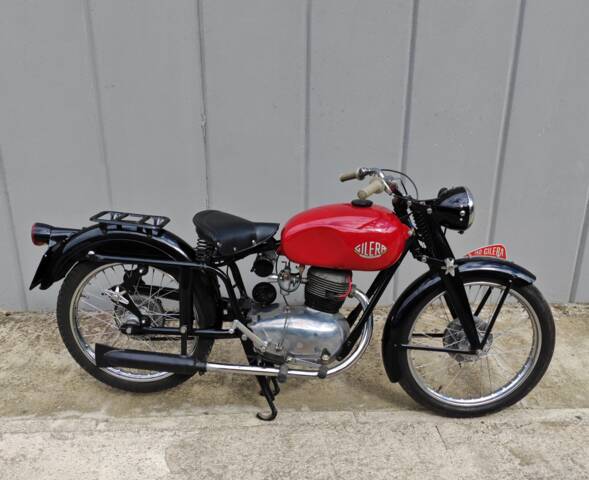

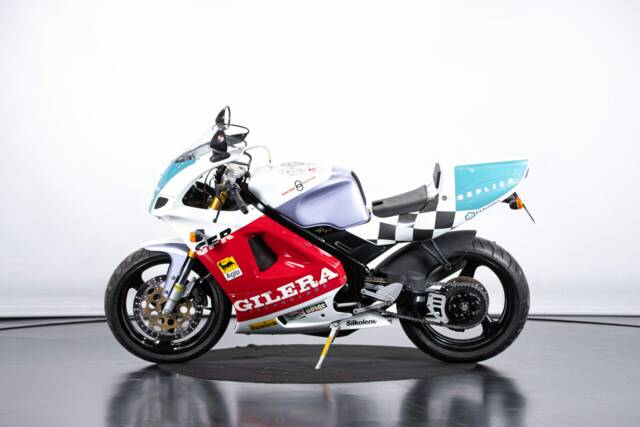
1992 | Gilera GFR 125
Gilera GFR 125
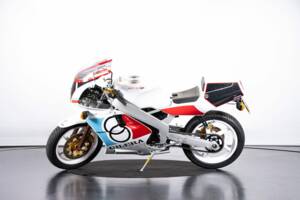
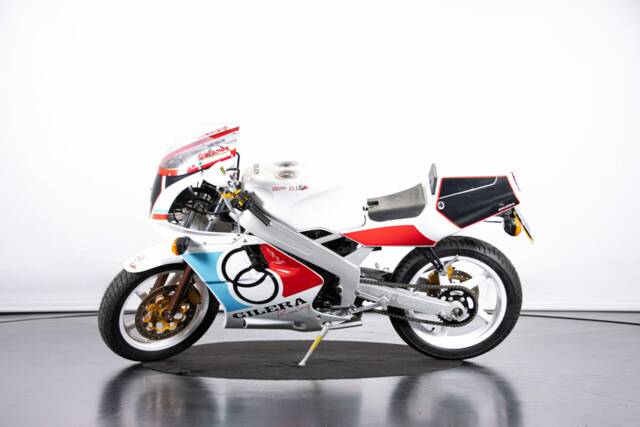
1991 | Gilera 125 SP01
Gilera 125 SP01
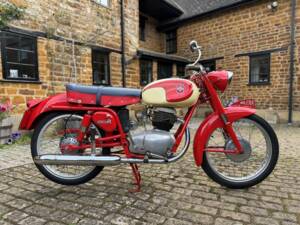
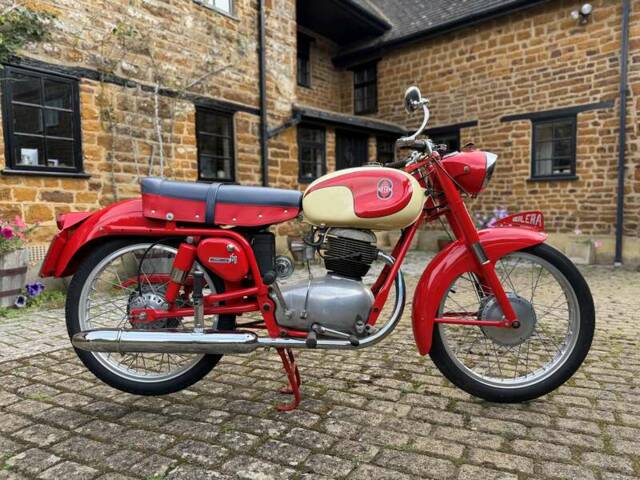
1959 | Gilera 150 Sport
1959 Gilera 150 Sport 152cc

Newsletter
The best Gilera listings, straight to your inbox
Get hand-picked Gilera listings, plus the best of cars, motorbikes, and auctions on Classic Trader — all in one place.
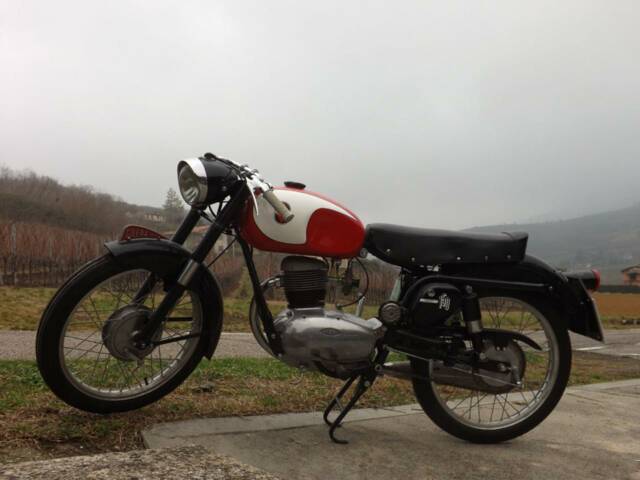
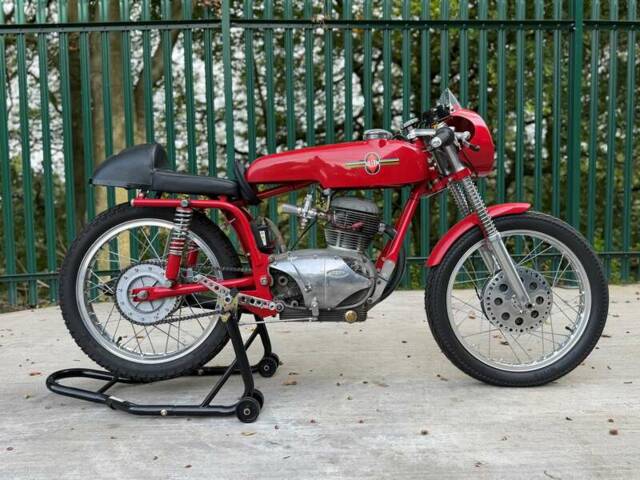
1958 | Gilera 175 Extra Rossa
c.1958 Gilera 175 Rossa Corsa Extra Race Bike 174cc
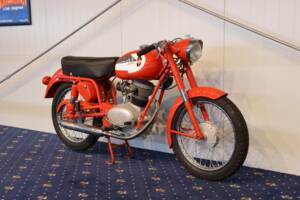
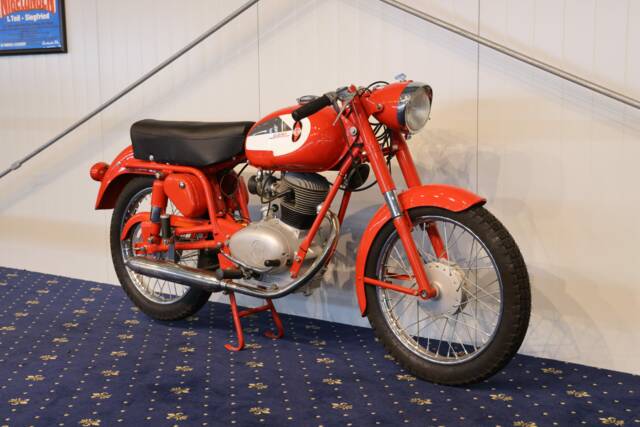
1900 | Gilera Giubileo 100
Gilera Giubileo 98 · Sammlung Sonderklasse · No reserve

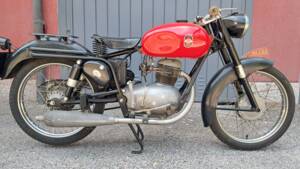
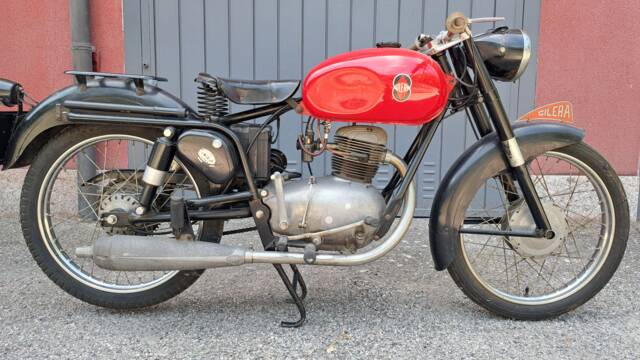
1955 | Gilera 150
Gilera Motoleggera G 150 Sport e Turismo 1955 with original documents preserved and complete
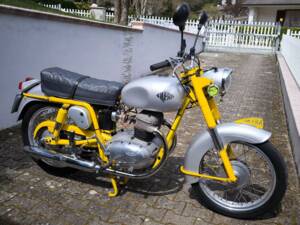
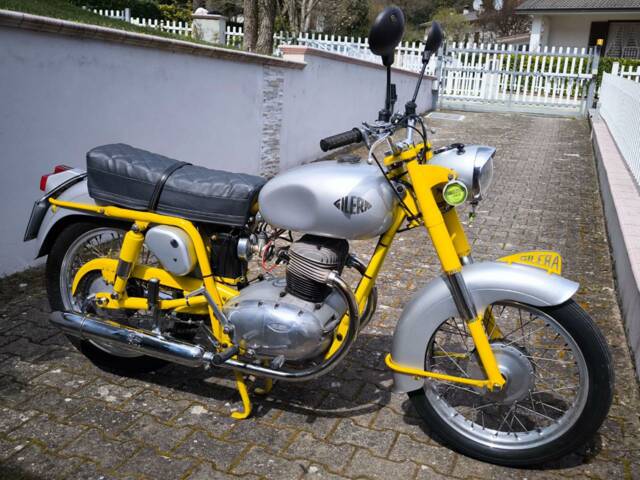
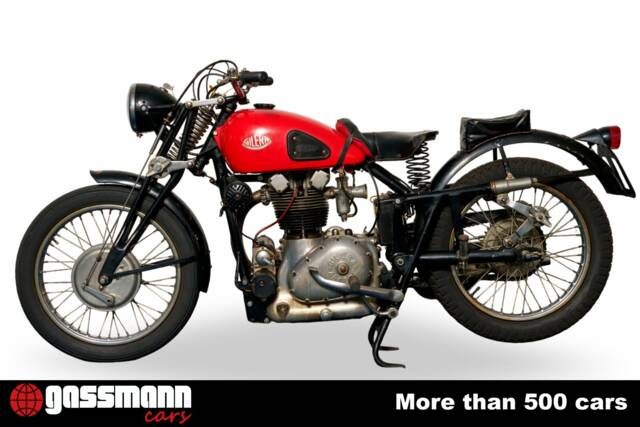
1950 | Gilera Saturno
Saturno 500 cm3

Gilera listing references from Classic Trader
Below you will find listings related to your search that are no longer available on Classic Trader. Use this information to gain insight into availability, value trends, and current pricing for a "Gilera" to make a more informed purchasing decision.
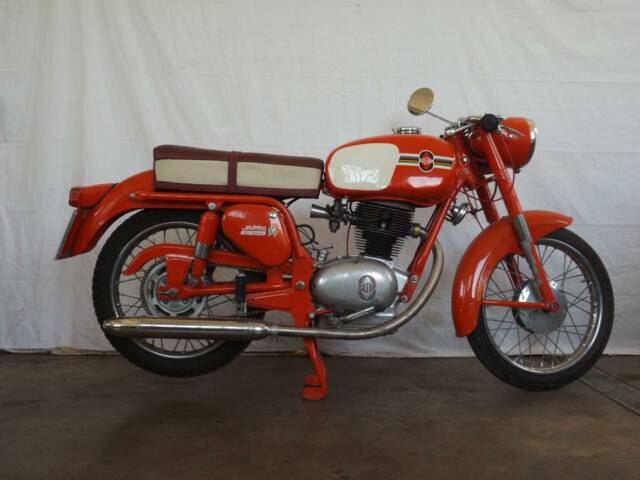
1963 | Gilera Giubileo 150
-
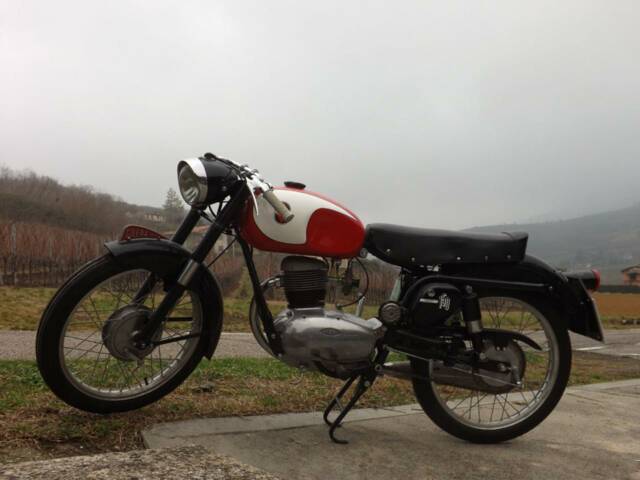
1955 | Gilera 150 Sport
-
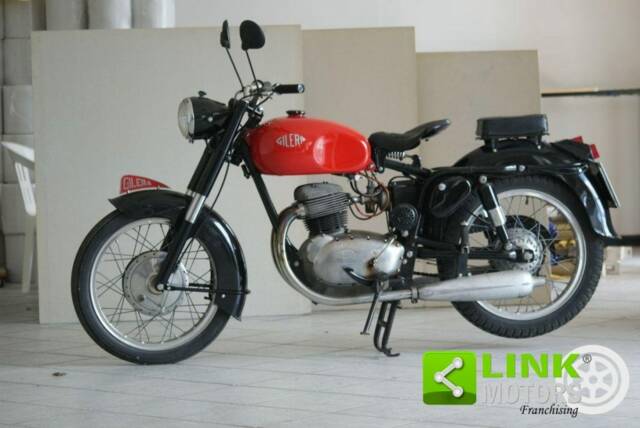
1976 | Gilera B 300 Extra
-
The story of Gilera is a century-long odyssey of speed, innovation, and Italian soul. Founded in the Lombardy town of Arcore, the marque rose from humble single-cylinder beginnings to become the undisputed king of the 500cc Grand Prix class during the 1950s. For the Australian enthusiast, Gilera represents more than just mechanical brilliance; it evokes memories of a golden era when world champions like Geoff Duke and Reg Armstrong brought the exotic sounds of Italian multi-cylinder engineering to local circuits like Longford and Bandiana. Whether you are seeking the thumping heart of a post-war Saturno or the high-revving precision of a modern classic, finding a Gilera means owning a piece of motorsport royalty that has survived wars, economic shifts, and the Japanese onslaught.
History of Gilera
The Gilera legend began in 1909 when Giuseppe Gilera established his workshop in Milan. Having honed his skills at Bianchi and Moto Reve, Giuseppe’s first creation, the VT 317, was a testament to his vision: a 7 hp single-cylinder engine mounted on a bicycle-style frame. It didn't take long for the brand to find its competitive edge, winning a hill climb in its very first year. By 1911, Gilera had formed a modest racing team, laying the foundation for what would become one of the most successful competition histories in motorcycling.
The 1920s saw the emergence of models like the 3.5 HP Turismo (1920) and the VLSS (1925), but it was in 1923 that Gilera truly shocked the world. The introduction of a four-cylinder engine producing 28 hp was a technical sensation for the era, positioning Gilera as a pioneer of multi-cylinder technology. Throughout the 1930s, the VT and VL models further solidified the brand's reputation for reliability and performance.
A pivotal moment arrived in 1934 when Giuseppe Gilera acquired the rights to the CNA motorcycle project and hired the brilliant engineer and racer Piero Taruffi. Under Taruffi’s guidance, the supercharged, water-cooled Rondine was developed. This fully-faired four-cylinder machine was a beast of its time, setting a world speed record of 244 km/h between 1935 and 1937. It was this DNA that would eventually lead to the post-war dominance of the 500cc class.
After the hiatus of World War II, Gilera faced a new challenge: the ban on forced induction (supercharging) in Grand Prix racing. Giuseppe Gilera and his team went back to the drawing board, creating the naturally aspirated Gilera 500 Four. This machine became the benchmark of the 1950s, securing six World Championships between 1950 and 1957. Legendary riders like Umberto Masetti (1950, 1952), Geoff Duke (1953, 1954, 1955), and Libero Liberati (1957) piloted the red machines from Arcore to 44 Grand Prix victories. The 500 Four, initially producing 80 hp and later 88 hp at 11,000 rpm, weighed a mere 120 kg—a power-to-weight ratio that remains impressive even by modern standards.
The 1955 Australian Tour: A Rock-Star Reception
For Australian fans, the most indelible chapter of the Gilera story occurred in early 1955. The reigning 500cc World Champion, Geoff Duke, arrived in Australia with two works Gilera fours and chief mechanic Giovanni Fumagalli. The reception was nothing short of hysterical. In an era before satellite television and instant global media, seeing the world’s fastest man on the world’s most exotic machinery was a once-in-a-lifetime event.
Duke’s tour took him to circuits like Bandiana in Victoria and the legendary Longford in Tasmania. At Longford, the sight of the Gilera 500/4 in the paddock drew crowds that rivalled major sporting finals. The "Duke's Crusade" wasn't just about road racing; the versatile Brit even competed in the Victorian Motocross Championships at Springvale, demonstrating the ruggedness of the Gilera engineering (and his own immense talent). This visit cemented Gilera’s status in the Australian psyche, making the brand a household name among local "petrolheads."
As the 1960s and 70s progressed, Gilera, like many European manufacturers, felt the pressure of the Japanese "Big Four." The brand was eventually acquired by the Piaggio Group in 1969. While the focus shifted towards smaller displacement machines and eventually high-performance scooters, the spirit of Arcore was revived in 1989 with the new Saturno 500. Originally intended for the Japanese market, this modern single-cylinder classic eventually found its way to Europe and Australia, offering a nostalgic yet capable riding experience.
Highlights of Gilera
Gilera 500 Four (1950–1957): The undisputed queen of the 1950s Grand Prix circuit. Featuring double overhead cams, four carburettors, and a revolutionary low-slung oil sump, it was a technical masterpiece. With 88 hp and a weight of 120 kg, it propelled Bob McIntyre to the first-ever 100 mph lap of the Isle of Man TT in 1957. For collectors, an original is the "Holy Grail," though high-quality re-creations by firms like Kay Engineering are the more realistic (though still expensive) path to ownership.
Gilera Saturno 500 (1946–1959, 1989 Revival): The most famous road-going Gilera of the post-war era. The original 499cc OHV single featured a distinctive horizontal rear suspension with friction dampers and produced around 44 hp. It was often referred to as the "Italian Gold Star," a nod to its BSA rival but with a distinctly Latin flair. The 1989 revival, with its 492cc liquid-cooled engine and trellis frame, captured the essence of the original in a package that remains a sought-after modern classic in Australia.
Gilera Arcore 5V (1972–1979): Named after the company’s home town, the Arcore was a sporty single-cylinder four-stroke available in 125cc and 150cc versions. In Australia, these are often found as "sleeper" classics—lightweight, reliable, and surprisingly brisk. The five-speed gearbox and forward-leaning cylinder gave it a purposeful look that appealed to younger riders of the 70s.
Gilera 124 Regolarità: A standout from Gilera’s off-road and endurance heritage. These "Regularity" machines were built to withstand the rigours of multi-day trials. Their robust construction and torquey engines make them a fascinating alternative for the collector who enjoys the "scrambler" aesthetic with genuine pedigree.
Gilera Giubileo 125 (1960s): A compact, elegant single-cylinder that epitomised the Italian "commuter-sport" style. While less powerful than the racing fours, the Giubileo offered a level of refinement and style that made it a favourite for urban riders who wanted to look like their GP heroes.
Gilera XRT 600 (Late 1980s): A Paris-Dakar inspired adventure bike that predated the modern ADV craze. Powered by a 554cc DOHC single (41 hp), it featured liquid cooling and disc brakes. For the Australian rider looking to tackle the "Red Centre" or local fire trails on something unique, the XRT 600 is a rugged, undervalued gem.
Technical Data of Selected Models
Market Overview & Buying Tips
Price Ranges in the Australian Market (AUD)
The Australian market for Gilera is niche but passionate. Because many of these machines were never officially imported in large numbers, prices often reflect the rarity and the cost of previous private importation.
Gilera Saturno 500 (1946–1959):
Expect to pay between A$15,000 and A$35,000 for a well-restored example. At international auctions, these have seen a steady rise, and Australian collectors often have to compete with European buyers. A "Sport" or "Competizione" version with documented history can easily exceed these figures. Always check for matching numbers and original Dell'Orto carburettors.
Gilera Saturno 500 (1989 Revival):
These are becoming increasingly popular as "modern classics." Prices in Australia typically range from A$8,000 to A$16,000. Many of these arrived via the "grey import" route from Japan in the 90s. Look for bikes with low kilometres and original exhaust systems, as replacements can be difficult to source locally.
Gilera 500 Four (Re-creations):
Original factory race bikes are essentially museum pieces with seven-figure potential. However, re-creations (such as those by Kay Engineering) occasionally appear on the global market. These can fetch between A$100,000 and A$180,000. For the serious Australian collector, these represent the ultimate track-day weapon for events like the Island Classic at Phillip Island.
Gilera Arcore 125/150:
An excellent entry point into Italian classic ownership. Prices generally sit between A$2,500 and A$6,000. They are simple to maintain, though you should factor in the cost of shipping specialized parts from Italy or the UK.
Gilera XRT 600:
Currently undervalued in the Australian market. You might find a runner for A$4,000 to A$8,000. Given the local love for big singles and adventure riding, these have significant appreciation potential as the "Dakar" aesthetic continues to trend.
Buyer Profiles
- The Racing Historian: Driven by the Geoff Duke connection. They seek the 500 Four re-creations or the early Saturno models to relive the glory days of Longford.
- The Italian Purist: Focused on the Arcore or Giubileo. They appreciate the "small-capacity" charm and the mechanical honesty of Italian engineering.
- The Modern Classicist: Drawn to the 1989 Saturno. They want the look of a vintage racer with the reliability of a more modern, liquid-cooled powerplant.
- The Adventure Collector: Hunting for the XRT 600. They want a unique alternative to the ubiquitous Japanese dual-sports of the era.
Brand-Wide Characteristics & Parts Availability
When buying a Gilera in Australia, the primary consideration is parts logistics. While basic consumables (plugs, tyres, chains) are universal, specific engine components or bodywork often require sourcing from Europe. Shipping costs from Italy or the UK can be significant, so factor this into your restoration budget.
- Mechanical Simplicity: The single-cylinder models are remarkably straightforward. Any competent mechanic familiar with European singles can handle a Saturno or Arcore.
- Electrical Systems: Like many Italian bikes of the 70s and 80s, the electrical systems (often CEV or Dansi) can be "characterful." Upgrading to a modern electronic ignition is a common and recommended modification for Australian riders who want reliability in the heat.
- Build Quality: 1950s Gileras are generally over-engineered and robust. The 1970s models can show signs of cost-cutting in the finish, so look for corrosion in the frame and fuel tanks.
Market Trends
- The "Duke Effect": Anything associated with the 1950s racing era continues to appreciate. The connection to Australian racing history adds a local premium.
- Small-Bore Renaissance: There is a growing movement in Australia towards smaller, lightweight classics. The Arcore 125 is perfectly positioned to benefit from this trend.
- Adventure Gold: As 80s and 90s nostalgia grows, the XRT 600 is likely to follow the price trajectory of the Honda Africa Twin or Yamaha Ténéré.
Riding Experience & Performance
Gilera Saturno 500: Riding an original Saturno is a visceral experience. The big 500cc single has a rhythmic, thumping idle that smooths out into a purposeful roar as you open the throttle. The handling, aided by the unusual horizontal rear suspension, is surprisingly stable, though the friction dampers require a bit of "getting used to" on choppy Australian B-roads. It’s a bike that rewards a smooth, deliberate riding style—you don't "flick" a Saturno; you guide it with intent.
Gilera 500 Four: This is a machine for the brave and the skilled. The power delivery is peaky, typical of a high-revving multi-cylinder racer of the 50s. The sound is legendary—a piercing, multi-tonal scream that defined the Grand Prix era. On a track like Phillip Island, the Gilera 500 Four feels remarkably light and narrow, a testament to the "mass centralisation" philosophy that Arcore pioneered decades before it became a marketing buzzword.
Gilera Arcore 5V: The Arcore is all about momentum. With only 12-14 hp on tap, you learn to preserve speed through corners. It is incredibly light and flickable, making it a joy on tight, winding coastal roads. The five-speed gearbox is crisp, allowing you to keep the small engine in its "sweet spot." It’s the perfect "Sunday morning coffee" bike—uncomplicated and full of character.
Gilera XRT 600: The XRT offers a commanding view of the road. The long-travel suspension soaks up potholes with ease, and the DOHC engine provides a broad spread of torque. It feels more "planted" than many of its Japanese contemporaries, making it a surprisingly good long-distance tourer. The fairing provides decent wind protection, a bonus for those long stretches of Australian highway.
Design & Philosophy
The design philosophy at Arcore was always "Function over Form," yet in the hands of Italian craftsmen, function inevitably became beautiful. Giuseppe Gilera believed that a racing motorcycle should be as narrow as possible to reduce frontal area, a principle that led to the incredibly slim profiles of the 500 Fours.
The Saturno represents the pinnacle of post-war functionalism. The exposed valve springs on early models, the elegant "fishtail" silencers, and the teardrop tanks are all iconic. It is a design that doesn't try too hard; its beauty comes from its mechanical honesty.
In the 1970s, the Arcore introduced a more modern, angular aesthetic. The "wedge" shaped tanks and integrated side covers reflected the transition from the rounded 60s to the sharper 70s. It was a design that looked fast even when standing still, a key requirement for the youth market.
The 1989 Saturno was a masterclass in "Retro-Modernism." Designed by Sandro Colombo, it used a classic trellis frame (a nod to the brand's racing past) but wrapped it in sleek, minimalist bodywork. It remains one of the most beautiful motorcycles of the late 20th century, proving that Gilera hadn't lost its eye for style even under Piaggio ownership.
Target Audience
- The Gentleman Racer: Drawn to the Saturno 500. They value heritage, mechanical purity, and the prestige of the Gilera name.
- The Aspiring Champion: The rider who wants a 500 Four re-creation. They are likely active in historic racing and want the most authentic experience possible.
- The Urban Stylist: The Arcore or Giubileo owner. They want an Italian classic that is easy to live with and looks great outside a Melbourne or Sydney cafe.
- The Retro Explorer: The XRT 600 enthusiast. They appreciate the Dakar history and want a bike that can actually handle a dirt road.
Racing Culture & Kultural Significance
Gilera’s impact on motorcycle racing cannot be overstated. Their withdrawal from Grand Prix racing in 1957 (alongside Moto Guzzi and FB Mondial) marked the end of an era. Officially, the "Triple Withdrawal" was due to rising costs, but many believe Gilera left because they had nothing left to prove. The technology they developed—particularly the transverse four-cylinder layout—became the blueprint for the Japanese manufacturers who would eventually dominate the sport.
In Australia, the cultural significance of Gilera is inextricably linked to the 1955 tour. It was a moment of "cultural exchange" that brought the best of European engineering to a country that was still largely reliant on British machinery. The sight of Geoff Duke on the Gilera 500/4 challenged the dominance of the Norton Manx and the BSA Gold Star in the minds of Australian riders, paving the way for the eventual acceptance of multi-cylinder bikes.
The brand also holds a place in pop culture. In Italy, a Gilera was often the first "real" motorcycle for generations of riders. In Australia, they remain a "connoisseur's choice"—a bike for the person who knows their history and isn't afraid to explain it to curious onlookers at a bike meet.
Summary
Gilera is a brand that carries the weight of history with effortless Italian grace. From the pioneering days of Giuseppe Gilera to the world-beating dominance of the 1950s, the marque has always stood for technical excellence and racing soul. For the Australian collector, a Gilera offers a unique connection to a golden era of motorsport, highlighted by the legendary 1955 visit of Geoff Duke.
Whether you are drawn to the thumping authority of a Saturno 500, the lightweight agility of an Arcore 125, or the rugged adventure of an XRT 600, owning a Gilera is an invitation to join an exclusive club of enthusiasts. While parts sourcing requires a bit more effort than for a Japanese classic, the reward is a riding experience that is rich in character, sound, and heritage. In the world of classic motorcycles, Gilera remains a name that commands respect—a red-blooded reminder of why we fell in love with two wheels in the first place. Find your piece of Arcore history today and discover why the roar of a Gilera still echoes through the paddocks of time.