Wolseley 6/80 classic cars for sale
The Wolseley 6/80 stands as an early post-war British saloon, powered by a robust 2.2-litre straight-six engine. Sharing its platform with the Morris Six MS, the 6/80 brought single overhead cam technology and a considerable bump in size and power for the era. Its reputation for durability and its role as a popular police car in the 1950s set it apart from many rivals.
Suchergebnisse
Zur Zeit sind keine passenden Inserate zu Ihrer Suche veröffentlicht.
Create search alert
Let yourself be notified as soon as a listing is published that matches your search filters.
Create listing
Do you have a Wolseley 6/80 that you want to sell? Then create a listing now.
Create listingWolseley 6/80 listing references from Classic Trader
Below you will find listings related to your search that are no longer available on Classic Trader. Use this information to gain insight into availability, value trends, and current pricing for a "Wolseley 6/80" to make a more informed purchasing decision.
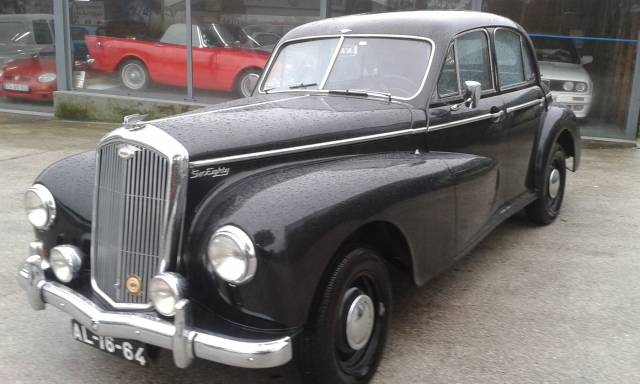
1950 | Wolseley 6/80
Vanden Plas Princess Wolseley six/eighty
Create search alert
Let yourself be notified as soon as a listing is published that matches your search filters.
Create listing
Do you have a Wolseley 6/80 that you want to sell? Then create a listing now.
Create listingWolseley 6/80 Classic Cars: Prices & Market Values
Introduction and history of Wolseley 6/80
The Wolseley 6/80, launched in 1948, marked a significant point in the British automotive landscape. As Wolseley's first post-war saloon, it quickly earned a place in both private and official fleets. The 6/80's origins tie directly to its sibling, the Morris Six MS, but with distinct Wolseley character: a refined grille design, higher-grade trim, and a focus on robust engineering. It was a step forward for the brand after wartime production paused civilian car development, embodying the technological optimism of the late 1940s. The 6/80 became widely seen on British roads, not least because of its selection by police forces, thanks to its strong performance and reliable engine.
Model history of the Wolseley 6/80
The 6/80 replaced pre-war Wolseley large saloons, introducing modern construction and a new straight-six engine with 2,215 cc displacement. Its four-cylinder counterpart, the 4/50, shared much of its design but delivered less power. The 6/80 set itself apart not only through engine size but with upmarket finishes and advanced features for its class. The model line paved the way for later Wolseley saloons of the 1950s and 1960s, offering a template for combining luxury and practicality in British motoring.
Highlights and statistics for the Wolseley 6/80
Among the first British saloons to employ a single overhead cam straight-six engine after WWII, the 6/80 was known for its smoothness and ample torque. Its reputation for police work was well deserved, offering spaciousness, robust construction, and reliability. Today, supply statistics from our platform show that the 6/80 accounts for 100% of Wolseley models currently listed, confirming its unique standing. Likewise, demand statistics reflect that all Wolseley interest on Classic Trader is focused solely on the 6/80, making it the most researched and offered model from this marque.
Technical data for the Wolseley 6/80
Special Editions and Collectible Models
There are no known factory-produced special editions for the Wolseley 6/80. However, certain cars with documented service as police vehicles or uniquely preserved examples with original period fittings can be of special interest to collectors.
Weak Spots and Common Issues
Although specific weak spots are not widely documented, buyers of 6/80 models should pay attention to typical British saloon concerns of the late 1940s—such as rust in the body sills and chassis, wear in the leaf spring suspension, and degradation of interior wood and leather. Mechanical inspection of the straight-six engine and the electrical system is recommended due to the age of these cars.
Engine, Performance, Transmission and Handling
The heart of the 6/80 is its smooth 2.2-litre straight-six, which set it apart from many contemporaries. The engine offered 72 hp, giving the car a strong turnout for long-distance cruising as well as reliable urban performance. Its four-speed manual gearbox was known for durability, while the suspension provided a comfortable, if softly sprung, ride—ideal for long patrols or leisurely motorway journeys. The car handled predictably, favouring comfort over sporting precision. The Wolseley 6/80 is currently the sole highlighted model, with no other model series from Wolseley represented in the Classic Trader listings. Technical focus: 2,215 cc straight-six engine, 72 hp, 4-speed manual transmission, rear-wheel drive.
Interior, Comfort, Exterior and Design
The 6/80 showcased upmarket design touches for its time: a distinctive chrome grille, deep fluted bonnet, and polished wood trim on the dashboard and doors. The seats featured quality leather, and the large saloon body allowed for generous rear legroom. Wolseley's eye for detail is evident in touches like the centrally mounted instruments and the signature illuminated grille badge—a discreet mark of class. Factory-fitted options could include a sunroof, radio, and additional fog lamps, catering to buyers seeking enhanced comfort or specific period accessories.
Other relevant features
The 6/80’s role as a police car played a significant part in its historical footprint. Vehicles used for constabulary service occasionally surface on the market with period modifications, such as dashboard-mounted radio equipment or specialized lighting, adding to their appeal for enthusiasts keen on authenticity.
Summary
The Wolseley 6/80 stands as a significant post-war British saloon, noted for its robust 2.2-litre straight-six and ample comfort. Its exclusive place among Wolseleys on the market reflects its enduring appeal, especially for collectors interested in period police vehicles or authentic British motoring craftsmanship. Attention to structural integrity and classic British mechanicals are the primary considerations for prospective buyers.