Toyota 87 classic cars for sale
The Toyota 87 series embodies a unique blend of Japanese engineering, motorsport influence, and technical innovation. This model series stands out for its specific approach to performance and design, making it a real topic for dedicated collectors and enthusiasts of rare Toyota vehicles.
Suchergebnisse
Zur Zeit sind keine passenden Inserate zu Ihrer Suche veröffentlicht.
Create search alert
Let yourself be notified as soon as a listing is published that matches your search filters.
Create listing
Do you have a Toyota 87 that you want to sell? Then create a listing now.
Create listingToyota 87 listing references from Classic Trader
Below you will find listings related to your search that are no longer available on Classic Trader. Use this information to gain insight into availability, value trends, and current pricing for a "Toyota 87" to make a more informed purchasing decision.
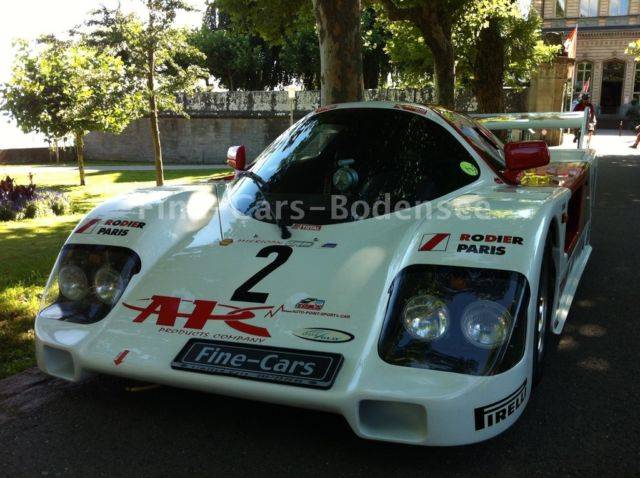
1986 | Toyota 87C-L
LE-MANS-GRUP-C GTM-RENNWG.-STRASSENZULASSUNG
Create search alert
Let yourself be notified as soon as a listing is published that matches your search filters.
Create listing
Do you have a Toyota 87 that you want to sell? Then create a listing now.
Create listingToyota 87 Classic Cars: Prices & Market Values
History of the Toyota 87 series
The Toyota 87 series is rooted in Toyota’s ambitious motorsport endeavours of the late 1980s. Born primarily as a Group C race car, the Toyota 87 was developed to compete in international endurance racing. The car is best known for its participation in prestigious events such as the 24 Hours of Le Mans. Toyota’s involvement with the 87 series marked a significant step in building its motorsport pedigree, pushing technical boundaries and laying the foundation for its later successes with the 88C and beyond. The short production run and track-focused nature distinguish the 87 from Toyota’s more mainstream road models.
Model history
The Toyota 87 series does not have a conventional predecessor in Toyota’s homologated passenger range. It succeeded earlier racing prototypes and was, in turn, directly succeeded by the Toyota 88C, which continued development of the Group C concept. The 87 series remained focused on track duty, never homologated for road use, and thus exists in very limited numbers. Its rarity comes not only from low production but also from the specific use cases requiring advanced engineering and materials.
Highlights of the Toyota 87 series
The standout feature of the Toyota 87 is its exclusive focus on racing, making it fundamentally different from any road-going Toyota of the era. It sports a lightweight chassis, advanced aerodynamics, and a turbocharged powertrain purpose-built for endurance racing. The use of composite materials for the bodywork and the impressive safety standards of the time were notable. Featuring a distinctive silhouette for high-speed stability, the 87 signalled Toyota's serious intent in world-class motorsport. As for market metrics, Toyota 87 listings make up a fraction of overall Toyota vehicles available: with an insubstantial supply and almost no demand share in comparison to Toyota’s more common classics, reflecting its specialist status and minimal presence on the market.
Technical data
Special Editions and Collectible Models
Due to the 87’s origins as a limited-run racing model, every example produced can be regarded as a ‘special edition’. There were subtle variations for each competition entry, often tailored for specific race requirements, which makes individual provenance and race history significant for collectors.
Weak Spots and Common Issues
Track-only racing prototypes like the Toyota 87 require exceptionally high standards of maintenance, typically beyond conventional enthusiasts' capabilities. Components such as the turbocharged engine and sequential gearbox need specialist attention. Parts availability is extremely limited, with many demands for bespoke machining or reproduction. Advanced electronics from the late '80s may also present challenges due to ageing and obsolescence.
Engine and Performance, Transmission and Handling
The engine of the Toyota 87 delivers performance focused solely on endurance racing, with sustained high-rpm operation and the durability to withstand long-distance events. The transmission is a purpose-built racing gearbox, requiring considerable skill and expertise to service. Handling was benchmarked to the requirements of fast, technical circuits, incorporating aerodynamic elements, wide track, and a low centre of gravity. In the niche of Japanese Group C machinery, the 87 stands out but is closely followed by successors like the Toyota 88C, which refined the formula even further. - Toyota 87C: Turbocharged prototype, mid-engine, Group C spec, extremely rare.
- Toyota 88C: Successor, incremental technical improvements, continued Le Mans campaign.
Interior, Comfort, Exterior and design
Created for racing, the Toyota 87 has a purely functional interior with a single-seat configuration and full harness. All controls are optimised for use with racing gloves and focus on clarity and reliability during high-pressure competition. Exterior styling is subordinate to aerodynamic effectiveness: ground-hugging bodywork, a prominent rear wing, NACA ducts, and composite panels for reduced weight. Livery and individual paint schemes often correspond to specific events or teams. Accessories, when present, relate exclusively to trackside use, including telemetry interfaces and modular bodywork.
Other relevant features
Owing to its exclusive motorsport heritage, ownership of a Toyota 87 generally aligns with specialist collections and historic racing events, like the Le Mans Classic. Insurance, storage, and logistics require planning generally reserved for significant racing machinery. Documented racing provenance significantly influences value.
Summary
The Toyota 87 represents Toyota’s dedicated leap into top-tier motorsport during a transformative era for the brand. Its rare appearance on the collector market and its uncompromising racing specification make it a central talking point for serious historic motorsport enthusiasts. Every aspect of the 87—from its design to its upkeep—reflects its status as a purpose-built race car, and not a product of mass manufacturing.