Tatra 11 classic cars for sale
The Tatra 11, produced from 1923 to 1927, stands out as a pioneering compact with innovative engineering—most notably its backbone tube chassis and air-cooled engine. This model, limited to just 3,847 units, shaped the brand’s future design and remains a prime discovery for automotive history enthusiasts.
Search results
Currently, there are no matching listings for your search.
Create search alert
Let yourself be notified as soon as a listing is published that matches your search filters.
Create listing
Do you have a Tatra 11 that you want to sell? Then create a listing now.
Create listingTatra 11 listing references from Classic Trader
Below you will find listings related to your search that are no longer available on Classic Trader. Use this information to gain insight into availability, value trends, and current pricing for a "Tatra 11" to make a more informed purchasing decision.
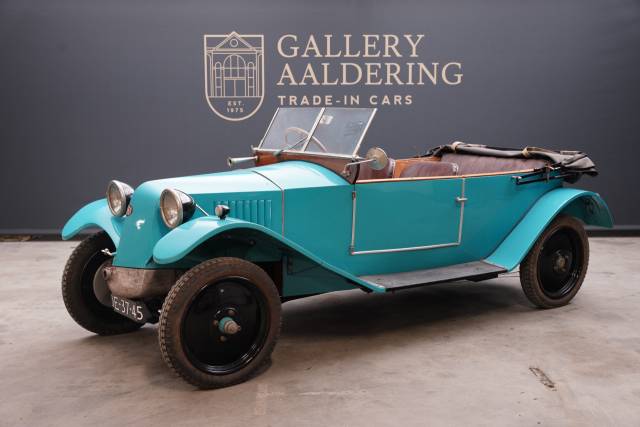
1925 | Tatra 11
Tatra 11 "the Tatracheck - T11", the common man-Tatra

Create search alert
Let yourself be notified as soon as a listing is published that matches your search filters.
Create listing
Do you have a Tatra 11 that you want to sell? Then create a listing now.
Create listingTatra 11 Classic Cars: Prices & Market Values
Introduction and history of Tatra 11
The Tatra 11 marks a milestone in automotive development, both for the Czech marque and for car engineering as a whole. Conceived by Hans Ledwinka, whose ideas were initially dismissed by Steyr, the T11 was brought to life at Nesseldorfer, soon to be Tatra. Ledwinka’s vision introduced key technical innovations: the backbone chassis and swinging half-axles, elements that went on to define the Tatra brand for decades. Produced between 1923 and 1927, the T11 was crucial in establishing Tatra’s international reputation for progressive engineering.
Model history
The Tatra 11 directly followed earlier, more conventional vehicles made at Nesseldorfer. Its development sprang from Ledwinka’s frustration with conservative Austrian manufacturing trends and rejection of his ambitions. The T11’s immediate successor was the Tatra 12, building upon the same fundamental concepts but evolving further in mechanical details and production numbers. The T11’s run saw 3,847 examples produced in four years, underlining its modest but influential place in the brand’s timeline.
Highlights of Tatra 11
Key features of the Tatra 11 include its innovative backbone tube chassis—lighter and more rigid than conventional ladder frames—and a 1,057 cc air-cooled, two-cylinder engine with overhead valves. Engine and gearbox form a single unit, which was unconventional in the 1920s compact class. This forward-thinking construction contributed to reliability and low maintenance needs. The T11 remains the only Tatra of its era present in current market listings and captures 100% of Tatra’s classic car attention both in supply and demand statistics on the marketplace.
Technical data
Special Editions and Collectible Models
No limited or factory special editions of the Tatra 11 are currently documented. Each surviving example, however, is notable due to the total production of only 3,847 units across its four-year lifespan. Unique provenance or features found on individual cars are typically due to customisation or variation during its production.
Engine and Performance, Transmission and Handling
With its air-cooled engine delivering reliable performance and minimal fuss, the Tatra 11 was engineered for simplicity and endurance. The backbone chassis and swinging axle system produce a surprisingly refined ride for a car of this era, ensuring comfort even on less developed roads. Engines are robust, and the transmission’s integration reduces complexity. In today's market, survivors are valued for their technical curiosity and driveability. The single Tatra 11 configuration is the focus. Emphasis is on the 1,057 cc, two-cylinder air-cooled engine, backbone chassis, and simple yet robust drivetrain.
Interior, Comfort, Exterior and Design
Hans Ledwinka’s flair for innovative engineering also influenced the Tatra 11’s aesthetics. Its body, although compact, uses proportionate, minimalist lines typical of the early-1920s period, with steel-pressed parts and modest detailing. Interiors are functional, prioritising space and utility over embellishments. Accessories and special trim variants were rare and largely dictated by adapting coachbuilders, often region-specific, resulting in a diversity of surviving interiors and body types.
Summary
The Tatra 11’s limited production, pioneering engineering, and straightforward mechanics make it a unique entry point into early Czechoslovakian automotive innovation. For collectors, restorers, and engineers, it sets a powerful example of how radical design decisions can redefine a marque’s legacy.